
13 min 27 sec
Available in: English
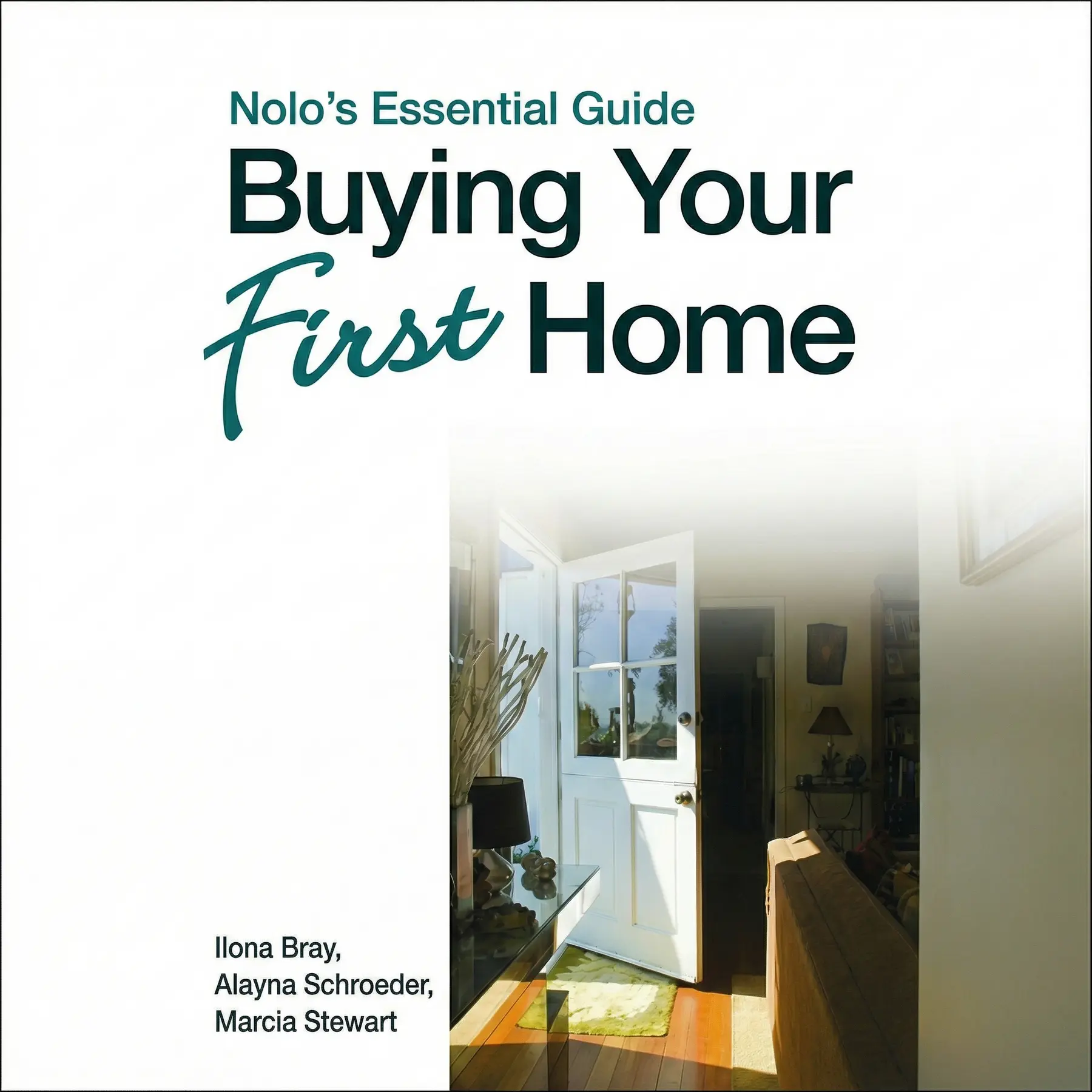
Buying Your First Home: Nolo's Essential Guide
A step-by-step guide for first-time buyers: why owning beats renting, how to choose a neighborhood, qualify for a better mortgage, see through staging, inspect properly and set an offer that fits the market.
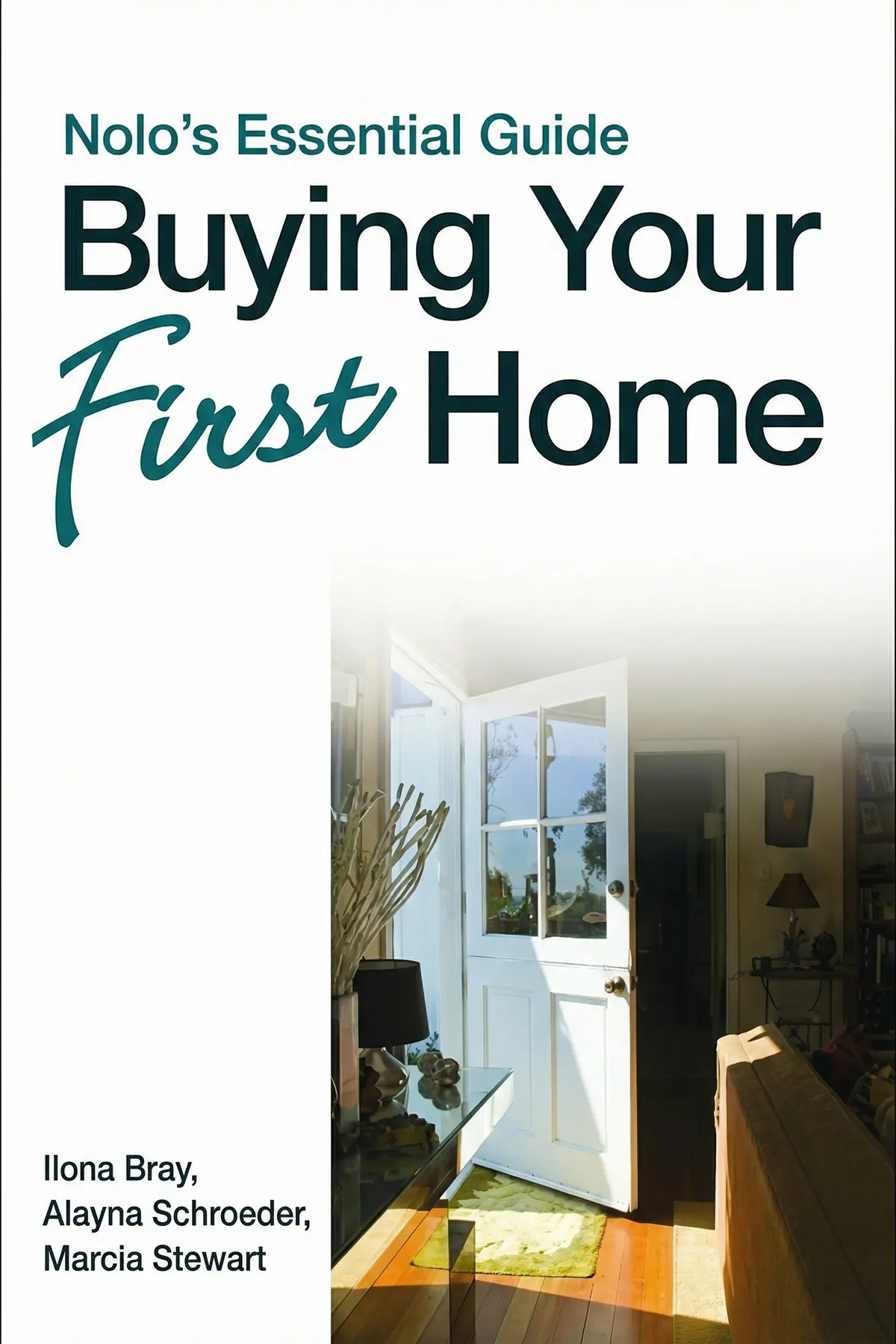
Table of Content
1. Introduction
55 sec
Buying a first home feels like one huge, frightening decision, yet it is really a series of smaller checks anyone can learn. The first is the deal itself: a home lets you control a large, valuable asset for a small sum up front, such as $15,000 down on a $100,000 apartment, with a loan covering the rest.
In Buying Your First Home, three longtime Nolo authors, Ilona Bray, Alayna Schroeder and Marcia Stewart, walk first-time buyers from that first impulse to a signed offer. Their argument comes down to one idea: the buyer who gathers the most information about the property, the market and the seller gets the right home at the right price.
By the end, a house tour becomes a fact-finding visit, a seller’s paperwork becomes a starting point, and the offer price becomes a calculation instead of a guess.
2. Turn your rent into an asset you own
1 min 28 sec
Many renters stay put because their monthly deal seems too good to give up. The authors answer that excuse with one blunt comparison, and it changes how a rent check looks the next time you write one.
3. Pick the neighborhood before you pick the house
1 min 26 sec
The biggest, most impressive house on the street can turn out to be the worst investment on it. The authors explain why fitting in matters, and why a brand-new build carries risks of its own.
4. Earn a cheaper loan by looking safe
1 min 22 sec
Two buyers can apply for the same mortgage and walk away with very different deals. The difference has less to do with the loan than with what the lender sees when it looks at you.
5. Treat every showing as a two-way inspection
1 min 28 sec
You walk into an open house thinking you are the one doing the judging. Someone else in the room is quietly sizing you up, and what you wear can cost you money before you say a word.
6. See past staged rooms and flipped houses
1 min 26 sec
Rented flowers and borrowed artwork can add tens of thousands of dollars to a price tag. One simple test involving the lamps tells you whether you are looking at a home or a stage set.
7. Trust your own eyes before the seller's paperwork
1 min 23 sec
Sellers are legally required to tell you about problems, so the forms should protect you. The authors explain why they often fall short, and what a faucet and a roofline can reveal on your first visit.
8. Get an inspection that covers what matters
1 min 31 sec
An inspector who finishes in an hour may seem efficient, but a typical house hides tens of thousands of parts. Knowing what to request, and how long a real inspection takes, protects you from expensive blind spots.
9. Set your offer by reading market and seller
1 min 20 sec
Offer too little and the door closes; offer too much and you pay for years. The authors show how two separate clues, one about the market and one about the person selling, point to the right number.
10. Conclusion
1 min 08 sec
A first home looks like one giant leap, and the authors spend their book cutting it into steps. Information is what links them. Each stage hides something a seller or agent would prefer you missed: the big house that gains value more slowly in a small-house suburb, the suit that tells an agent you can pay full price, the lamp sitting in a corner with no outlet, the seller who inherited a house and wants it gone. The buyer who looks for those things pays less and regrets less.
That work needs time, and the authors insist you give it. Realizing your rent check could be building something of your own is no reason to buy the first house you see. They suggest allowing six months to a year to learn the market, the neighborhoods and the buying process, and they note that typical buyers tour 10 to 12 homes before choosing one.
Make those visits count. Switch on every lamp, open every faucet, ask how long the place has been for sale and look next door. Walls and pipes can be repaired later. The neighbors and the price you paid cannot.
About this book
What is this book about?
A first home is a huge decision that can stay with you for years, and that alone makes it stressful. Ilona Bray, Alayna Schroeder and Marcia Stewart argue that the fear shrinks once the purchase is broken into smaller decisions, each one answered with research rather than hope. The authors start with why buying is worth it: a modest down payment gives you control of a large asset, and ownership ends the worries about landlords, rent increases and eviction. They then work through the choices that follow, from neighborhood and the age of a house to the mortgage terms a lender will offer you. The heart of the book is skepticism. Sellers and agents dress homes up with rented furniture, flip houses with careless remodels and hand over disclosures that vary by state. Readers learn what to wear and ask on a showing, how to spot problems before hiring experts, what a proper inspection should cover and how to set an offer by reading both the market and the seller's situation.
Book Information
Who it's for
Renters thinking of buying
Renters wondering whether it is finally time to buy, and what that actually involves.
First-time buyers getting ready
First-time buyers about to tour homes, apply for a mortgage or make an offer.
Worried about costly mistakes
Anyone who worries about overpaying or missing a hidden defect in a house.
About the Author
Ilona Bray
Ilona Bray, Alayna Schroeder and Marcia Stewart are longtime Nolo authors. Bray holds a law degree from the University of Washington and writes and edits on real estate, immigration law and nonprofit fundraising. Schroeder is a lawyer in Sacramento, California, a graduate of the University of California, Hastings College of Law, and coauthor of Selling Your House in a Tough Market. Stewart has been an editor and author at Nolo since 1989, covering renting law, property and everyday consumer matters, and coauthored Renters' Rights and Leases and Rental Agreements.
Ratings & Reviews
Ratings at a glance
What people think
Listeners consider this title a superb asset for first-time home buyers, delivering solid information and high readability. They value the thorough explanations, with one listener highlighting how the material puts things in layman's terms.
Top reviews
Pairot
Picked this up when my husband and I were drowning in Zillow listings and feeling completely overwhelmed by the sheer scale of the investment. To be fair, I initially thought I could just skim through the sections that didn't apply to us, but the writing is so clear that I ended up reading every single page. It truly is a sanity-saver for anyone who doesn't speak 'realtor' as their first language. The breakdown of what 'points' are and the chart on page 134 saved us from making a very expensive mistake during our closing process. I can't recommend it enough for people who want to feel like they actually have some control over the chaos. It’s essentially a crash course that turns you into a savvy buyer overnight.
Show moreLaor
Finally got around to finishing this, and the truth is, I bought a house two weeks later, so I guess the book did its job! It demystified the entire process from start to finish, making the transition from a renter to an owner feel achievable rather than impossible. I especially loved the practical tips at the end regarding saving money on utilities and maintenance once you actually move in. Most guides stop at the closing table, but this one sticks around to help you survive the first year. It’s clear, easy to follow, and remarkably thorough for a single volume. If you are even remotely on the fence about taking the plunge, this will give you the confidence you need.
Show moreWatchara
Wow, I was totally ambitious when I first picked this up, thinking I’d just glance at it, but I found myself glued to the chapters on negotiation and closing costs. The truth is, the home-buying process is a whirlwind, and having this Nolo guide was like having a professional consultant in my pocket. It explained the difference between market value and equity in a way that finally clicked for me. Even the minor details, like how to save water with your dishwasher, felt like valuable additions to the bigger picture. This book turned my anxiety into a manageable project with clear, actionable steps. It’s easily the most important tool in my arsenal as I prepare to make an offer.
Show moreAmelia
This book serves as an incredible weapon against the misinformation and doubts that naturally creep in when you're looking at six-figure price tags. It’s structured in a very logical way, moving from the initial 'can I afford this?' stage all the way to moving day tips. Frankly, some of the anecdotes about people getting screwed out of thousands of dollars felt a bit like the ultra-paranoid version of reality. However, I’d rather be over-prepared and slightly scared than walk into a closing meeting totally blind to the risks. It puts everything into layman’s terms without sounding condescending, which is a rare find in financial literature. I plan to keep my copy on the shelf to refer back to when we eventually tackle home maintenance.
Show moreAir
After hearing so many friends complain about the stress of their first purchase, I decided to go into this with a 101-level textbook approach. The Nolo guide was exactly what I needed to decode the weird language lenders use during the pre-approval phase. It’s well-organized and doesn't try to sell you on any specific service, which makes the advice feel much more authentic. My only real gripe is that the current housing market moves so fast that the negotiation strategies feel a bit like relics from a slower era. Still, having a clear explanation of equity and leverage helped me justify the jump from renting. It’s a solid resource that provides a great foundation for any beginner.
Show moreMingkwan
As someone who prefers to have every single detail mapped out before making a move, this book was a total godsend during my condo search. It covers everything from how your credit score impacts your rate to the importance of planting shade trees to save on cooling costs. The logical flow makes it easy to jump between chapters depending on which stage of the process you are currently navigating. I did feel that some of the horror stories were a bit extreme, but they certainly kept me on my toes during the inspection. Overall, it’s a very informative read that puts complex financial concepts into words that regular people can understand. I’ll definitely be passing this copy along to my sister when she starts her search.
Show moreSomporn
Ever wonder why no one explains the actual mechanics of a mortgage until you're already signing the papers? This book fills that gap perfectly by breaking down concepts like leverage and tax credits without making your head spin. I appreciated the bluntness of the authors; they don't sugarcoat how stressful this process is, which actually made me feel more prepared. The checklist for choosing a realtor was particularly helpful because I had no idea what questions I was even allowed to ask. It’s a bit dry in places, but you're buying a house, not a beach novel, so that's to be expected. It is a must-read for any first-timer who wants to avoid getting screwed over.
Show moreSun
Is home buying really this terrifying, or is the tone of this guide just intentionally designed to keep you on high alert? Every other chapter seems to feature a horror story about a deal falling through or a hidden foundation issue that ruins a buyer's life. While the information is undeniably indispensable for understanding the jargon, the delivery is as dry as a desert. I appreciate the deep dives into creditworthiness and tax breaks, but the dream of home ownership feels a bit forced here. Look, if you need a comprehensive dictionary for confusing real estate terms, this is absolutely perfect for your needs. Just don't expect a fun read, and maybe take a breather if the scary stories start giving you heart palpitations.
Show moreFon
The chapter on paying points was probably the most useful thing I’ve read all year, even if the rest of the book was a bit of a slog. To be fair, the authors clearly know their stuff, but the 2017/2021 market context doesn't always translate perfectly to what's happening on the ground today. I found myself skipping the sections on 'slow markets' because those just don't exist where I'm looking right now. It’s a great resource for definitions and understanding the mechanics of a mortgage, but it lacks the soul of a more modern guide. I suppose it's better to have too much information than too little, but be prepared for some very dense reading sessions.
Show moreDek
Not what I expected given the high ratings, as it felt like reading a legal manual rather than a helpful guide for a major life milestone. Personally, I found the writing style to be incredibly boring and the layout quite cluttered with sidebars that broke my concentration. It covers the basics like inspections and budgets, but it does so with zero flair or encouragement. It honestly felt like the authors were trying to scare me out of buying a home with all the warnings and 'worst-case scenario' sidebars. I ended up getting more practical advice from a couple of YouTube videos and a conversation with my local credit union. It's okay for a reference, but I couldn't get through it.
Show moreQuestions about this book
What is Buying Your First Home about?
It is a practical guide for first-time buyers by Ilona Bray, Alayna Schroeder and Marcia Stewart. The authors argue that buying is a sound choice, then cover choosing a neighborhood, deciding between old and new houses, getting a mortgage, touring homes, spotting staging and flips, inspecting properly and setting an offer. Their central message is that thorough research on both the property and the seller gets you the right home at the right price.
How much down payment do lenders expect for a first home?
According to the authors, lenders today usually prefer to finance about 80 percent of the price and ask the buyer for the remaining 20 percent. Borrowing the full price was possible before the housing meltdown, when many homes lost value soon after their loans were granted. A bigger down payment and a record of paying bills on time also help you qualify for better loan terms.
How can you tell if a house has been staged?
The authors suggest looking for rooms with less furniture than people would really need and lots of decoration with few useful objects, such as a laundry room filled with vases instead of detergent. Turn on every lamp: some are props, placed in corners with no electrical outlet. Staging is the practice of renting furniture, art and flowers for showings, and it may push the price up by tens of thousands of dollars.
What should a home inspection include?
No standard inspection exists, so prices range from $200 to $600. The authors advise stating exactly what you want, such as a look at the foundation from under the house, and checking the inspector’s license. Share any earlier reports, stay during the visit and be wary of an inspector who finishes in an hour, since a thorough job often takes at least a few hours.
How do you decide how much to offer on a house?
The authors point to two clues. First, judge whether the market is hot or cold: in hot markets such as the San Francisco Bay Area, buyers often have to offer well above asking, while in cold markets a lower offer is often accepted. Second, learn about the seller. Someone who inherited the house or owns it as an investment while rents fall may take less.
Readers also enjoyed

AUDIO SUMMARY AVAILABLE
Listen to Buying Your First Home in 15 minutes
Get the key ideas from Buying Your First Home by Ilona Bray, plus 5,000+ more nonfiction titles.
- 5,000+ titles
- Listen as much as you want
- 7-day free trial
- Cancel anytime









