

A Life Decoded: My Genome: My Life
J. Craig Venter
 English
 ไทย
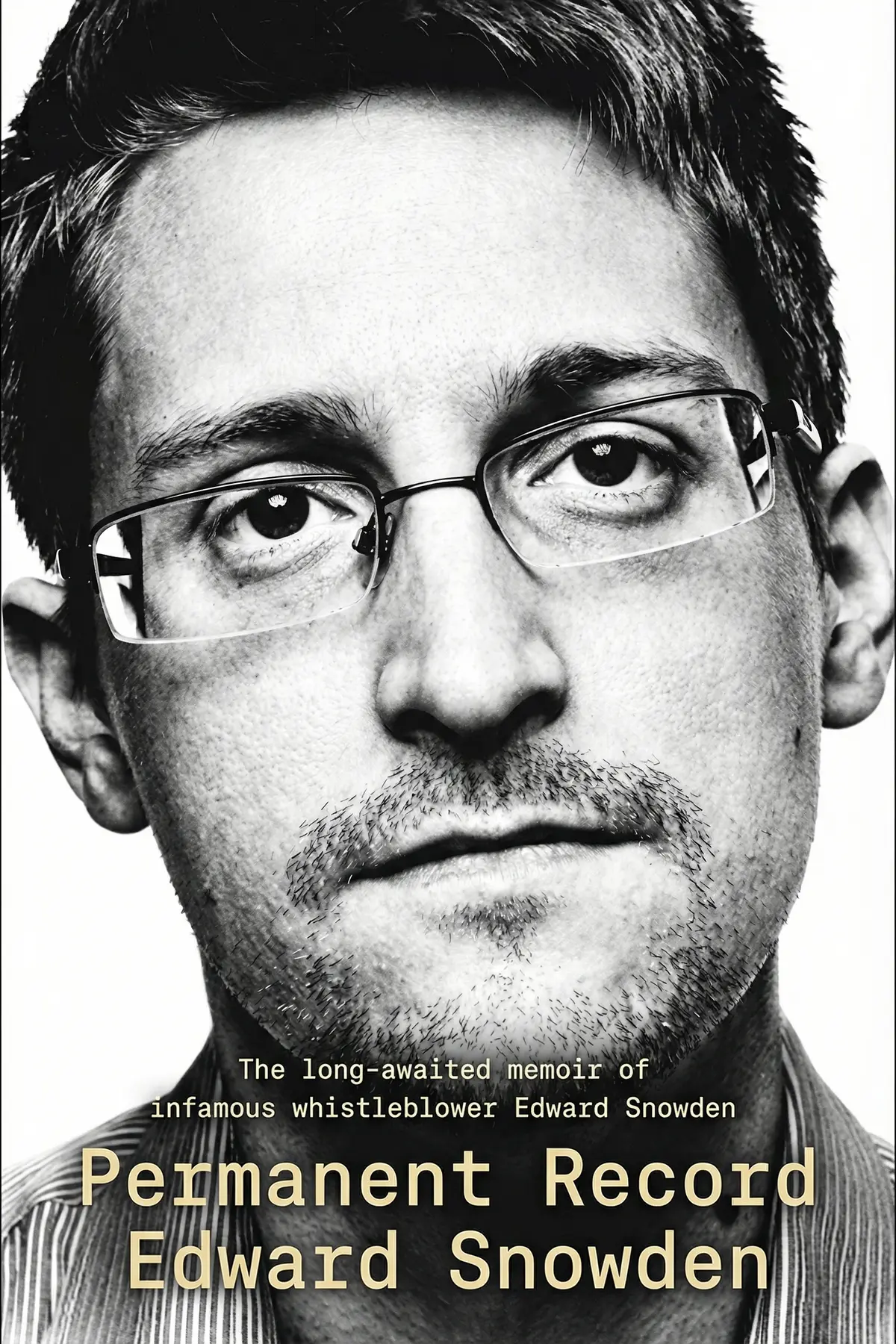
Edward Snowden's memoir traces how a rule-bending young hacker rose through US intelligence after 9/11, found a program gathering nearly everyone's communication records, and risked exile to expose it, showing what metadata reveals about ordinary lives.
59 sec
Most of us suspect our calls and clicks are being recorded somewhere, yet few could say by whom or what exactly is kept. In Permanent Record, Edward Snowden, a former CIA employee and NSA contractor, explains how he learned the answer from the inside. His starkest discovery was a program called STELLARWIND, built to collect records of nearly everyone’s phone and online activity, a scope the government’s public account had left out.
The memoir follows one instinct from childhood to exile. As a boy, Snowden learned to study a system until he could bend its rules. After 9/11 he served the agencies that grew in its wake, and when he concluded they had betrayed the principle they existed to protect, he turned that same skill against them. The story shows what metadata reveals about a life, how a careful whistleblower plans, and what speaking up cost one man.
1 min 40 sec
Before a handful of companies owned it, the web was a place where a shy teenager could become anyone he liked. That lost freedom explains a great deal about the choices he made two decades later.
1 min 40 sec
A six-year-old who resets every clock in the house and a teenager who skips homework on purpose share one skill. Years later it would be aimed at a target far larger than any school.
2 min 23 sec
A terrorist attack and a broken ankle sent a young man without a degree into the CIA. Then a forceful complaint about a run-down training motel, sent straight to senior officials, taught him what breaking the chain of command could cost.
2 min 01 sec
A last-minute conference assignment about Chinese surveillance led to a document that was never meant to reach his desk. What it described had less to do with what people said than with the trail they leave behind.
2 min 07 sec
A Constitution Day prank in a paperless office made one employee reread a document he thought he already knew. What he found there turned private doubt into a deliberate plan.
1 min 45 sec
Copying secrets inside one of the most closely watched buildings on Earth is one problem, and walking out with them is another. A child’s puzzle helped solve it, and a refusal to cover his tracks raised the stakes.
1 min 52 sec
The leak worked, the stories ran, and the source stepped forward. Then the escape route closed during a layover, leaving one of the world’s most wanted men stuck somewhere nobody had planned for.
1 min 03 sec
Permanent Record is, finally, a hacker’s logic turned on the largest system its author could find. The boy who reset the clocks to stay up grew into the man who reread the Fourth Amendment at his desk and decided his own government’s agencies were breaking it. His case is that mass surveillance turns private life into a permanent record that anyone with access can open, and that citizens deserve to know it exists.
You can reach your own verdict on Snowden, as many already have. The book gives you better grounds for one. Remember that the records of when, where and with whom you communicate can trace your days. Judge institutions, your employer included, by the principles they claim. And if you ever see a wrong from the inside, note how deliberately Snowden weighed method, context and cost before acting.
He could have disguised the documents to protect himself. He sent the originals, and then put his own name beside them.
Edward Snowden is called a traitor by some and a hero by others. Permanent Record is his own account of how a shy, computer-obsessed boy who grew up partly at Fort Meade, Maryland, came to expose the secret mass surveillance system the US government built after 9/11. Snowden frames his life around one habit: understanding a system so well that he can turn its rules against it, from resetting the household clocks at age six to skipping homework he calculated he did not need. After 9/11 he brought that skill to the CIA and the NSA, rising fast without a college degree. Then a classified report reached his desk describing STELLARWIND, a program for collecting records of nearly everyone's calls and online activity. Rereading the Fourth Amendment convinced him the agencies were breaking the very principles they were created to defend. Readers get a clear picture of what metadata reveals about a person, how Snowden planned and carried out the leak, from a Rubik's cube to encrypted email, and what it cost him: espionage charges, refused asylum requests and 40 nights stranded in a Moscow airport.
Professionals who live on phones and email and want to know what surveillance records can reveal about them.
Tech workers and young recruits weighing loyalty to an employer against their own sense of right and wrong.
Readers of politics and history who want the whistleblower's own account of the 2013 NSA disclosures.
Born in Elizabeth City, North Carolina, in 1983, Edward Snowden was a CIA employee and later an NSA contractor. In 2013 he handed thousands of classified NSA files to reporters, revealing worldwide surveillance programs and prompting a public argument over security and privacy. His honors include the German Whistleblower Prize and the Right Livelihood Award. Since 2016 he has led the Freedom of the Press Foundation as its president, and his memoir Permanent Record appeared in 2019.

Listeners find this book gripping and easy to follow, with expert writing that fleshes out details and offers shocking revelations. They also appreciate how it provides a window into the Intelligence Community and keeps listeners engaged throughout, specifically near the conclusion. Furthermore, listeners praise the intimate account of Snowden’s life and his intriguing path driven by bravery, while also highlighting the book's excellent pacing.
This book is a masterclass in making complex surveillance concepts accessible to the average reader. Snowden doesn’t just jump into the leaks; he builds a foundation by sharing his upbringing and his early infatuation with the burgeoning internet. It's fascinating to see how a patriotic kid who wanted to serve his country ended up as its most famous whistleblower. The prose is remarkably sharp and surprisingly witty at times, which I didn't expect from a former sysadmin. While some might find the childhood stories a bit long, they are essential to understanding his moral compass. Truth is, we all live in the world he described now, whether we like it or not. It's a gripping account that fills in the gaps left by years of media speculation.
Show moreFinally got around to reading this and I’m genuinely blown away by how much of a page-turner it actually is. It reads almost like a techno-thriller, especially during the chapters where he’s preparing to meet journalists in Hong Kong. Snowden’s description of how the NSA can essentially see your entire life—your past, your present, and even predict your future—is absolutely chilling. I appreciated the insight into his life in Moscow; it dispels a lot of the myths that he’s just some Russian puppet. To be fair, he doesn't drop any massive new bombshells, but the context he provides for the existing disclosures is invaluable. It’s a fascinating journey powered by immense courage.
Show moreWow. Just finished this and I feel like I need to wrap my laptop in tinfoil. Snowden’s account of the 'Permanent Record'—the idea that everything we do online is stored forever—is a wake-up call we all need. The writing is incredibly skillful, particularly how he explains the transition from the old, wild internet to the corporate-controlled one we use today. Personally, I found the parts about his girlfriend Lindsay the most moving. Seeing the personal cost of his decision makes the whole ordeal feel much more human. It’s a brave account of one man standing up against a system that has no accountability. Truly mind-blowing content that everyone should engage with.
Show moreThe chapter on the 'right to forget' is something that has stayed with me long after closing the book. Snowden argues that our digital footprints shouldn't define us forever, yet the government's machines are designed to ensure they do. It’s a powerful, well-written narrative that feels incredibly relevant to our current political climate. I loved the old-school internet nostalgia in the beginning; it reminds us of what we've lost to surveillance and data mining. There are moments where he gets a bit philosophical, but it fits the tone of someone who has sacrificed everything for a principle. I highly recommend this personal account for anyone interested in the future of freedom.
Show moreNot what I expected at all! I thought this would be a dry, technical manual, but it’s actually a deeply personal and moving account of a man’s ethical awakening. The way he describes his realization that the technology he helped build was being used to strip away global privacy is haunting. The ending, detailing his escape and current life in exile, is fast-paced and keeps you engaged until the very last sentence. It’s a reminder that the government should be afraid of the people, not the other way around. This is definitely one of the most important and mind-blowing books of our generation. A fascinating journey through the heart of the surveillance state.
Show moreEver wonder why someone would throw away a high-paying career and a comfortable life in Hawaii? Snowden lays it all out here with painful clarity. I was particularly struck by the second half of the memoir where the realization of mass surveillance starts to weigh on him. He describes the Fourth Amendment violations in a way that feels urgent rather than academic. Not gonna lie, the technical details can get a bit dense, but he manages to keep the narrative moving with a well-paced structure. It’s less of a dry manifesto and more of a coming-of-age story for the digital era. A necessary read for anyone with a smartphone who cares about their personal data footprint.
Show moreAs someone who was always a bit skeptical of Edward Snowden’s motives, this book definitely shifted my perspective. He comes across as deeply self-aware and remarkably humble about his role in history. The structure of the book is well-paced, moving from his early days hacking around his father’s computer to the high-stakes world of the CIA. I did find the first third a little slow as he reminisced about his childhood, but it paid off once the surveillance state reality set in. Whether you consider him a hero or a traitor, his argument for the right to privacy is hard to ignore. It is a compelling account that offers a much-needed look into the Intelligence Community.
Show morePicked this up because I wanted a behind-the-curtain look at the Intelligence Community, and it did not disappoint. Snowden writes with a level of clarity that makes even the most complex cryptology programs understandable for a layman. It’s terrifying to realize how much the government actually knows about the average citizen under the guise of national security. The book does a great job of explaining the 'why' behind his actions, rather than just the 'how.' Frankly, it’s one of the most compelling memoirs I’ve read in years, despite my initial reservations about his move to Russia. It’s well-structured and keeps you engaged throughout, particularly near the climactic end.
Show moreLook, I wanted to love this, but it felt a bit self-indulgent in the first half. Snowden spends an awful lot of time talking about his childhood and his early tech experiments, which dragged on for me. I was looking for more about the actual NSA operations and the immediate fallout of the leaks. However, once he gets to the 'Heartbeat' program and his time in Geneva, the book really finds its rhythm. It’s a good memoir, but it could have benefited from a tighter edit in the beginning chapters. If you can push through the slow start, the second half is genuinely mind-blowing and provides deep insight into our modern lack of privacy.
Show moreAfter hearing so many conflicting reports over the years, I finally decided to hear it from the source. The truth is, Snowden isn't the low-level drone the media tried to portray him as; he was a highly capable professional who saw a systemic abuse of power. While he doesn't reveal any new classified secrets, the way he connects the dots of how metadata is used is eye-opening. I found some of his justifications for leaving his family in the dark a bit hard to swallow, though. It’s a complicated story about a complicated man. The writing is skillful, but the pacing in the middle sections felt a bit uneven for my taste.
Show moreIt is Snowden’s memoir of how a shy, computer-obsessed boy who grew up partly at Fort Meade became an intelligence insider after 9/11 and then exposed the US government’s secret mass surveillance. He describes finding a classified report on STELLARWIND, a program for collecting records of nearly everyone’s calls and online activity, deciding the public had a right to know, and leaking documents to journalists Laura Poitras and Glenn Greenwald in 2013.
Snowden says STELLARWIND aimed to gather the phone and internet activity of almost anyone, including browsing histories, with help from telecom companies such as AT&T. Its focus was metadata: when a conversation took place, where, and with whom. He explains that such records can show where a person is, who is with them, where they have been and where they are going next. A search engine called XKEYSCORE let analysts query that data by name or IP address.
Because his work computer was monitored, he moved files to unused office computers under the cover of compatibility testing and sorted them there. He encrypted the files and copied them to SD cards, which could take as long as eight hours, then concealed the cards in a Rubik’s cube, and the guards gave him a nickname because of it. From home, and from his car using strangers’ wifi, he sent the files to the journalists.
After the first story ran on June 6, 2013, and Snowden revealed himself as the source, the US charged him with espionage on June 17. Many countries refused his asylum requests. He set out for Ecuador through Moscow, Caracas and Havana, but the State Department canceled his passport and he was stuck in the Moscow airport for 40 nights. Russia then granted him temporary asylum, and he still lives in Moscow with his wife Lindsay.
It suits anyone who uses a phone and email and wants to understand what surveillance records can reveal, as well as readers following debates about privacy and security. Young professionals in technology or government may find his account of loyalty, rules and dissent useful, from the complaint during CIA training that got him punished to his decision to send original documents knowing they would lead back to him.
J. Craig Venter


Yanis Varoufakis

Ishmael Beah

James Herriot

Pankaj Mishra

Barack Obama

Anthony Pratkanis
AUDIO SUMMARY AVAILABLE
Get the key ideas from Permanent Record by Edward Snowden, plus 5,000+ more nonfiction titles.









