

A Life Decoded: My Genome: My Life
J. Craig Venter
 English
 ไทย
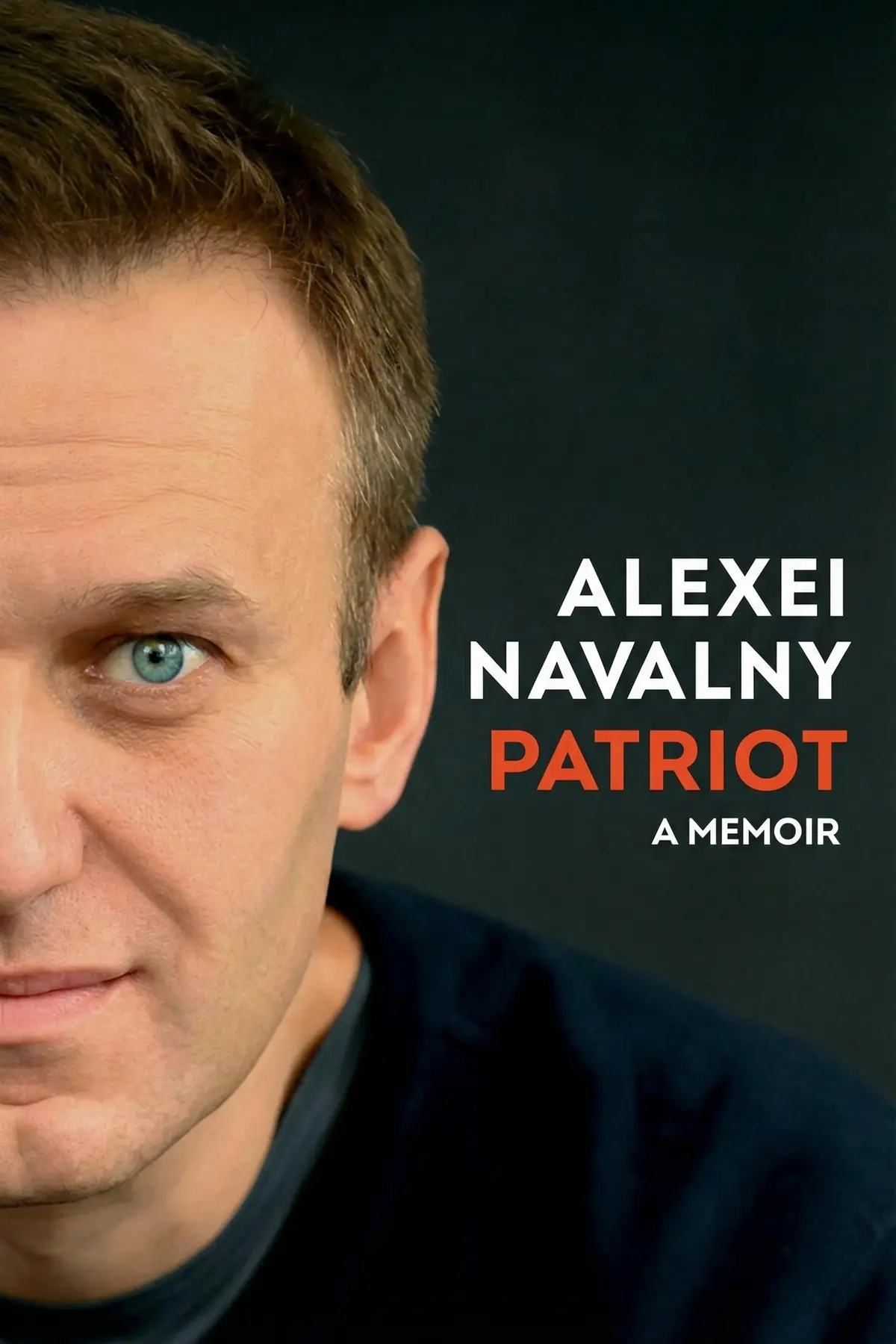
Alexei Navalny's memoir shows how a lawyer who learned to trace hidden money turned Russian opposition politics into a mass movement, survived a state poisoning and faced prison by accepting the worst and fighting on.
1 min 03 sec
Most of us think courage means not being afraid. In Patriot, his memoir, the Russian opposition leader Alexei Navalny describes a sturdier kind: accept the worst outcome before it arrives, then act freely, because a threat loses its force once you stop bargaining with it. He held to that rule through the years in prison that followed his 2021 arrest, until his death in an Arctic prison colony in 2024.
The memoir shows how he got there. It starts with a Soviet childhood full of official lies and a corporate job that taught him how money hides. Then come the years of turning blogs, tiny donations and street stands into a mass movement. The throughline is that a regime built on lies can be shaken by people who follow the money, talk plainly to ordinary citizens and refuse to be frightened. Listen for the methods he used, and for a model of steady nerve that works in much smaller fights too.
1 min 54 sec
A boy in a Soviet military town watched soldiers in protective suits check the ground for radiation while officials insisted all was well. What he saw that year shaped how he would read every government statement for the rest of his life.
1 min 48 sec
The most important act of bravery in Navalny’s youth came from fear rather than confidence. It taught him something about where courage comes from, and he would rely on that lesson for decades.
1 min 58 sec
A well-paid corporate job showed Navalny bodyguards, bribes and money moving offshore every day. He walked away from the career, but he kept what it taught him, and that turned out to be the more valuable part.
2 min 09 sec
A handful of shares, a blog and donations from ordinary people do not sound like weapons against a state. Within a few years, the protests they helped spark had grown to more than 100,000 people.
2 min 08 sec
The Kremlin blocked his blog, kept him off television and prosecuted his family. Each time a door closed, Navalny ended up reaching more people, until the state ran out of polite ways to stop him.
2 min 05 sec
After surviving a nerve agent, Navalny was warned to stay in Germany. He went home, faced decades in prison and built a mental discipline that made the regime’s harshest threats strangely powerless.
1 min 19 sec
On February 16, 2024, Russia’s prison service announced that Navalny had died in that Arctic colony, after weeks of complaints about poor food and mistreatment. Officials said he fell ill after a walk and could not be revived. His mother waited eight days for his body. Poison had failed to kill him. Imprisonment, slowly, did what the poison could not.
The memoir does not end on defeat. Navalny proved to Russians they could resist the regime without losing their dignity. He moved opposition politics out of intellectual circles and into shopping centers and social media feeds. Many called him reckless. The book argues for something rarer: defiance chosen with open eyes.
That is the part worth carrying into your own life. When pressure comes, at work or anywhere else, name the worst that could happen and accept it before it arrives, the way Navalny and Yulia did when they whispered during a prison visit, out of reach of the surveillance microphones. Then look for where the contradictions and the money lie, and explain them plainly to the people around you. Fear has little hold on someone who has already counted the cost. Accept the worst, Navalny decided, and keep fighting.
In August 2020, Alexei Navalny collapsed on a flight from Siberia to Moscow, poisoned with the nerve agent Novichok. He survived. Months later he flew home anyway, knowing what waited for him. Patriot explains how he reached that decision. The memoir follows him from a Soviet childhood shaped by official lies after Chornobyl to a corporate law job where he learned how money hides in offshore companies. From there he moved into opposition politics. He bought small stakes in state companies so he could question their bosses. He raised money from ordinary donors instead of oligarchs, branded Putin's party the Party of Crooks and Thieves and built a national movement out of blogs, YouTube and street stands. The last part is the hardest to read. It covers his recovery in Berlin, his arrest on returning to Russia, the prison sentences that kept getting longer and the mental discipline he called prison Zen. Readers get a firsthand account of how one man challenged the Kremlin. They also get a clear model of courage: name the worst outcome, accept it and then act freely.
Readers who want a firsthand account of how one man challenged Putin's Russia.
Organizers, founders and campaigners curious how small donors and cheap online tools built a mass movement.
Anyone under heavy pressure who wants a clear way to think about fear and courage.
Alexei Navalny was born in 1976 in Butyn, in the Moscow region. He founded the Anti-Corruption Foundation in 2011 and led the Russia of the Future party. He came second in the 2013 Moscow mayoral election and was later barred from the 2018 presidential race. He received the European Parliament's Sakharov Prize, and Amnesty International recognized him as a prisoner of conscience. He survived Novichok poisoning in 2020, returned to Russia in 2021, was detained and died in prison in February 2024.
Listeners consider this memoir vital reading, admiring its genuineness as a true story of faith and its bravery in opposing Putin. The writing is well-crafted and perceptive, with one listener noting its significance for understanding Russia today. Listeners describe the book as heartwarming, with one review highlighting Navalny’s resilience, and many view it as a must-read for all Americans.
Navalny’s final testament is a gut-wrenching yet strangely uplifting account of a man who refused to be broken. The prison diaries at the end offer a raw, unvarnished look at the mental fortitude required to face a Siberian gulag with humor intact. I was struck by how he describes the mundane details of prison life—buying food at the shop or watching Euronews—juxtaposed against the existential threat of his surroundings. This isn't just a political manifesto; it’s a deeply personal story about a family man who loved his country more than his own safety. Reading his letters to Yulia made me realize the immense sacrifice they both made for a vision of a free Russia. This memoir is a truly stunning achievement for a man writing under such impossible conditions. It is essential reading for anyone trying to understand the current global struggle between democracy and autocracy.
Show moreAfter hearing so much about the documentary, I finally dove into this memoir to see if the written word matched the screen presence. The book is surprisingly intimate, capturing a sense of irony and wit that you rarely find in standard political literature. Navalny recounts the 2020 poisoning with terrifying clarity, yet he never comes across as a victim or a doomed martyr. Instead, he presents himself as a strategist who genuinely believed that light would eventually overcome the darkness in the Kremlin. There are moments where his writing feels a bit rushed, likely due to the circumstances of his incarceration, but that only adds to the authenticity. You can feel the urgency in every sentence as he attempts to leave a roadmap for the next generation. It’s a profound look at what it means to actually stand up for your convictions when the stakes are death.
Show morePicked this up because I wanted to understand the man behind the headlines, and I was blown away by his unique voice. Navalny writes with a conversational style that makes you feel like you’re sitting across from him in a cafe rather than reading a prisoner. The way he describes his childhood and his growing realization of the corruption surrounding him is both relatable and eye-opening for Western readers. To be fair, I expected a dry political treatise, but what I got was a heartwarming and often funny story about faith and family. His relationship with his wife serves as the emotional anchor for the entire memoir, proving that he wasn't just fighting for power. The prison diaries are particularly moving, showcasing a spirit that even the most brutal regime could not successfully crush. This is a must-read for all people who take their own personal freedoms for granted.
Show moreThere is a rare kind of power in reading the words of a man who knew he was likely writing his own epitaph. Navalny’s memoir is a masterclass in moral clarity, documenting his journey from a young lawyer to the face of the Russian opposition. The descriptions of his poisoning and the subsequent investigation are as gripping as any thriller, yet the stakes are entirely real. What surprised me most was the total lack of bitterness in his tone; he remains hopeful even when describing miserable conditions. Personally, I found the chapters on his political awakening to be a fascinating look at the chaotic transition of the post-Soviet years. He explains the nuances of modern Russia with an insider's perspective that few others can provide. This book is a testament to the fact that one person can indeed make a difference in this world. Highly recommended for anyone interested in international politics or human rights.
Show moreThe sheer bravery on display in these pages is almost hard to comprehend in our modern, comfortable Western world. Navalny doesn’t just tell his story; he invites you into his mindset, showing how humor and faith can become weapons against a state. His account of the 2020 poisoning is harrowing, but his decision to return to Russia is what truly defines his character. In my experience, most political memoirs are ghost-written fluff, but this feels like the genuine article with all the rough edges. The prison diaries are the highlight, offering a window into a soul that refused to be extinguished by isolation. He speaks of his love for Russia with a passion that is both beautiful and tragic, given the outcome. This is a crucial read for anyone who wants to understand the true cost of liberty today. It is a story of resilience that will stay with me for a very long time.
Show moreGotta say, I didn't expect to laugh as much as I did while reading a book written by a man in a gulag. Navalny had this incredible ability to find the ridiculousness in his situation, whether he was describing the guards or the legal proceedings. This authenticity makes the more serious moments—like his reflections on the poisoning—hit even harder because you feel like you know him. The book is a true story of faith in the belief that people are fundamentally good and want to be free. It is a crushing read at times, especially when you consider how his journey ultimately ended in that cold prison. His optimism is infectious throughout the narrative, proving that his spirit was never actually broken by the regime. If you want to understand the heart of the Russian resistance, you need to read this memoir immediately. It is a powerful, essential piece of contemporary history.
Show moreWhile the editing feels slightly frantic in places—understandably so given the author's tragic fate—the core message remains incredibly powerful. The narrative jumps between his recovery from Novichok and the harsh realities of the Russian penal system, creating a jarring but effective rhythm. Truth is, Navalny was a complex figure, and this book doesn't shy away from his stubbornness or his intense nationalist leanings that critics often point out. However, his resilience in the face of solitary confinement and constant harassment is nothing short of heroic. I appreciated the footnotes that added context to the arbitrary rules of his imprisonment, though I wish there were more details on how these writings were smuggled out. Even if you don't agree with every policy he ever supported, you have to respect the sheer guts it took to return home. It’s a significant historical document that captures a spirit that refused to stay silent.
Show moreEver wonder what drives a person to walk straight into a trap knowing they might never come out again? This memoir provides some answers, though it often raises just as many new questions about the future of his political movement. Navalny’s writing is sharp and frequently hilarious, which makes the eventual ending of his story feel even more devastating to the reader. I found the sections on the Russian prison system particularly enlightening, especially the arbitrary way rules were enforced across facilities. To be honest, some of the political arguments felt a bit repetitive, and a few chapters could have used a tighter edit. Still, the authenticity of his voice carries the book through its slower moments during the middle sections. It’s a vivid account of a life dedicated to a single, dangerous cause that he believed in. Whether you view him as a savior or a flawed patriot, his impact is impossible to ignore.
Show moreAs someone who follows international relations, I found Navalny’s memoir to be a fascinating, if sometimes frustrating, look at the Russian soul. He captures the absurdity of the Putin regime with a biting wit that reminds me of the great Russian satirists. However, the book does skip over some of the more controversial aspects of his early nationalist career, which might leave some readers wanting. To be fair, the prison writings are where the book truly shines, providing a visceral sense of the day-to-day struggle. It’s a poignant reminder that ideas are often more dangerous to dictators than any physical weapon or army. While it may not be the definitive history of the Russian opposition, it is a vital piece of the current puzzle. It’s a story of incredible resilience that will likely inspire people for many decades to come. I hope people read this with an open but critical mind.
Show moreLook, I’m torn on this one because while Navalny’s courage is undeniable, the book leaves several uncomfortable questions completely unanswered. Many reviewers mention his imperialist tendencies, and you can see flashes of that 'Great Russia' rhetoric in how he discusses history. He addresses his past briefly, but it often feels like he’s pivoting to more convenient topics to maintain his image for a Western audience. Also, the lack of editorial context regarding his access to the internet or how he communicated with his lawyers makes parts feel incomplete. Was he a truly perfect hero for the ages? That’s much harder to say after reading his own words here. It is an important read for the historical record, but it requires a critical eye to separate the man from the global myth. It's a fascinating look at a flawed but incredibly brave individual who changed history.
Show morePatriot is Navalny’s memoir. It follows him from a Soviet childhood marked by official lies after Chornobyl, through a corporate law career and into opposition politics. It covers the Anti-Corruption Foundation, the 2011 protests, his 2013 mayoral race and the 2018 presidential campaign he was barred from. It then describes his Novichok poisoning in 2020, his return to Russia, his imprisonment and the mental discipline he used to keep fighting until his death in 2024.
Prison Zen was Navalny’s way of surviving his imprisonment. He accepted the worst possible outcome as his starting point and gave up any hope of being released. In his account, this made him free, because a regime cannot frighten someone with a punishment he has already accepted. He and his wife Yulia both concluded, calmly, that he might never leave prison alive, and they kept working anyway.
Navalny used skills from his corporate law job, where he handled contracts for offshore companies. From 2008 he bought small numbers of shares in state companies such as Gazprom and VTB Bank. That gave him legal standing to see internal documents and question executives at annual meetings. He published his findings online, first on LiveJournal and later on YouTube, and funded the work through small donations from ordinary people.
The memoir suggests a few habits. Watch for gaps between what people in power say and what they do, because those gaps are evidence. Use what you learned inside a system to understand how it really works. When one channel is blocked, look for a wider one. And when you face serious pressure, name the worst outcome and accept it in advance, so fear no longer decides your actions.
J. Craig Venter


Yanis Varoufakis

Ishmael Beah

James Herriot


Pankaj Mishra

Barack Obama

Anthony Pratkanis
AUDIO SUMMARY AVAILABLE
Get the key ideas from Patriot by Alexei Navalny, plus 5,000+ more nonfiction titles.









