

14 min 44 sec
Available in: English
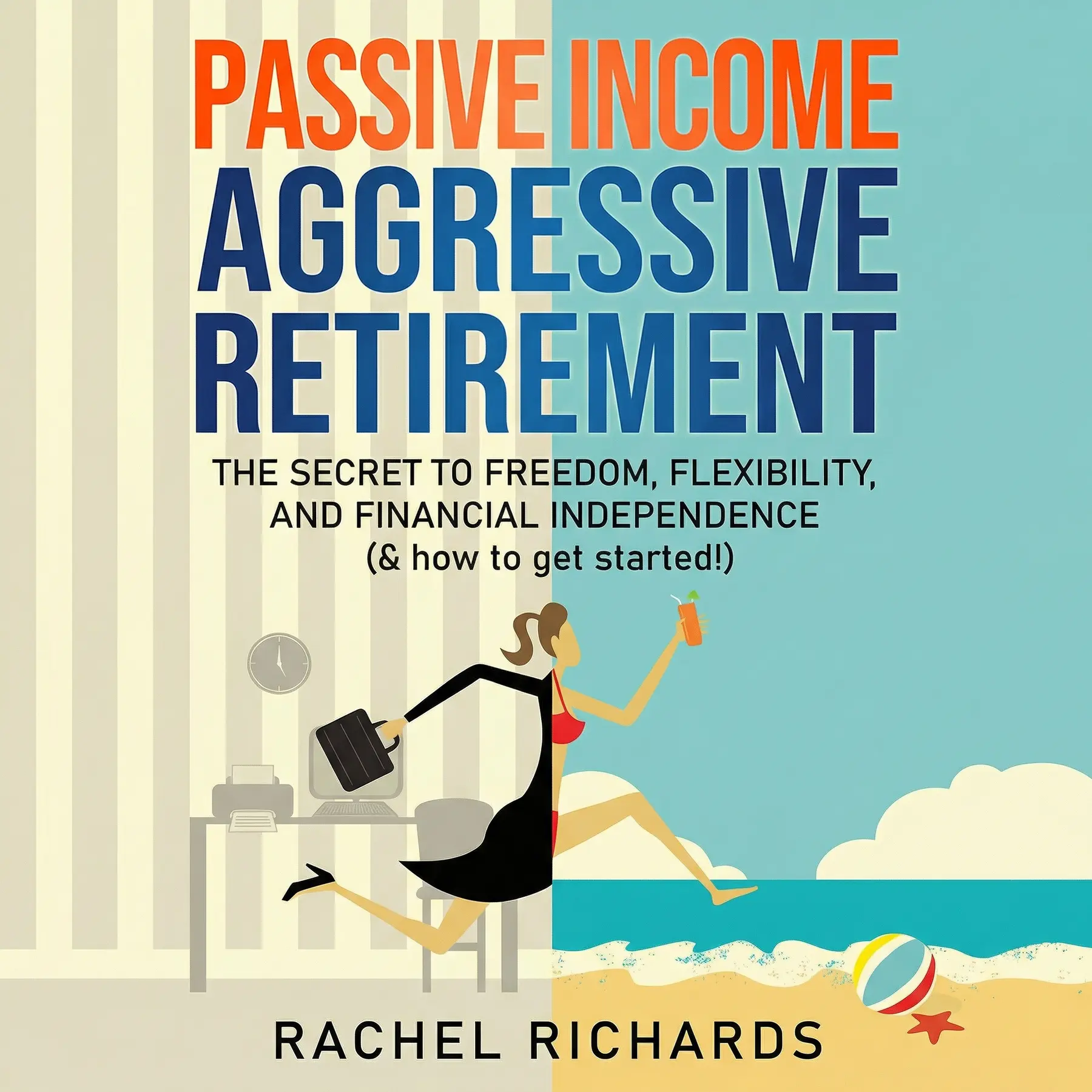
Passive Income, Aggressive Retirement: The Secret to Freedom, Flexibility, and Financial Independence (& How to Get Started!)
Shows why saving one large nest egg rarely works today. Explains how royalties, dividends, REITs and rental property can produce income that does not depend on your hours, and how to start your first stream.
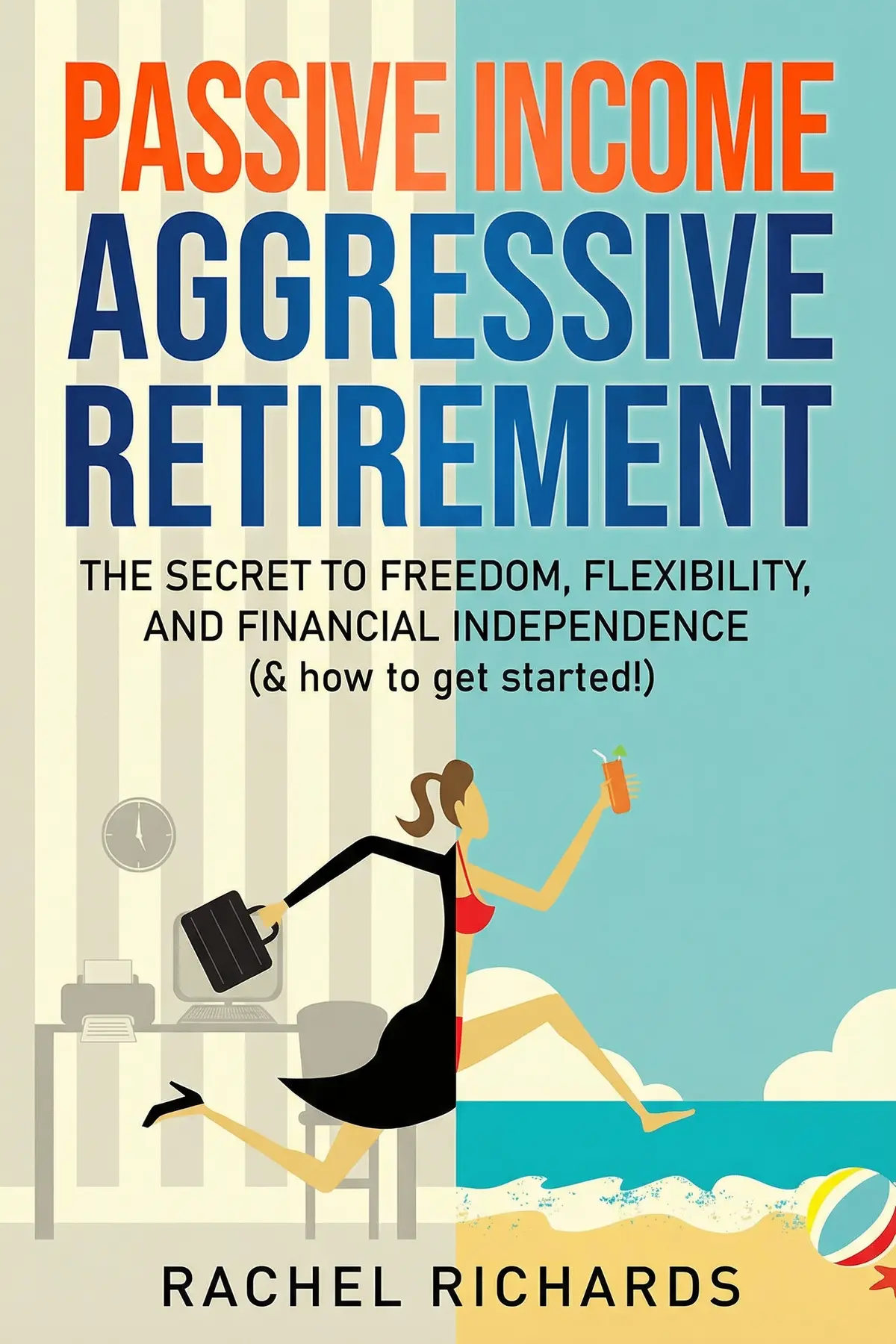
Table of Content
1. Introduction
1 min 06 sec
If your retirement plan is to work for forty years and hope the savings last, Rachel Richards has bad news and better news. In Passive Income, Aggressive Retirement, the former financial advisor, who left her job at 27, shows what the classic plan asks: a 25-year-old must set aside $621 every month for four decades. Meanwhile people in their late fifties hold about $163,577 on average.
Her alternative is to stop depending only on savings and start building income that keeps arriving without costing more of your hours. Every part of her book serves one idea. Freedom comes faster from income streams you own than from a pile of savings you hope will last, as long as you choose those streams with care and start small while your paycheck still covers the bills.
Along the way you get a test for judging any money idea, the real royalty rates for books, what a dividend or a rental pays in plain numbers, and a way to find the hours to begin.
2. Stop betting your retirement on one nest egg
2 min 05 sec
A family in the 1950s could retire on steady savings and a single car. The numbers behind today’s standard advice tell a very different story, and most people are much further from the target than they think.
3. Score any income idea on five simple measures
1 min 59 sec
Saving a few cents can secretly cost you something you will never earn back. Richards uses that trade-off to define a different kind of income, and gives a short test for telling real opportunities from second jobs.
4. Create something once and get paid for years
2 min 02 sec
One self-published author earned more than $700,000 a year from a single book, while traditional deals usually pay around 8 to 15 percent in royalties. Richards weighs the two publishing routes and explains why the work does not end once the book is written.
5. Put idle savings to work through dividends and REITs
2 min 18 sec
In the 1980s a bond could pay 15 percent. Today a savings account needs six figures to produce a modest yearly income. Richards maps the alternatives, from lending platforms to property trusts, and their hidden risks.
6. Build rental income that runs itself
2 min 13 sec
An investor with more than a hundred properties can still have free afternoons. Richards explains the financing tricks, the quick price test and the one hire that turn being a landlord into income you barely have to manage.
7. Find the hours and nerve for your first stream
1 min 50 sec
Richards discovered she was losing hours every day without noticing. Turning that time into her first income stream meant facing a quieter obstacle, the doubts that stop most people before they risk a single dollar.
8. Conclusion
1 min 11 sec
Richards’s book adds up to a new answer to what retirement means. The old plan asked you to trade forty years of hours for one large pile of savings and hope it survived crashes, illness and rising household costs. Her version asks you to own a few things that pay you: a book, a dividend portfolio, a rental with a good manager. Each one takes real work or real money first. What it gives back is time, which she values above everything else.
The way in is smaller than the goal. Start with an honest look at your week, as Richards did when she found three hours a day going to television, and put some of those hours into one stream that fits a skill you already have. Score the idea on scalability, control, investment, marketability and passivity before you commit. If money is what holds you back, begin with a sum like $600 and let results build your confidence. Keep your salary until the new income can carry your life.
In her telling, nobody wins the café in Paris by luck. A patient plan gets you there, one income stream at a time.
About this book
What is this book about?
The standard retirement plan says to save about $2 million over forty working years. For most people that target is far out of reach. Rising household costs, expensive college, a strained social security system and disappearing pensions make it harder still, and one market crash, illness or divorce can wipe out years of saving. Rachel Richards is a former financial advisor who retired at 27, and she argues for a different goal: financial independence built on passive income. This is money that keeps arriving after the upfront work is done. She treats time as more valuable than money and gives five yardsticks for judging any income idea. Then she explains the main options in plain numbers: royalties from books and music, dividends, bonds, peer-to-peer lending, REITs and rental property. Readers get a working comparison of these streams, real royalty rates for authors, rules of thumb such as the 1 percent test for rentals, and a plan for finding the time, money and confidence to start one stream without quitting their job too early.
Book Information
Who it's for
Uneasy salaried savers
Salaried professionals who suspect their retirement savings will never reach the usual target.
Beginners chasing early independence
Young earners who want financial independence decades early and need a realistic first step.
Budding artists and landlords
Aspiring writers, musicians and landlords comparing royalties, dividends and rentals before committing money or time.
About the Author
Rachel Richards
Rachel Richards is an author and investor who once worked as a financial advisor. She left that job and retired at age 27. Her first book, Money Honey, is described as a bestselling seven-step guide to getting your finances in order. Passive Income, Aggressive Retirement, published in November 2019, sets out 28 passive income models and explains how to begin building them.
Ratings & Reviews
Ratings at a glance
What people think
Listeners find the book educational and simple to follow, with one listener noting it offers an exhaustive look at various passive income models. The writing is highly regarded, specifically Rachel’s snarky attitude, and listeners appreciate its entertainment value. Beyond that, the material is inspiring and pushes people to take action, and listeners value the actionable tips, with one listener highlighting its 28 great ideas. Finally, listeners see it as a vital financial guide for millennials, providing many choices that require smaller starting capital.
Top reviews
Chokdee
Rachel Richards has a way of making finance actually fun, which is no small feat given how dry this subject can be. This book serves as a fantastic catalyst for anyone feeling stuck in the 9-to-5 grind. I appreciated the snarky, conversational tone; it felt like getting advice from a savvy older sister rather than a dusty textbook. She breaks down 28 different income streams, ranging from royalties to vending machines, making the concept of 'passive' income feel attainable. To be fair, some of the ideas like Kindle publishing are way harder than she makes them sound. Still, the motivation factor here is through the roof. It is a breath of fresh air for my bank account.
Show moreClara
Finally got around to reading this after hearing so much buzz in the millennial financial independence community. Most money books are a total snooze-fest, but I finished this one in just two days because the pacing is so fast. Rachel breaks down the math in a way that doesn't make my head spin. I especially loved the section comparing traditional retirement plans to modern passive income strategies. It really puts things into perspective. Not gonna lie, I was skeptical about the 'aggressive retirement' claim at first. After seeing her breakdown of coin-slot machines and rental properties, it actually feels doable. This is a must-read if you want to stop trading time for money.
Show moreWittaya
Wow, I finished this in two sittings and immediately started auditing my own budget. Rachel's enthusiasm is magnetic. She makes you feel like you're leaving money on the table by not pursuing these streams. I’ve read plenty of finance books, but few actually motivated me to take action like this one did. The chapter on real estate was particularly eye-opening for me. Even though she’s retired young, she doesn't sound out of touch with the struggles of the average person. It’s a necessary read for anyone tired of the status quo. Her humor keeps the heavy topics light and manageable throughout the entire journey.
Show moreNit
Not what I expected from a finance book, but in the best way possible. Rachel's writing is like your morning coffee—it wakes you up and gets you moving. Most people find money talk depressing, but this book is genuinely entertaining and full of 'aha' moments. The way she simplifies complex concepts like growth portfolios and royalty streams is impressive. It’s definitely a necessary read for anyone in our generation looking to escape the rat race early. I’ve already recommended it to three friends. Go get it if you want to stop trading your hours for dollars. You won't regret the small investment for the wealth of knowledge provided.
Show moreDuang
Ever wonder if those t-shirt printing side hustles you see on social media are actually worth the effort? Rachel dives into those plus bigger fish like real estate duplexes with a refreshing level of honesty. This is clearly geared toward a younger crowd, especially millennials who feel like traditional retirement is a pipe dream. I loved the breakdown of growth versus income portfolios. Personally, my only gripe is that she leans very heavily on real estate, which isn't everyone's cup of tea. Regardless, it’s a great jumping-off point for anyone needing a spark of inspiration to diversify their revenue. It makes the math simple and the goals feel much more reachable.
Show moreDylan
As someone who finds traditional investing books about as exciting as watching paint dry, this was a massive relief. The writing is entertaining and Rachel doesn't shy away from being a bit blunt about the work required. She offers twenty-eight practical ideas that don't all require a million dollars to start. I appreciate that she admits when she isn't the top expert and brings in guest interviews to fill the gaps. That level of transparency is rare in the 'get rich' genre. It focuses heavily on the U.S. market, so keep that in mind. Overall, it’s a spunky, informative guide that actually kept me engaged from cover to cover.
Show morePraepimon
Look, you aren't going to get rich overnight by reading this, but you will get a roadmap that actually makes sense. Rachel brings in guest experts for the topics she isn't a master of, which I found incredibly humble and helpful. It shows she isn't just trying to pretend she knows everything about every single niche. The focus on low initial investment options makes this perfect for young professionals. Some sections are a bit light on the 'how-to' details, but that's what Google is for, right? It's a solid, practical guide for the modern era. I'm already looking into a few of the portfolio suggestions she mentioned.
Show moreWan
The truth is, this is a solid primer for anyone who is brand new to the concept of financial independence, but it lacks depth for experienced investors. I found her enthusiasm contagious. However, I have to point out that she glosses over the immense difficulty of things like marketing a book or a collection of photographs. These things require a team and real money to do right. It’s not quite as 'no-cost' as the text implies. If you are a student or just starting your career, you will get a lot of value out of the 28 ideas presented. For anyone else, it might feel a bit like common sense packaged in a spunky voice.
Show moreSeksan
The chapter on real estate was definitely the strongest part of the book, which makes sense given the author's background. I find two main faults with the narrative though. One, the author claims she’s retired at twenty-seven, which feels slightly misleading when you realize she’s basically a high-level entrepreneur working fifteen to twenty-five hours a week on her businesses. It’s not sitting on a beach. Two, she presents self-publishing as a zero-cost venture, which is rarely true if you want quality results. Gotta say, the list of income ideas is still useful for brainstorming. It's a decent starting point for the curious, provided you take the 'passive' part with a grain of salt.
Show moreKwame
I picked this up hoping for deep, actionable strategy, but it felt a bit like a surface-level blog post stretched into a full book. Frankly, calling it 'passive' is a stretch when some of these suggestions require twenty-plus hours of setup and aggressive marketing. The author's tone can come across as a bit much at times, almost like she’s flexing her success at twenty-seven to prove a point rather than to teach. If you’re a total newbie, you might find some value in the list of options. However, if you've already read a couple of finance blogs, there isn't much new here. It's just the same old advice repackaged with a snarkier voice.
Show moreQuestions about this book
What is the main idea of Passive Income, Aggressive Retirement?
Rachel Richards argues that the traditional nest egg is out of reach for most people. Saving $2 million means putting away $621 a month for 40 years, yet people in their late fifties hold about $163,577 on average. She suggests building passive income instead. This is money that keeps arriving after the upfront work is done, from royalties, investments or rental property, so you gain financial independence and control over your time.
How does Rachel Richards suggest choosing a passive income stream?
She judges each option on five measures. Scalability asks whether it can grow without more effort, and control asks how much of the outcome you decide. Investment is the money or time needed up front. Marketability asks whether people want it, and passivity asks how little ongoing work it needs. She also crosses off any option that does not fit your skills or current resources. If full independence is your goal, put passivity first.
Is self-publishing better than traditional publishing for royalties?
According to Richards, a traditional publisher handles editing and marketing but usually pays authors about 8 to 15 percent in royalties. Self-publishing pays between 35 and 70 percent, but you do every job yourself. She points to Hal Elrod, whose self-published title The Miracle Morning brought him over $700,000 annually. Either way, she stresses that ongoing marketing decides whether a book earns anything.
What is the 1 percent rule in real estate?
Richards uses the 1 percent rule as a quick first test for a rental property. A property should bring in monthly rent of about 1 percent of its price, so a $100,000 home should rent for around $1,000 a month. She treats it as a rough guide alongside other factors: the neighborhood’s room to grow, the type of property and its price.
How can I start building passive income with little money?
Richards suggests first finding the time and the funds. Track your days, as she did when she found three hours a day lost to television. Then free up money through short-term sacrifices, such as skipping an expensive dinner or an extra streaming service. If investing makes you nervous, begin with a small amount like $600. Keep your job until your income streams can cover your lifestyle.
Readers also enjoyed


AUDIO SUMMARY AVAILABLE
Listen to Passive Income, Aggressive Retirement in 15 minutes
Get the key ideas from Passive Income, Aggressive Retirement by Rachel Richards, plus 5,000+ more nonfiction titles.
- 5,000+ titles
- Listen as much as you want
- 7-day free trial
- Cancel anytime









