
14 min 21 sec
Available in: English
Our Wild Calling: How Connecting with Animals Can Transform Our Lives—and Save Theirs
By Richard Louv
Shows why modern loneliness is partly a loss of contact with other species. It also shows how seeing animals as beautiful, understanding them on their own terms and caring for local nature can help both us and them.
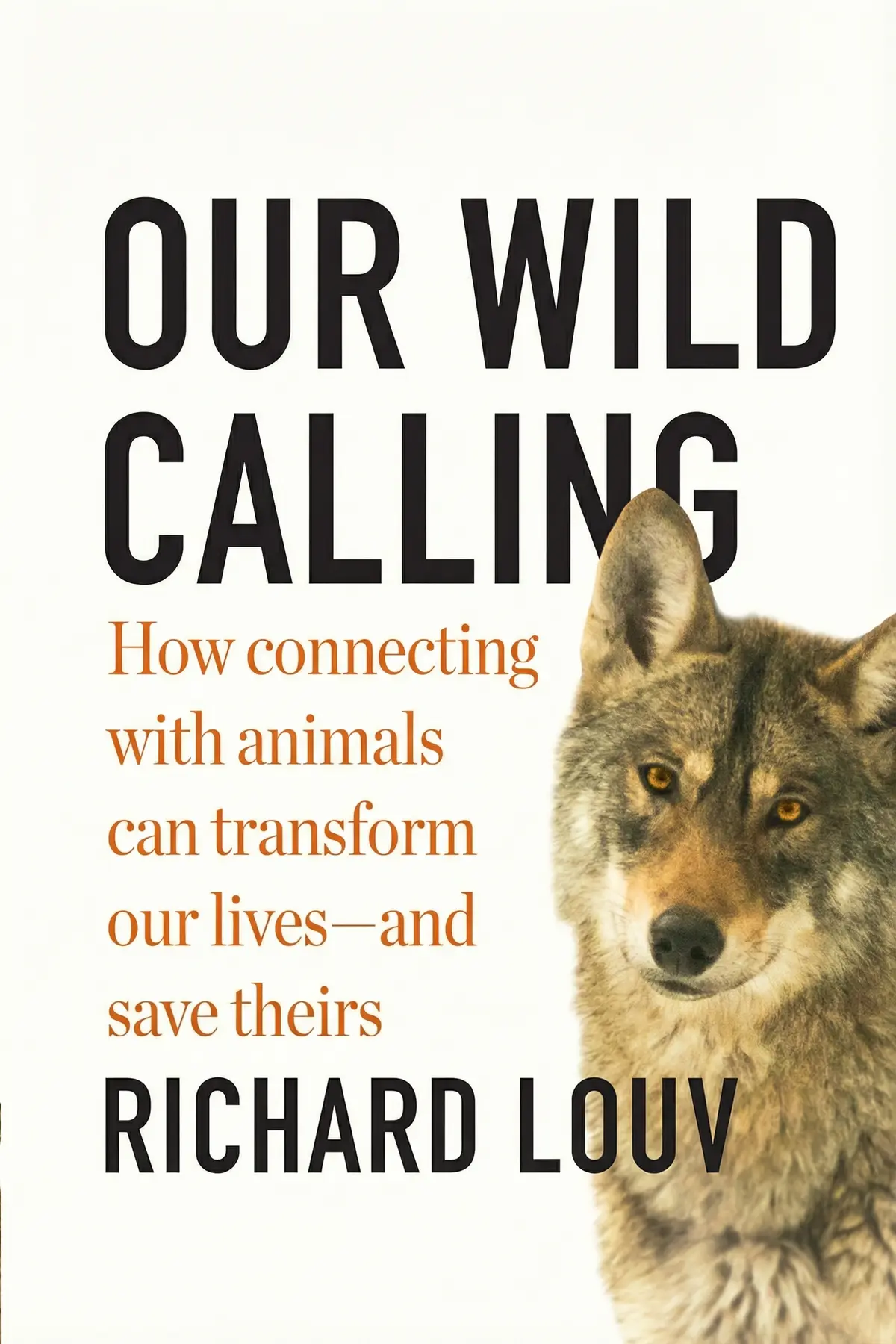
Table of Content
1. Introduction
1 min 08 sec
If you feel more connected than ever and somehow lonelier, Richard Louv offers an unexpected diagnosis. In Our Wild Calling, the journalist behind Last Child in the Woods argues that part of what we miss is the company of other species, a hunger one ecologist has named species loneliness. Louv’s case is that this loss hurts us as much as it hurts the animals, and that the cure works both ways. When we learn to see wild creatures as beautiful, to understand them on their own terms and to care for the nature nearest to us, our lives grow richer and the animals gain protectors who act from love.
The evidence runs from a black fox on an Alaskan island to fruit bat calls decoded by scientists in Tel Aviv and a teenager in Denver who found a hooked bird he could not save. Along the way you will hear what bats argue about, why one people in Kenya has no word for nature, and how to turn a vague guilt about the planet into small acts that feel good to do.
2. Name the loneliness that screens cannot fix
1 min 56 sec
Rates of loneliness keep climbing even as our devices link us to everyone. One ecologist thinks the missing company is not human at all, and the ancient stories people once told around the fire hint that he may be right.
3. Care for wildlife because you want to
1 min 49 sec
Most people protect nature the way they file taxes: grudgingly. A night-time meeting on an Alaskan island and a Norwegian philosopher’s distinction point to a kind of care that comes from wanting to act, not from grudging duty.
4. See animals clearly without making them human
2 min 04 sec
Treating animals like little people seems kind, yet children taught that way learn less. Treating them as machines did far worse damage for centuries. Scientists are now finding a third way to look.
5. Listen for what animals are telling you
1 min 58 sec
A wolf on an empty Alaskan road made a stranger follow it, and recordings of thousands of bats revealed four favorite quarrels. Animals have plenty to say, and the clearest messages arrive without any sound.
6. Sort your animal encounters and keep the healthy ones
2 min 13 sec
A lion on the savanna, a dog on the sofa and a chicken in a factory shed are three very different relationships. One psychologist’s map, plus a contest of wits with a raccoon, shows which ones feed us.
7. A small patch of nature can heal you both
2 min 04 sec
A teenager in a poor Denver neighborhood could not save one injured bird, and that failure shaped his whole career. His story and an Australian wetland show why the smallest scale may matter most.
8. Conclusion
1 min 09 sec
Louv’s book describes a trade we have been making without noticing. Each time a wild place gives way to pure use, we gain resources and lose company, and with that company we lose some perspective on who we are. The loneliness so many people feel is, in his view, partly the ache of a species that has drifted away from all the others.
What he offers in return is a way back that runs through pleasure rather than guilt. The fox on Kodiak Island asked nothing of him and left a memory that outlasted everyone he met that summer. Moments like that are closer to home than most people think. Learn the routines of one animal near you until it starts to look beautiful. When you watch it, keep two questions in mind: what it shares with you, and what it senses that you never will. And give steady care to one small piece of ground, the way Garcia teaches children in Denver and Albrecht tends his wetland.
As science reveals how much animals feel and say, Louv’s warning grows sharper. The time to start listening is before there is no one left to hear.
About this book
What is this book about?
People have never been so connected by technology, yet loneliness keeps rising, especially among the young. Richard Louv suggests part of the reason has nothing to do with other people. He follows an ecologist's idea of species loneliness: a growing distance between humans and the rest of life, made sharper as human activity pushes other creatures toward the edge. Louv's angle is hopeful and practical. He argues that we protect animals best when we find them beautiful, not when we feel we must. He shows how science is moving past both Descartes' idea of animals as machines and the cartoon habit of treating them as small humans. He gathers new research on animal communication, from arguing fruit bats to dolphins that seem to speak in sentences. Readers get a clear way to sort their own contact with animals into wild, domestic and distorted. They meet people who heal a small patch of nature near home, and they learn why that local care also eases the grief many feel about the state of the planet.
Book Information
Who it's for
Connected but lonely professionals
Professionals who feel constantly connected yet lonely and want a source of meaning beyond screens.
Weary of climate news
People worn down by bad climate news who want small, local ways to help.
Curious about animal feelings
Pet owners and nature lovers curious about what animals feel and how they communicate.
About the Author
Richard Louv
Richard Louv, born in 1949, is an American journalist and nonfiction author. He is best known for Last Child in the Woods, published in 2005, in which he introduced the term nature-deficit disorder and helped inspire an international movement to bring children back to nature. He co-founded the nonprofit Children & Nature Network and received the Audubon Medal in 2008. His writing has appeared in The New York Times and The Washington Post, and he was a columnist for The San Diego Union-Tribune.
Ratings & Reviews
Ratings at a glance

What people think
Listeners find the work readable and value its empathetic approach to human and animal viewpoints. The standard of information is considered high, with one listener remarking that it functions as a treasure trove of scientific data. Additionally, they appreciate the link to the natural world, as one review spotlights the connectivity of life on Earth. The storytelling is praised for its effective use of engaging narratives, while views on the book's authenticity are mixed.
Top reviews
Iff
This book feels like a warm embrace for anyone who has ever felt a profound connection to a creature that doesn't speak our language. Louv captures the essence of what it means to coexist, weaving together stories that illustrate the healing power of the natural world. Not gonna lie, I teared up reading about the specific instances where animals helped people overcome deep-seated trauma or isolation. It’s an easy-to-read journey that manages to be both informative and spiritual without being too preachy about environmentalism. The way he discusses the connectivity of all life on Earth really resonated with me. Truly, this is my heart in written form.
Show moreAna
Picked this up during a particularly stressful month and it provided exactly the kind of perspective shift I needed. Louv invites us to slow down and acknowledge the wild calling that still exists within our DNA, even in the middle of a concrete jungle. The storytelling is vivid—I specifically enjoyed the sections about how urban animals, like pigeons or ants, can serve as conduits for our humanity. It’s a captivating look at animal minds that avoids being a dry academic textbook. Frankly, this book should be required reading for anyone feeling disconnected from the world around them. It is a beautiful, reverential tribute to the animal kingdom.
Show moreRyan
Finally got around to this and I am blown away by the depth of compassion Louv shows toward all living things. This isn't just a book about animals; it's a treasure trove of insights into our own souls. The way he describes the 'wild calling' as a fundamental need for human flourishing is both galvanizing and hopeful. I loved the variety of stories—from ants to endangered species—and how they all point toward the same truth: we are not alone on this planet. It’s a beautiful, reverential work that urges us to embrace the wild and reconnect with our roots. In a world of digital noise, this book is a necessary quiet.
Show moreKenji
Richard Louv has a way of making complex ecological concepts feel like a conversation over coffee. This book is a treasure trove of scientific inquiry mixed with a deeply compassionate understanding of our non-human neighbors. I loved the chapters on animal languages and how he explores the cognitive capabilities of creatures we often overlook. While the narrative occasionally drifts into metaphysical territory, the core message about our shared biological destiny is powerful. It’s a readable, necessary reminder that we aren't as solitary as our modern, screen-heavy lives make us feel. Some parts felt a bit anecdotal, yet the overarching vision of a world where we actually listen to the wild is undeniably hopeful.
Show morePiyanart
Ever wonder what the birds in your backyard are actually thinking? This book dives into animal minds with a sense of wonder that is totally infectious. Louv manages to combine a lightweight, fast-paced writing style with some genuinely deep insights into how animals impact our mental health. I appreciated the balance between domestic pets and wild encounters, highlighting that our bond with nature isn't just about 'the wilderness' but about everything with a pulse. There were moments where the anecdotal evidence felt a bit repetitive, but the overall message about integrating nature into our daily lives is so vital. It’s an easy read that leaves you looking at every squirrel differently.
Show moreZoey
In my experience, books about nature can often be either too dry or too sentimental, but this one finds a decent middle ground. The focus on animal minds and our mutual impact on one another is fascinating. I specifically enjoyed Louv’s speculations on how we can better integrate the natural world into our modern infrastructure and daily habits. While some of the sections on indigenous wisdom felt a little superficial, the overall intent to foster a deeper respect for the animal kingdom shines through. It’s a fast read that offers plenty of food for thought regarding our place in the ecosystem. I’ll be keeping this close for a re-read when I need a reminder of our shared humanity.
Show moreLena
After finishing Louv’s previous work, I had high hopes for this one, but I found the structure a bit scattershot. The truth is, the organization of the chapters felt more like a series of loosely connected essays rather than a cohesive argument. He spends a lot of time on anecdotal encounters which are charming, but they often overshadow the scientific data he tries to integrate later. Look, the writing style is very accessible and the tone is reverential. However, I struggled with the way he occasionally romanticizes indigenous cultures in a way that feels a bit dated and stereotypical. It’s an interesting read for nature enthusiasts, but it lacks the tight focus I was craving.
Show morePing
Not what I expected from the author of Last Child in the Woods. While I appreciate Louv’s passion, this book felt a bit unfocused and relied too heavily on personal stories rather than hard-hitting analysis. Personally, the stories are lovely, and some are quite moving, but they don't always build toward a clear conclusion. I found myself skimming some of the more metaphysical sections because they lacked the scientific grounding I was looking for. That said, it’s still a readable overview of human-animal relationships if you go in expecting a collection of ruminations rather than a structured manifesto. It's a 3.5 for me, rounded down for the lack of organizational clarity.
Show moreYulia
As someone who prefers a more rigorous scientific approach, I found the tone here a bit too metaphysical for my tastes. Louv is clearly a fan of anecdotal evidence, which makes for a pleasant reading experience, but it sometimes leaves you wanting more data. Gotta say, the chapters on animal communication were the highlight for me, though they felt a bit short compared to the personal narratives. It’s an easy-to-read book that serves as a decent introduction to the concept of human-animal connectivity, but it doesn't quite dive as deep as I had hoped. The writing is compassionate, yet the lack of a strong organizational thread makes it feel a bit rambly.
Show moreAmara
To be fair, Louv is a talented writer, but this text suffers from a major case of the 'noble savage' trope. As someone who values cultural accuracy, his references to indigenous practices felt shallow and, at times, flat-out incorrect—the Lakota stork reference being a prime example of poor fact-checking. The organization of the book is also quite messy, making it hard to follow his central thesis through the thicket of random animal encounters. While the scientific research he cites is interesting, it often feels like an afterthought compared to his romanticized anecdotes. It’s a lightweight book that fails to offer the deep, respectful connection it claims to value. I was disappointed.
Show moreQuestions about this book
What is the main idea of Our Wild Calling by Richard Louv?
Louv argues that part of modern loneliness is species loneliness, a growing distance from non-human life. Reconnecting with animals helps both sides: when we find wild creatures beautiful and identify with them, protecting them becomes something we want to do instead of a chore. He supports this with personal encounters, research on animal communication and stories of people restoring nature close to home.
What is species loneliness?
Species loneliness is a term coined by the ecologist Michael Vincent McGinnis for humankind’s increasing alienation from non-human life. Louv links it to rising loneliness in the Western world and to the anthropocene, the epoch climate experts announced in 2016, whose logical endpoint is a planet holding only humans, their livestock and their crops.
What are the wild, domestic and distorted ways of relating to animals?
Ecopsychologist Patricia Hasbach describes three relationships. Wild means meeting animals in their own setting, like a lion in the Serengeti. Domestic means a mutual bond, like life with a pet dog. Distorted begins where contact becomes purely technological, such as factory farms or banging on zoo cages. Louv adds co-becoming, where humans and animals change each other.
What do fruit bats talk about, according to Our Wild Calling?
Louv describes research at Tel Aviv University in which voice recognition technology was applied to thousands of calls from Egyptian fruit bats. The squealing turned out to be arguments about four things, each with its own sound: who sleeps where, how near other bats are perched, unwanted sexual activity and food. Dolphins appear to go further, forming sentences of about five words.
How can I apply the ideas in Our Wild Calling?
Watch one local animal often enough to learn its routines, as Louv did with ground squirrels, until it looks beautiful to you. Ask what it shares with you and what it senses that you cannot. Sort your animal contact into wild, domestic or distorted, and care for one nearby patch of nature, as Glenn Albrecht did with a wetland in New South Wales.
Readers also enjoyed
Beyond Words: What Animals Think and Feel
Carl Safina
Cod: A Biography of the Fish That Changed the World
Mark Kurlansky
Comfortably Unaware: What We Choose to Eat is Killing Us and Our
Richard A. Oppenlander
Cradle to Cradle: Remaking the Way We Make Things
William McDonough

Drinking Water: A History
James Salzman
AUDIO SUMMARY AVAILABLE
Listen to Our Wild Calling in 15 minutes
Get the key ideas from Our Wild Calling by Richard Louv, plus 5,000+ more nonfiction titles.
- 5,000+ titles
- Listen as much as you want
- 7-day free trial
- Cancel anytime









