
Bloodlands: Europe Between Hitler and Stalin
Timothy Snyder
 English
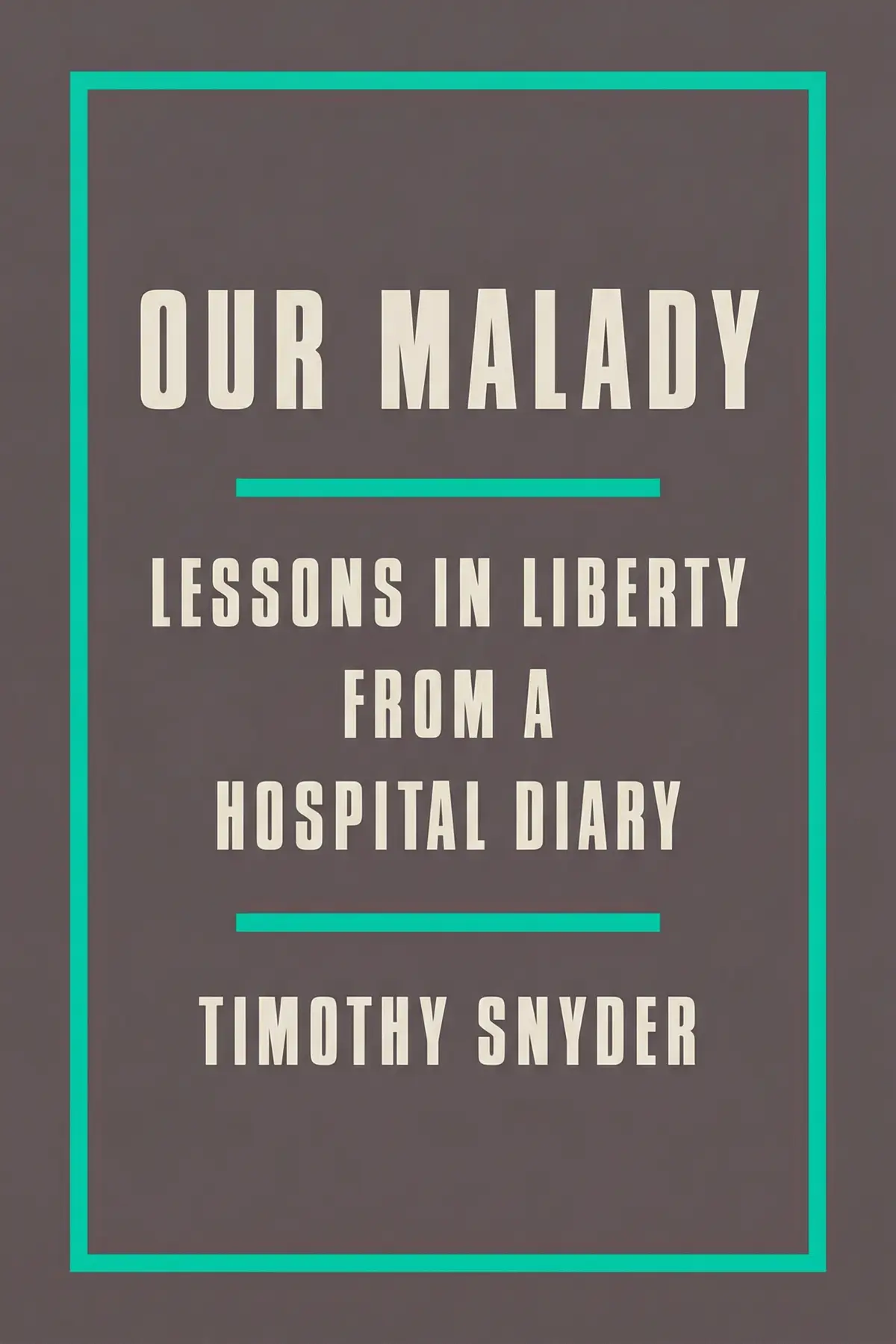
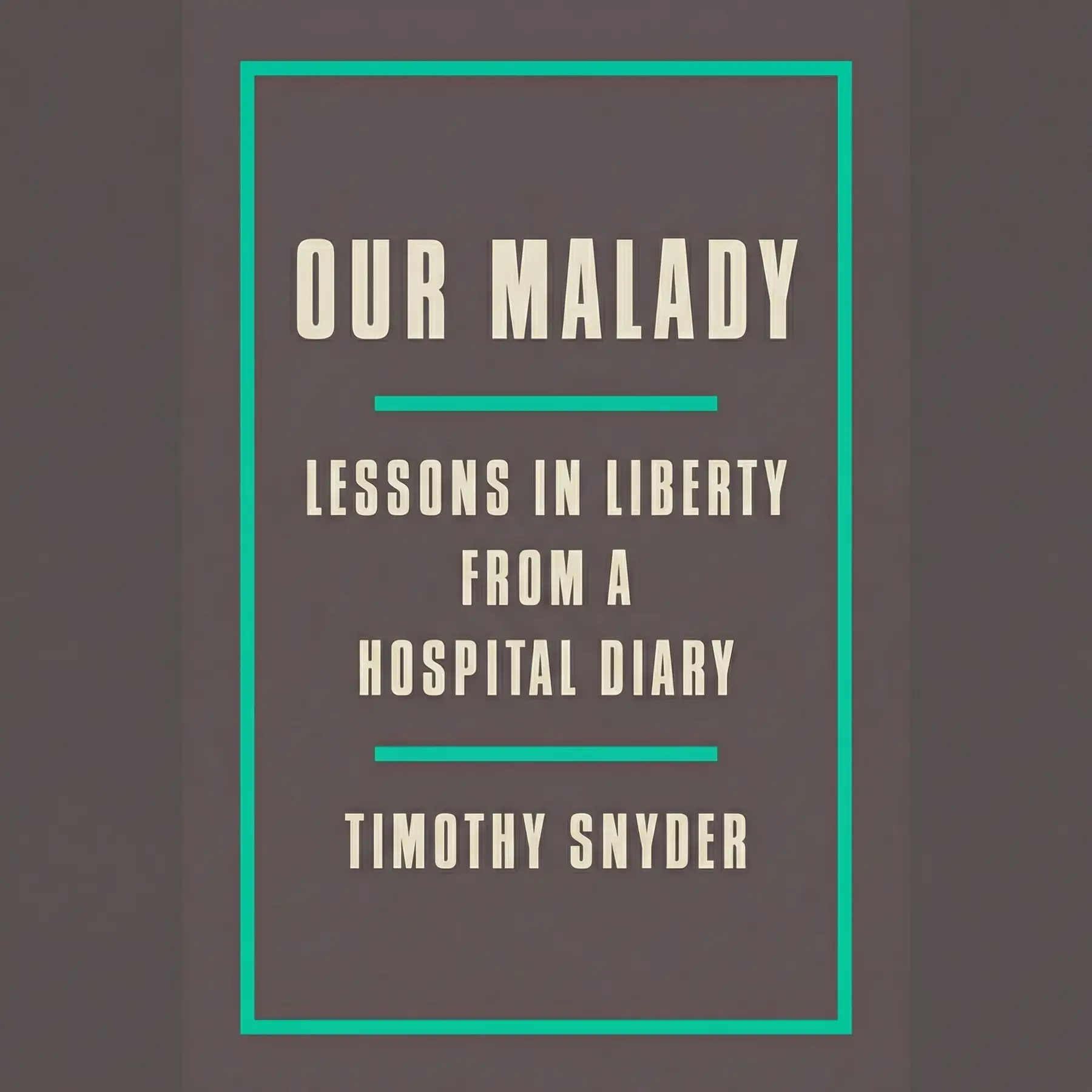
Historian Timothy Snyder uses his own near-fatal hospital stay to argue that freedom depends on health. He shows how profit-driven American medicine, unheard doctors and dishonest leadership have left people sicker and less free.
59 sec
Most people think of freedom as voting and speaking freely, and of health as a private matter of luck. In Our Malady, historian Timothy Snyder argues that the two cannot be pulled apart: a person who is sick, frightened or unable to pay for care is not truly free. He writes from a hospital bed. In the last days of 2019, Snyder nearly died in an American hospital from an infection his doctors failed to see, though the evidence sat in his own records.
From that experience he builds a case. The United States, for all its talk of liberty, has made medicine a business, pushed its doctors aside and let its leaders hide the truth, and its people are sicker and less free as a result. The pandemic year of 2020 becomes his evidence. Follow his reasoning and you will know what to demand of a health system, an employer or a leader who claims to stand for freedom, wherever you live.
2 min 08 sec
He walked into the emergency room carrying the answer to his own illness. Nine hours later nobody had used it, and his brush with death opens a much larger question about a rich country’s health.
1 min 59 sec
Two of the twentieth century’s worst regimes treated medical care as a reward for the useful. Snyder hears faint echoes of their logic in modern arguments over who deserves treatment.
2 min 15 sec
A patient reading his own hospital file found entries that were convenient but untrue. The reason had little to do with careless doctors and much to do with who the record was really written for.
1 min 59 sec
One physician received a single mask a week, while others lost their jobs for bringing their own. Snyder follows the money to show what happens when the people doing the healing have no voice.
2 min 07 sec
A wizard from a fantasy novel helps explain a real pandemic. Snyder shows how burying bad news, and the people who deliver it, turns a health crisis into a political one.
2 min 00 sec
Austrian fathers-to-be were shocked by what an American employer considered generous. The difference, Snyder argues, shapes whether children grow into adults who can think clearly under pressure.
1 min 09 sec
Snyder’s diary keeps returning to one hospital bed, where survival depended on whether anyone would read the truth already written in front of them. The country he describes fails that test again and again. Its records are written for billing, its doctors are fired for protecting themselves, its officials are punished for reporting shortages, and its parents go back to work while their babies still need them. Each failure trades health for profit or power, and each one leaves people with fewer real choices.
His argument suggests a few habits for anyone, anywhere. Judge a health system by how long its people live and whether those without money can still be treated. Give the people closest to a danger, as doctors were in the pandemic, a say in how it is met. Protect the messenger who brings bad news, and distrust leaders who work harder to lower the numbers than the danger. Guard the first years of a child’s life, because that is where the calm that freedom needs is learned.
A free country, in Snyder’s view, has to begin as a healthy one.
In late 2019, historian Timothy Snyder was rushed to an emergency room with an infection that his own records could have explained. Doctors took nine hours to read them and called it flu, and he nearly died of sepsis. Our Malady grows out of that experience into an argument about liberty: if you are sick, afraid or unable to pay for care, you are not free. Snyder holds that the United States, despite its wealth, has built a system that makes its people sicker. Americans live shorter lives than people in comparable countries and even in some poorer ones. He traces the cause to commercial medicine, where records become billing tools and algorithms set doctors' workloads. He adds a pandemic response in which doctors went without masks and officials who told the truth were fired, and an old political habit of treating care as a favor for the deserving. Against this he sets Austria, where two years of paid parental leave give children the attention they need to grow into calm adults who can think freely. Readers get a clear account of how health and democracy depend on each other, and of what to expect from leaders, employers and health systems.
Readers frustrated by costly health care who want to see how profit shapes treatment.
Doctors, nurses and managers who watched frontline staff go unheard during the pandemic.
Citizens anywhere asking what leaders, employers and governments owe people in a crisis.
Timothy Snyder, born in 1969, is a historian of modern Europe. A Marshall Scholar, he finished his Oxford doctorate in 1997. He served as Yale's Richard C. Levin Professor of History from 2017 to 2025 and holds a University of Toronto chair in modern European history, based at its Munk School. He is a permanent fellow of the Institute for Human Sciences in Vienna and serves on the Committee on Conscience of the United States Holocaust Memorial Museum. Bloodlands, his 2010 history of Nazi and Soviet mass killing between Berlin and Moscow, was a New York Times bestseller, and his books have appeared in more than forty languages.
Timothy Snyder
Timothy Snyder
Timothy Snyder
Timothy Snyder
Listeners find this work to be a fantastic, swift read offering extensive perspectives on healthcare, while one review points out the author’s skillful integration of academic study and individual narrative. The text is lauded for its profundity, as one listener calls it an exceptional book written from a private vantage point. Listeners hold differing opinions on the correctness of the information, and the tempo of the writing draws varied responses. Listeners value the work's importance, with one remarking that it feels especially pertinent in the post-election period.
Ever wonder how a historian views the tubes and wires of an ICU? Snyder’s 'Our Malady' is a harrowing bridge between personal catastrophe and national failure, written while he was still recovering from a near-fatal misdiagnosis. He uses his brush with death—a terrifying case of sepsis that went undetected across multiple hospitals—to dissect the systemic rot in American healthcare. It’s a short, punchy volume that feels like a necessary companion to 'On Tyranny.' He masterfully argues that without health, we cannot truly be free citizens because we are too weak to exercise our rights. The way he connects the opioid crisis to political desperation and the rise of populism is particularly brilliant. It’s an urgent, emotional, and deeply scholarly plea for a system that values human life over quarterly profits. I found the pacing perfect for such a heavy subject; it’s a quick read but the ideas stick with you for weeks.
Show moreWow. This book is a punch to the gut that manages to be both a scholarly critique and a desperate plea for humanity. Snyder's account of his brush with death is nothing short of terrifying, especially considering it happened just as the world was shutting down in 2020. He describes being treated like a 'number' behind a hospital curtain, a cog in a profit-driven machine that almost let him die of sepsis. His definition of freedom—not just as the absence of government but as the presence of health and security—is a paradigm shift. The way he links the lack of local news to the spread of medical misinformation is a detail I hadn't considered before. It is a very comprehensive look at how we’ve lost our way. Personally, I think every politician should be required to read the chapter on how inequality in healthcare directly leads to the erosion of democracy. It’s a profound, albeit short, masterpiece.
Show moreAfter hearing Snyder speak about his experiences in Europe compared to the US, I had to read the full account. This book is a brilliant exploration of how our physical bodies are connected to the body politic. Snyder argues that we cannot be free if we are constantly in pain or terrified of medical bankruptcy. His story about the hospital roommate with COVID-like symptoms being ignored is a haunting reminder of the early days of 2020. The prose is eloquent and urgent, moving quickly from personal anecdote to historical warning. He reminds us that tyrants thrive on a sick and divided population. I particularly liked the section on empathy and how our lives are like 'rafts' tied together; when one person sinks, we all feel the waves. It’s a beautiful, tragic, and ultimately hopeful call for a more empathetic society. Truly an outstanding book that provides a fresh perspective on what it means to be a free individual.
Show moreSnyder's 'Our Malady' is an essential read for anyone concerned about the future of American democracy. He deftly combines scholarly research with personal experiences to show how our failing healthcare system makes us vulnerable to authoritarianism. The book is incredibly timely, reflecting on the failures of the COVID-19 response and the broader 'malady' of a society that treats health as a luxury. I loved the distinction he makes between 'individualism' and actual freedom. He points out that we are currently trapped in a system that forces us to spend our lives worrying about survival rather than thriving. The writing is sharp, and the emotional stakes are high. It’s a quick read, but it provides a very comprehensive look at the structural changes needed to save our country. This is Snyder at his most passionate and most personal. I’ve already recommended it to several friends who are frustrated with the state of the world.
Show morePicked this up after seeing Snyder’s name, and while it isn't his typical historical tome, it’s just as vital. The book is part hospital diary, part political treatise, detailing his agonizing journey through the US medical system during the dawn of the pandemic. He makes a compelling case that 'malady' isn't just a physical disease but a social one. Look, the American system is focused on profit, which Snyder contrasts sharply with his experiences in European hospitals where doctors actually have time to talk to patients. Some might find the focus on the Trump administration’s handling of COVID-19 a bit dated, but the underlying philosophy about health as a human right is timeless. My only minor gripe is that he occasionally gets a few technical details wrong—like the regulation of medical implants—but the emotional core of the book is undeniable. It’s a sobering look at how close we are to the edge.
Show moreFinally got around to reading this short but heavy-hitting essay on why America's medical system is so broken. Snyder’s personal ordeal with appendicitis and subsequent sepsis serves as a terrifying case study of how a wealthy person with every advantage can still nearly die due to systemic inefficiency. The writing style is vintage Snyder: succinct, sharp, and laden with historical parallels that make your skin crawl. He argues that healthcare is the prerequisite for liberty, a concept that many in the US seem to have inverted. In my experience, his comparison of maternity care in the US versus Austria was particularly eye-opening and frankly embarrassing for our country. The book is a bit of a 'pamphlet' in terms of length, but the depth of insight is remarkable. It’s a great quick read for anyone who thinks the current system is sustainable. Definitely a timely piece that stays relevant even after the 2020 election cycle.
Show moreAs someone who works in the medical field, Snyder’s description of 'malady' as both a bodily ailment and a social sickness resonates deeply. He captures the exhaustion of the American doctor and the transactional nature of our current system perfectly. His diary entries from the hospital are raw and vulnerable, showing a side of the historian we rarely see. Not gonna lie, some of his critiques of hospital management are hard to read because they are so accurate. He correctly identifies that when doctors are forced to prioritize 'efficiency' and billing codes over patient interaction, everyone loses. The pacing is a bit frantic, mirroring his own delirium and recovery, which adds to the authenticity of the narrative. While he might lean a bit heavily into the comparison with European socialized medicine, his observations about the dehumanizing nature of the US system are spot on. It’s a necessary, albeit uncomfortable, mirror for our society.
Show moreThe chapter on the intersection of pain and politics changed how I think about the opioid crisis. Snyder isn't just complaining about a bad hospital experience; he's diagnosing a national illness where wealth is prioritized over wellness. He writes with the clarity of someone who has stared death in the face and come back with a message. The book is short enough to read in one sitting, but the implications are massive. He talks about how the 'freedom' to be sick is no freedom at all. Gotta say, his insights into how the Nazi regime used health as a tool of exclusion were chilling and gave much-needed context to his modern critiques. Some parts feel a bit like a collection of thoughts rather than a unified theory, but the brilliance of his mind shines through every page. It’s a vital contribution to the conversation about what we owe one another as citizens.
Show moreNot what I expected from a historian of Snyder's caliber, though the core message remains vital and worth discussing. The book feels a bit rushed, likely because it was written in the heat of a personal health crisis and the start of a global pandemic. While his story of being ignored by doctors while his body was shutting down is genuinely moving, the transition into political theory feels a bit disjointed at times. To be fair, he makes some excellent points about how physical pain can be exploited by authoritarian leaders to create divisions in society. However, I found some of his generalizations about the medical profession to be a bit broad and occasionally unfair to the overworked staff he describes. It’s an interesting hybrid of memoir and manifesto, but it lacks the rigorous structure of his previous works. It’s worth a read for the perspective, but don't expect a deep dive into policy specifics.
Show moreTimothy Snyder presents a deeply flawed premise that true freedom can only be achieved through government-mandated health care, which essentially feels like a call for total bureaucratic control. Truth is, if medicine is a right, then the medical professionals themselves are being treated as property of the state to fulfill your demands. This book argues that for-profit medicine is a sinister force, yet it ignores the fundamental loss of liberty when the government micromanages every aspect of a person's physical well-being. It feels more like a hive-mind manifesto than a serious historical analysis. While his personal story of surviving sepsis is harrowing, the leap he makes to suggest that only a socialized, European-style system can save our humanity is a stretch. He paints the American public as cattle incapable of running their own lives. Frankly, the tone is condescending and the logic is circular, prioritizing a twisted version of security over actual individual choice.
Show moreOur Malady starts with Snyder’s near death from sepsis in a New Haven hospital in late 2019 and grows into an argument about liberty. Snyder holds that people cannot be free if they are sick, afraid or unable to pay for care. He blames commercial medicine, the sidelining of doctors and leaders who hide the truth for leaving Americans sicker, and he uses the 2020 pandemic as his main evidence.
Snyder argues that a sick person cannot pursue a full life and that fear narrows the mind into simple pairs such as me or them, fight or flight. Adults who learned emotional regulation as children can see more options under stress. So, in his view, health care and early childhood support are conditions of freedom, and governments that treat care as a favor make citizens less free.
Just after midnight on December 29, 2019, Snyder came to a New Haven emergency room with tingling limbs and severe tremors. A liver abscess was sending bacteria into his blood. His surgeon had seen a lesion on his liver two weeks earlier without telling him, and although Snyder brought his records, nine hours passed before anyone read them properly. Doctors suggested flu, and he nearly died of sepsis.
Snyder argues it puts profit before healing. Digital records are built for billing, and an algorithm weighing revenue against cost sets how many patients doctors see. Americans pay more than people in comparable countries yet live about four years less, and are outlived even by people in Barbados, Costa Rica and Chile. When 20 million lost their jobs early in the pandemic, millions also lost their insurance.
Judge any health system by how long people live and whether those without money get care. Read your own medical records and check them. If you lead a team, let the people closest to a danger help decide how to handle it, and protect whoever brings bad news. And treat a child’s first five years as worth defending, since Snyder argues emotional regulation is learned there.

Masaji Ishikawa

John Rawls



Miles Taylor



Tracy Rosenthal

Jessica Valenti

Yanis Varoufakis
AUDIO SUMMARY AVAILABLE
Get the key ideas from Our Malady by Timothy Snyder, plus 5,000+ more nonfiction titles.









