

14 min 40 sec
Available in: English
Our Dollar, Your Problem: Seven Turbulent Decades of Global Finance, and the Road Ahead
Explains why one country's currency shapes prices, debts and crises everywhere, who gains and who pays from the dollar's dominance, and why inflation and US debt could end its long reign.
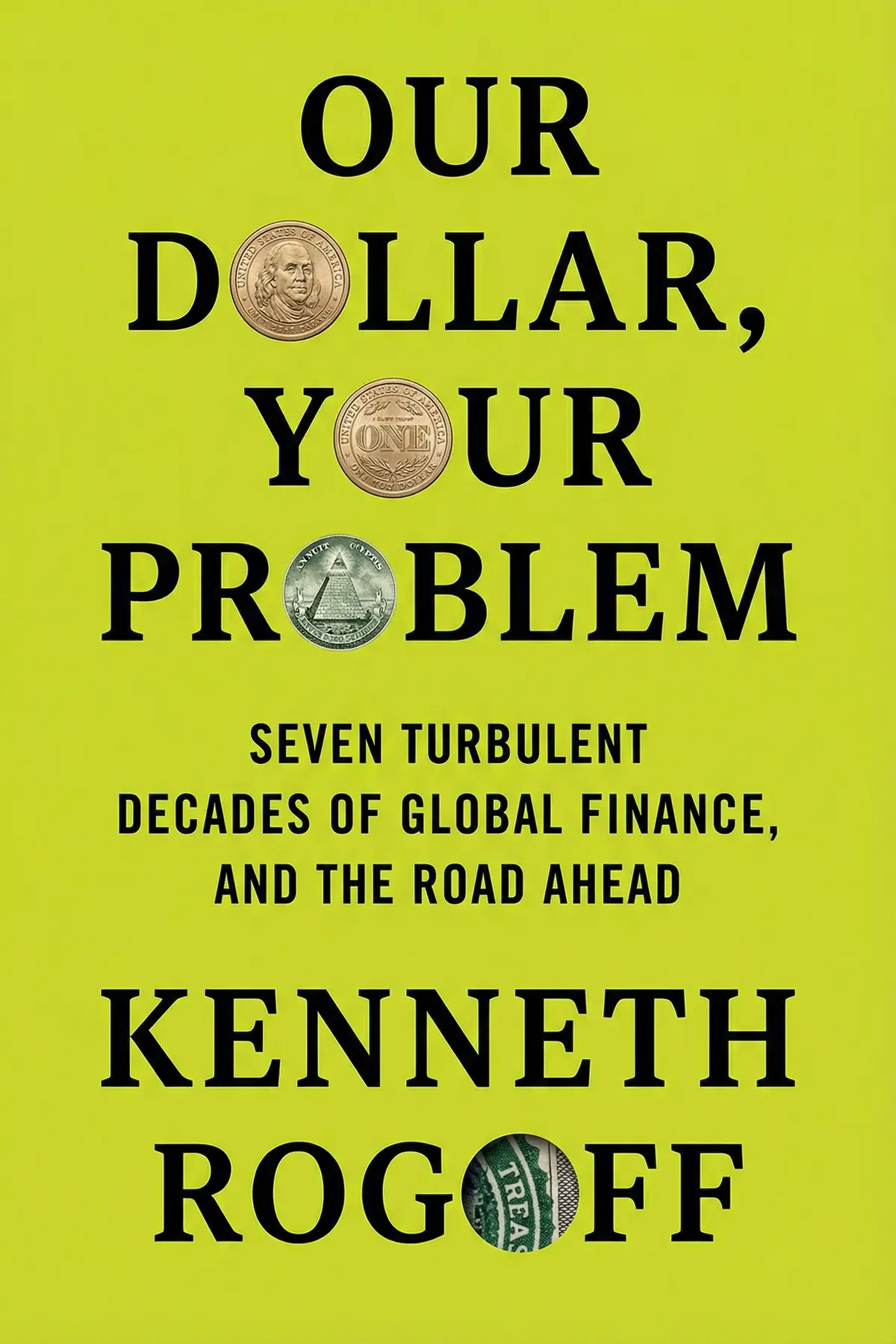
Table of Content
1. Introduction
1 min 03 sec
If the dollar only crosses your mind when an exchange rate eats into your savings or your company’s costs, Kenneth Rogoff’s Our Dollar, Your Problem explains why one currency’s fate lands on everyone. The title comes from 1971, when President Nixon ended the swap of dollars for gold. European officials, long assured the dollar was as safe as gold, protested to Treasury Secretary John Connally, and he answered: “Our dollar, your problem.”
Rogoff, a Harvard economist and former chief economist of the International Monetary Fund, argues that the dollar’s reign rests on habit and confidence. It gives America cheap borrowing and great reach, while pushing risks onto other countries and onto Americans too. And it is not permanent: inflation and debt could end it. By the end, you will be able to explain why oil is priced in dollars, why currency pegs collapse, and which warning signs to watch in the news.
2. Read the dollar's power as a network habit
1 min 51 sec
Dominant currencies have changed hands only a few times in five hundred years. The forces that put the dollar on top are less about American virtue than about a simple cost that every bank in the world tries to avoid.
3. Spot what sank the ruble, yen and euro
2 min 12 sec
Each of three rival currencies once looked ready to stand beside the dollar. One was undone by a reform that never came, one by a deal among allies, and one by a weakness hidden in its design.
4. Judge the yuan and crypto by trust
2 min 01 sec
China is building its own payment routes and lending in yuan across three continents, while Bitcoin skips governments entirely. Both look like threats to the dollar, yet both still lack the one thing that keeps a currency on top.
5. Spot when a dollar peg is about to break
2 min 02 sec
Tying a currency to the dollar has tamed runaway inflation and drawn in floods of foreign money. Mexico and Thailand both learned what happens on the day the promise behind that tie can no longer be kept.
6. What America gains from owning the world's money
2 min 07 sec
Being the world’s banker hurts American exporters and angers allies, yet no president gives it up. The reasons explain how the US can run enormous deficits without the crisis that would hit almost any other country.
7. Watch inflation and debt, the dollar's weak points
2 min 05 sec
The privilege that lets America borrow cheaply could flip into a burden faster than most people expect. Rogoff points to two pressures building inside the system itself, and to the institution standing between them.
8. Conclusion
1 min 19 sec
Connally’s remark in 1971 sounded like arrogance, and Rogoff shows it was also an accurate description of the system. The dollar sits at the center because the world chose it at Bretton Woods and then kept choosing it, one cheap transaction at a time. That habit gives America the cheapest borrowing on Earth, the reach of sanctions and a central bank that can look mostly inward. It gives everyone else a currency they cannot ignore and problems they did not create, from Mexico’s collapse in 1994 to the run on the baht in 1997.
The book’s sharpest point is that none of this rests on law. It rests on confidence, and confidence is exactly what inflation and debt wear away. The ruble, yen and euro fell short when trust in their systems broke, and the dollar could weaken the same way, from the inside.
So when you read about the yuan or crypto, judge them by whether they are winning trust and everyday use. If your own currency is tied to the dollar, watch the gap between deficits and reserves. And keep an eye on the Fed, because its independence holds the arrangement together. The dollar still belongs to America. The problem, Rogoff reminds us, has always been shared.
About this book
What is this book about?
Most people only notice the US dollar when an exchange rate moves against them. Kenneth Rogoff argues that this is exactly the problem: the dollar sits at the center of world trade, reserves and oil prices, so America's choices land on everyone else. The book takes its title from a blunt remark by a US Treasury Secretary in 1971, after the dollar stopped being convertible into gold. Rogoff traces how the dollar won its place at Bretton Woods in 1944, why network effects keep it there, and why challengers from the Soviet ruble to the yen and the euro fell short. He weighs China's yuan and cryptocurrencies as newer rivals, and shows through Mexico in 1994 and Thailand in 1997 how tying a currency to the dollar can end in collapse. He then sets out what America gains, from the world's cheapest borrowing to the reach of financial sanctions, and what could take it away. Readers get a clear frame for reading currency news and the warning signs worth watching: inflation, rising debt and pressure on the Federal Reserve.
Book Information
Who it's for
Professionals facing currency swings
Professionals whose costs, salaries or savings swing with the dollar and who want to understand why.
Cross-border founders and investors
Founders and investors trading across borders who need a frame for currency risk.
Students and the curious
Students and curious readers who want the dollar's history and future explained in plain terms.
About the Author
Kenneth Rogoff
Kenneth Rogoff, born in 1953, holds the Maurits C. Boas Chair of International Economics at Harvard University. Earlier in his career, he served as chief economist at the International Monetary Fund (IMF). With Carmen Reinhart he co-wrote This Time Is Different, a study of financial crises.
Ratings & Reviews
Ratings at a glance

What people think
Listeners find the material highly educational and expertly crafted, with one person pointing out the author’s use of direct, modest language to explain various concepts. Furthermore, they prize the book's accessible nature and view it as required reading within the fields of economics and finance. The work also garners praise for its excellent timing, as listeners remark on its pertinence to modern-day affairs, while one review underscores its ability to separate politics from economics.
Top reviews
Chloe
This book is a masterclass in global finance that feels incredibly relevant to the current 2025 landscape. As a former IMF Chief Economist, Rogoff brings an 'insider' weight to the table that most pundits simply can't match. He explores the nuances of the SDR and the 'exorbitant privilege' of the US dollar with a level of detail that is both dense and rewarding. I particularly appreciated his circumspect view on the 'unprecedented' crises we face; he shows that history often rhymes in ways we forget. It’s rare to find a book that balances the frontier of academic research with the practical realities of international policymaking so seamlessly. A must-read for anyone serious about understanding where the American economy is headed.
Show moreMoo
Rarely do you find a Harvard economist who can write in such unpretentious prose without sacrificing the complexity of the subject matter. Rogoff manages to separate the partisan noise from the hard fiscal reality of the so-called 'Mar-a-Lago Accord' and the shifting power of the dollar. The book is timely, insightful, and surprisingly balanced given the polarized climate we live in. He doesn't just predict a collapse; he analyzes the erosion of trust caused by weaponizing the financial system. His breakdown of why the Euro and Yuan aren't ready to take the crown is the most convincing argument I’ve read all year. If you want to understand the intersection of geopolitics and your bank account, start here.
Show moreMarasri
After hearing so much about the 'death of the dollar' on news cycles, it was refreshing to read a measured, long-range perspective. Rogoff doesn't just look at the next four years; he traces seven decades of history to show why China isn't ready to take the crown just yet. The book is incredibly well-written and serves as a vital introduction to why the US dollar remains the world's dominant reserve currency. I found his discussion on the 'debt funding is not a free lunch' warning to be particularly poignant in today's fiscal climate. He manages to make international macroeconomics feel like a page-turner. Truly a tour-de-force that leaves no major issue uncovered, from fixed exchange rates to the impact of populism.
Show moreAmy
Wow. This is probably the most comprehensive survey of international macroeconomics I’ve ever picked up. Rogoff covers everything from SDRs and currency manipulation to the impact of the Russia asset seizures with incredible depth. The truth is, the world is at a turning point, and this book serves as an essential map for the road ahead. I loved how he integrated his experiences at the IMF into the broader narrative without it feeling like a dry memoir. It’s a rare book that reflects both the cutting edge of research and the front lines of global policy. If you’re at all concerned about the looming financial crisis, you need to read this now.
Show morePita
Kenneth Rogoff’s ability to distill complex topics like financial repression and flexible exchange rates into a narrative that doesn’t require a PhD is impressive. It’s a must-read for anyone trying to understand why the US economy hasn't collapsed under its own debt—at least not yet. The book is a rare blend of academic rigor and accessible storytelling, providing a career retrospective that feels both personal and globally significant. I particularly liked his take on why Europe and China are struggling to provide a viable alternative to the dollar. Personally, I found the discussion on the 'Mar-a-Lago Accord' and the weaponization of finance to be the most enlightening parts of the entire book. Highly recommended for students and professionals alike.
Show moreRuangrat
Ever wonder why the dollar still rules the world despite all our political chaos? Rogoff attempts to answer this with a surprisingly lucid breakdown of the international financial system. He manages to explain complex topics like the 'convenience yield' and debt cycles in unpretentious prose that even a non-economist can grasp. While he can be a bit dismissive of modern alternatives, his long-range view of seven turbulent decades is incredibly grounding. The book is timely, especially with the recent shifts in 2024 and 2025, providing a necessary reality check against the hype of crypto and AI. It’s a very readable survey, though it occasionally feels like it’s only scratching the surface of more systemic rot. Still, it’s a solid addition to the library of anyone tracking global finance.
Show moreNuk
The chapter on AI was a bit thin for my taste, especially for a 'bigshot' economist, but the rest of the book is solid gold. He spends a significant amount of time referencing his previous hit 'This Time is Different,' which can feel like a retread at times, but the context is updated for the post-2024 political world. I think he captures the 'Wile E. Coyote' moment of our current fiscal policy perfectly. The US is playing risky games with debt, and Rogoff’s warnings about the erosion of trust are chilling. It’s a dense read, and I had to look up a few terms, but it’s worth the effort for the clarity it provides on why our dollar is currently 'their problem.' A very informative and necessary piece of work.
Show moreSatit
As someone who follows market trends closely, I appreciated how Rogoff explains the 'convenience yield' and the 'exorbitant privilege' of American currency. He isn't afraid to warn us that we are playing risky games with our fiscal policy, even if the dollar stays on top for the foreseeable future. The book is highly informative and separates the economic reality from the political theater very effectively. I do wish he had spent more time on the impact of dollar appreciation on domestic manufacturing, as that felt like a missing piece of the puzzle. Overall, though, it’s a brilliant and readable survey that highlights why the dollar’s global footprint might finally be starting to shrink.
Show moreVera
Finally got around to reading Rogoff's latest, and while the economic insights are top-tier, the constant self-hagiography is exhausting. Does he really need to mention his chess grandmaster status or his connection to Bobby Fischer every few chapters? It feels like he’s constantly name-dropping to validate his decades of experience when the data should speak for itself. He also leans way too heavily on his previous book, 'This Time is Different,' which starts to feel like a repetitive plug. Frankly, his analysis of AI's impact on finance felt pretty facile for an economist of his stature. There is a great discussion here about how the dollar holds up the global system, but you have to wade through quite a bit of ego to find the gems.
Show moreKofi
Look, I really wanted to like this, but the hubris on display is just too much to overlook. Rogoff seems to have learned nothing from the 'excel error' debacle and instead spends his time taking context-free snipes at Elizabeth Warren and AOC. While he offers a decent history of the IMF, the book is riddled with neo-liberal myths that feel increasingly out of touch with the reality of ordinary people. If you want a balanced view of macroeconomics, you are much better off reading Skidelsky’s 'Money and Government' instead of this self-congratulatory retrospective. It's essentially a love letter to the status quo that ignores how deeply the system is failing everyone outside of the Ivy League. A very disappointing and narrow-minded read.
Show moreQuestions about this book
What is Our Dollar, Your Problem by Kenneth Rogoff about?
It explains how the US dollar became the world’s dominant currency after the 1944 Bretton Woods conference, why network effects keep it there, and what that means for America and everyone else. Rogoff covers past rivals like the ruble, yen and euro, newer ones like the yuan and crypto, the dangers of dollar pegs, the perks America enjoys, and the inflation and debt risks that could end the dollar’s reign.
Where does the title Our Dollar, Your Problem come from?
In 1971 President Nixon suspended the conversion of dollars into gold, surprising European leaders who had been told the dollar was as good as gold. When angry European officials confronted Treasury Secretary John Connally, he replied with the line that gives the book its name. Rogoff uses it to show how US decisions about the dollar spill onto the rest of the world.
What is exorbitant privilege?
It is the economists’ name for America’s ability to borrow more cheaply than any other country because the world wants to hold dollars. Foreign central banks owned 6.7 trillion dollars of US Treasury bills by mid-2024, and the total reached 8.2 trillion once private investors were counted. Because the US pays for imports in its own currency, it can run trillion-dollar deficits without the currency crises other nations would face.
Could the dollar lose its dominance?
Rogoff thinks it could. Neither the yuan nor crypto yet has the network effects and trust needed to replace it, but the bigger threats come from inside: a return of high inflation and US federal debt above 33 trillion dollars, more than 120 percent of GDP. If confidence broke, the network effects that built the dollar’s position could reverse quickly.
Why do currency pegs to the dollar fail?
A peg promises to swap a currency for dollars at a fixed rate, which can calm inflation and attract investment for a while. But the economy can drift from the fixed rate. Mexico’s peso lost over half its value within weeks after it abandoned its peg in December 1994, and Thailand’s reserves vanished within days when speculators attacked the baht in July 1997.
Readers also enjoyed

A Splendid Exchange: How Trade Shaped the World
William J. Bernstein




Adults in The Room: My Battle With Europe’s Deep Establishment
Yanis Varoufakis


1929: Inside the Greatest Crash in Wall Street History--and How It
Andrew Ross Sorkin

23 Things They Don’t Tell You About Capitalism
Ha-Joon Chang
AUDIO SUMMARY AVAILABLE
Listen to Our Dollar, Your Problem in 15 minutes
Get the key ideas from Our Dollar, Your Problem by Kenneth Rogoff, plus 5,000+ more nonfiction titles.
- 5,000+ titles
- Listen as much as you want
- 7-day free trial
- Cancel anytime









