

A Promised Land
Barack Obama
 English
 ไทย
A reported account of how Joe Biden's physical and mental decline was hidden by his closest aides, why he ran again anyway, and how that silence left his party too little time in 2024.
58 sec
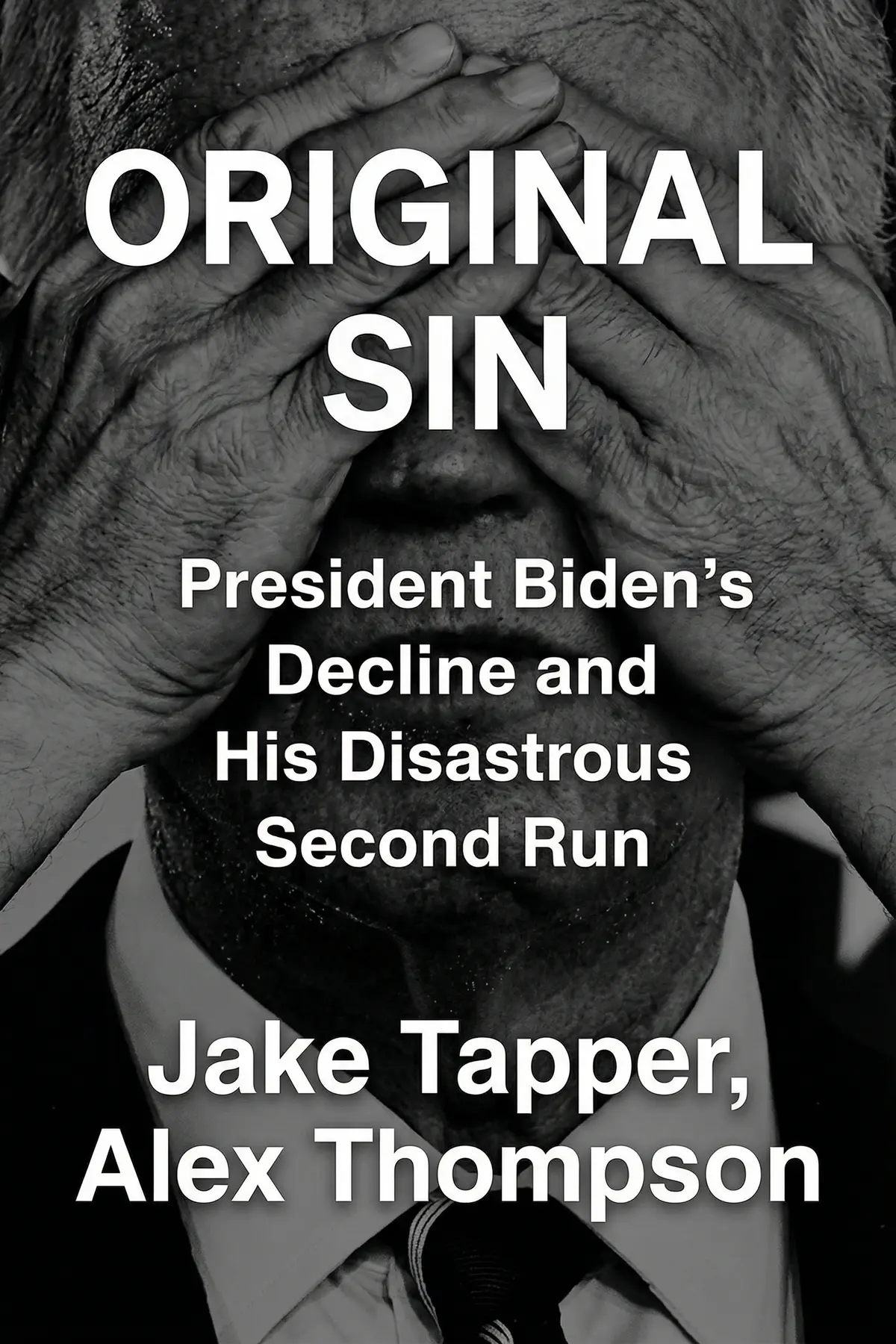
Most people have watched a leader falter while everyone nearby insisted nothing was wrong. In Original Sin, journalists Jake Tapper and Alex Thompson argue that Joe Biden’s decline was visible from at least 2019, and that the people closest to him spent years hiding it. The two reporters interviewed hundreds of people around the president to rebuild how that happened.
Their case is that a family creed of never giving in and a tiny, loyal circle of advisers kept the truth from voters, from senior officials and even from Biden himself. When it finally broke through on a debate stage in June 2024, the authors argue, it was too late for Kamala Harris to beat Donald Trump. Follow the story and you get a clear account of the 2024 race, plus a sharp lesson about what happens when loyalty outranks honesty in any team.
1 min 49 sec
A man famous for verbal slips forgets the name of a colleague of nearly forty years. Biden had always been prone to gaffes, yet this lapse was something different, one of the earliest warning signs of his decline.
1 min 52 sec
Getting back up after tragedy carried Biden from a childhood stutter to the White House. The same family motto, joined by two quieter sayings, made one hard truth nearly impossible to speak.
1 min 52 sec
Insiders nicknamed his closest advisers after a Soviet committee. A pandemic, a few gatekeepers and some carefully scripted video calls show how a handful of people came to stand between a president and everyone else.
1 min 48 sec
A missing medical test, an interview count far below his predecessors and a Hollywood director with a better microphone. Each fix looked harmless alone, but together they tell a different story.
2 min 00 sec
A pollster was told his numbers were not needed, and a congressman learned what happens to those who speak first. The decision to run again rested on surprisingly little.
2 min 13 sec
A special counsel chasing misplaced documents ended up recording something far more damaging. His investigation, which found that no criminal charges were warranted, exposed the president’s deterioration more devastatingly than any other event.
2 min 20 sec
One night in June undid years of careful management. What followed inside the White House, and one blunt private meeting with a senior senator, shows how costly a truth can be when it arrives late.
1 min 12 sec
Even Biden’s critics, the authors note, never thought him wholly incapable. He could do the job. The damage came from pretending he was always at full strength while his speech, memory and body were failing, and from a circle that hid the extent of it from voters, from officials who might have stepped in sooner and from Biden himself.
That is why the book aims at the people around the president as much as at the man. A creed of getting up, a rule against unkind truths and a few devoted gatekeepers turned a visible decline into a kept secret, until one night in June made it public. By then, the authors argue, Harris had no time left to win.
The story offers a test for any group that shields a leader. Watch for access shrinking to a handful of people, for workarounds piling up, and for big decisions that arrive with no meeting behind them. Then ask who is still allowed to say the obvious. David Plouffe, who later helped the Harris campaign, drew the lesson plainly: a party can never again ask people to disbelieve their own eyes.
Joe Biden once described himself as a bridge and nothing else, and four of his advisers said a second run was virtually inconceivable. By 2023 he was running anyway. He quit only in July 2024, after a debate that showed millions of viewers what insiders had seen for years. Journalists Jake Tapper and Alex Thompson interviewed hundreds of people around the president to explain how that happened. They trace the early warning signs, the family motto that treated every setback as something to rise from, and the small group of advisers, nicknamed the Politburo, who controlled access to him. They show the workarounds that kept the decline out of view: scripted calls, a daily news card, a missing cognitive test and few interviews. The book follows the decision to run with almost no process, the special counsel interview that exposed Biden's memory lapses, the debate and the private pressure that finally pushed him out. Readers get a clear account of the 2024 race and a sharp lesson about what happens when loyalty outranks honesty.
Readers who followed the 2024 US election and want to understand why Biden ran again and quit so late.
Managers and team leads who worry that a small trusted group is filtering what reaches the top.
Students of politics curious how power concentrates around an aging leader.
Jake Tapper is CNN's main Washington anchor, presenting The Lead with Jake Tapper on weekdays and co-hosting the Sunday program State of the Union. He was previously senior White House correspondent for ABC News and wrote The Outpost, a nonfiction account of US troops in Afghanistan. Alex Thompson is National Political Correspondent at Axios and a CNN contributor, and he won a White House Correspondents' Association award for his coverage of Joe Biden. He created the West Wing Playbook newsletter at POLITICO and has worked at Vice News and The New York Times.
Listeners find the book a compelling and well-crafted read that is thoroughly researched and offers deep analysis. The caliber of reporting is praised for its investigative depth, and listeners appreciate the insightful material that raises intriguing questions. Reactions to the narrative and trustworthiness are mixed—while some enjoy the storytelling, others note it jumps all over the place, and while some view it as truthful, others point to anonymous sources that damage its credibility. The work faces criticism for its bias, with listeners labeling it as blatantly hypocritical.
Finally, someone had the guts to put the full story in print without the usual partisan cushioning. This book is a gut-punch of reality. Jake Tapper and Alex Thompson provide an insider's account that is deeply researched and frankly terrifying. They detail the denial and the carefully curated public image that allowed an unfit candidate to pursue a second term. The authors aren't just looking for clicks; they are documenting a genuine institutional failure. Regardless of your politics, the evidence of cognitive decline presented here is hard to ignore. It’s a highly-polished, brisk read that manages to be both a political thriller and a sad biography of a man who didn't know when to step aside. This should be mandatory reading for anyone who wants to understand the 'original sin' of the 2024 Democratic campaign.
Show moreThis book is an essential piece of investigative work. Not gonna lie, I was skeptical when I first heard about it, but the level of detail is impressive. The authors managed to get a surprising number of people to talk, even if many stayed off-record. They paint a picture of an inner circle that was essentially running the country while the President was shielded from the public. It’s a fascinating study of power and the lengths people will go to hold onto it. Tapper’s prose is sharp and the narrative is fast-paced. While it’s certainly not a pro-Trump book—he’s treated as a known quantity of chaos—it is a brutal indictment of the Democratic establishment. It’s insightful, balanced, and a truly necessary addition to the political history of this era.
Show moreRegardless of your political leanings, 'Original Sin' is a masterclass in political reporting. Tapper and Thompson dive deep into the mechanics of the Biden White House, revealing a level of insulation and protection that is truly staggering. They don't just focus on the 'what,' but the 'why'—exploring the motivations of people like Ron Klain and Jill Biden. The writing is incredibly polished and the research feels exhaustive. It’s a tragic account of a man who stayed too long and the people who helped him do it. The book raises vital questions about age, transparency, and the future of leadership in America. Some might find the reliance on anonymous sources frustrating, but in this climate, it’s the only way this story was ever going to be told. An absolute must-read.
Show moreAs a lifelong Democrat, reading this was absolutely devastating. Tapper and Thompson have delivered an incredibly informative account of the last year of the Biden presidency, and it is a wake-up call for the party. The chapter on the June debate and the subsequent scramble to save a failing campaign was particularly hard to stomach. It’s clear that a small group of confidantes were more focused on protecting the President’s ego than ensuring the country was safe from a second Trump term. While I still respect Joe Biden’s long career, this book makes a compelling case that he stayed far too long. The authors don't pull any punches, even when it’s uncomfortable. It is a well-written tragedy about the hubris of power. I took away one star only because some sections felt like they were padded out with information we already knew from the news cycles.
Show moreTapper and Thompson have delivered a work of investigative journalism that is as compelling as it is frustrating. They lay out how key leaders seemed blinded by their own loyalty, ignoring the obvious signs of a leader who was no longer up to the task. The reporting is thorough, and while I’ve seen some critics call it biased, I found it to be a pretty balanced look at a chaotic period in history. The authors provide enough context to show that Biden was still making sound decisions on policy, yet he was physically and mentally fading in a way that was impossible to hide forever. It’s an insightful look at the machinery of the White House. My only gripe is that the first half feels a bit unorganized, but once it gets into the 2024 re-election bid, I couldn't put it down.
Show moreReading this was like watching a slow-motion car crash that you knew was coming. Personally, I found the comparisons to historical figures like Edith Wilson to be very apt—the influence of the First Lady is a central theme here that I hadn't fully considered before. The authors describe a 'sclerotic' party led by octogenarians who are completely out of touch with younger generations. It’s a tough read if you’re a fan of the administration, but an essential one if you want to understand why the 2024 election went the way it did. Tapper’s style is direct and he doesn't shy away from the 'moral crime' of the cover-up. It's an important piece of the puzzle, even if it leaves you feeling a bit cynical about the state of American democracy.
Show morePicked this up on a whim after the headlines wouldn't stop, and I found it surprisingly balanced. The truth is, both sides of the aisle will find something to be angry about here. For Democrats, it’s the betrayal of the inner circle; for Republicans, it’s the proof of what they’ve been saying for years. Tapper is a great storyteller, and he makes the complex web of White House aides and family members easy to navigate. I did feel that some of the narrative jumps around too much, and it can be hard to keep track of the timeline in the middle chapters. However, the analysis of how Biden was handled like a 'pawn' is some of the most interesting reporting I’ve read in years. It’s a solid 4-star read that offers a lot of food for thought.
Show moreEver wonder what happens when a political party refuses to let go of the past? This book provides a sobering, if slightly repetitive, look at the groupthink that defined the Biden administration’s final years. While I found the reporting quality to be generally high, the authors lean so heavily on 'unnamed officials' that it starts to undermine the book’s credibility by the midpoint. To be fair, they do a good job detailing how the inner circle, especially Jill Biden, managed access to the Oval Office. It’s a fascinating look at the American gerontocracy, but it’s a tough pill to swallow. I would have appreciated more analysis on the media’s role in this 'cover-up' rather than just focusing on the White House staff. It’s a decent chronological play-by-play, though it lacks the emotional depth I was hoping for.
Show moreThe prose is polished and the book is certainly an easy read, but I struggled with the lack of accountability from the authors themselves. Frankly, if this cognitive decline was so obvious to everyone in Washington, why are we only getting the 'deep dive' now in a book deal? It feels incredibly hypocritical. Tapper and Thompson provide a lot of behind-the-scenes gossip, but without more people willing to go on the record, it’s hard to take these bombshells at face value. The narrative jumps all over the place chronologically, making it feel like a collection of Slack messages and off-the-record lunches rather than a cohesive piece of investigative journalism. I expected more from 'respected' reporters than this collection of rumors and surface-level analysis. It’s a disappointing effort that raises more questions about the authors' intentions than the President's health.
Show moreWhy on earth did this book need to exist right now? It feels like a massive betrayal from journalists who claim to be objective. Tapper and Thompson rely almost exclusively on cowardly anonymous sources to paint a picture of a man who has given his entire life to public service. Even Naomi Biden called this garbage 'political fairy smut,' and I have to agree. Where was this 'investigative energy' when Trump was dismantling our institutions? Instead of focusing on the actual threats to our democracy, these authors chose to profit off a narrative of decline that feels more like a hit piece than actual reporting. The timing is suspicious and the evidence is sketchy at best. If you care about the future of the country, skip this vulture-like attempt at 'news-tainment' and look at Biden’s actual accomplishments instead.
Show moreThe book argues that Joe Biden’s decline was visible for years and that his closest aides worked to hide it. Drawing on interviews with hundreds of people around him, the authors trace early warning signs from 2019, the inner circle that controlled access, the decision to run again with little process, and the June 2024 debate that exposed him. In their view, he left the race too late for Kamala Harris to beat Donald Trump.
Staff called it the Politburo. Its core was Mike Donilon, a protective aide since 1981; Steve Ricchetti, chief of staff during Beau Biden’s illness; and Bruce Reed, a policy expert seen as Biden’s security blanket. Annie Tomasini and Anthony Bernal, Jill Biden’s top aide, controlled much of the daily access. One cabinet secretary said big economic decisions were made without even calling Treasury Secretary Janet Yellen.
Special Counsel Robert Hur found that Biden had knowingly mishandled classified material but that no criminal charges were warranted. He also judged that a jury would likely see an elderly, well-meaning man with a poor memory and would struggle to convict him. In their interview, Biden forgot the term fax machine twice and could not recall the years he served as vice president.
The story shows how loyalty can crowd out honesty in any group that protects a leader. Warning signs include access shrinking to a few people, workarounds that quietly pile up, and major decisions made with no meeting, data or dissent. The Biden family’s saying, never call a fat person fat, illustrates how a rule against unkind truths can keep everyone, including the leader, from seeing what is obvious.
It suits readers who want an inside account of the 2024 US presidential race and why Biden withdrew only in July. It also speaks to managers and team leads interested in how small trusted circles filter information, and to anyone curious how a president’s health was managed out of public view through scripted calls, a daily news card and very few interviews.
Barack Obama

Masaji Ishikawa

John Rawls



Miles Taylor



Tracy Rosenthal

Jessica Valenti
AUDIO SUMMARY AVAILABLE
Get the key ideas from Original Sin by Jake Tapper, plus 5,000+ more nonfiction titles.









