

A Life Decoded: My Genome: My Life
J. Craig Venter
 English
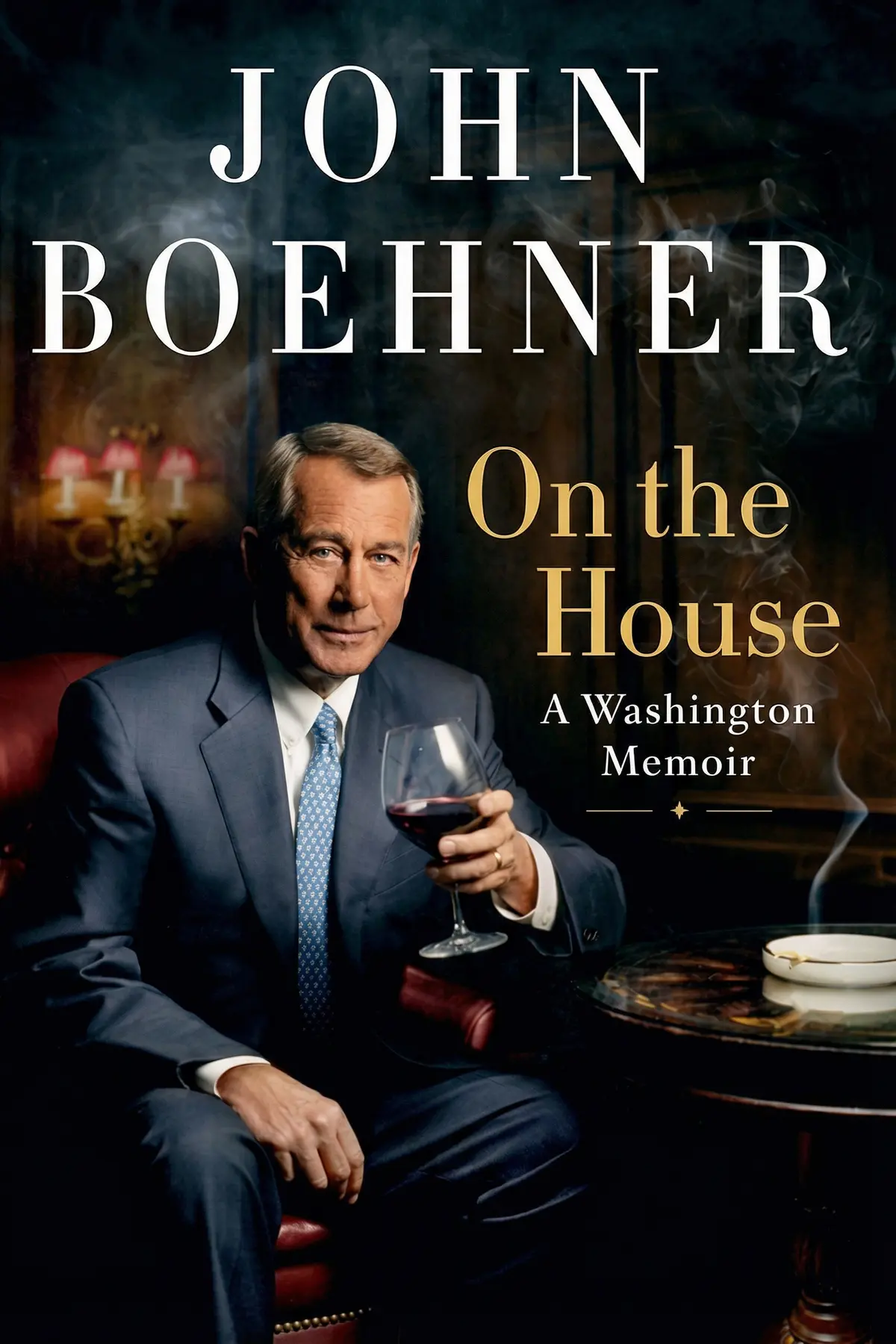
A former Speaker of the House tells how a bartender's son fought perks and waste inside Congress, and how he watched his own Republican Party trade governing for chaos and attention.
56 sec
Washington can look like pure noise from the outside, but John Boehner’s memoir On the House shows how its dysfunction grew, one fight at a time. Boehner, who went from cleaning bathrooms in his family’s Cincinnati bar to Speaker of the House, counts hypocrisy as a worse vice than his two-pack smoking habit. That single standard runs through his whole story.
He spent his career attacking perks and waste inside his own institution, and made enemies doing it. Then he watched a new kind of Republican arrive who cared less about governing than about breaking things, until he was no longer sure the party was his. Follow him from a bar in a working-class neighborhood to a meeting where the world economy hung in the balance, and you get a clear inside view of how American conservatism changed, along with a portrait of what refusing double standards costs in a place built on them.
1 min 58 sec
An eight-year-old pours beer for factory workers before sunrise. The values he picks up behind that counter will later make him powerful enemies in the most exclusive club in Washington.
1 min 57 sec
A college student with no scholarship, a bad back and no clear goal takes a night job mostly so he can play softball. One coworker’s change of routine turns the drift into a direction.
1 min 52 sec
Party bosses were sure no one with his name could win an election. He had no donors, no contacts and an empty family bank account, and he ran anyway.
1 min 58 sec
A bank that let lawmakers overdraw forever, and a post office with rumors of poker games and worse. Exposing them made him a star, and handed his rivals a grudge they waited years to settle.
1 min 56 sec
A $223 million bridge to an island of a few dozen people became his favorite example of waste. Its sponsor answered the criticism in a way no rulebook covers.
2 min 08 sec
The Treasury Secretary warned that the world economy was about to fall. The hardest votes to win were not from the opposition but from young members who seemed to enjoy saying no.
1 min 55 sec
A presidential candidate suspends his campaign to rescue the economy, and the press applauds. Inside the White House meeting that followed, one man’s silence and one rival’s smile told Boehner how the election would end.
1 min 21 sec
Boehner reached the top and felt less at home there than ever. He became Speaker in 2011, early in Obama’s presidency, and compares leading his party to being mayor of Crazytown. From the start, right-wing Republicans rejected Obama’s legitimacy, and Donald Trump promoted the idea that the president was a hidden Muslim born in Kenya who despised America. Media figures such as Rush Limbaugh, Sean Hannity and Mark Levin, part of what he calls the freak show set, could make or end careers. In 2015 he resigned, glad to leave before the Trump presidency and unsure he still belongs in the party.
The story holds together because of the line running from Andy’s Cafe to that exit. The boy who learned that everyone gets the same welcome fought the House bank, the post office scandal and the earmark trade by the same rule. His complaint about the new right is that rule turned on his own side: talk of principle hiding a hunger for attention. When you weigh a leader, ask whether they hold insiders to the rules they preach, and whether their opposition fixes anything or only draws cameras. Apart from a few rare lapses, Boehner avoided double standards. In the end, it was the party that moved.
John Boehner grew up pouring beer in his family's bar in Cincinnati, one of twelve children in a two-bedroom house. He ended his career as Speaker of the House, and then walked away, unsure he still belonged in his own party. On the House is his account of how that happened. Boehner tells his story as one long argument against hypocrisy. As a newcomer in the early 1990s he helped expose the House bank and the House Post Office scandals, made lasting enemies, and lost his leadership post for years. Back in power, he fought earmarks, including the famous Bridge to Nowhere, and once had a knife held to his throat for it. The second half turns darker. Boehner describes the 2008 financial crisis from inside the room, the new Republicans who seemed to want the government to fail, and John McCain's campaign stunt that, in his view, handed Barack Obama the presidency. Readers get a frank insider's view of how American conservatism changed, and a portrait of what it costs to keep one standard in a city built on favors.
Readers who want an insider's account of how the Republican Party changed from the Reagan era to Trump.
People curious about how Congress really works, from earmarks to the 2008 bailout vote.
Anyone who admires blunt, self-made figures who refuse double standards.
John Boehner was born in 1949 in Reading, Ohio. A Republican, he represented Ohio's 8th congressional district, covering rural and suburban areas near Cincinnati and Dayton, from 1991 to 2015. He served as House majority leader and then minority leader before becoming the 53rd Speaker of the House in January 2011, a post he was re-elected to twice. He resigned from Congress in October 2015 and in 2016 joined the lobbying firm Squire Patton Boggs and the board of Reynolds American.
Listeners find this book exceptionally engaging, with one remarking that it unfolds much like a thriller. They also appreciate its useful political takeaways, with one review pointing out the fresh outlook it provides on life in Congress. Furthermore, the prose is commended for its chatty delivery, and listeners gravitate toward its homespun, subtle humor. They value the writer’s transparency—with one review noting his blunt evaluations of figures and situations—and find the narratives compelling, particularly the ones from his congressional years. This book offers significant clarity on the world of politics, and listeners enjoy the author’s relatable, unpretentious nature.
Wow, this was an absolute ride from start to finish. I listened to the audiobook, and hearing John Boehner narrate his own story with that signature dry wit was worth every penny. He doesn't hold back on the profanity or his opinions on Ted Cruz, whom he clearly loathes with every fiber of his being. To be fair, I expected a dry political manual, but what I got was a fast-paced, almost thriller-like account of his time in the House. It’s incredibly rare to find a politician who speaks this candidly about the 'crazies' in his own party. While he definitely paints himself in a favorable light, his down-to-earth personality makes the whole thing feel like a conversation over a glass of red wine. It’s an entertaining peek behind the curtain of Washington’s dysfunctional machine.
Show moreThe chapter on Ted Cruz alone is worth the price of admission. Boehner is absolutely brutal, calling out what he sees as the performative nonsense that has replaced actual governing in Washington. In my experience, most political memoirs are boring slogs, but this one reads more like a tell-all from a guy who has finally retired and stopped caring about who he offends. He brings a very practical, blue-collar perspective to the Speaker’s chair, likely a result of his years hustling in the private sector before entering politics. Even if you don't agree with his Reagan-era economics, you have to admire the honesty he brings to these pages. It is a cynical, hilarious, and deeply insightful look at how the sausage really gets made.
Show moreA fascinating look at the 'other world' of Washington that most of us only see through a 24-hour news cycle lens. Boehner’s transition from a family of Democrats to a Reagan Republican is told with a level of sincerity that I found quite moving. He understands that government is about solving problems through collaboration, a concept that seems lost on many of his successors. The book is filled with practical insights into the mechanics of leadership and the difficulty of herding a diverse political caucus. Not gonna lie, I laughed out loud several times at his descriptions of various 'jackass' colleagues. It’s an honest, unvarnished, and highly entertaining account of a life spent in the middle of the political arena.
Show moreAfter hearing the hype about Boehner’s 'unfiltered' thoughts, I was pleasantly surprised by how much heart is actually in this book. While he is definitely famous for his dry wit and love of a good glass of Merlot, his reflections on his working-class roots in Ohio felt incredibly genuine. He provides a fascinating, almost thriller-paced look at the inner workings of the House that you just don't get from standard news coverage. Frankly, his candid assessments of his colleagues—especially those he labels the 'crazies'—are refreshing in an era of scripted political talking points. Even though I don't agree with every policy decision he made, I finished the book with a lot of respect for his down-to-earth approach to leadership. It’s an entertaining, folksy, and deeply practical look at the realities of modern American politics.
Show moreAs someone who grew up in the Midwest, I found the early chapters about his childhood in Cincinnati fascinating. Living in a two-bedroom house with eleven siblings and working at his family’s bar at dawn is a world away from the typical elite political background. Frankly, these formative years explain a lot about his 'on the house' approach to governance and his later frustrations with ideological purity. The book moves quickly and offers practical insights into how bills actually move—or get stuck—in the House. I do wish he had gone deeper into the specifics of his immigration reform proposals rather than just blaming Obama for the failure. Still, it’s a refreshing, folksy memoir that avoids the usual stuffiness found in DC biographies.
Show morePicked this up on a whim and ended up finishing it in two sittings because the pacing is just so brisk. Boehner treats politics like the football games he played at Moeller High, and that competitive, team-oriented mindset permeates every chapter. He offers a very candid assessment of the shift within the Republican Party, tracing the line from the 1990s revolutionaries to the modern-day firebrands he clearly can't stand. Some might find his bluntness offensive, but I appreciated the lack of a filter in a genre that is usually scrubbed clean by PR teams. My only real gripe is that he glosses over some of his own policy failures to focus on personality clashes. It’s a great look into the 'inner workings' of the Capitol for any political junkie.
Show moreNot what I expected from a former Speaker of the House, but in the best way possible. Boehner’s writing style is incredibly conversational and full of the kind of folksy wisdom you’d hear at a Cincinnati dive bar. While the anecdotes are wildly entertaining, particularly those involving his interactions with the 'Young Guns,' the book also offers a sobering look at how the party changed during his tenure. To be fair, his description of the GOP’s metamorphosis is authentic and provides a necessary perspective on the current political climate. It’s a great read for the political gossip, but it also delivers some surprisingly practical insights into the mechanics of governance. If you want a dry policy book, look elsewhere, but if you want the real story of Washington, this is it.
Show moreFinally got around to reading this, and I have to say that John Boehner is a much better storyteller than I gave him credit for. He manages to make the mundane aspects of congressional committee assignments feel high-stakes and interesting. The way he describes the influence of right-wing media on his caucus is particularly eye-opening and provides a necessary perspective on today's polarization. His down-to-earth personality shines through, making him seem like the kind of guy you'd actually want to grab a beer with at the end of a long shift. I didn't care for the constant swearing, as it felt like he was trying too hard to be 'edgy,' but the insights into the 2010 wave are invaluable. A solid, engaging memoir.
Show moreEver wonder how we ended up with such a divided government? This book provides some answers, though perhaps not the ones John Boehner intended to give. While his stories about playing golf with Gerald Ford and his disdain for the Tea Party are amusing, the truth is that this memoir feels largely self-serving. He constantly complains about 'the crazies' ruining the GOP, yet he admits to going along with the 2013 government shutdown despite knowing it was a disaster. Look, it’s hard to respect a leader who identifies a moral wrong and then chooses to follow the mob anyway. The language is unnecessarily foul, and the constant 'Boehnerisms' feel a bit forced after a while. It's a quick read, but ultimately a frustrating one.
Show moreThis book is a definitive waste of paper and ink from a man who spent his career playing both sides. Boehner wants us to believe he was the only rational adult in the room, yet his record shows a consistent lack of spine when it actually mattered. He rails against the Tea Party 'crazies' but then handed them the keys to the kingdom whenever he felt his own speakership was threatened. The entire narrative is a series of self-serving excuses wrapped in a 'good ol' boy' persona that feels entirely manufactured for this book tour. Frankly, as an Ohioan, I find his attempt to rewrite his legacy as a courageous centrist to be insulting. Save your thirty dollars and read a history book instead.
Show moreIt is the memoir of a former Speaker of the House who grew up working in his family’s bar in Cincinnati. Boehner traces his path from odd jobs and a sales career into Congress in 1991, his fights against insider perks and earmarks, the 2008 financial crisis, and his growing unease with a Republican Party he felt was drifting toward chaos, which led him to resign in 2015.
In the early 1990s, members of Congress had to cash their pay at a House bank open only to them, where they could overdraw without limit and pay no interest. The bank bounced more than 8,000 of its own checks a year. Boehner and six other Republican newcomers, the Gang of Seven, made it public, and within a year the bank closed for good.
As minority leader, he had to win Republican votes for President Bush’s $700 billion rescue after Treasury Secretary Hank Paulson warned the financial system was close to collapse. Boehner argued that normal rules on spending did not apply in a crisis. He blames newer Republicans who, in his view, wanted the government to fail and enjoyed the media attention that every no vote brought them.
Boehner describes leading House Republicans as Speaker like being mayor of Crazytown. Right-wing members rejected Obama’s legitimacy, and conservative media figures such as Rush Limbaugh, Sean Hannity and Mark Levin could make or break careers. He stepped down in 2015, grateful to leave before the Trump presidency and unsure he still belonged in the party.
The memoir argues for holding everyone, insiders included, to the same rules, even at personal cost, as Boehner did with the House bank and earmarks. It also offers a way to judge politicians: ask whether opposition solves a problem or only earns attention, and whether a dramatic gesture, like McCain’s campaign suspension, comes with a real plan.
J. Craig Venter


Yanis Varoufakis

Ishmael Beah

James Herriot

Pankaj Mishra

Barack Obama

Anthony Pratkanis
AUDIO SUMMARY AVAILABLE
Get the key ideas from On the House by John Boehner, plus 5,000+ more nonfiction titles.









