

14 min 05 sec
Available in: English
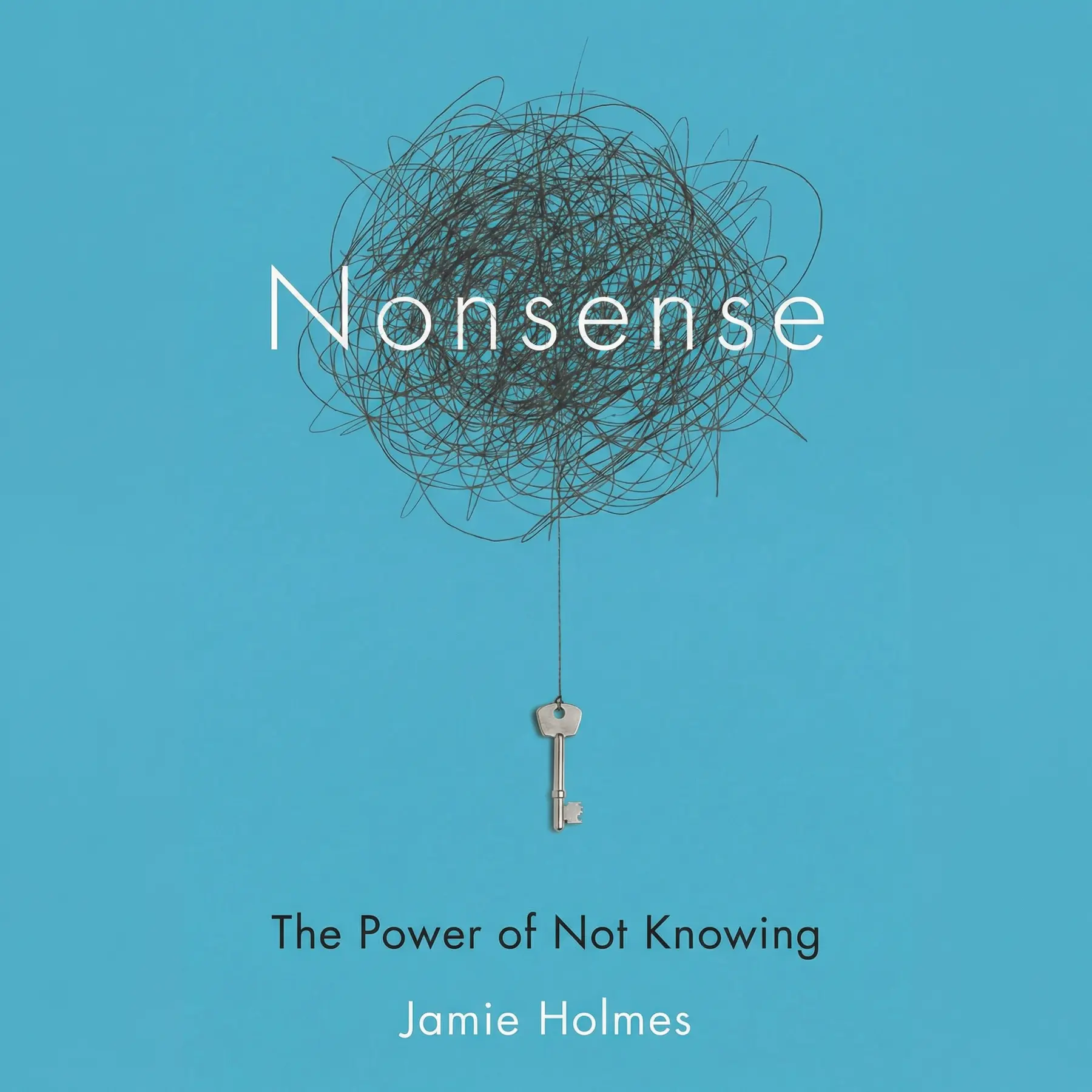
Nonsense: The Power of Not Knowing
By Jamie Holmes
Explains why not knowing unsettles adults, how that unease hardens opinions and rushes big decisions, and how calm, patience and a little playfulness let you use ambiguity instead of being driven by it.
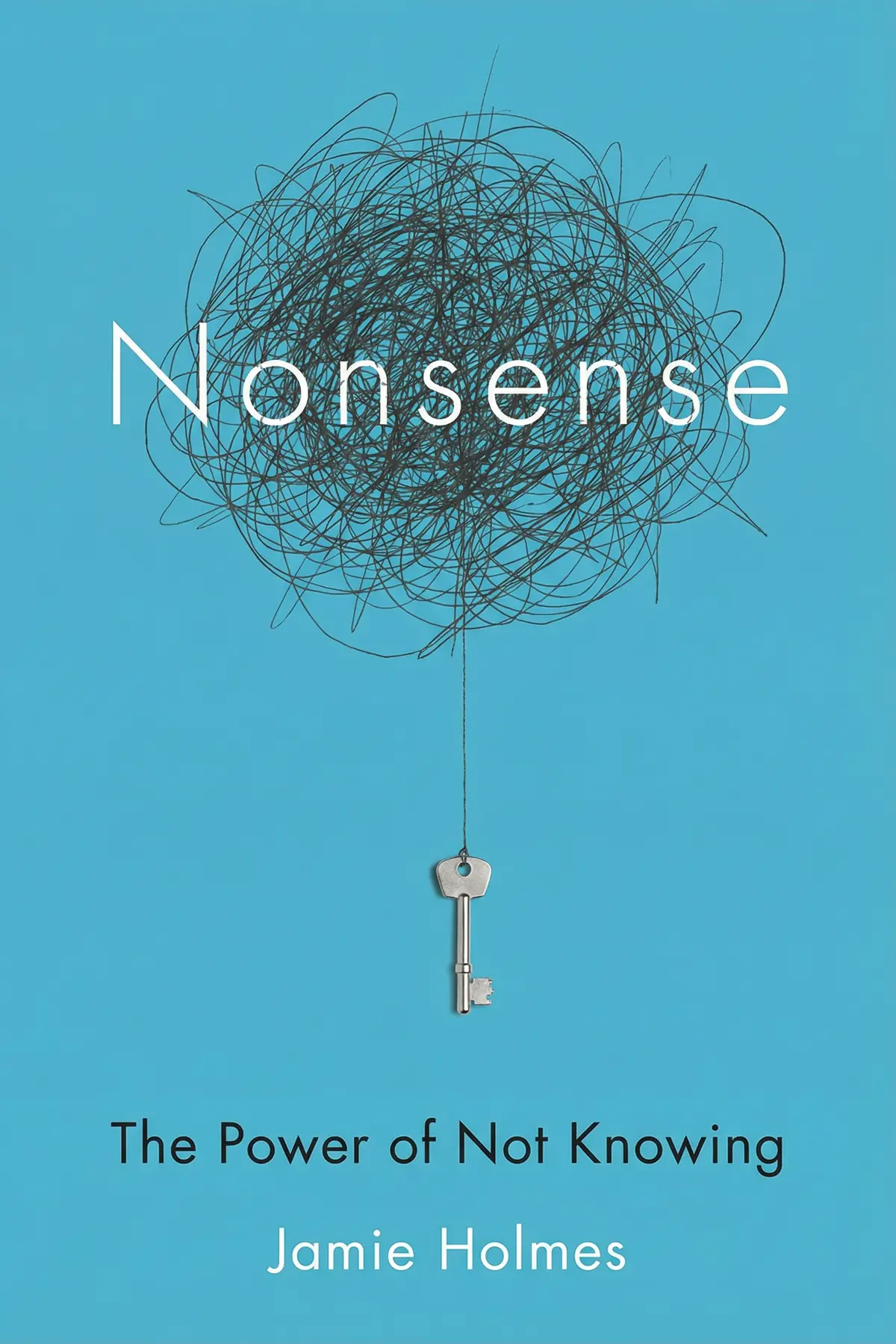
Table of Content
1. Introduction
1 min 03 sec
Uncertainty makes most adults grab the nearest simple answer, often at the worst possible moment. In Nonsense, writer Jamie Holmes describes a study in which a loud printer running in the room changed how people judged a criminal case. The unsure switched sides faster as the noise grew, while the confident only dug in deeper.
Holmes argues that ambiguity unsettles us, and the discomfort pushes us toward quick, rigid answers, from snap opinions to hasty marriages. If you can notice that pull and stay calm inside it, uncertainty stops making your choices for you and becomes something you can use. His evidence runs from a vodka ad floating in Boston Harbor to a story by Franz Kafka, a doomsday group waiting for a flying saucer and a long standoff in Texas.
Along the way come habits worth trying this week: using a small puzzle to hold attention, helping someone learn a confusing task, and knowing when a big decision should wait.
2. Use a small puzzle to hold attention
1 min 27 sec
A joke that seems to miscount and an ad where the product is hard to find both rely on the same brief moment of confusion. Why does it delight us, and when does it stop working?
3. Stress makes doubters cave and believers harden
1 min 45 sec
A few trick playing cards and a noisy office machine were enough to shift people’s views on serious questions. The direction of the shift depended on something the people themselves hardly noticed.
4. Absurdity can sharpen an adult mind
1 min 39 sec
Grown-ups usually explain away anything strange as fast as they can, while a small child will invent a story for it. A study using a bizarre Kafka tale found an unexpected benefit in the adult discomfort.
5. Spot the pull toward one loud voice
1 min 50 sec
In anxious times, a leader who refuses complexity can become more popular, not less. The same craving for a simple story once kept a group waiting for a flying saucer, and explaining its failure.
6. See how crises push people into rash life choices
1 min 40 sec
After one famous earthquake, a groom married a woman whose name he could not give. After a hurricane, rings and divorce papers sold side by side. Something about disaster speeds up love in both directions.
7. Calm the room and learning follows
1 min 41 sec
A teacher once took desks out of a classroom of struggling French students, banned note-taking and told them not to try to remember anything. What their regular teacher found a week later surprised her.
8. Keep options open when stakes are highest
1 min 47 sec
One army ignored warning signs because its leaders had settled on a single story. One police operation lost patience with a slow negotiation. Both show what it costs to close an open question too early.
9. Conclusion
1 min 13 sec
Nonsense makes a case that sounds modest and reaches surprisingly far: the feeling of not knowing is itself a force, and it acts on us whether or not we notice it. A hidden bottle in Boston Harbor turns it into attention. A flashed black heart turns it into a firmer opinion. An earthquake turns it into a wedding with a bride whose name the groom cannot give. In each case the discomfort comes first and the decision follows, usually too fast.
Holmes’s practical answer is to put a pause between the two. When a choice feels urgent mainly because things are unclear, treat that urgency as a warning sign and wait until the stress has passed, the way he advises against quitting a job after a single bad day. When you lead others through confusing work, make the setting calm, as Michel Thomas did with armchairs and plants. And when a group rushes to agree, give someone the job of finding the holes in the plan.
The girl who told Piaget that trees make the wind was wrong, but she was at ease not knowing. Adults can learn to stay there a little longer.
About this book
What is this book about?
Most adults dislike things that make no sense. A painting with an apple floating in front of a man's face, a rumor at work or a sudden crisis all create the same itch to settle the question quickly. Jamie Holmes argues that this itch shapes far more of life than we realize, from the jokes we laugh at to the opinions we defend and the people we marry. Holmes draws on decades of psychology, including flashed trick playing cards, a noisy printer in a jury-style study and a Kafka story that sharpened readers' minds. He follows our dislike of ambiguity into politics, a doomsday cult, wedding records after an earthquake, a famous language teacher's classroom, a war that caught its leaders unprepared and a standoff in Texas. Readers learn when a small puzzle helps and when unresolved uncertainty hurts. They learn why stress makes doubters cave and believers dig in, and how to lower the pressure on themselves and others. They also come to see why waiting until they are calm is often the wisest decision available.
Book Information
Who it's for
Decision makers under pressure
Professionals who make big calls under pressure and want to stop deciding on their worst days.
Teachers and managers
Managers and teachers who hand people unclear tasks and want them to learn faster.
Curious minds
Curious readers who want to know why uncertainty hardens opinions and fuels simple, loud answers.
About the Author
Jamie Holmes
Jamie Holmes is a writer whose books include Nonsense, The Free and the Dead and 12 Seconds of Silence. His articles have appeared in The New York Times, The New Yorker, Slate, WIRED, The Atlantic and USA TODAY. Before writing full time, he worked as a research coordinator in Harvard's Department of Economics, focusing on behavioral economics. He was also a policy analyst in international development at New America and a Future Tense Fellow, and he holds a degree from Columbia University's School of International Affairs.
Ratings & Reviews
Ratings at a glance
What people think
Listeners find the title to be an enjoyable and intriguing listen, with striking examples that ensure the material remains highly captivating.
Top reviews
Sarawut
Wow, I didn't expect a book about ambiguity to be so incredibly gripping and relevant to my daily life. Holmes uses vivid examples, like the weird way we reacted to that viral white and gold dress, to show how our brains struggle with conflicting information. It’s a masterclass in pop-psychology that feels much more nuanced than the typical Malcolm Gladwell fare because it admits that the world isn't easily solved. The stories about how diversity in Japanese society led to bursts of creativity two generations later really stuck with me. Frankly, this book changed how I view my own knee-jerk reactions on social media. It teaches you that owning your uncertainty isn't a weakness; it actually makes you more empathetic and alive. This is the kind of book you’ll want to highlight every other page.
Show moreAnchalee
Finally got around to reading this, and it’s easily one of the most fascinating deep-dives into human cognition I’ve picked up this year. Holmes has a way of taking complex ideas, like Piaget’s assimilation and accommodation, and making them feel relevant to why we buy certain clothes or how we vote. The chapter on the 'Hidden A's' opened my eyes to how we subconsciously affirm our beliefs when we feel threatened by new, confusing information. I particularly appreciated the discussion on how medical professionals often over-test patients just to avoid the anxiety of a 'not sure' diagnosis. It’s a sparkling, well-written exploration of the human mind that encourages us to stop rushing toward easy answers. If you’ve ever felt overwhelmed by the complexity of the modern world, this book will give you a new lens to view it through.
Show moreAey
Not what I expected at all, but in the best way possible. This isn't a boring self-help book; it's an engrossing look at how 'nonsense'—the stuff that doesn't fit our worldview—actually drives progress. The stories about Alexander Graham Bell and the development of the Zara fashion chain were brilliant illustrations of how embracing uncertainty can lead to massive success in business. I loved the idea that the capacity to be puzzled is the premise of all creation. Holmes manages to bridge the gap between hard science and storytelling with ease, making for a book that is both educational and fun. It made me realize that my own discomfort with not knowing is actually an opportunity to be more creative. Highly recommend this to anyone who feels stuck in their thinking!
Show moreMaria
Ever wonder why people cling to crazy beliefs even when they’re proven wrong? Holmes dives deep into this phenomenon by examining the Waco Siege and the 1993 standoff, illustrating how the human brain panics when faced with total uncertainty. I found the section on 'cognitive closure' particularly enlightening because it explains our desperate need to simplify a messy world into neat, manageable boxes. While the narrative occasionally drifts into over-detailed anecdotes that feel a bit disconnected from the core thesis, the underlying message is incredibly powerful. We are naturally wired to hate ambiguity, yet learning to sit with that discomfort is exactly what leads to better decision-making. It’s a fascinating read for anyone who wants to understand why we jump to conclusions or entrench ourselves in tribalism during stressful times.
Show moreBella
As someone who struggles with a high need for closure, I found Holmes’ exploration of the 'Hidden A’s' and our visceral reaction to disorder surprisingly helpful. The book argues that in an unpredictable world, our IQ matters less than our ability to handle what we don't understand. I loved the section on how bilingualism and biculturalism can foster a more creative mindset by forcing the brain to juggle multiple meanings at once. Though the author’s foray into the Israeli-Palestinian conflict felt a bit tone-deaf and oversimplified, the general point about diversity being a catalyst for innovation was well-made. The writing is snappy and accessible, making complex cognitive theories feel like a casual conversation. It’s a great tool for anyone looking to increase their tolerance for the grey areas of life.
Show moreSaovapa
Truth is, we live in a world that demands black-and-white answers, so Holmes’ defense of 'shades of grey' feels like a necessary intervention. The book is at its best when it’s exposing the hazards of denying ambiguity, such as the tragic failures during intelligence briefings or the Ruby Ridge standoff. Holmes provides a 'closure test' that really makes you reflect on your own mental rigidity and how stress or fatigue can make you more likely to revert to stereotypes. My only gripe is that some of the later chapters on creativity felt like they belonged in a different book entirely. However, the prose is so engaging and the examples are so diverse that I didn't mind the occasional detour. It’s a solid 4-star read that offers some much-needed perspective on our collective need for certainty.
Show moreAnong
The premise of this book is absolutely stellar, yet the execution left me feeling a bit like the doomsday cult members described in the first chapter—waiting for a payoff that never quite arrived. To be fair, the first third is brilliant, especially the experiments involving reverse-colored playing cards that prove we see what we expect to see. But as the pages turn, the stories become increasingly redundant and start to feel like filler for a thesis that could have been a long-form essay. I was particularly confused by the massive section of endnotes at the back, which makes the actual book feel surprisingly short. It’s a decent enough read if you enjoy trivia and light psychology, but don't expect a rigorous academic breakdown of cognitive science. It’s more of a collection of interesting 'what if' scenarios.
Show moreTakeshi
While I enjoyed the vivid anecdotes about the failure of the midi-skirt and the psychology of bilingualism, the book’s overall structure is undeniably messy. Holmes is a gifted storyteller, but he often fails to connect his fascinating examples to a central, meaningful point. I found myself halfway through a chapter on motorcycle racing wondering how we got there and what it had to do with ambiguity in the first place. The book ends abruptly at around 70%, with the rest being a massive wall of endnotes that felt like a way to pad the page count. It’s a quick, pleasant read if you take it for what it is—a collection of 'cool facts'—but it’s definitely not the definitive text on uncertainty that I was hoping for. It’s just okay.
Show moreRuangrat
Jamie Holmes certainly picked an appropriate title for this book, because much of the middle section felt like total nonsense to me. The author starts with a compelling premise about how we handle the unknown, but the actual delivery is a disjointed mess of scissors-and-glue research. Specifically, Chapter 2 was an absolute slog; he introduces the 'Hidden A’s' but then fails to even define 'abstraction' after making the reader hunt through sixty pages of extraneous fluff. I felt like I was doing more work to cobble together his points than he did to write them. Some of the stories, like the one about the San Francisco earthquake and sudden marriages, are interesting on their own. However, the book lacks any real penetrative analysis to tie these threads together into a cohesive argument.
Show moreEvelyn
This was a massive disappointment that felt more like a disorganized collection of Wikipedia entries than a cohesive psychological study. I honestly suspect the author was playing a trick on the reader by making the book itself as confusing and muddled as the 'nonsense' he claims to investigate. He makes bold, pseudo-profound claims about war and marriage that aren't backed up by anything other than his own fancy prose. For example, quoting the 'Cambridge University Effect' when it has been thoroughly debunked really damaged his credibility for me. The structure is a complete disaster, with trains of thought that leapfrog over digressions and then backtrack to points that were supposedly finished chapters ago. Save your money and just read the original research papers he quotes; you’ll get much more substance and a lot less frustration.
Show moreQuestions about this book
What is the main idea of Nonsense by Jamie Holmes?
Holmes argues that adults are deeply unsettled by things they cannot explain. Light ambiguity can amuse us or catch our attention, as in jokes and clever ads. Stronger or unresolved ambiguity creates anxiety that pushes us toward quick, rigid answers, from hardened opinions to rushed marriages after disasters. Since ambiguity never goes away, the book’s case is that learning to cope with it calmly matters, especially in high-pressure settings like war or hostage negotiation.
How does ambiguity affect our decisions according to Nonsense?
Holmes describes studies showing that unresolved ambiguity makes people cling to what feels certain. After seeing trick playing cards, volunteers held their existing views more firmly. In Arie Kruglanski’s study, a loud printer made unsure people change their minds faster while confident people grew more confident. On a larger scale, the San Francisco earthquake of 1906 and a 1989 hurricane in South Carolina sped up weddings, divorces and births.
What practical advice does Nonsense give?
The book’s central advice is to avoid important decisions while stressed. Holmes suggests waiting until you are calm rather than, for example, quitting a job after one bad day. He also points to Michel Thomas, who taught languages by making students relax, as a model for giving others unclear tasks. From military practice comes the red team, a group charged with finding weaknesses in a leader’s plan.
Who should read Nonsense?
It suits people who make decisions under pressure and want to understand why stress pushes them toward rash choices. Managers and teachers will find the Michel Thomas story useful for helping others learn. Readers interested in politics will see how anxiety favors simple, loud answers and silences dissent, while marketers and writers can learn how a small, solvable puzzle holds attention.
Readers also enjoyed

59 Seconds: Change Your Life in Under a Minute
Richard Wiseman




A Liberated Mind: How to Pivot Toward What Matters
Steven C. Hayes


Acting with Power: Why We Are More Powerful Than We Believe
Deborah Gruenfeld


Age of Propaganda: The Everyday Use and Abuse of Persuasion
Anthony Pratkanis
AUDIO SUMMARY AVAILABLE
Listen to Nonsense in 15 minutes
Get the key ideas from Nonsense by Jamie Holmes, plus 5,000+ more nonfiction titles.
- 5,000+ titles
- Listen as much as you want
- 7-day free trial
- Cancel anytime









