

12 min 34 sec
Available in: English
Nomad Capitalist: Reclaim Your Freedom
Shows how to stop depending on one country by choosing where to live, bank and invest separately, so you pay less, earn more on savings and stay protected when one government changes the rules.
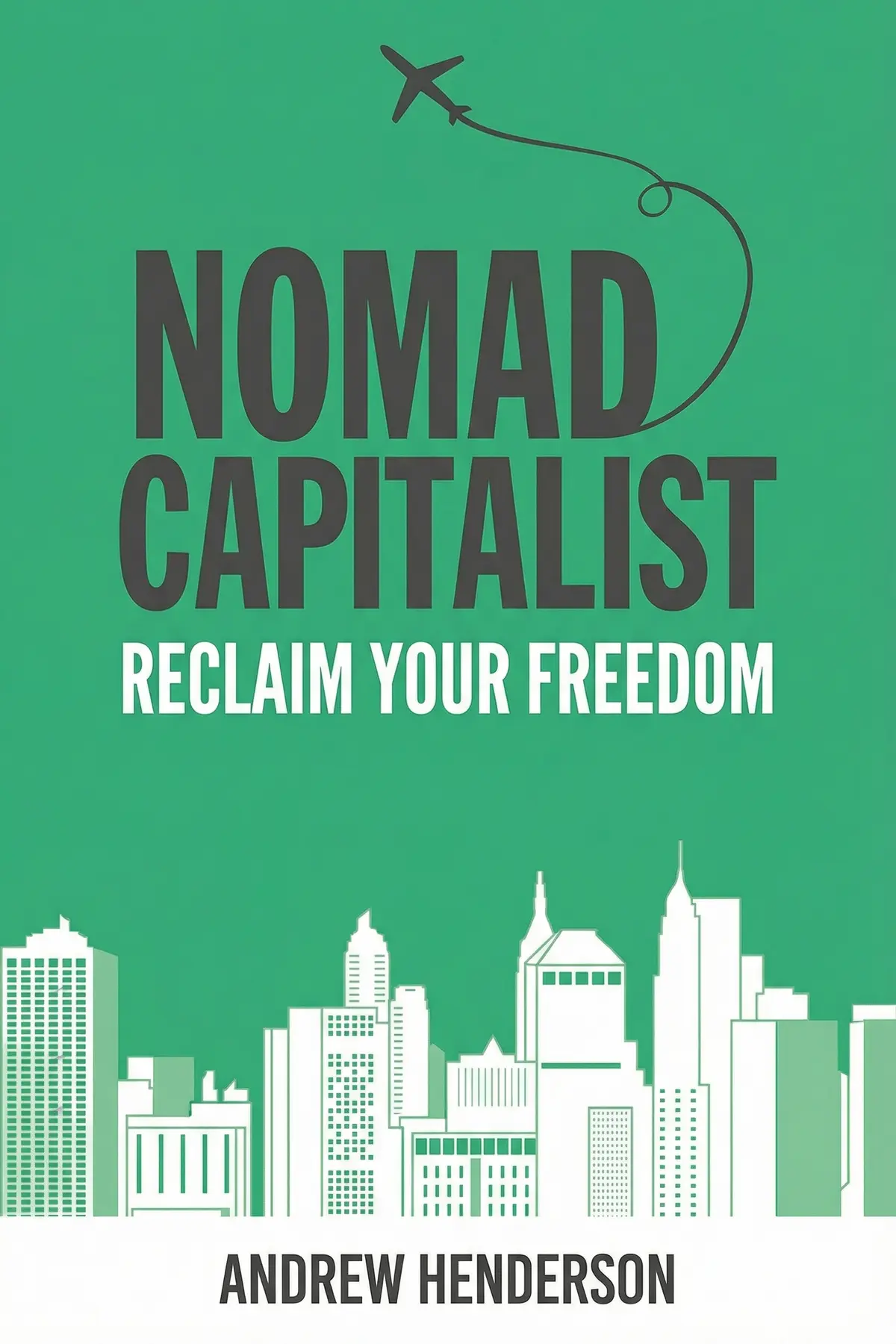
Table of Content
1. Introduction
1 min 07 sec
If you work hard and pay your taxes but still feel the system is set against you, Andrew Henderson has an unusual suggestion: stop treating your birth country as the only place your life can happen. In Nomad Capitalist, Henderson, founder of a consulting firm with the same name, argues that the internet and remote banking have made borders far less binding than most people assume. You can live in one country, run a business from a second, bank in a third and invest in a fourth. His rule for choosing is short: go where you’re treated best.
His case is that spreading your life across countries, the way an investor spreads money across assets, brings lower costs, better returns and protection when any one government turns against you. It also calls for humility and good advice, because shortcuts in this world are expensive. What follows is a practical map: which setup suits your life, why a foreign bank account comes first, where to put money before a market gets crowded, and where you should never try to save.
2. Stop betting your whole life on one country
2 min 06 sec
Most people assume that being born in a rich country means they already have the best deal available. Henderson thinks that assumption is getting more expensive every year, and he offers a different way to think about where you belong.
3. Pick the global setup that fits your life
2 min 06 sec
A global life sounds like selling everything and living out of a suitcase. Henderson describes several very different setups, including one that asks for nothing more than six months and an open mind.
4. A foreign bank account is your first Plan B
1 min 56 sec
Keeping all your savings at home feels like the safe choice. Henderson describes the ordinary accidents that can freeze an account overnight, and the simple move that also changes what your savings can earn.
5. Buy into markets before they get crowded
2 min 04 sec
The cities everyone praises as success stories look like the safest places to invest. Henderson argues they are often the worst, and explains how to spot tomorrow’s winners while the door is still open.
6. Spend on expertise and save everywhere else
2 min 07 sec
Living internationally can feel like a contest to find the cheapest deal. Henderson warns that a bargain in the wrong place can cost ten times what it saved, and explains how to tell the two kinds of decision apart.
7. Conclusion
1 min 08 sec
Nomad Capitalist rests on a simple reversal. Most people accept their country’s terms and try to work harder inside them. Henderson asks you to treat countries like providers competing for your business, and to give each part of your life to whichever one serves it best. The freedom he describes comes from many small moves. Each one makes you a little less dependent on any single government, bank or market, so that a sudden tax change or a crisis hits only one part of your life.
None of it requires an overnight leap. Opening one account abroad and moving part of your savings there is a step most people can take this year. A six-month stay in a place like Vietnam or Montenegro tests whether the life suits you before you commit to it. A small first property in a rising market such as Georgia teaches you the local rules while it pays you. And whenever law, tax or citizenship is involved, the cheap option usually turns out to be the expensive one.
The world, as Henderson sees it, is open for business. You can keep ordering every dish from one table, or you can walk the whole buffet.
About this book
What is this book about?
Many hardworking people feel the system in their home country is working against them. Taxes keep rising, red tape slows their businesses, and political trouble arrives just as they start to get ahead. Andrew Henderson argues that the fix may not be working harder. It may be looking elsewhere. His rule is to go where you're treated best. Because the internet and remote banking have loosened the hold of borders, you can live in one country, run a company from another, bank in a third and invest in a fourth. Henderson lays out ways to build that life: a single home abroad, a set of base cities, or a six-month trial. He explains why a foreign bank account is an early step, and why the best investments are in markets like Georgia, Serbia and Mexico that are still rising, not in famous cities that have already peaked. He also covers the attitude that makes it work: humility instead of preaching, and paying for quality advice whenever law, tax or citizenship is involved. Readers get a practical framework for spreading their lives and money across borders so that no single country can limit them.
Book Information
Who it's for
Tired of high taxes
Entrepreneurs and remote workers tired of high taxes and red tape at home.
Savers earning little interest
Savers earning almost nothing on bank deposits who want protection beyond one currency.
Curious about life abroad
Professionals curious about living abroad who want a low-risk way to test it first.
About the Author
Andrew Henderson
Andrew Henderson is the founder and chief executive of Nomad Capitalist, an international consulting firm. His father worked in financial services and hosted a talk show. Henderson started a radio business as a teenager and sold it in his twenties. He set up Nomad Capitalist to help people gain personal freedom and improve their finances. The firm advises clients on lowering their taxes lawfully, spreading their wealth across countries and getting second citizenships.
Ratings & Reviews
Ratings at a glance
What people think
Listeners find the material highly educational and a swift, engaging read, featuring well-crafted prose that introduces them to global citizenship concepts. The content earns praise overall, with one listener highlighting it as an entertaining manual for geographic and economic diversification. However, perspectives on the narrative quality and the usefulness of the advice are varied—while some feel it offers plenty of practical instruction, others suggest it lacks actionable steps, and while many like the intriguing anecdotes, some feel they are repetitive. Finally, views on the book's value are split between those who find it worthwhile and those who see it as a poor investment.
Top reviews
Jiraporn
Wow, Henderson really managed to flip my entire perspective on what it means to be a citizen. I had absolutely no idea that you could approach residency and banking with the same consumer mindset you use to buy a car. This book is a testament to the modern era where we are no longer tethered to our place of birth. The author teaches you how to be a respectful, shrewd global citizen who understands how the world actually works. I loved the pragmatic examples of how small wins in tax savings can compound into massive wealth over just a few years. It's a game-changer for anyone who is single and location-independent. The writing is punchy and full of humor, making what could be a dry subject very engaging. I've already started looking into some of the banking options in Singapore that he mentioned. Highly recommended for the brave.
Show moreElla
Finally, a book that treats international living like the strategic business decision it is. I've been following Henderson's YouTube channel for a while, and the book puts all his best ideas into one well-organized place. The 'Nomad Capitalist' lifestyle isn't just about saving money; it's about going where your values are appreciated. If you feel like your current country is treating you like a piggy bank rather than a person, you need this. The chapters on diversifying your physical assets and finding safer currencies are brilliant. It's written with a sense of urgency that I found motivating. While some critics call it selfish, I see it as being responsible for your own future. Why should I be forced to fund a system that is failing when I can contribute to an emerging economy that actually wants me there? Five stars for the clarity and the courage to say what most people are afraid to.
Show moreMadison
Look, if you are making six figures and still living in a high-tax jurisdiction, you are simply doing it wrong. This book is the wake-up call I needed. It completely reframed how I see my relationship with the government. Henderson is a gifted writer who mixes serious financial issues with novel insights about the world. He makes a great point: you don't have to evangelize or convince anyone else you're right; you just have to move. The diversification strategies he outlines for bank accounts and passports are something every high-net-worth individual should be implementing immediately. I appreciated his honesty about the 'honeymoon phase' of moving abroad and the need for due diligence. It’s not just a book; it’s a blueprint for a more free and prosperous life. My hair is on fire with new ideas for my business. Absolutely essential reading for the modern entrepreneur.
Show moreKamol
Picked this up because I was tired of feeling like my business was just a tax farm for the government. This book is a catalyst for anyone wanting to take their freedom to the next level. I’ve lived in Portugal for a few years now, but I realized after reading this that I’ve barely scratched the surface of true geographic diversification. Henderson’s advice on seeking out 'emerging markets' instead of just sticking to the OECD path is eye-opening. Personally, I appreciated the well-thought-out organization of the chapters; he builds his points logically, starting with mindset before moving into the specifics of passports and banking. It’s an uncomfortable read at times because it challenges your national loyalty, but it's a necessary one. If you are a location-independent entrepreneur making six figures, you simply cannot afford to ignore these strategies. It’s about more choice, more diversification, and ultimately, more fun.
Show moreThida
The gold mines of information regarding multi-pronged portfolios are genuinely impressive in this volume. While many people focus only on their stock portfolio, Henderson argues for a portfolio of citizenships and residencies to hedge against political risk. In my experience, most business books are fluff, but this one actually provides a framework for 'location independent living' that feels attainable. I did find some of the anecdotes about his time in the Balkans a bit repetitive, and he definitely has a libertarian streak that might rub some the wrong way. But you can't argue with the logic: why stay where you are taxed 50% when you can go where you are treated best? The chapter on dating and marriage felt a little out of place and perhaps a bit dated, yet the core financial advice is robust. It's a must-read for anyone looking to diminish their financial risks in an increasingly unstable global economy.
Show moreAdam
As someone who has always been wary of government overreach, I found this manifesto to be a breath of fresh air. Henderson doesn't just complain about the system; he offers a pragmatic way to opt-out. The book is full of interesting anecdotes about buying foreign property and the benefits of second passports. It's not a secret that the West is struggling, and seeing the world through the lens of an 'emerging market' investor is a helpful shift. I will say, the author is clearly selling his own services throughout the text, which can get a little tiring. You have to filter through the sales pitch to get to the meat of the strategy. Still, the underlying message—that you don't have to be a victim of your geography—is incredibly powerful. It’s an entertaining guide that will expand your outlook on what is possible in the 21st century.
Show moreSuvannee
Nomad Capitalist is a fascinating look at how the global elite actually structure their lives to maximize freedom. I particularly enjoyed the sections on 'legal' tax avoidance and how to use different jurisdictions for different needs. The author makes a compelling case for why entrepreneurs should be mobile. Some of the data feels a bit cherry-picked, and I suspect some of the 'simple' processes he describes are much more bureaucratic in reality. For example, getting a passport in some of these countries isn't just a matter of writing a check. However, the book serves its purpose as a mindset shifter. It makes you realize that the 'greatest country on earth' rhetoric we hear in the US is often just a way to keep people from looking at better options abroad. It’s a quick read that packs a punch, even if it leaves you wanting more technical details.
Show moreHiroshi
Ever wonder how people actually manage to hold five passports while living in Georgia or Montenegro? This book provides a decent introduction to that world, but it feels more like a collection of blog posts than a cohesive guide. To be fair, Henderson grabbed my attention with ideas like 'shuttles are for slaves' and the importance of diversifying your residency to avoid being a 'sitting duck' for the taxman. However, I found myself getting bored to tears by the middle. The author spends way too much time complaining about how high taxes are in the US and not enough time explaining the actual mechanics of moving money. The constant mentions of his own real estate deals in Cambodia started to feel like a humble-brag after the third chapter. It’s a solid mindset book that will certainly foment a spark of interest, but don’t expect a step-by-step manual. It’s mostly just awareness-building.
Show moreJirapat
Frankly, the information here is a bit of a double-edged sword. On one hand, the concept of being a 'Nomad Capitalist' is empowering and offers a fresh perspective on global citizenship that most people never consider. Henderson is a gifted enough writer to make boring topics like bank jurisdictions and offshore audits feel somewhat interesting. On the other hand, the prose is often clunky, and the narrative plods along like a textbook. He uses strange phrases like 'tinfoil chapeaus' that just don't land. My biggest gripe is that he avoids the reality of the nomad lifestyle: if you have homes everywhere, do you really have a home anywhere? Relationships require more than three months of presence to thrive. Truth is, this is a niched iteration of the '4-Hour Workweek' that adds some helpful financial layers but lacks the charm or narrative drive of Tim Ferriss’s original work.
Show moreLaddawan
After finishing this, I'm left feeling that Henderson's worldview is incredibly narrow and arguably anti-social. While the core idea of 'going where you're treated best' sounds appealing on a surface level, the execution in this book is frankly insufferable. The author comes across as quite smug, frequently dropping unnecessary remarks about 'Western women' and referencing questionable influencers for advice. He advocates for a lifestyle where you extract all the benefits of Western infrastructure—like the internet and global security—without contributing a dime back into the system. Beyond the ethical concerns, the book lacks any real technical substance. It’s more of a 'why-to' than a 'how-to,' serving primarily as a giant marketing funnel for his high-priced consulting services. If you’re looking for actual tax law or residency procedures, you’re better off spending twenty minutes on Wikipedia. It’s a repetitive, self-indulgent manifesto that prioritizes individual greed over any sense of human kinship.
Show moreQuestions about this book
What is the main idea of Nomad Capitalist?
Andrew Henderson argues that you should go where you’re treated best. Rather than tying your entire life to your birth country, you can reside in one place, operate a business in a second, keep your money in a stable banking jurisdiction and put your investments wherever growth is still climbing. Spreading your life this way, like spreading an investment portfolio, can lower taxes, raise returns and protect you if one country changes its laws or falls into crisis.
What lifestyle strategies does Andrew Henderson describe?
He describes the Expat Strategy, where you live full-time in one city abroad, which suits families and can lead to a second citizenship in countries like Ireland. The Base Cities Strategy uses two or three homes, such as Kuala Lumpur and Tbilisi, to reach different regions. The Piecemeal Strategy is a six-month trial somewhere like Vietnam or Montenegro, which suits beginners.
Why does Nomad Capitalist recommend a foreign bank account?
Henderson sees it as a legal Plan B. Keeping all your money at home exposes you to one country’s laws, currency and possible errors or account freezes. Abroad, interest can be much higher: in New Zealand rates can be five to ten times what US savers get, and some foreign banks pay 5 to 6 percent on dollar accounts. Many accounts also let you hold ten or more currencies.
Where does Henderson suggest investing abroad?
He advises against places that have already peaked, such as Hong Kong and Singapore, where yields are thin and residency is hard to get. He prefers rising markets with growing middle classes and governments that welcome investors, naming Georgia, Serbia and Mexico. He suggests starting small, for example with an apartment in Tbilisi, and acting early, since residency-for-investment programs in Hungary and Ireland have already closed.
How can I apply Nomad Capitalist without moving abroad?
Open one foreign bank account and move part of your savings into it, which Henderson calls easy and often cheap. Review whether your home country is really the best place for each part of your life: residence, business, banking and investing. And when you deal with offshore law, tax or citizenship, pay for proper expertise, because fixing bad advice costs far more than getting it right the first time.
Readers also enjoyed



AUDIO SUMMARY AVAILABLE
Listen to Nomad Capitalist in 15 minutes
Get the key ideas from Nomad Capitalist by Andrew Henderson, plus 5,000+ more nonfiction titles.
- 5,000+ titles
- Listen as much as you want
- 7-day free trial
- Cancel anytime









