

12 min 42 sec
Available in: English
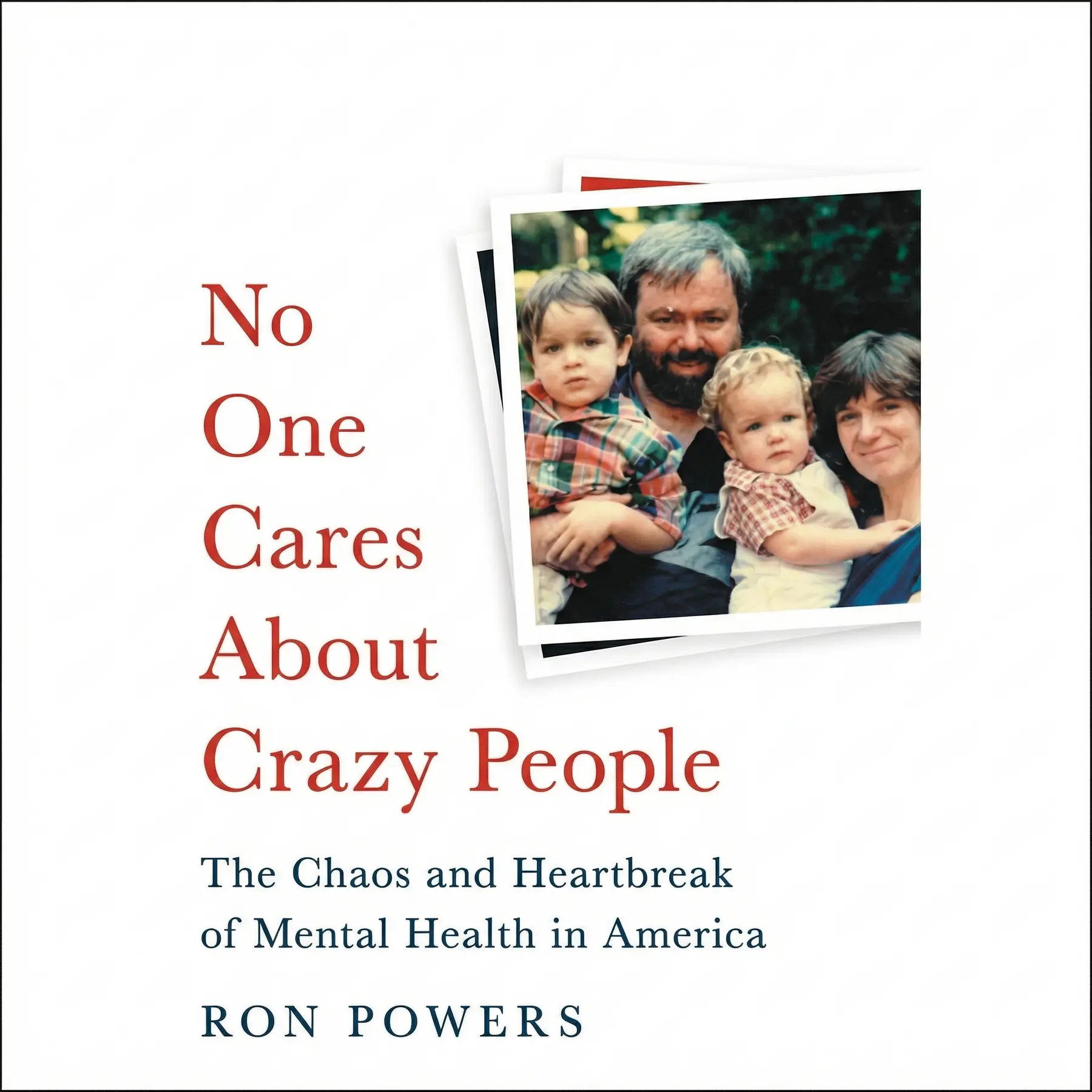
No One Cares About Crazy People: The Chaos and Heartbreak of Mental Health in America
By Ron Powers
Explains how American policy since the 1960s moved people with serious mental illness out of hospitals and onto streets and into prisons, and why early diagnosis, community care and advocacy would cost less and help more.
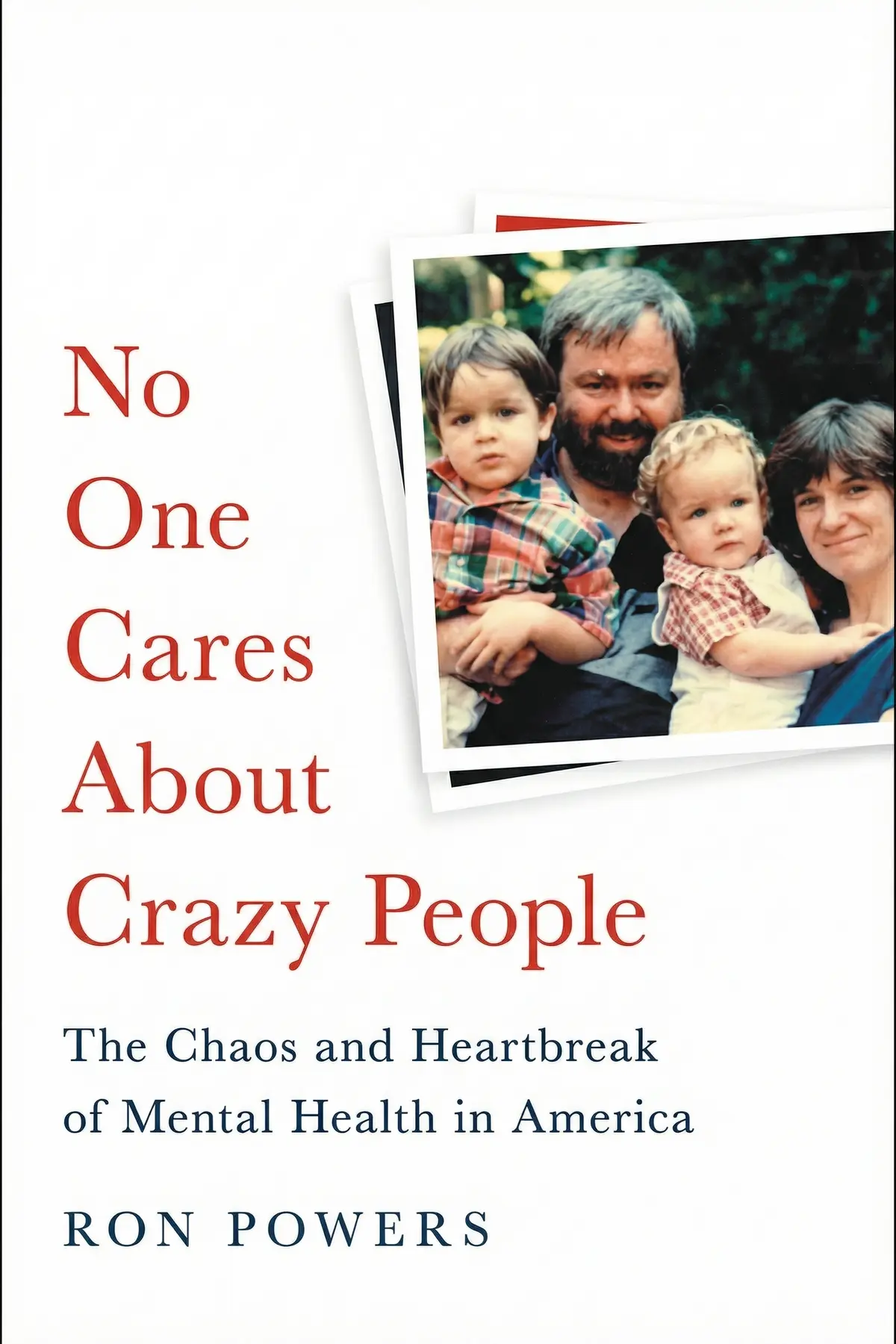
Table of Content
1. Introduction
57 sec
If someone you love starts to lose their grip on reality, the hardest discovery may be that the law often stops anyone from helping until things turn dangerous. In No One Cares About Crazy People, Pulitzer Prize winner Ron Powers traces how that rule came to be, and how it turned a medical problem into a crisis of streets and prisons. Powers writes as a father: one of his sons died by suicide, and the other lives with schizophrenia.
His argument is that America, starting in the 1960s and 1970s, treated serious mental illness as a matter of liberty rather than medicine. It closed its hospitals, never finished the care meant to replace them, and left the sick to fend for themselves. Patients, families and taxpayers have all paid for that choice.
What follows explains how schizophrenia takes hold in a young brain, why consent laws can work against the people they protect, and which forms of help Powers believes cost less and work better.
2. Spot the triggers that can wake schizophrenia
1 min 56 sec
The illness often appears just as a young person’s life gets harder, and the timing is no coincidence. Powers explains what happens inside the brain in those years, and which two outside forces can tip it over.
3. Learn how freedom can leave a sick person without help
2 min 16 sec
A book from 1961 argued that mental illness was a myth, and a court later wrote its spirit into law. The result protects a freedom that the sickest patients are often unable to use.
4. See how good intentions emptied the hospitals
2 min 08 sec
A president signed a plan to care for patients close to home, and a new drug seemed to make it easy. Then a war changed the budget, and the hospitals closed anyway.
5. Follow the road from hospital to prison cell
2 min 02 sec
Former patients who could not hold a job or fill in a benefits form had few places left to go. Powers traces where they ended up, and one encounter on a street that ended in gunfire.
6. Early care costs a fraction of a jail cell
2 min 10 sec
A father who lost one son and nearly lost another argues that the cheapest answer is also the most humane. A psychiatrist’s long-term results suggest what good treatment can look like.
7. Conclusion
1 min 13 sec
The title of Powers’s book is a bitter phrase, and his account shows how it came close to the truth. A theory that doubted mental illness existed, a court ruling built on that theory, a drug sold as a cure and a care program abandoned halfway all pointed the same way. Each choice told the sick that they were free, and then left them alone with an illness that does not respect freedom. That left 280,000 people discharged with nowhere to go, and a prison system doing work it was never built for.
Powers admits that decades of damage are nearly impossible to reverse. What he asks for is smaller and closer to home. Take sudden changes in a stressed young adult seriously, especially when cannabis is involved or psychosis runs in the family, and push for a diagnosis early instead of waiting for danger. When public spending comes up, remember the gap between a 50,000 dollar sentence and a few thousand for treatment. And speak for people who cannot speak for themselves.
A father who lost one son and nearly lost another wrote this book so that other families would hear someone answer the title: some people do care.
About this book
What is this book about?
Families who watch a loved one fall into psychosis often find that the law ties their hands. Help can come only with the sick person's consent or a court order, and court orders take months. Ron Powers, whose two sons both developed serious mental illness, sets out to explain how the United States arrived here. His account runs from the biology of schizophrenia, which tends to surface in the late teens when stress or cannabis meets a vulnerable brain, to the ideas and decisions that shaped policy. A psychiatrist named Thomas Szasz cast doubt on whether mental illness existed at all. A 1975 Supreme Court ruling made treatment without consent a violation of civil liberties. Hospitals closed on the promise of a drug sold as a cure and a network of community centers that was never finished. Powers follows the consequences to homelessness, prison cells, solitary confinement and fatal police encounters. He then argues for early diagnosis, for treatment that costs a small fraction of a jail sentence, and for psychosocial rehabilitation, an approach that helps patients rebuild a life in the community. It is a father's argument, and a public one too.
Book Information
Who it's for
Families facing early psychosis
Families watching a young relative show signs of psychosis and unsure what the law allows.
Teachers, managers, health workers
Teachers, managers and health workers who meet mental illness without knowing how the system works.
Wanting the bigger picture
Readers who want to understand why so many people with mental illness end up homeless or in prison.
About the Author
Ron Powers
Ron Powers was born in 1941 in Hannibal, Missouri, Mark Twain's hometown. In 1973 he became the first television critic to win the Pulitzer Prize for Criticism, for columns written at the Chicago Sun-Times, and in 1985 he won an Emmy for his work on CBS News Sunday Morning. His books include Mark Twain: A Life, a National Book Critics Circle Award finalist, and he co-wrote Flags of Our Fathers with James Bradley and True Compass with Ted Kennedy. No One Cares About Crazy People, drawn from his own family's experience, was a finalist for the PEN/E. O. Wilson Literary Science Writing Award.
Ratings & Reviews
Ratings at a glance
What people think
Listeners find this work exceptionally engaging, with one noting that it flows like a novel, and they value its thoroughly documented fusion of historical context and data. The book offers a perceptive examination of mental health, particularly within the chapters detailing the history of American healthcare, and listeners commend the author’s superb prose and gripping narrative structure. They characterize it as a moving and brave account that resonates deeply with audiences, making it essential reading for those advocating for mental health.
Top reviews
Manee
Wow. Ron Powers has written something that feels less like a dry textbook and more like a visceral, beating heart. I was struck by the way he weaves the history of lobotomies and the failures of the 1960s deinstitutionalization movement into the tragic personal narrative of his two sons. It’s a courageous piece of work that doesn't shy away from the gut-wrenching reality of schizophrenia. While the dense historical chapters might slow some readers down, they provide essential context for why our system is so broken today. This is a must-read for anyone trying to understand the human cost of mental health policy in America. I found myself in tears by the final chapter because the prose is just that powerful.
Show moreSuthee
This book should be mandatory reading for every lawmaker in the country. Powers exposes the "chaos and heartbreak" promised in the subtitle with breathtaking clarity and beautiful prose. He chronicles the shift from horrific asylums to the modern reality where jails have become our primary mental health facilities. The narrative arc regarding his sons, Dean and Kevin, is handled with such dignity and grace that it's impossible not to be moved. Not gonna lie, the chapter on the history of lobotomies made my skin crawl, but it’s a history we cannot afford to forget. While some might find his stance on involuntary treatment controversial, his perspective as a parent who has lived through the worst-case scenario is invaluable. Truly a poignant and necessary piece of literature for mental health advocates.
Show moreWillow
Powers has crafted a narrative arc that is as compelling as any novel I've read this year. The book succeeds because it humanizes a topic that is too often reduced to cold statistics or sensationalist headlines. By sharing Kevin’s story, the author gives a voice to the millions of people that society prefers to ignore or lock away in prisons. Personally, I found the chapters on the eugenics movement in the United States to be the most chilling part of the entire work. It’s a sobering reminder that our current neglect is part of a long, dark history of state-sanctioned cruelty. This book doesn't offer easy answers, but it forces you to look at the problem directly. It is a courageous, brilliant, and heart-wrenching achievement.
Show moreWararat
After hearing so much about this, I finally dove in and found it quite gripping. Ron Powers writes with the sharp eye of a seasoned journalist but the tender heart of a grieving parent. The book flows like a novel, which is surprising given how much data and history he manages to pack into every chapter. Truth is, the sections on the pharmaceutical industry and patent law were a bit dry, but they highlighted how corporate greed exacerbates our national health crisis. I appreciated the unflinching look at Kevin’s struggle and the ultimate tragedy that hit their family. It’s a heavy read that demands your full attention, though I wish he had spent more time interviewing others with the diagnosis rather than just speaking for them. Still, it’s a brilliant, necessary contribution to the field.
Show moreVipawan
The history of American healthcare has never felt so personal or so devastating. I was fascinated by the way Powers tracks the evolution of psychiatric treatment from the era of Dorothea Dix to the present day. He does a brilliant job explaining how well-intentioned reforms often led to even worse outcomes for the vulnerable. Look, the book is incredibly dense and at times the chronological jumps—like placing the WWII aftermath after deinstitutionalization—are a bit disorienting. However, the emotional core of the book remains steady because of his commitment to telling his sons' stories. He manages to make the reader care about the policy by showing the human faces of those it fails. It’s an insightful, if occasionally disorganized, exploration of a systemic nightmare.
Show morePear
Picked this up because I have a family member struggling with similar issues. This was a painful but cathartic experience that mirrored so many of my own frustrations with the medical system. Ron Powers captures the sheer helplessness of watching someone you love succumb to a brain disorder while the law stands by and does nothing. Frankly, I didn't mind the long descriptions of his sons' early years because it reminded me that they are people first, not just their symptoms. My only gripe is that the book sometimes feels like it's trying to do too much at once. It’s part history, part memoir, and part political manifesto, and occasionally those gears grind against each other. Regardless, the writing is top-notch and the message is urgent.
Show moreSomsri
Ever wonder why so many of our homeless neighbors seem to be struggling with their mental health? This book provides the historical and political answers to that question in devastating detail. Ron Powers explains the "great emptying" of the asylums and how it traded one form of misery for another. His writing style is incredibly engaging, making complex topics like neuroscience and pharmaceutical history accessible to everyone. In my experience, books on this topic can be dry, but this one kept me turning pages late into the night. I do think he pooh-poohs civil liberties concerns a bit too casually, which made me uneasy as a reader. But his passion is undeniable and his research is thorough. It’s a thought-provoking look at a crisis that affects us all.
Show moreFelix
The structure of this book is a bit of a puzzle to me. Powers alternates between a deeply personal memoir and a journalistic history of psychiatric care, but the two genres don't always mesh perfectly. To be fair, the historical sections on eugenics and the development of Thorazine are incredibly well-researched and eye-opening for a layperson. However, the memoir sections felt slightly unbalanced, focusing heavily on his sons' childhoods long before the onset of their illness. I wanted more insight into their adult lives and the actual day-to-day experience of managing their care. His policy suggestions also raised some red flags for me regarding civil liberties and patient autonomy. It's an important conversation starter, but it feels more like a father's lament than a definitive roadmap for reform.
Show moreEthan
Is this a history book or a diary? It’s a bit of both, and that’s both its strength and its weakness. I loved the deep dive into the development of antipsychotic drugs, though the legal rants about patent law and Bernie Sanders felt like they belonged in a different book entirely. Powers is a great writer, but he has a tendency to go off on tangents that don't always serve the central theme. For example, the detailed account of a car accident from his son’s youth felt more like a personal grievance than a relevant data point for a book on national policy. It’s an engaging read if you want to understand one man’s perspective, but I’d supplement it with other memoirs written by patients themselves to get a fuller picture.
Show moreKaen
Not what I expected based on the glowing blurbs I saw online. While I sympathize deeply with the author's family tragedy, I found his approach to the subject matter quite problematic and one-sided. Powers spends a significant amount of time attacking figures like Thomas Szasz while glossing over the very real concerns of the "mad pride" movement. His tone often felt dismissive of the civil liberties of the people he claims to be championing. Furthermore, the memoir portions were frequently interrupted by long tangents about Darwin or the history of pharmaceutical precursors that felt like filler. It’s more of a vent for a frustrated caretaker than an objective look at mental illness. I was looking for science and policy but mostly got authorial speculation and family anecdotes that lacked the perspective of the sons themselves.
Show moreQuestions about this book
What is No One Cares About Crazy People about?
Ron Powers argues that since the 1960s American policy has treated serious mental illness as a matter of civil liberty rather than medicine. Hospitals closed, promised community care was never finished, and people with illnesses like schizophrenia ended up homeless or in prison. He tells this public history alongside his own family’s story: one son died by suicide, and the other lives with schizophrenia.
Why does Ron Powers criticize Thomas Szasz?
Szasz, a prominent 1960s psychiatrist, argued in The Myth of Mental Illness that mental illness was a label for behaviors society found inconvenient. Powers says the book helped reduce the number of doctors entering mental health, and that a 1975 Supreme Court ruling put its spirit into law by banning treatment without consent. Since most people with schizophrenia cannot recognize their illness, treatment is often delayed while it worsens.
What happened after America closed its mental hospitals?
According to Powers, patients left with a dose of Thorazine, a drug promoted as a cure, and a promise of community centers. Kennedy’s 1963 Community Mental Health Act funded those centers, but Vietnam War cuts meant fewer than half were built by 1973. Some 280,000 patients were discharged with nowhere to go, and many ended up homeless, in prison or in solitary confinement.
What solutions does the book propose?
Powers calls for early diagnosis, since long untreated psychosis deepens the illness. He cites a National Alliance on Mental Illness estimate that a 50,000 dollar jail sentence could be avoided with two or three thousand dollars of treatment. He also points to psychiatrist Courtney Harding’s psychosocial rehabilitation, which mentors patients into community life, and urges everyone to speak up for people who have no voice.
How does cannabis relate to schizophrenia in the book?
Powers explains that schizophrenia-linked genes can switch on in the late teens and early twenties, when the brain prunes old connections. Outside triggers then set off the illness. Stress is the most common, and cannabis is another: for people carrying the relevant genes, it can push toward psychosis. He cites a Wall Street Journal article drawing on research in journals such as the Lancet.
Readers also enjoyed

Afropean: Notes From Black Europe
Johny Pitts




All About Love: New Visions
bell hooks



Alcoholics Anonymous
Alcoholics Anonymous World Services

AUDIO SUMMARY AVAILABLE
Listen to No One Cares About Crazy People in 15 minutes
Get the key ideas from No One Cares About Crazy People by Ron Powers, plus 5,000+ more nonfiction titles.
- 5,000+ titles
- Listen as much as you want
- 7-day free trial
- Cancel anytime









