Doppelganger: A Trip into the Mirror World
Naomi Klein
 English
 ไทย
Explains how big brands came to sell identity over products, why that drove sweatshops, insecure jobs and narrower choice, and how activists turn famous logos against the companies behind them.
1 min 00 sec
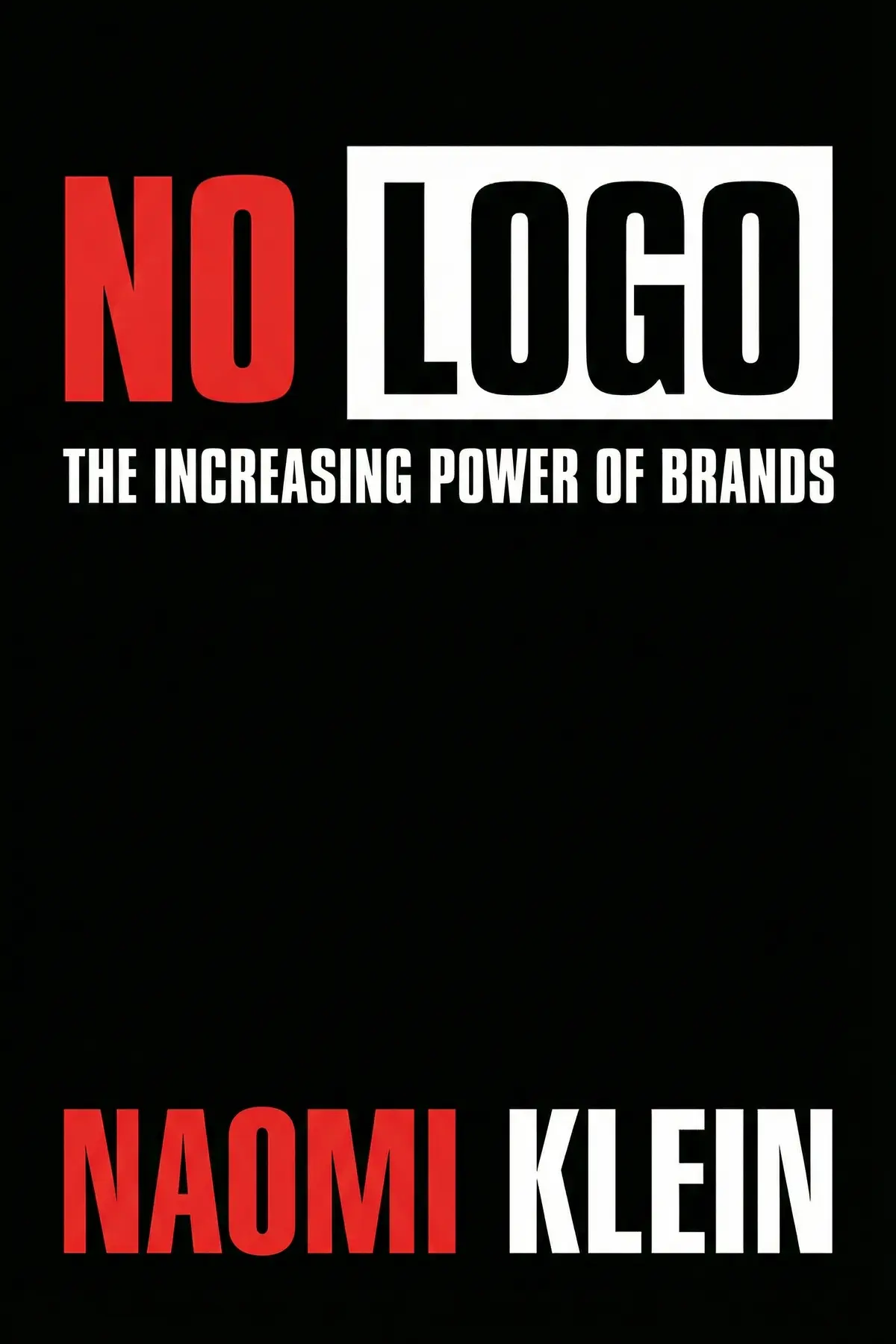
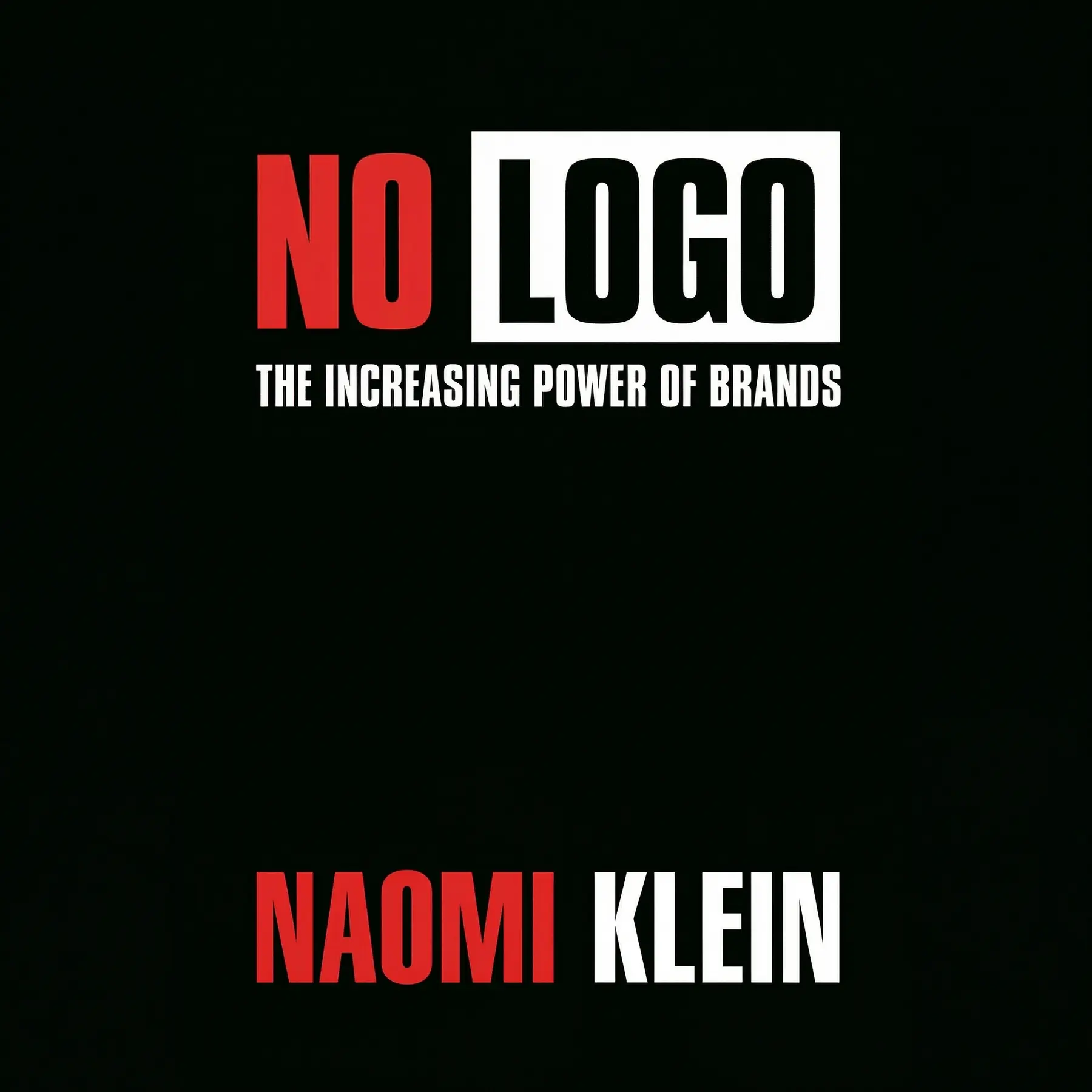
Most of us wear and buy logos without asking what they stand for, yet Naomi Klein shows that a logo can explain an entire economy. In No Logo, she argues that since the 1980s the most successful companies have competed less on what they make and more on what their name means.
That single change, Klein argues, explains a lot. A company whose real product is an image must chase whatever is cool, push into every corner of life, crush its rivals and spend as little as possible on the people who make its goods. The same logic links sweatshops abroad, insecure jobs at home and shrinking choice on store shelves. It also explains why brands became the favorite targets of protest.
Follow her argument and a familiar slogan on a billboard starts to read like a map of where money, labor and power flow, and of where pressure on a giant company actually works.
1 min 25 sec
Experts once predicted that shoppers would stop caring about brand names and simply chase low prices. Almost the reverse happened, and the reason reveals what a famous company is really selling when it sells you a shoe.
1 min 30 sec
Punk, grunge, irony and hip-hop all began as ways of standing apart from the mainstream. Klein traces how they ended up inside advertising, and who gets to decide what counts as cool once that happens.
1 min 27 sec
One of the coolest clothing names in the world lost ground simply by standing still. Its fall shows why logos now appear on every street, every stadium and even inside school exams.
1 min 31 sec
A coffee chain that began with a few cafes in one city reached nearly two thousand stores worldwide in thirteen years. Klein explains the deliberate methods behind growth like that, and why small shops rarely survive them.
1 min 30 sec
Brands moved their factories to special zones in poorer countries, and on paper nobody there works for them at all. Klein follows that legal gap to the young women on the production lines and what they endure.
1 min 42 sec
Part-time shifts, temp contracts and managers who expect nothing from you did not appear by accident. Klein traces them to the same decision that sent factories overseas, and to what it did to trust at work.
1 min 32 sec
A world packed with brands looks like a world packed with options. Klein shows how mergers and one retailer’s family image could decide which films, songs and magazines ever reach you, even from one of the biggest bands around.
1 min 40 sec
The more money a company spends making you love its name, the more exposed that name becomes. Klein shows how activists with stencils and spray cans turned the world’s best-known slogans against their owners.
1 min 14 sec
No Logo describes an economy turned inside out. Making things used to be the business, and advertising helped sell them. In Klein’s account, the image became the business and making things became a cost to squeeze. That one reversal connects a hip-hop sponsorship deal to a woman in Mexico proving she is not pregnant, a local cafe to a cluster of Starbucks on the same streets, and a cynical temp worker to a Nirvana album altered for Wal-Mart.
The same reversal hands ordinary people a lever. Brands live on attention and feeling, so they are most exposed exactly where they have invested most. Klein’s activists did not have to outspend Nike. They borrowed its slogan.
Her argument points to what you can do. When a logo pulls at you, separate what you pay for the object from what you pay for the story, and ask who made it and on what terms. When you want a company to behave differently, aim at the name it guards most carefully.
A swoosh was never just a mark on a shoe. Read it closely and it shows you the whole system.
At the end of the 1980s, many expected the branded product to fade as shoppers hunted for value. Instead, brands grew more powerful than ever. Naomi Klein sets out to explain that turnaround and to follow its consequences from shopping malls to factory floors. Her argument is that leading companies stopped competing mainly on what they made and started competing on what their names meant. That choice forced them to mine youth culture for cool, saturate streets and even classrooms, and expand with tactics that wipe out smaller rivals. It also pushed manufacturing into Export Processing Zones with few protections, replaced secure jobs at home with part-time McJobs, and let dominant firms like Wal-Mart and Viacom shape what shoppers can find. Klein then shows the other side. Because brands depend on attention and emotional attachment, they are exposed. Sweatshop campaigns and culture jammers use the most famous logos to make criticism stick. Readers come away able to read a brand as a system of money, labor and power, and to see where pressure works.
Shoppers who wear logos daily and want to know what stands behind them.
Marketers, founders and small retailers trying to understand how brand giants grow and whom they push aside.
Students and workers in part-time or temp jobs wondering why secure, loyal employment became so rare.
Naomi Klein, born in Montreal in 1970, first became known internationally with No Logo. She later wrote The Shock Doctrine, a history of neoliberal economics, and No Is Not Enough, a New York Times bestseller and National Book Award nominee. She has written a column for The Guardian, reported for Harper's and Rolling Stone, and received the Sydney Peace Prize in 2016 for climate justice activism. Since 2021 she has been a professor of climate justice at the University of British Columbia.
Listeners find the book readable and well-researched, with one listener remarking that it provides convincing supportive data. They value its incisiveness and political depth, as one review emphasizes how the work documents anti-globalization social movements. The pacing gets positive marks, with one listener describing the text as meticulously annotated. Reactions to the book's era are mixed, as some note its details are modestly dated.
The depth of research Klein poured into this project is frankly staggering and sets a high bar for political non-fiction. Each chapter is meticulously annotated, providing a mountain of supportive data that makes her critique of multinational corporations feel ironclad. I was particularly struck by the sections on the export processing zones and the horrific conditions workers endure to produce luxury goods. It’s an incisive look at how branding functions as a new form of enclosure for public spaces. While some might find the dense prose a bit academic, I found it remarkably readable and urgent. This is essential reading for anyone who wants to understand the origins of modern anti-globalization movements.
Show moreAfter hearing so much about this book, I finally dove into the world of brand-based capitalism and I’m honestly reeling. Klein’s exploration of sweatshops in places like Vietnam and the Philippines is absolutely gut-wrenching and forced me to confront my own ignorance is bliss attitude. It’s one thing to know your clothes are cheap, but it’s another to see the calculated corporate decisions that keep workers in poverty while Nike’s marketing budget explodes. The book is incredibly incisive and manages to be both an emotional rollercoaster and a rigorous piece of investigative journalism. I’m not sure I can ever look at a mall the same way again. It’s a heavy read, but a necessary one for the conscious consumer.
Show moreTo be fair, the section on sweatshops in the 90s is absolutely gut-wrenching and should be required reading for every high school student. Klein doesn't just give you opinions; she provides convincing data that exposes the dark side of the brands we all know and love. I was fascinated by the concept of the liquid modern world where companies don't actually own their factories anymore. This plausible deniability is exactly how they get away with human rights abuses while maintaining a squeaky-clean PR image. The book is long and meticulously annotated, but the prose is so engaging that the pages fly by. It’s a powerful call to move from being customers to being active citizens.
Show moreNo Logo still feels like a foundational text for anyone questioning why our world looks like a giant billboard. Klein does a brilliant job of explaining how corporations shifted from making products to selling lifestyles and concepts. Even though the specific examples like the 90s-era Nike scandals feel a bit old, the underlying logic remains more relevant than ever. The way she documents the hollowing out of the workforce while marketing budgets skyrocket is genuinely infuriating. I found the pacing a bit slow in the middle sections, but the data she provides is too convincing to ignore. It really makes you look at your own closet with a sense of lingering guilt.
Show morePicking this up in the current political climate makes you realize how little has actually changed regarding corporate accountability. Klein explains the transition from manufacturing things to branding them with such clarity that it totally changed how I view my favorite companies. The book is well-researched and delivers a punchy, political message that doesn't pull any punches when describing the exploitation of underdeveloped economies. I appreciated the focus on how youth culture is co-opted and sold back to us for a massive markup. Some of the references to MTV feel ancient, but the labor struggles she describes are still very much the engine of our global economy. A solid, thought-provoking read.
Show moreFew books manage to document the rise of anti-globalization social movements with such incisiveness and passion as Naomi Klein does here. The way she connects the dots between the loss of stable jobs in the West and the rise of exploitative labor abroad is truly impressive. I loved the No Space section, which details how corporate logos have invaded every corner of our public lives, from schools to city streets. It’s a thick book, and some parts are definitely more engaging than others, but the overall impact is undeniable. While the 1990s context is obvious, the struggle against corporate hegemony hasn't gone away—it has just changed its face and become even more digital.
Show moreEver wonder why we pay $150 for shoes that cost five dollars to make? This book answers that question by deconstructing the brand as a parasite that consumes the actual product. Klein’s writing is sharp and her research into companies like Apple and Gap is quite revealing, even if some of the tech references are a bit behind the times. I found the analysis of how corporations co-opt cool from marginalized communities to be particularly brilliant. It’s a depressing read in many ways, especially when you realize how much worse the situation has gotten since 2000. Still, it’s an important tool for understanding the mechanics of modern greed and the rise of corporate power.
Show moreIs it a bit dated? Truth is, reading this in the 2020s feels like looking at a museum exhibit of the late nineties. Klein focuses heavily on Shell and McDonald’s, which are still huge, but the world has moved on to big tech giants she barely mentions. I found myself skimming the parts about culture jamming because that specific brand of activism feels like a relic of the past. To be fair, her core thesis about the weightless corporation remains pretty sharp. It’s a decent historical document of a specific moment in anti-capitalist thought, but it might not blow your mind if you’ve already read her later, more refined work.
Show moreMeticulously annotated and surprisingly readable, Klein’s work serves as a time capsule of the late-nineties activist spirit. Personally, I felt like a lot of the information was stating the obvious, perhaps because I’m already quite familiar with anti-capitalist theory. The pacing is a bit hit-or-miss, with some chapters dragging on about 90s ad campaigns that no one remembers anymore. However, her core argument about the brand taking precedence over the worker is still a powerful lens through which to view the world. It’s a decent entry point for beginners, but those looking for deep economic theory might find it a bit lacking in substance compared to her later works.
Show moreLook, I wanted to like this more, but the economic arguments felt incredibly shallow and often bordered on the arrogant. Klein seems to think that closing these factories in developing countries is the best solution, ignoring that these jobs are often the only lifeline for local workers. Her understanding of how global markets actually function is flawed at best, and she frequently confuses simple vandalism with some sort of noble political movement. The writing is certainly readable, and I’ll admit the chapters on marketing strategies were interesting, but the overall message felt like it was preaching to a very specific choir. It’s a dated piece of polemic that doesn't stand up to serious scrutiny in today's world.
Show moreKlein argues that since the 1980s, major companies have competed mainly on brand image instead of products. Because a brand’s value lies in its name, it must chase cool, appear everywhere and expand aggressively, while cutting what it spends on making things. That logic, she says, led to sweatshops, insecure jobs and narrower consumer choice, and it also made brands the main targets of activists.
Klein uses Nike as her clearest example of a brand selling ideas over goods. It spends little on manufacturing compared with advertising, sponsorship and marketing, and presents itself as improving lives through sport and empowering women and Black people. Its outsourced production gave its name to the Nike Model, and activists have turned its slogan into lines like Justice, do it Nike.
They are special areas in developing countries where income and export taxes are lifted to attract foreign manufacturing. Many governments also drop minimum wages, labor laws and union rights. Klein describes mostly young migrant women working there in a legal gap, with pay as low as 13 cents an hour and, in Mexico, forced proof that they were not pregnant.
When a brand attracts you, separate what you pay for the product from what you pay for its image, and ask who made it and under what conditions. If you run a small business, identify whether a rival is using low prices, store clustering or flagship stores against you. If you want a company to change, Klein’s examples suggest targeting its most famous logo or slogan.

bell hooks


Barack Obama

Masaji Ishikawa

John Rawls



Miles Taylor

AUDIO SUMMARY AVAILABLE
Get the key ideas from No Logo by Naomi Klein, plus 5,000+ more nonfiction titles.