
14 min 50 sec
Available in: English
 ไทย
EnglishไทยDoppelganger: A Trip into the Mirror World
By Naomi Klein
Shows how social media, conspiracy thinking and tribal politics have turned public life into a distorted mirror world. It also offers everyday habits and a coalition-building approach for finding common ground with people who seem to be your opposites.
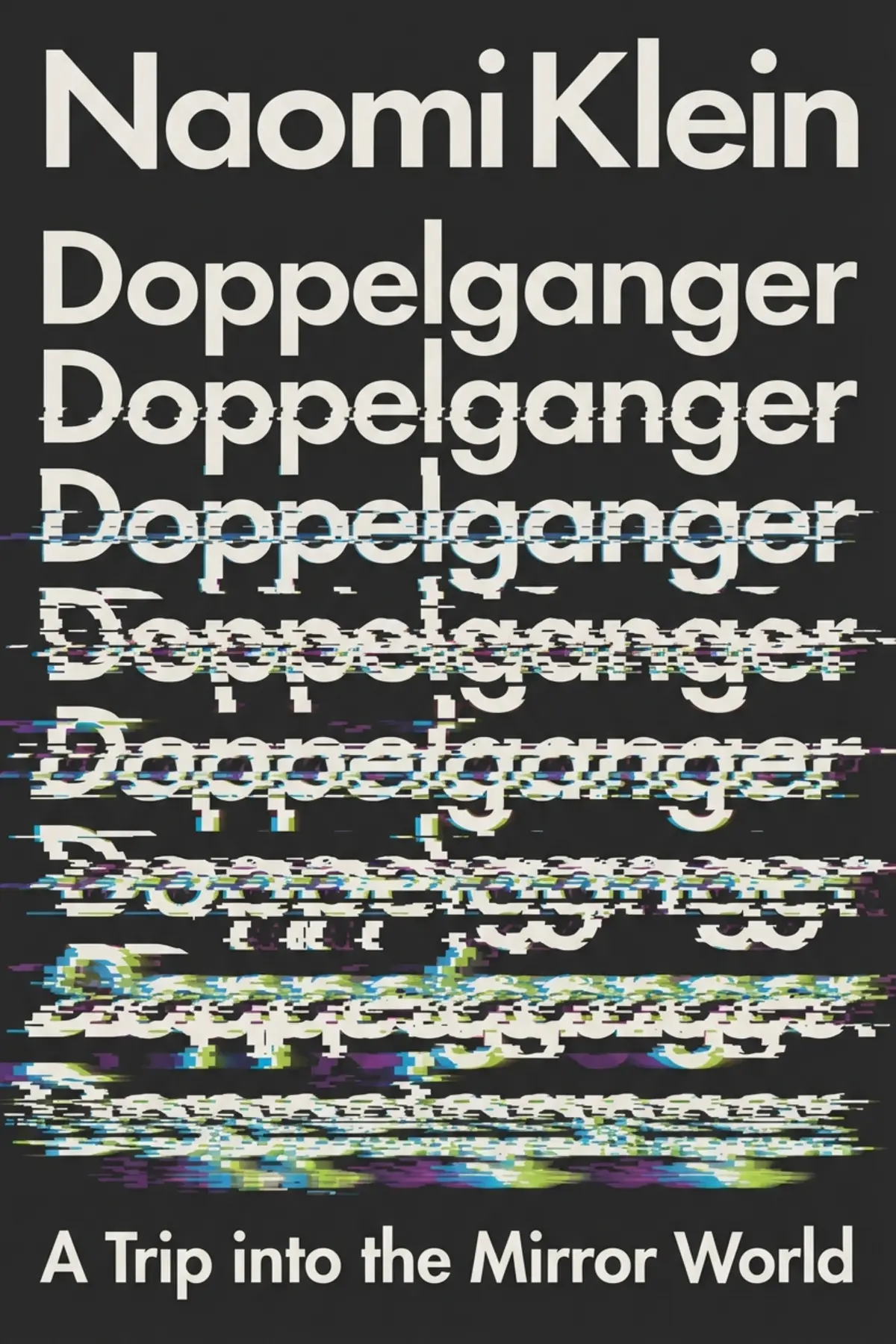
Table of Content
1. Introduction
1 min 06 sec
If political arguments at work or at home now feel like shouting at a reflection, Naomi Klein offers a way to read the distortion instead of being swallowed by it. In Doppelganger, the journalist and climate justice professor describes years of being mistaken for another writer, Naomi Wolf, who shares her first name and her public profile but holds nearly opposite views. Klein treats that strange pairing as a lens. In old stories, she notes, a double tends to arrive with chaos, yet it can also warn about what a person or a society refuses to see.
Her argument is that public life has become a mirror world. Social media rewards people for defining themselves against an enemy, so both sides drift to extremes while real shared threats grow. Following her double shows how that mirror works, who profits from it and which small habits begin to break its hold. What you gain is a clearer map of today’s politics and a practical route back toward common ground.
2. Read a double as a warning sign
1 min 52 sec
For decades, strangers mixed Klein up with a writer whose views ran almost opposite to hers. Old myths say such a double brings chaos, but they also hint that it carries a message nobody wants to hear.
3. Learn how ideas get flipped into conspiracies
2 min 08 sec
Klein spent years explaining how disasters get exploited. Then she watched her double turn that same argument into something unrecognizable, and gain a huge new audience by doing it.
4. See how platforms profit from your outrage
2 min 12 sec
A once respected author found a bigger audience after making wilder claims. Klein traces that reward to a system most of us use every day, and to a study that measured where it pushes people.
5. Recognize the extremes pulling both sides apart
2 min 06 sec
It is easy to spot the other side’s worst voices and hard to spot your own. Klein looks in both directions, and she argues the damage lies in what these fights crowd out.
6. See how the old left-right map fails you
2 min 02 sec
A former feminist author courting the far right. Yoga fans repeating eco-fascist ideas. Klein argues these pairings are no accident, and that the map most people use to read politics can no longer explain them.
7. Step out of the mirrors one conversation at a time
2 min 15 sec
The divides look permanent, with each camp painting the other as a cartoon. Klein insists the exit is closer than it seems, and that it starts with habits small enough to try this week.
8. Conclusion
1 min 09 sec
Klein’s double turned out to be a teacher. By following a writer who shared her name and held nearly opposite views, she found a map of public life in which identities split, ideas bend into conspiracies and people define themselves mainly by whom they oppose. The deeper lesson is that the mirror world is built, by platforms that profit from outrage and by fears that real crises keep feeding. Something that was built can also be left.
Klein draws a gentler lesson from Wolf as well. Each of us holds contradictory multitudes, and remembering that shared complexity makes it harder to turn anyone into a pure enemy. The practical work starts there. Read one piece this week from a perspective you usually skip. Notice the moment you file a person under a single label, and look for what the label leaves out. When a group you belong to starts fighting over symbols, steer it back toward a problem that hurts everyone, such as health care or the climate.
The mirror shows us opponents who look like strangers. Looked at longer, they turn out to face the same storms.
About this book
What is this book about?
For decades, Naomi Klein was confused with another writer, Naomi Wolf. The two share a first name and a similar public profile, but their views and their effect on the world point in nearly opposite directions. During the COVID-19 pandemic, Wolf became a leading source of medical conspiracy theories, and she even reworked Klein's own ideas about disaster capitalism to argue that the crisis had been engineered. Klein follows her double through those strange alliances to understand what it reveals. In myth, a doppelganger signals chaos, but it can also warn about what a person or a society refuses to see. She argues that social media algorithms reward outrage and extremes. Politics now runs on opposition to an enemy more than on principle, and the old left-right map no longer explains who stands with whom. Readers get a clear explanation of why public conversation feels so warped, and why that matters while pandemics, climate change and authoritarianism threaten everyone. Klein closes with personal habits that loosen the grip of the mirror world and with a case for broad coalitions built around shared problems.
Book Information
Who it's for
Exhausted by political fights
People exhausted by online political fights who want to understand why the conversation feels so distorted.
Keeping divided groups working
Team leads and organizers trying to keep divided groups working on shared problems.
Know Klein's earlier books
Readers of No Logo and The Shock Doctrine curious how Klein's ideas were twisted during the pandemic.
About the Author
Naomi Klein
Naomi Klein, born in Montreal in 1970, first gained international attention with No Logo, followed in 2007 by The Shock Doctrine, her history of neoliberal economics. Her book No Is Not Enough was a New York Times bestseller and a National Book Award nominee. She has written columns for The Guardian, reported for Harper's and Rolling Stone, and made the documentary The Take with her husband Avi Lewis. She won the Sydney Peace Prize in 2016 for climate justice activism, and since 2021 she has been a professor of climate justice at the University of British Columbia, where she co-directs the Centre for Climate Justice.
Ratings & Reviews
Ratings at a glance

What people think
Listeners consider this work an outstanding read, praising the high-quality prose and the remarkable depth of the research cited. Furthermore, they value its challenging themes; one listener observes that it unravels complicated strands of logic and meaning, while another emphasizes its pertinence to today's political and social movements. The work also gains acclaim for its intimate storytelling, with one listener describing how it weaves in observations about Naomi Wolf's personal journey. Nevertheless, listeners express varying opinions regarding the book’s stressful and unsettling subject matter.
Top reviews
Tantipat
Ever wonder why your yoga-loving, green-juice-drinking neighbor suddenly started posting QAnon memes during the pandemic? Klein dives headfirst into this "wellness-to-fascism" pipeline with a rigor that is both impressive and deeply unsettling. Truth is, I expected a lighthearted memoir about being mistaken for Naomi Wolf, but this is a heavy, research-heavy critique of how the 'Mirror World' has hijacked legitimate grievances. The way she traces the links between the Nazi obsession with health fads and modern-day conspiracy culture is a stroke of brilliance. It isn't an easy read—the content is frequently anxiety-inducing and makes you want to delete your social media accounts immediately. However, the clarity she provides on how we’ve lost our collective sense of reality is a necessary medicine for our times. If you feel like the world is unraveling, this book offers a map of the wreckage.
Show moreHenry
Finally finished the audiobook and I have to say, hearing Klein narrate her own descent into the 'Mirror World' adds a layer of vulnerability that is often missing from political texts. There’s something profoundly human about her frustration at being mistaken for someone spreading disinformation. This isn't just a political treatise; it’s a deeply personal narrative that untangles the complex threads of logic and nonsense that define our current era. I was especially gripped by her reflections on Jewish identity and the conflict in Palestine—these sections were astute and emotionally difficult to process but necessary for a full understanding of the 'doubling' she describes. The book is thought-provoking in a way that stays with you long after the final chapter. It’s easily one of the best things I’ve read this year.
Show moreChamp
Wow, this was far more expansive than I originally anticipated. Klein manages to weave together the most disparate threads—from the JFK assassination to Steve Bannon’s podcast—into a cohesive warning about the loss of shared meaning. I loved how she analyzed the way 'doubles' function in literature and film, like Dr. Jekyll and Mr. Hyde, to explain how we’ve become two versions of ourselves online and off. The research references are impressive, and she doesn't shy away from calling out her own side of the political spectrum when necessary. It’s a dense read, but the prose is so engaging that the pages fly by. Personally, I think this should be required reading for anyone trying to navigate the madness of the internet without losing their mind.
Show moreYok
Klein’s exploration of the Naomi Wolf confusion is a brilliant framing device for a much larger conversation about our fractured reality. She isn’t just talking about a name mix-up; she’s talking about how we’ve created a shadow version of our society where facts no longer matter. I was particularly fascinated by the discussion of 'digital doppelgängers' and how the attention economy forces us to brand ourselves into oblivion. The book is impressively researched and manages to be both a cultural critique and a warning. Truth is, it made me look in the mirror and rethink how I engage with the world online. It's a rare book that can make you feel more sane while describing a world that has gone completely mad.
Show moreJune
Look, I appreciate how Klein doesn't just point fingers at the 'other side' but takes a hard look at the left's own failures in this book. Her analysis of how we've ceded territory to the far right by ignoring the concerns of ordinary people is a wake-up call. The section on Zionism was particularly brave and articulate, especially given the current global context. Some parts are definitely anxiety-inducing—reading about the 'Mirror World' can feel like watching a train wreck in slow motion—but the clarity she provides is worth the discomfort. It’s a thick, meaty book that requires your full attention. If you want to understand why things feel so 'wrong' lately, you need to read this.
Show moreElias
The chapter on the history of the fascist/New Age alliance was worth the price of admission alone. I’ve been trying to put my finger on why certain 'holistic' circles became hotbeds for conspiracy theories, and Klein explains it with such historical depth and precision. This book is a masterclass in synthesis, pulling from psychology, politics, and personal memoir to create something truly unique. Gotta say, the way she handles her 'double' is surprisingly empathetic, even while she remains horrified by what Wolf has become. It’s a thought-provoking, beautifully written, and ultimately vital piece of work. It might not age well for everyone, especially those deep in the 'rabbit hole,' but for the rest of us, it’s a lifeline of logic.
Show moreArt
Picking this up felt like entering a funhouse where everything is familiar yet horribly distorted. Klein’s concept of the 'Mirror World' is a terrifyingly accurate way to describe our current political climate, where the right has appropriated the language of the left to sell something entirely different. I found the section on the 'attention economy' particularly biting—the idea that we all maintain digital doppelgängers that we perform for is a haunting thought. Not gonna lie, the book gets quite bleak at times, and I had to put it down more than once because of the sheer weight of the information. Her research is, as always, impeccable and incredibly deep. It’s not a perfect book, and some of the psychological meandering felt a bit self-indulgent, but the intellectual payoff is massive.
Show moreJom
As someone who has followed Klein's work for years, I found Doppelganger to be her most personal and perhaps her most frustrating effort to date. The premise of being confused with Naomi Wolf is hilarious at first, but it quickly evolves into a deep dive into the 'mass unraveling of meaning' we are all experiencing. While I agree with her critique of the wellness industry’s shift to the right, some of the sections on the COVID-19 response felt a little one-sided and could have benefited from more nuance regarding the medical establishment's failures. Still, the way she deconstructs the 'Other' is brilliant. The writing is sharp, though the structure is definitely a bit messy. It’s a 4-star read for the ideas alone, even if the delivery wanders occasionally.
Show moreJun
This book was a bit of a chaotic ride, to put it mildly. While I’ve always appreciated Klein’s sharp leftist analysis, the organization here felt incredibly disjointed, almost like a collection of essays that didn't quite fit together. She uses her ongoing confusion with Naomi Wolf as a framing device, but it often felt like a reach to connect that personal annoyance to every global crisis from COVID-19 to the climate catastrophe. To be fair, her insights into Zionism and the 'personal brand' economy are top-tier, yet the doppelgänger theme frequently felt crowbarred in to justify the title. I was left feeling a bit unsatisfied by the conclusion, which seemed shallow compared to the density of the preceding chapters. It’s worth reading for the individual gems, but don’t expect a cohesive narrative arc.
Show moreTak
I am genuinely stunned that Klein is being hailed as a visionary for what amounts to a defense of the status quo under the guise of intellectualism. For someone who wrote The Shock Doctrine, she seems remarkably blind to the pharmaceutical industry’s role in the current extractive capital landscape. She spends so much time obsessing over Naomi Wolf that she misses the bigger picture entirely. Frankly, her defense of figures like Anthony Fauci is a massive disappointment. She dismisses anyone who questioned the pandemic response as a 'conspiracy theorist,' ignoring the very real concerns about data transparency and profit schemes. This book feels like a desperate attempt by the old guard to police the narrative while the world moves toward more radical questioning. It’s a tragic example of a great thinker becoming the very thing she used to criticize.
Show moreQuestions about this book
What is Doppelganger by Naomi Klein about?
Klein describes years of being confused with Naomi Wolf, a writer with the same first name and nearly opposite views. She uses that experience to explore a wider mirror world in which social media rewards outrage, people define themselves against enemies, and the old left-right divide breaks down. She argues that seeking out other views and building coalitions around shared threats can restore common ground.
Why does Naomi Klein write about Naomi Wolf?
The two were mixed up so often that each sometimes had to correct her own followers. During the pandemic, Wolf spread medical conspiracy theories, calling masks and vaccines tools of a genocidal plot, and reworked Klein’s idea of disaster capitalism to claim COVID was engineered. Klein follows her double to understand what that transformation reveals about politics and media today.
What does Klein say about social media and polarization?
Klein argues that platforms such as Facebook and Twitter built algorithms that promote extreme, divisive content because it keeps people engaged. That rewards wild theories and inflammatory language. She cites a 2020 study finding that polarization on social media rose sharply during the pandemic, and it blamed algorithms that led people toward more extreme opinions regardless of accuracy.
What are diagonal alliances in Doppelganger?
Klein uses the term for alliances that cut across the traditional left-right divide, held together by a shared enemy more than by coherent beliefs. Her examples include Wolf, once a feminist author, courting far-right extremists, and yoga devotees repeating eco-fascist ideas. She notes there are authoritarians on the left and civil libertarians on the right, which the old map cannot explain.
How can I apply the ideas in Doppelganger?
Klein suggests regularly reading journalism from another political perspective and, when you feel ready, discussing hot topics with people who disagree. Catch yourself when you box people into simple categories and ask what nuance the group might hold. Then look for concerns you share, such as health care, education and a livable climate, and frame big crises as human problems instead of partisan ones.
Readers also enjoyed


A Promised Land
Barack Obama

A River in Darkness: One Man’s Escape from North Korea
Masaji Ishikawa

A Theory of Justice
John Rawls



A Warning
Miles Taylor


AUDIO SUMMARY AVAILABLE
Listen to Doppelganger in 15 minutes
Get the key ideas from Doppelganger by Naomi Klein, plus 5,000+ more nonfiction titles.
- 5,000+ titles
- Listen as much as you want
- 7-day free trial
- Cancel anytime









