Aware: The Science and Practice of Presence
Daniel Siegel
 English
 ไทย
Shows parents how to handle tantrums and rule-breaking without yelling or punishment: calm the child through connection first, then teach better behavior in ways that shape a brain still under construction.
1 min 04 sec
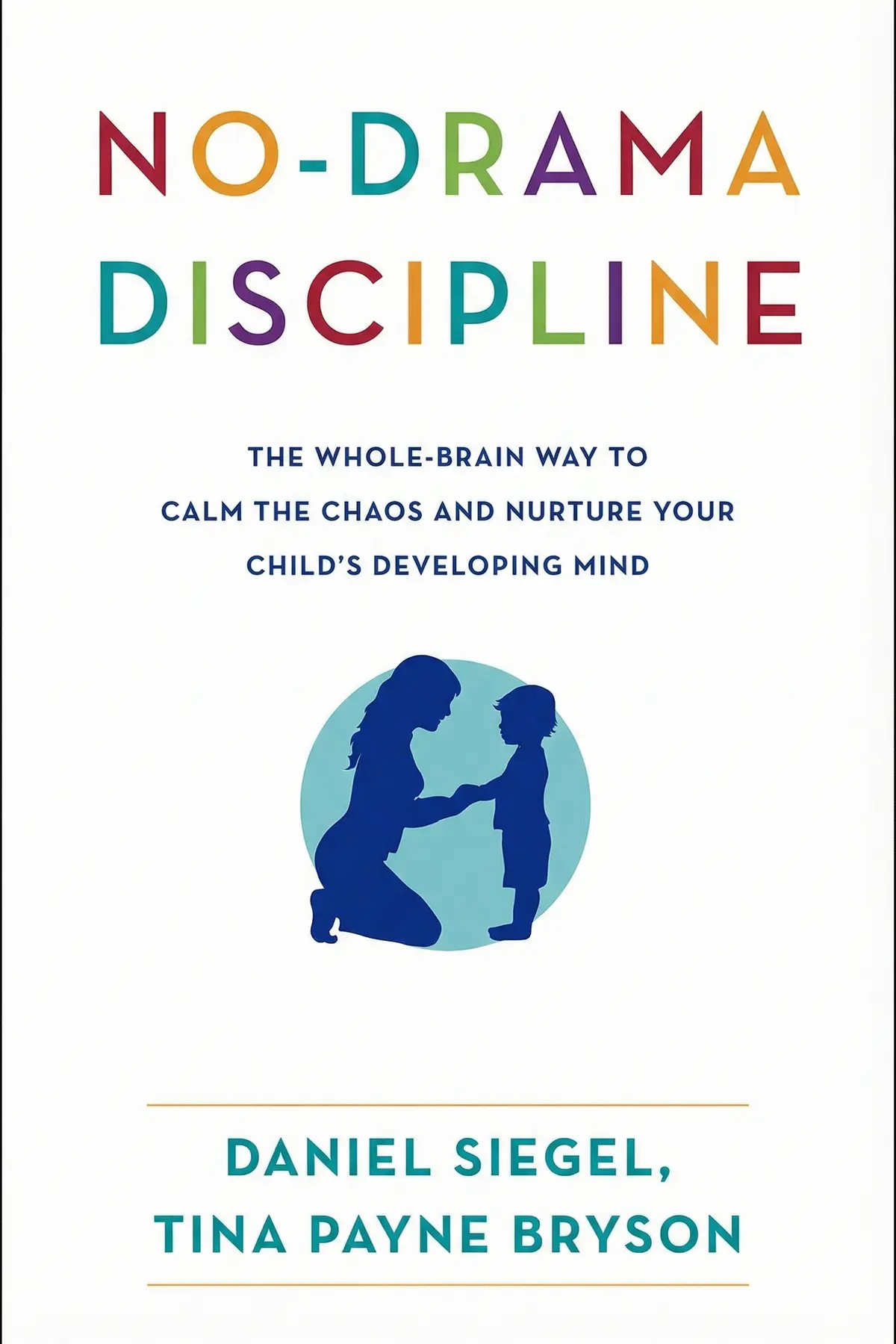
Many parents end the day replaying an argument over the dishes or the TV, wondering how a small request turned into shouting. In No-Drama Discipline, child psychiatrist Daniel Siegel and psychotherapist Tina Payne Bryson offer an answer that changes how those moments look: a child in meltdown is running on the part of the brain that is already built, while the part that manages feelings and empathy is still under construction. Discipline, they argue, works best when it treats misbehavior as a chance to build that unfinished part.
Their method has two moves, connect first and redirect second. Connection moves a child from a reactive state into one where they can actually listen, and redirection then teaches the skill that was missing. Along the way the authors show how a hug, a well-chosen question or a conditional yes can end a standoff that yelling would only stretch out. The reward is fewer battles over time and a closer bond with the child you are trying to guide.
1 min 56 sec
Time-outs and spankings are meant to make children think about what they did. According to the authors, children usually end up thinking about something else entirely, and the conflict often grows rather than shrinks.
1 min 58 sec
A little girl screams that the wrong parent is driving her to school. Her mother’s response does not stop the drama completely, yet the authors count it as a success, and their reason lies in how young brains grow.
1 min 46 sec
A five-year-old hurls a box of Lego across the room because he feels left out. What his father does in the next minute gets a confession that no lecture would have produced.
1 min 46 sec
A worried mother nearly dismisses her daughter’s tearful phone call. What she says instead shows that connection works at any age, and that you can accept a feeling without agreeing with it.
1 min 46 sec
A poor math grade, rude noises in class and a child who refuses bed all invite the same angry reflex. Three small habits let a parent respond to what is really going on instead.
1 min 47 sec
A twelve-year-old breaks the phone rule for the second time, and her parents clearly have to act. They choose not to confiscate anything, and the solution that follows comes from an unexpected person.
1 min 40 sec
Every parent has to refuse things, from staying longer at a grandparent’s house to another hour of games. The way the no is delivered decides whether it ends in a fight or a lesson.
1 min 13 sec
Siegel and Bryson’s case rests on one change of view. The child screaming about the school run or flinging Lego is not a small opponent to defeat. That child has a brain with a finished ground floor and an upper floor still being built, and every hard moment is a chance to help build it. Fear-based punishment wastes that chance. Connection, followed by patient redirection, uses it.
The method asks something of parents too: to read the situation before reacting to it. The authors offer a shorthand for this, HALT. Before you react to misbehavior, ask yourself if the kid might be hungry, angry, lonely or tired. Sometimes a small snack does more than any consequence, because a fed and settled child is ready to listen.
From there the habits are small. Offer a hug or a nod before a correction. Name the feeling you see. Ask how your child would fix the problem, and let them talk more than you do.
The meltdowns will not stop overnight. But each one handled this way leaves behind a little more of the calm, caring adult your child is growing into.
Arguments over the dishes, the TV or bedtime can turn into shouting matches that leave parent and child exhausted. Time-outs and spankings are the usual answer, yet they often breed fear and resentment and teach little. Daniel Siegel and Tina Payne Bryson argue that effective discipline starts with understanding how a child's brain works. Their key image is a brain with two floors. The downstairs brain runs basic functions and is well developed at birth. The upstairs brain, which manages emotions and empathy, takes years to build, and experience shapes it. So every episode of misbehavior is a chance to help that unfinished part grow. Their method is connect and redirect: comfort and validate the child until they can listen, then guide them toward better choices. Readers get concrete tools for real moments: offering a hug before a correction, naming a child's feelings, checking their own mood, asking why a child acted out, offering a conditional yes and letting children design their own fixes. The promise is fewer battles over time and a closer, more respectful bond.
Parents of young children whose small requests keep turning into shouting matches.
Parents who use time-outs or threats and sense they teach little beyond resentment.
Teachers and caregivers who want calm, brain-based ways to handle tantrums and rule-breaking.
Daniel J. Siegel is a Harvard-trained child psychiatrist and clinical professor of psychiatry at the UCLA School of Medicine, a co-director of the Mindful Awareness Research Center and executive director of the Mindsight Institute. Tina Payne Bryson is a psychotherapist with a PhD from the University of Southern California, where she researched attachment and interpersonal neurobiology. She founded The Center for Connection and The Play Strong Institute. Together they wrote The Whole-Brain Child, which has sold over a million copies.
Listeners find this parenting book incredibly helpful, describing it as a vital resource and the finest guide available for parents. The content is accessible and clear, and listeners appreciate the whole-brain approach to discipline, which helps them recognize their children's feelings and build stronger connections. They value the actionable strategies and compassionate tone, with one listener highlighting how much it has improved their family dynamics.
This book is a total game-changer for parents who feel like they’re constantly yelling and getting nowhere. Siegel and Bryson break down the science of why children act out, shifting the focus from immediate punishment to long-term teaching. I loved the concept of "connecting" before "redirecting." It sounds simple, but it requires a lot of emotional regulation from the parent first. Instead of reacting to a tantrum with a time-out, you learn to look for the underlying need. In my experience, this approach helps de-escalate situations that used to end in tears for everyone. Some of the scenarios, like the one about the child hitting to get attention, might feel a bit permissive at first glance. However, the logic behind building an "upstairs brain" is sound and backed by actual brain physiology. It’s not about being a pushover; it’s about being a mentor.
Show moreEver wonder why your kid seems to lose their mind over the smallest things, like having to ride in a specific car? This book offers a fascinating look at the "reptilian brain" and why traditional discipline often backfires when a child is in a state of high emotion. The authors explain that we can’t teach a child whose brain is in "reactive mode." We have to get them back to "receptive mode" first. The "Connect and Redirect" strategy has genuinely helped me stay calmer during my toddler's meltdowns. Truth is, I used to think I needed to be "tougher" to get results. Now I realize that empathy is a much more powerful tool for shaping behavior. The illustrations are a nice touch, making the concepts easy to visualize even when you're exhausted. Every parent should have a copy of this on their nightstand.
Show moreAs someone who grew up with a "toeing the line" style of parenting, reading this was an eye-opening experience. The authors argue that fear-based discipline actually hinders a child's ability to develop empathy and self-control. I was skeptical at first—thinking this might just raise "spoiled brats"—but the emphasis on clear boundaries changed my mind. You aren't giving in to every whim; you're just acknowledging the child's feelings while holding the line. The story about the younger brother breaking the Lego set was a bit controversial for me, as the victim seemed overlooked. Yet, the point about not shaming a child into better behavior is something I’ve seen work in real-time with my own kids. It’s a gentler, more thoughtful way to parent that actually makes sense when you consider the neurology involved.
Show moreFinally got around to finishing this, and I can say it has significantly improved our family dynamics. Before this, discipline felt like a battle I was always trying to win. Now, it feels like a conversation where I’m helping my children understand their own big emotions. Not gonna lie, the "HALT" acronym (Hungry, Angry, Lonely, Tired) has saved us from dozens of unnecessary arguments. It turns out my son isn't being "defiant"; he's just exhausted and lacks the tools to say so. The book teaches you how to be that tool for them. Some people might think this is "soft" parenting, but it’s actually much harder to stay calm and empathetic than it is to just start yelling. It requires a lot of self-work, but it is worth it.
Show moreAfter hearing so much hype about "No-Drama Discipline," I had high expectations, and for the most part, they were met. The focus on neuroplasticity is fascinating, explaining how our responses actually shape the physical structure of our children's brains. This is a must-read for anyone who wants to move away from punitive measures like time-outs or spanking. I particularly liked the distinction between a child's "needs" and "wants." While we should always meet their emotional needs for connection, we don't have to give in to their every demand. The book provides a lot of "what to say" scripts that are very helpful when you're in the heat of the moment and your own "downstairs brain" is taking over. It’s practical, compassionate, and scientifically grounded.
Show morePicked this up because I was tired of the constant power struggles in our house. The core message is powerful: discipline should be about instruction, not just making a child pay for a mistake. While the book is highly informative, I gotta say it felt a bit repetitive in the middle chapters. The authors tend to use twenty words where five would do, which is ironic given their advice to keep things brief with kids. That said, the "refrigerator sheet" at the end is pure gold for quick reference. I’ve started using the "lowering my eye level" trick, and it really does change the energy of a confrontation. It’s not a magic wand, but it provides a solid framework for building a more respectful relationship. I just wish there were more citations for some of the scientific claims made about brain development.
Show moreThe chapter on the "No-Drama Connection Cycle" is probably the most useful piece of parenting advice I have ever read. Siegel and Bryson help you understand that when a child is "flipped out," their logical brain is literally offline. Trying to lecture them in that moment is a waste of breath. Personally, I’ve found that just sitting with my child in their mess—without judgment—makes them much more willing to listen once they’ve calmed down. The writing style is very accessible and warm, though it does occasionally veer into being a bit preachy. I appreciate that the authors admit they aren't perfect parents themselves. It makes the strategies feel more attainable rather than an impossible standard of perfection. It’s a great follow-up to The Whole-Brain Child.
Show moreFrankly, I think some of the negative reviews miss the point of what "teaching" actually entails. This isn't about letting kids run wild; it's about making sure the lesson actually sticks. If a child is terrified or ashamed, they aren't learning anything except how to avoid getting caught next time. I like that the authors advocate for being "consistent but not rigid," which allows for a lot more nuance in parenting. To be fair, I do think the book could have been about 100 pages shorter without losing much of its impact. The anecdotes are helpful, but they start to feel repetitive after a while. However, the overall message of "connection before correction" is one that every parent should at least try before dismissing it.
Show moreWow, I have some mixed feelings about this one. On one hand, the "upstairs brain" terminology is a brilliant way to explain impulse control to parents. On the other hand, some of the advice feels incredibly unrealistic for a parent who is actually in the trenches of a toddler's meltdown. For instance, the suggestion to offer elaborate "one-on-one special time" or speakerphone stories to placate a kid who won't get in the car seems like it’s rewarding the bad behavior. I found myself agreeing with the "connect" part but feeling like the "redirect" part was missing some actual teeth. If my kid hits me, I want a concrete consequence, not just a calm discussion about their feelings ten minutes later. It’s a nice philosophy, but I’m not sure it works for every temperament.
Show moreNot what I expected based on the title. I was looking for practical "what do I do now" tips, but this is more of a psychological deep-dive into the "why" behind behavior. While the idea of validating a child's feelings is great in theory, I struggled with the lack of immediate consequences. In the real world, if you act out, there are repercussions that aren't always "teachable moments" involving a hug. The authors seem to view almost any form of isolation, like a brief time-out, as damaging rejection, which feels like a bit of an exaggeration. Look, there are some great insights here about the "upstairs brain," but I’m skeptical about how this holds up with a truly defiant child who isn't interested in "collaborative solutions."
Show moreDaniel Siegel and Tina Payne Bryson argue that discipline should teach, not punish. Children misbehave partly because the upstairs brain, which manages emotions and empathy, is still developing, and experience shapes it. Their method is connect and redirect: first comfort and validate the child so they move from a reactive to a receptive state, then guide them toward better behavior. Over time this means fewer conflicts and a stronger bond.
Parents hope a time-out will make the child reflect on what they did. According to the authors, children usually spend that time thinking about how mean their parents are, which builds resentment and can escalate the conflict. Spanking has a similar problem: it makes children fear the parent’s actions instead of examining their own behavior. Both methods run on fear and are applied the same way whatever the situation.
It is the authors’ simple map of a child’s brain. The downstairs brain, the lower regions, is well developed at birth and controls basic functions such as breathing and digestion. The upstairs brain, the cerebral cortex, handles regulating emotions and empathy and is mostly undeveloped at birth. During a meltdown the downstairs brain is in charge, so parents need to calm the child before any lesson can land.
Begin with HALT, which means asking if hunger, anger, loneliness or tiredness is affecting your kid before you react. Offer comfort, such as a hug, before correcting, and name the feeling you see. Check your own mood, ask why the behavior happened and phrase limits positively. Give a conditional yes when you can, keep lectures short and let your child suggest how to fix the problem, as twelve-year-old Nila did with her phone.


Abigail Shrier

Amy Chua



Chimamanda Ngozi Adichie
AUDIO SUMMARY AVAILABLE
Get the key ideas from No-Drama Discipline by Daniel Siegel, plus 5,000+ more nonfiction titles.