A Bigger Prize: How We Can Do Better Than the Competition
Margaret Heffernan
 English
Shows employers how hiring rituals and unspoken office rules shut out neurodiverse talent. It gives three practical fixes: hire for contribution over fit, make interviews collaborative, and shape support around each person from day one.
1 min 06 sec
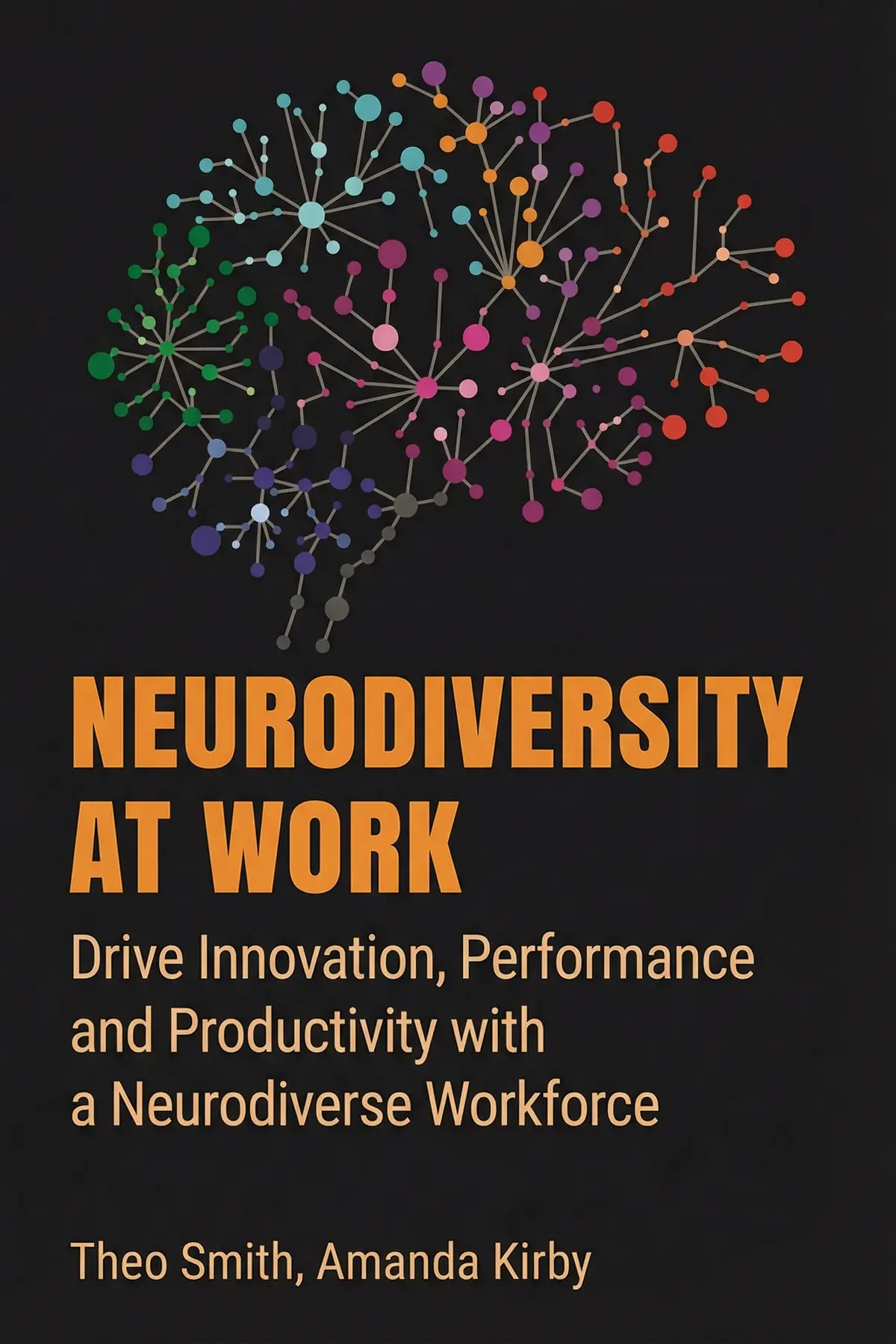
A qualified candidate can lose a job in the first minute of an interview, simply because the ritual rewards a narrow kind of performance. In Neurodiversity at Work, physician and researcher Amanda Kirby and workplace adviser Theo Smith argue that this ritual costs employers as much as it costs candidates.
Hiring, interviewing and daily office life are designed around one way of thinking. As a result, many neurodiverse people, including those with dyslexia, ADHD or autism, are shut out of a large part of the job market, and teams lose the range of perspectives that makes them strong. The authors’ remedy is three changes: question your picture of a good candidate, turn the interview into a collaboration, and shape the workplace around each person.
If you hire, recruit or manage, you will leave with specific moves for your next job ad, your next interview and a new hire’s first week, along with a reason to make them that reaches your whole team.
1 min 44 sec
Every brain is as individual as a thumbprint, yet most offices are built for a single standard worker. Microsoft, JP Morgan and IBM have noticed what that mismatch throws away.
1 min 34 sec
Most of us judge a stranger within half a minute, often on a handshake or a glance. A team picked that way can excel at one thing and fail at everything else.
1 min 30 sec
A posting can turn away excellent people before anyone reads a CV. The fix starts with one honest sorting exercise that most employers skip.
1 min 38 sec
Some candidates dazzle in the room and disappoint in the job, while others freeze despite being excellent. A few small offers change what an interview actually measures.
1 min 30 sec
A new hire turns up on day one and cannot get through the door. The authors argue that every office has invisible steps like that, and most managers never see them.
1 min 31 sec
Three people can share the same diagnosis and need opposite things to do their best work. The authors’ approach is simple to describe and harder to practice.
1 min 15 sec
Smith and Kirby’s book is about neurodiversity, yet its deepest claim concerns every workplace. Each fix it proposes, from the job ad to the induction meeting, begins by questioning a habit nobody chose on purpose: the thirty-second verdict, the exam-style interview, the rule everyone follows and no one writes down. Questioning those habits pushes a company to innovate and to value different perspectives, and the authors argue that the trust and support it builds help every employee do better work.
You can start small and soon. Before your next interview, offer the candidate the questions in advance or a remote first meeting. Before your next hire arrives, write down the email, meeting and social expectations you have stopped noticing, then sit with the newcomer and ask which ones will be hard.
If your organization has a neurodiversity network, a group of neurodiverse employees who share experiences and good practice and press management for change, join it; if it has none, help start one. Acting together, the authors note, speeds change and builds solidarity.
The wheelchair user at the door did not need a warmer welcome. She needed a ramp, and most of the ramps your team needs can be written down this week.
Job interviews, CV screening and everyday office life follow rituals that reward a narrow kind of performance. Candidates who freeze under pressure, avoid eye contact or struggle in a noisy open office are often filtered out, however capable they are. Many neurodiverse people, including those with dyslexia, ADHD or autism, lose access to a large share of the job market this way. Theo Smith and Amanda Kirby argue that employers lose too, because strong teams depend on a range of perspectives. Their answer is three steps. First, confront the hidden biases behind your idea of a good candidate and ask what each person would add instead of whether they fit. Second, treat the interview as a joint effort, with adjustments, advance questions and alternatives such as portfolios, tasks and job shadowing. Third, write down the unspoken rules of your workplace and agree person-centered support with each new hire. Readers who hire, recruit or manage get concrete changes to job ads, interviews and induction meetings, plus the argument that an inclusive approach helps every employee.
Hiring managers and recruiters who suspect their interviews reward confidence more than competence.
Team leads and HR staff who want practical ways to support neurodiverse colleagues from their first day.
Founders building a team who want a wider range of thinkers than people like themselves.
Amanda Kirby is a GP who studied medicine at the University of Wales, Cardiff, and holds a PhD from the University of Leeds. She is an emeritus professor at South Wales and an honorary professor at Cardiff University. After her second child was diagnosed with dyspraxia in 1985, she turned her career to developmental disorders, co-founded the support tech company Do-IT Solutions in 2012 and developed the Neurodiversity Aware Standard with the ADHD Foundation. Theo Smith, founder of Neurodiversity at Work, advises organizations on redesigning hiring and people systems, hosts the Neurodiversity with Theo Smith podcast and has been named a LinkedIn Top Voice.

Listeners find the book offers useful perspectives and functions as an all-encompassing resource, while one listener emphasizes its actionable techniques for managing professional environments. The component regarding diversity generates varied feedback among listeners.
As an HR professional, I’ve been searching for a roadmap that moves beyond vague DEI slogans and into actual, tangible changes. Theo Smith and Amanda Kirby have delivered a masterclass here, blending medical expertise with real-world recruitment savvy from Theo’s time at NICE. I particularly appreciated the focus on shifting the interview from a high-pressure 'exam' into a collaborative conversation. It is a paradigm shift that recognizes how ritualized our hiring processes have become, often to the detriment of brilliant minds. Frankly, the case studies with companies like IBM provided the concrete evidence my board needs to see to approve new initiatives. This book doesn't just ask for empathy; it builds a business case for innovation through cognitive diversity.
Show moreWow. This should be mandatory reading for every manager in the tech industry. We talk a lot about 'culture fit,' but Smith and Kirby effectively argue that we should be looking for 'culture add' instead. The breakdown of how 'hidden biases' at the 30-second mark of an interview can ruin a company's chance at hiring a genius is eye-opening. I’ve already started rethinking our open-office plan after reading the sections on sensory stimulation and focus. It’s rare to find a business book that balances such deep empathy with such clear, logical steps for organizational improvement. Truly an essential resource for the modern workplace that prizes different perspectives.
Show moreIf you manage people, you need to read and understand this book immediately. It’s not just about being 'nice'; it’s about unlocking the potential of the 20% of the population that thinks differently. The person-centered approach advocated by Kirby and Smith is a game-changer for building trust and support within any organization. I was particularly moved by the comparison between physical accessibility, like ramps for wheelchairs, and cognitive accessibility in our workplace culture. It shifted my entire perspective on what a 'reasonable accommodation' actually looks like in practice. This isn’t just a book about neurodiversity—it’s a book about how to be a better leader for every single employee.
Show moreTo be fair, I went into this thinking it might be a bit dry, but the authors' passion for inclusion is contagious. The 'Eliminating Kryptonite' analogy really stuck with me—we often focus on the diagnosis rather than the environment that creates the disability. By focusing on strengths and removing unnecessary barriers, we allow people to become the 'superheroes' they are meant to be. The advice to create or join neurodiversity networks within the company is brilliant and something I plan to propose next week. This is a comprehensive, insightful, and deeply necessary guide for the 21st-century workplace. Five stars for the authors' lived experience and practical, actionable wisdom.
Show moreThis book is a fantastic bridge between medical understanding and corporate application. Dr. Kirby’s 25 years of experience really shine through in the depth of the diagnostic explanations, making it accessible without being reductive. I loved the emphasis on creating a person-centered environment rather than a one-size-fits-all accommodation policy. Some of the advice on rewriting job ads to remove unnecessary 'buzzwords' is something I can implement tomorrow. My only minor gripe is that the tone gets a little preachy toward the end, but the core message remains vital for anyone leading teams in the digital age. It’s a 4-star read that offers a better perspective on the 'D' in DEI.
Show moreEver wonder why your team is struggling to innovate despite having 'top talent' from the best schools? This book suggests it’s because you’re hiring for a specific type of performance rather than a true diversity of thought. I found the sections on the 'secret rulebook' of office social expectations to be particularly poignant. We often assume everyone knows the 'unspoken' rules, but spelling them out is such a simple way to foster inclusion. The book is well-structured, moving from the 'why' to the 'how' with significant clarity. I’m docking one star because the ending felt a bit rushed compared to the earlier, more detailed chapters on recruitment.
Show moreLook, I finally got around to reading this, and I have to say, the authors make a compelling case for the digital revolution demanding a new way of working. With nearly 2 in 10 employees in the UK identifying as neurodiverse, corporate culture simply cannot afford to stay trapped in archaic hiring practices. I appreciated the specific mention of companies like Microsoft and Autotrader UK who are leading the way. It’s practical, grounded in research, and deeply human in its approach. While the last chapter felt like a bit of a tangent, the rest of the content is pure gold for anyone wanting to build a more innovative team. A solid 4-star effort.
Show morePicked this up hoping for a guide on how to navigate my own ADHD in a corporate setting, but it really leans more toward management and execs. While the information is solid, I felt a bit excluded as the actual employee looking for survival tips. To be fair, the authors are very clear that the burden of change should be on the employer, not the individual, which is a refreshing take. The three-step framework for confronting hidden biases is useful, though some of the later chapters felt a bit repetitive and drifted into a rant. It’s a comprehensive guide for a CEO, but maybe less so for the person in the cubicle just trying to get through the day.
Show morePersonally, I found the chapter on the interview process to be the highlight of this entire guide. It’s true that we treat interviews like a ritualized exam, which naturally excludes those who process information differently. However, I felt the book spent a bit too much time on the 'why' and not quite enough on the nitty-gritty of long-term retention. It’s a great starting point for anyone unfamiliar with neurodiversity, but seasoned DEI professionals might find some of it to be a review of things they already know. In my experience, the case studies were a bit thin on the actual challenges faced during the implementation phase. Still, it’s a decent guide for the uninitiated.
Show moreNot gonna lie, I was looking for practical strategies for navigating the workplace as someone who is neurodivergent, but this is basically a textbook for recruiters. The diversity aspect felt a bit heavy-handed in some sections, while other parts were quite dry and academic. It felt more like a series of HR workshops compiled into a book rather than a cohesive narrative for the average worker. If you aren't in a position of power to change hiring policies, you might find this frustratingly irrelevant. Truth is, I struggled to finish it because the focus remained so high-level and systemic rather than personal or actionable for someone actually living with these diagnoses.
Show moreTheo Smith and Amanda Kirby argue that workplaces are designed around one way of thinking and performing, which shuts out many neurodiverse people, such as those with dyslexia, ADHD or autism. That exclusion also weakens companies, because strong teams need different perspectives. The authors propose three steps: confront hidden hiring biases, make interviews a collaboration, and create person-centered support with clear, written expectations.
The authors suggest asking each candidate whether any adjustments would help. Options include sending questions ahead of time or holding the first meeting remotely, which helps people who freeze under pressure or are sensitive to light and noise. They also recommend looking beyond the interview with a portfolio, a short task or assessment, or a visit to shadow someone already doing the role.
They cite a Harvard Business School study showing that people form a view of someone within about 30 seconds, often from eye contact or a handshake. Gut feeling carries unconscious bias, and people tend to hire those who resemble them. The result is a team of one type, like a side made only of goalkeepers. The better question is what skills and perspective a person would add.
It means asking each individual what they need and working with them to provide it, instead of applying one policy to everyone. Three people with ADHD might need different things, such as more home working or the structure of daily office attendance. The authors recommend writing down all workplace and social expectations, then holding an induction meeting to agree arrangements like weekly check-ins or a walled office.
It suits hiring managers, recruiters, HR professionals, team leads and founders who want to attract and keep neurodiverse talent. Its advice is concrete: sort job requirements into essential and nice to have, add a diversity and inclusion statement naming neurodiversity, adjust interviews, and make unspoken office rules explicit. Neurodiverse employees may also find the suggestion to create or join a neurodiversity network useful.
AUDIO SUMMARY AVAILABLE
Get the key ideas from Neurodiversity at Work by Theo Smith, plus 5,000+ more nonfiction titles.