

A Long Way Gone: Memoirs of a Boy Soldier
Ishmael Beah
 English
 ไทย
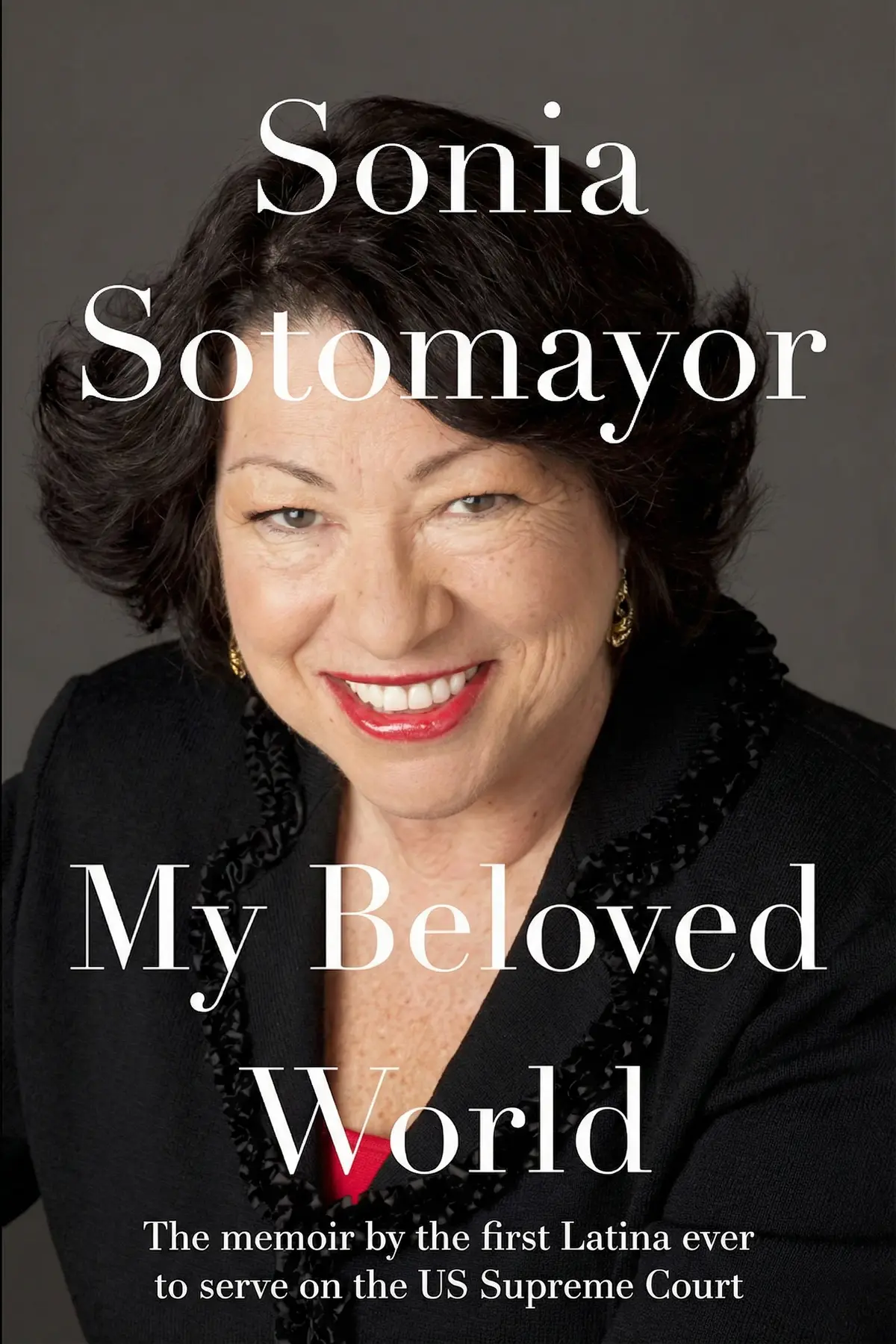
Follows Sonia Sotomayor from a Bronx housing project to the federal bench. It shows how early hardship built her self-reliance and how mentors, friends and allies helped her overcome prejudice at Princeton, Yale and beyond.
50 sec
If you grew up far from the places where power sits, it can feel as if every door was built for someone else. In My Beloved World, Supreme Court Justice Sonia Sotomayor tells how a seven-year-old in the Bronx, newly diagnosed with diabetes, learned to give herself insulin shots by practicing on an orange. That small act of self-reliance is where her climb begins.
Her memoir makes one argument across every stage of her life. Hardship built her discipline and resilience, but what carried her through prejudice and onto the bench was her habit of asking for help and gathering people who would stand with her. Along the way you hear how she learned to study, how she answered an insult at Yale, why she picked a job for its lessons rather than its pay, and how a network of friends won her first judgeship.
1 min 27 sec
A sick child in a struggling household needed a daily injection, and neither parent could steady the needle. The way she solved it shaped the person who later sat on the country’s highest court.
1 min 26 sec
After a death in the family, a struggling fifth grader made one simple move that most people are too proud to make. It changed her grades, her ambitions and the way she handled every challenge after.
1 min 32 sec
An acceptance letter from an elite university changed how strangers treated her almost instantly. It did not change what many people on campus believed about students like her, and she had to decide how to respond.
1 min 47 sec
A job interviewer implied a Yale law student did not deserve her place there, and when she filed a complaint, many criticized her for it. What she did instead cost her some goodwill and earned her something more lasting.
1 min 37 sec
Most of her classmates took the obvious, well-paid route out of law school. She took a path that looked like a step down and found experience, purpose and a case she would hear about again years later.
1 min 23 sec
Two cousins grew up side by side, and the one who seemed stronger did not survive. Sotomayor spent decades trying to understand why, and her answer points to what really held her up.
1 min 30 sec
At thirty-six she thought a federal judgeship was far beyond her, and even after the offer came, a hostile Senate could block it. The eighteen months that followed showed what years of relationships are worth.
1 min 11 sec
Sotomayor’s rise could be told as the triumph of one determined person. Her memoir tells a fuller story. The girl who practiced on an orange did learn she could depend on herself, and the losses of her early years, from her father to her cousin Nelson, left her with a stubborn resilience. Yet at every turning point, someone else stands in the picture: a classmate explaining how to study, a mentor at Yale, a coworker telling her to apply, a crowd of supporters appealing to the Senate. In 2009, President Barack Obama put her on the Supreme Court, the first Hispanic justice and only the third woman to serve there. She kept using her place to help others facing the prejudice she had faced.
Her example points to a few things worth trying. When a goal looks impossible, break it into small pieces and start with the first one, the way she began with a fruit and a needle. Ask the person who already does it well how they do it. And look after the friendships that hold you up, because one day they may speak for you.
Self-reliance got her started. Other people got her to the bench.
Sonia Sotomayor grew up in a Puerto Rican family in the Bronx housing projects. Her father struggled with alcohol and died when she was nine, and at seven she was diagnosed with juvenile diabetes. Few people would have predicted that this girl would become the first Hispanic justice on the Supreme Court of the United States. Her memoir traces the steps between those two points: teaching herself to give insulin shots, asking a classmate how to study, facing open doubt about her place at Princeton and Yale Law School, filing a complaint against a recruiter who insulted her, and choosing a prosecutor's job over a large firm's salary. Running through every stage is a double lesson. Hardship made her disciplined and resilient, and the people around her, from her grandmother to a coworker who urged her to aim higher, made the difference at every turning point. Readers get an honest account of rising from a disadvantaged start and dealing with prejudice along the way. They also see how to treat help, mentors and friendships as part of the work of getting ahead.
First-generation students and professionals who feel like outsiders in elite schools or workplaces.
Young lawyers and graduates weighing a first job, a mentor or a bold application.
Readers who want a frank account of rising from hardship through resilience and the help of others.
Sonia Sotomayor was born in the Bronx in 1954 to parents from Puerto Rico and grew up in New York City housing projects. Scholarships took her to Princeton and Yale Law School, where she was an editor of the Yale Law Journal. She worked as an assistant district attorney in New York and became a partner at Pavia & Harcourt. She became a federal district judge in 1992 and joined the Second Circuit Court of Appeals in 1998. In 2009 she joined the Supreme Court as its first Hispanic justice and its third woman.
Listeners find this memoir an engaging and accessible read, describing it as a quintessential American success story that holds their attention from start to finish. The book is written like a narrative and offers profound perspectives on the author’s life, and one listener highlights how it touches on several significant broader themes. They value the author's humble, approachable nature and consider it essential reading for driven young women.
Wow. I wasn't prepared for how much Sotomayor’s vulnerability would hit me. From the very first chapter where she describes learning to give herself insulin shots at seven years old, you realize this isn't just another dry political memoir. It is a story about survival and the fierce love of a family that, while often struggling, provided the backbone for her success. To be fair, she doesn't spend much time on her Supreme Court cases, which might disappoint some, but the focus on her childhood and time at Princeton feels much more intimate. It’s a beautiful look at a woman who refused to let her circumstances define her limits.
Show morePicked this up on a whim and couldn't put it down. This isn't just a 'rags to riches' story; it's a 'grit to greatness' chronicle that feels entirely human. I was particularly moved by the way she describes her relationship with her father and her Abuelita, showing a side of her life that most people would never guess exists behind the black robe. Not gonna lie, I teared up a few times during the descriptions of her childhood health struggles. It’s rare to find a public figure who is this willing to admit to their own insecurities and early failures. Absolutely stellar.
Show moreSonia Sotomayor writes with a level of candor that is rare for someone in such a high-profile position. She explores her heritage with such pride, yet she is honest about the internal conflicts that come with climbing the social ladder. The chapters on her time as a prosecutor in Manhattan were especially gripping, highlighting her commitment to public service over the lure of big private law firm salaries. Honestly, the book serves as a perfect roadmap for anyone who feels like an outsider in their chosen field. Her voice is clear, her message is powerful, and her story is a testament to the importance of staying true to your roots.
Show moreLook, I’m not usually one for political memoirs, but this felt different. It reads more like a classic coming-of-age novel than a stuffy autobiography. Sotomayor’s journey from the Bronx to the bench is told with such humility that you almost forget you’re reading about one of the most powerful people in the country. Her focus on the 'Wise Latina' identity isn't just a catchphrase; it’s a lived experience that she weaves through every page of this book. The way she handled her divorce and the loss of friends to the drug epidemic adds a layer of reality that is often missing from these kinds of success stories. Truly inspiring.
Show moreAfter hearing so much about Justice Sotomayor, I finally dove into her memoir and was struck by her incredible work ethic. She doesn’t sugarcoat the difficulties of being a first-generation student at Princeton, where she often felt like a 'visitor' in a world she didn't quite understand. Frankly, the book is less about law and more about the mentors and community organizations that helped her bridge that gap. I loved the glossary of Spanish terms at the end; it added such a rich layer of authenticity to the Bronx setting. While the prose is sometimes a bit dense, her reflections on her mother are deeply moving and relatable.
Show moreThe chapters detailing her battle with juvenile diabetes were particularly harrowing, revealing a level of self-reliance that most adults never achieve. It’s fascinating to see how that early medical diagnosis forced her to become disciplined and organized, traits that clearly served her well later in her legal career. In my experience, memoirs by judges can be a bit stuffy, but Sotomayor keeps things grounded with local color and a genuine warmth toward the people who helped her along the way. I wish there was a bit more about her later career, as the narrative cuts off somewhat abruptly, but it’s still a deeply compelling portrait.
Show moreAs someone who also grew up in a bilingual household, I deeply appreciated the inclusion of Spanish phrases and the vibrant descriptions of Puerto Rican culture. Sotomayor does a fantastic job of explaining the complexities of her 'beloved world' without oversimplifying the struggles of poverty or addiction that surrounded her. My only small criticism is that the writing occasionally feels a bit too methodical, mirroring her own self-described personality, which can slow the narrative down in the middle. However, the emotional payoff of her confirmation at the end makes every page worth the effort. It’s an essential read for understanding the heart of a Justice.
Show moreFinally got around to reading this and it’s a masterclass in determination. Sotomayor describes her path from the housing projects to the DA’s office with a down-to-earth tone that makes her accomplishments feel both miraculous and earned. The way she navigated the social pressures of Princeton while staying connected to her Puerto Rican roots was fascinating to read. My only real gripe is that some of the legal jargon in the middle sections could have been streamlined. Still, it’s a must-read for any young woman with big ambitions who needs a reminder that the odds can be beaten. A solid, encouraging American story.
Show moreEver wonder how a kid from the South Bronx makes it to the Ivy League? Sotomayor lays it all out here, though the narrative can be a bit of a slow burn. Personally, I found the discussions on affirmative action and her time at Yale Law much more compelling than the repetitive details about her extended family’s parties. She is clearly a brilliant, methodical person, but that same precision makes the prose feel a little sterile at times. It’s an inspiring success story, no doubt, but I felt like she was still guarding her true self behind a carefully polished curtain. A decent read, just not the page-turner I anticipated.
Show moreThis book just never really caught fire for me, despite my immense respect for the author. I found the pacing to be quite sluggish, especially the extensive sections dedicated to her early childhood and Catholic school days. While I appreciate the cultural context, the writing felt a bit methodical and lacked the emotional warmth I was expecting from a personal memoir. Truth is, I was hoping for more insight into her legal philosophy or her transition into the federal judiciary, but the book ends just as that journey begins. It’s definitely an important historical record, but as a casual reader, I struggled to stay engaged.
Show moreIt is Sotomayor’s memoir of growing up in a Puerto Rican family in the Bronx housing projects and rising through Princeton, Yale Law School and a prosecutor’s office to become a federal judge. She argues that her hard childhood gave her discipline and resilience, while mentors, friends and colleagues helped her overcome prejudice and seize each new opportunity.
Diagnosed with juvenile diabetes at seven, Sotomayor needed daily insulin shots, but her father struggled with alcohol and her mother was too anxious to give them steadily. So she practiced injecting an orange until she could do it herself. She describes this as the moment she learned she could count on herself, and she links it to the discipline that later drove her studies.
At Princeton she felt cut off from wealthy classmates and faced alumni columns attacking affirmative action, so she joined advocacy groups such as Acción Puertorriqueña while earning top honors like the Pyne Prize. At Yale, when a recruiter called her culturally deprived, she filed a formal complaint. Some criticized her, but friends, mentors and students supported her and shared similar experiences.
Ask people who do something well how they do it, as Sotomayor did with a fifth-grade classmate. Weigh a first job by the responsibility and purpose it offers, as she did at the District Attorney’s office. Break a daunting goal into small steps. And invest in friendships, since former coworkers and mentors helped secure her confirmation as a federal judge.
Ishmael Beah
James Herriot


Barack Obama


Masaji Ishikawa


Ben Macintyre

Fay Bound Alberti

AUDIO SUMMARY AVAILABLE
Get the key ideas from My Beloved World by Sonia Sotomayor, plus 5,000+ more nonfiction titles.









