

Acting with Power: Why We Are More Powerful Than We Believe
Deborah Gruenfeld
 English
Explains why decent people on opposing sides each feel morally certain, how fast gut feelings and slow reasoning shape our judgments, and how to settle stuck debates by asking what actually makes people better off.
1 min 03 sec
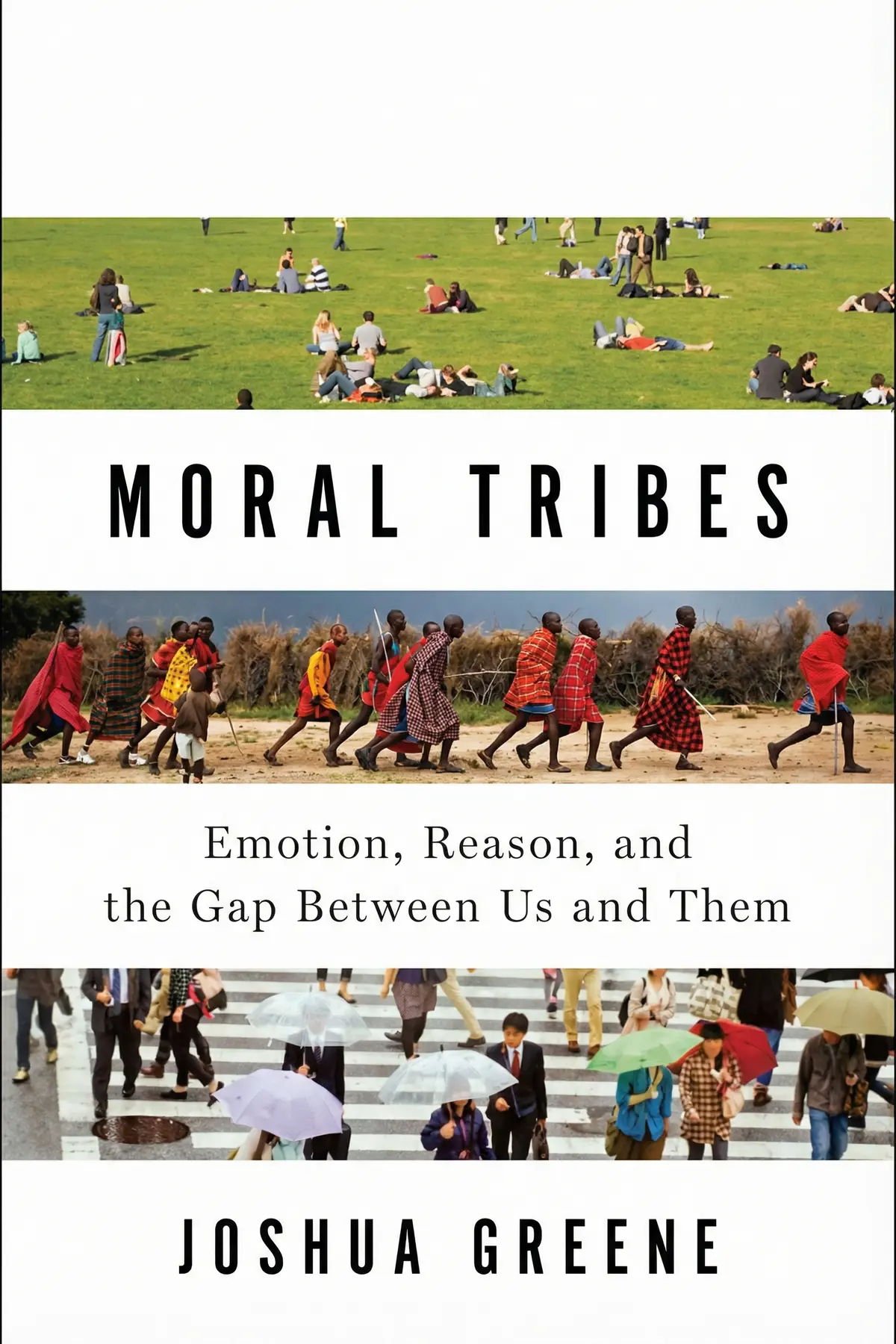
If moral arguments at work or online leave you sure you are right, and baffled that the other side is just as sure, there is a reason both of you feel that way. In Moral Tribes, Harvard psychologist Joshua Greene argues that both sides usually run the same ancient equipment: moral instincts that evolved to help us cooperate inside our own group, and that misfire when groups meet.
His case is that gut reactions serve us well within a tribe. When tribes clash, though, we need to switch to slower reasoning and judge competing values by a shared measure: which choice leaves people happier overall, without trampling individual rights.
Along the way come two doomed gunslingers, a cartoon that set embassies on fire, a hallway full of chocolate cake and a toddler trapped in a well. By the end you will be able to tell when your gut is steering a moral argument, and how to move a stuck debate onto ground both sides can stand on.
1 min 36 sec
Two travelers meet at a watering hole in the Wild West, each wary of being robbed by the other, and neither leaves alive. Their story shows how sensible choices made alone can add up to disaster for both sides.
1 min 53 sec
Two arrested bank robbers each face the same offer from the sheriff, and the logic of the deal pushes both toward the worst result. What changes their minds says a lot about how groups hold together.
1 min 37 sec
Some of the fiercest conflicts involve no greed at all. Each side is defending what it sees as plain decency, which is exactly why asking people to be less selfish does nothing to stop them.
1 min 46 sec
People asked to remember a long number made a noticeably different snack choice than people with a short one. That small result explains a great deal about when moral judgments go wrong.
1 min 50 sec
A typhoon seen in person and the same typhoon seen on a live video feed produce very different feelings of duty. The gap reveals a bias that shapes where our money and attention go.
1 min 50 sec
One philosophy offers rival groups a common way to weigh their choices. A man on a footbridge above a runaway train shows exactly where that philosophy breaks, and what it needs added.
1 min 41 sec
When two sides argue from completely different starting points, they end up fighting over a question that cannot settle anything. Greene shows how changing the question can move even the most entrenched dispute.
1 min 15 sec
Moral Tribes leaves you with two kinds of trouble side by side. Art and Bud die because each looks after himself. The Danish journalists and their critics end in fire because each defends its own sense of right. According to Greene, evolution equipped people to work together inside their own groups, yet getting different groups to work together remains a weak spot. Our fast moral feelings, shaped by genes and culture, feel like plain truth, which is exactly why two tribes can both feel certain.
The way forward he offers is slow and unglamorous. Switch to manual mode when the stakes are high, judge options by what they do to people’s happiness, and keep individual rights as a floor nobody can vote away.
His most practical advice is a test of honesty. Choose a policy you strongly oppose, on global warming or healthcare perhaps, and try to explain in detail why you disagree with it. If you struggle, admit that your certainty ran ahead of your knowledge, and invite others to try the same exercise. People who face what they do not know tend to listen better. The disagreement may remain, but now it is one you can actually work through.
Political and moral arguments keep getting angrier, and each side seems sure it holds the high ground. Harvard psychologist Joshua Greene argues that this is no accident. Evolution gave humans strong instincts for cooperating within a group, but much weaker tools for cooperating between groups, and the gut feelings that bind a tribe together are the same ones that set it against another. Greene builds his case from thought experiments and studies. Two Wild West strangers destroy each other out of mutual fear. A prisoner's dilemma shows how bonds and rules turn betrayal into loyalty. A Danish cartoon controversy shows two groups each defending what feels like common sense. An experiment with chocolate cake reveals the automatic and manual modes of the mind, and a toddler trapped in a well shows how distance shapes who we help. His proposed way forward is to switch into slower reasoning when tribes clash and to judge options by a shared standard, overall happiness, while protecting individual rights. Readers get a clear model of their own moral reactions and a practical method for debates that seem impossible to settle.
Professionals worn down by polarized arguments who want to understand why both sides feel certain.
Team leads managing people whose values clash and who need a fair way to weigh options.
Donors and volunteers wondering why some causes move them far more than others.
Joshua Greene, born in 1974, studied philosophy at Harvard and Princeton. He is now a professor of psychology at Harvard, where he directs the Moral Cognition Lab and is on the faculty of the Center for Brain Science. Much of his research examines how emotion and reasoning interact in moral judgment, including dilemmas such as trolley problems. His more recent work looks at reducing conflict between groups and encouraging effective giving.
Listeners find the work engaging and skillfully composed, with one listener noting how it integrates philosophy with psychology. Furthermore, the material is intellectual and profound, serving as essential listening for grasping modern moral psychology. Additionally, the tempo is well-regarded, with one review highlighting how it aids in managing individual and collective dynamics within a social environment.
Joshua Greene manages to bridge the gap between hard neuroscience and abstract ethics in a way that feels both urgent and intellectually satisfying. I loved the deep dive into how our brains process "Me vs. Us" and why that differs so wildly from "Us vs. Them." The writing is heady but remains incredibly accessible, making complex fMRI data feel relevant to our daily social interactions. While some of the philosophical arguments for "deep pragmatism" get a bit dense, the core insights into tribalism are essential for anyone trying to navigate our polarized world. It is a compelling look at the "automatic" versus "manual" settings of our moral minds.
Show moreAs someone fascinated by fMRI studies and the biological roots of behavior, this was exactly what I was looking for. Greene’s Moral Cognition Lab at Harvard has done incredible work, and seeing it synthesized here is a treat. The distinction between the amygdala's emotional reactions and the prefrontal cortex's rational calculations explains so much about our "gut" reactions to controversy. The book is heady, but it never feels pretentious. It’s a contemporary masterpiece of moral psychology that forces you to confront the "tragedy of commonsense morality." If you want to understand why your brain is wired for tribalism, look no further.
Show moreWow, this really changed how I view political conflict. I used to think people on the "other side" were just irrational, but Greene shows how they are actually following a different set of deeply ingrained "automatic" moral rules. The way he uses the Tragedy of the Commons to explain modern political tribalism is genius. It's a compelling, well-written journey through the human mind that balances rigorous science with big-picture thinking. Some might find the focus on trolley problems a bit repetitive, but it’s a necessary foundation for his larger points about utilitarianism. This is essential reading for the 21st century.
Show moreEver wonder why we can't just get along? This book provides the best explanation I’ve seen for why "good" people are so frequently divided by politics and religion. Greene argues that our moral instincts are evolved for small-group cooperation, which makes them disastrously ill-equipped for global, multi-tribe issues. The pace of the book is excellent; it flows naturally from psychological experiments to broader social implications without feeling like a textbook. It’s a must-read if you want to understand the "biased fairness" that plagues our current cultural climate. It’s eye-opening and deeply insightful, even if you don’t agree with every utilitarian conclusion.
Show morePicked this up on a whim and found it surprisingly emotional in parts. There's a section on how we view "statistics" versus "identifiable victims" that really made me rethink my own charitable giving and empathy. The author’s tone is conversational yet authoritative, blending heavy research with practical advice on managing personal and group relations. I did think the chapter on abortion was a bit of a missed opportunity, as it felt like it oversimplified the deeply held "rights" arguments on both sides. However, the overall message about switching our moral brains to "manual mode" is a powerful tool for self-reflection.
Show moreThe camera metaphor is what stayed with me long after I finished the last page. Our brains have these "automatic settings" for everyday life within our own tribe, but we need to switch to "manual" when we deal with other groups. It’s a simple but profound way to think about why we fail to communicate across political divides. Greene’s writing is well-paced and he has a knack for explaining complex game theory without losing the reader. I appreciated how he addressed the flaws in our innate sense of fairness. It’s a heady, insightful book that serves as a vital toolkit for social living.
Show moreAfter hearing about Greene's work in a college psych course, I had to dive into the full text. It’s a fascinating combination of philosophy and psychology that explores why humans are simultaneously the most cooperative and most conflict-prone species. The discussion on "biased fairness" was particularly striking—it’s scary how easily we convince ourselves that what benefits us is actually the "moral" choice. While the book is long and sometimes talks down to the reader, the insights into in-group preferences are invaluable. It really helps you manage your own biases in a social environment once you see how they work.
Show moreFinally got around to this classic, and it mostly lives up to the hype. Greene is a brilliant thinker who manages to make "deep pragmatism" sound like the only logical way forward in a world of clashing values. The pacing is mostly good, though it drags a little when he gets into the weeds of philosophical rebuttals. Truth is, the most valuable part is the psychological data—like the fact that even infants have in-group preferences. It’s a heady read that provides a necessary framework for understanding contemporary moral psychology. A bit long, but definitely worth the investment for the perspective shift.
Show moreThe science here is top-tier, but the philosophical portions didn't quite land for me. Greene spends an enormous amount of time on "Trolley-ology," which is fascinating for the first fifty pages but starts to feel repetitive after a while. I was hoping for more data on how groups form in modern, non-geographical societies rather than just hypothetical switches and footbridges. To be fair, his explanation of the interplay between emotion and reason is brilliant, yet I found his defense of utilitarianism a bit too defensive and over-qualified. It's a solid read that could have been much tighter with a more aggressive editor.
Show moreFrankly, the utilitarianism defense felt weak and took up way too much of the book's second half. I came for the evolutionary psychology and the cool brain scans, not a several-hundred-page apology for a philosophy that often ignores individual rights. Greene tries so hard to make utilitarianism seem "pragmatic" that he ends up watering it down until it’s just common sense. The "manual mode" metaphor is okay, but I don't think it justifies the dismissal of deontological ethics as mere "rationalization." It’s an okay read for the science, but the philosophy is a bit of a slog and fairly unconvincing.
Show moreGreene argues that human moral instincts evolved to help us cooperate within our own group but work poorly between groups. Each tribe’s gut feelings seem like common sense, so opposing sides both feel morally right. When groups clash, he says, we should switch from automatic intuition to deliberate reasoning and judge options by which leaves people happier overall, while protecting individual rights.
The tragedy of the commons is me versus us: self-interest undermining a shared good, as when two Wild West strangers destroy each other out of fear. The tragedy of commonsense morality is us versus them: two groups each defending values that feel obviously right, as in the 2005 Danish cartoon controversy, which led to more than a hundred deaths and burned embassies.
Greene compares the mind to a camera. Automatic mode is fast and intuitive, shaped by genes, culture and trial and error, and it favors immediate rewards. Manual mode is slower and weighs short-term against long-term effects. In a 1999 experiment by Shiv and Fedorikhin, people memorizing seven digits were 50 percent more likely to choose chocolate cake over fruit, because their manual mode was occupied.
Greene finds that felt obligation depends on physical distance and personal connection. In a study with Jay Musen, 68 percent of people who imagined being present at a typhoon felt a duty to help, versus 34 percent who imagined watching a live feed. Similarly, strangers gave more than $700,000 to help rescue one toddler trapped in a Texas well in 1987.
Notice when you are tired, rushed or angry and likely reasoning on autopilot, and delay big moral judgments. In stuck debates, move from competing rights to the practical question of what each option would do to people’s lives, while protecting basic rights. And test yourself: try to explain in detail why you oppose a policy. If you cannot, admit what you do not know.
Deborah Gruenfeld


Anthony Pratkanis




William B. Irvine

Richard Wiseman

AUDIO SUMMARY AVAILABLE
Get the key ideas from Moral Tribes by Joshua Greene, plus 5,000+ more nonfiction titles.









