

14 min 27 sec
Available in: English
 ไทย
EnglishไทยMindless Eating: Why We Eat More Than We Think
Shows how plate size, packaging, menu wording and the people at your table decide how much you eat, and how to rearrange those hidden cues so you eat less without a strict diet.
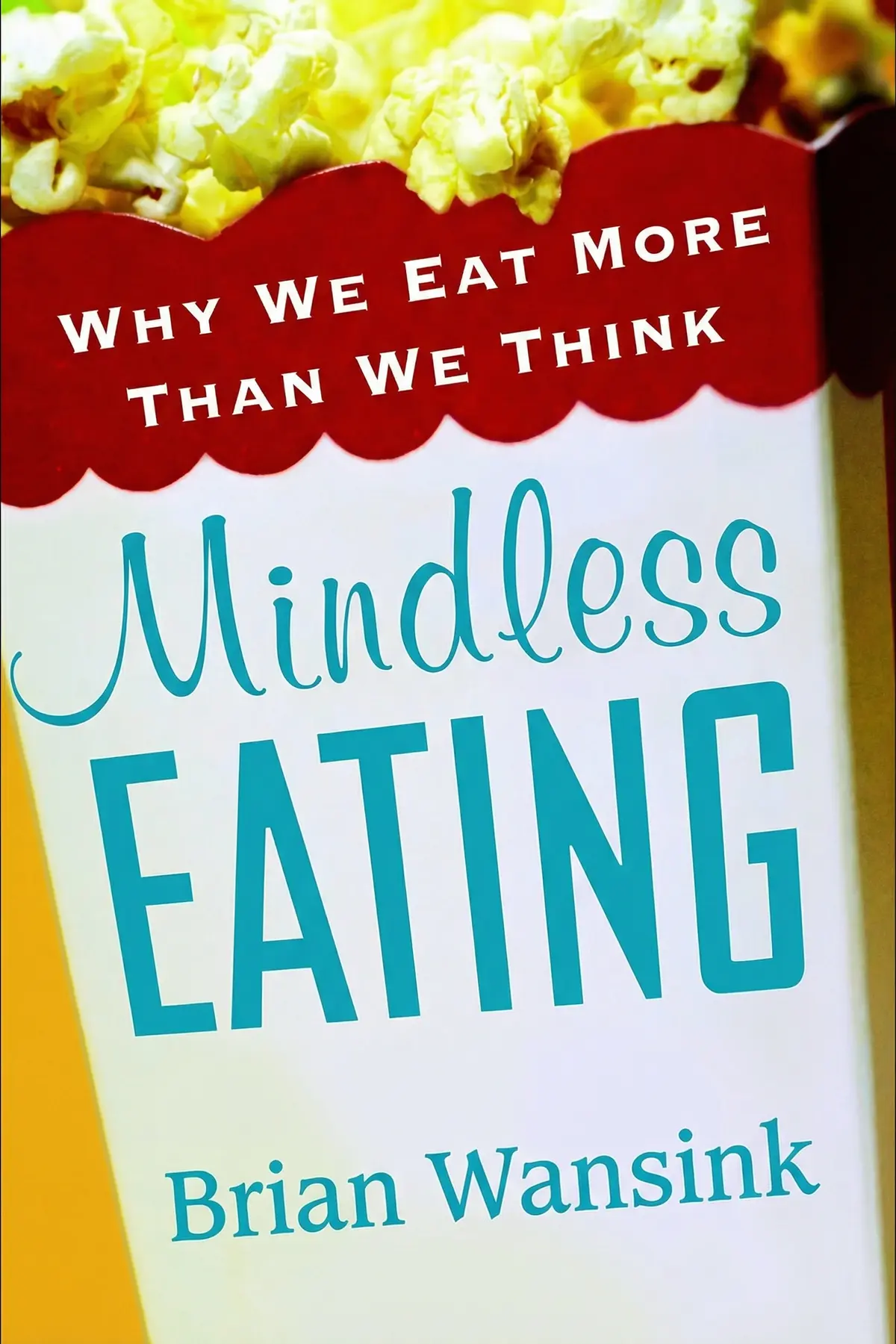
Table of Content
1. Introduction
1 min 01 sec
If you have ever finished a bag of chips without deciding to, the problem may not be willpower. In Mindless Eating, consumer behavior researcher Brian Wansink argues that our stomachs are poor judges of when we have had enough, so our eyes, our plates and the people around us decide for us. In one experiment he describes, diners whose soup bowls kept refilling without their knowledge ate 15 ounces on average, against 9 for people with ordinary bowls, and none of them noticed.
The argument running through the book is simple. Most overeating is driven by cues we never see, which means the same cues can be rearranged to help us eat less, with no punishing diet. Along the way come movie-goers eating five-day-old popcorn, a seafood dish that tasted better once it was called succulent, and a pile of chicken bones that shrank a meal by more than a quarter. By the end, you can spot these triggers in your own kitchen and switch a few of them in your favor.
2. Stop trusting your stomach to say when
1 min 45 sec
Most of us assume a meal ends when the body says it is full. A rigged bowl of tomato soup suggests the real stop signal comes from somewhere else entirely, and it arrives much earlier.
3. Smaller plates and buckets make smaller meals
1 min 44 sec
Movie-goers handed stale, unpleasant popcorn still ate more of it under one simple condition. The same effect sits in your kitchen cupboard, and restaurants have learned to use it against you.
4. See through the one-package, one-serving habit
1 min 44 sec
A bottle that looks like one drink can hold well over two servings, and almost nobody checks. Behind that small mistake sits an old instinct that modern supermarkets have learned to feed.
5. Be the slowest eater at the table
1 min 46 sec
Many meals end at a moment that has nothing to do with hunger. Once you see the unwritten rules that decide when you put the fork down, you can quietly rewrite them in your favor.
6. A fancier name makes the same food taste better
1 min 48 sec
Almost everyone believes advertising works on other people. A restaurant that changed nothing but the words on its menu found that diners tasted the difference anyway, along with a few other surprises.
7. Arrange your meals so eating less takes no effort
1 min 52 sec
A pile of chicken bones left on the table changed how much a group of students ate. It is one of several ways to make your own eyes work for you instead of against you.
8. Cut a hundred calories a day and keep going
1 min 36 sec
Most diets collapse within weeks, and the usual explanation blames the dieter. Wansink points the finger somewhere else, then offers a plan modest enough to survive birthdays, desserts and busy months.
9. Conclusion
1 min 11 sec
Mindless Eating turns a familiar story upside down. We like to think we eat what we want until we are full. Wansink’s picture is of a person steered by bucket sizes, menu adjectives, fast music, a bottle that counts as one drink and a friend who is still chewing. The stomach speaks late and softly. Almost everything else speaks first.
That is why his remedy targets the setting. You do not have to win the argument with your appetite if you change the room where the argument happens. Eat from smaller plates, so a modest portion looks like a full meal. Let the bones, wrappers or empty dishes stay where you can see them. Keep the dessert you love, and pay for it with a lighter lunch.
One caution belongs here. In 2018, Cornell University found that Wansink had committed scientific misconduct, and several of his research papers have since been retracted. Treat the specific numbers as his reported findings, and test the habits on yourself, where the evidence that counts is your own plate.
The cues around your food will never go away. What you can choose is whose purpose they serve.
About this book
What is this book about?
Most people believe they eat what they want until they feel full. Brian Wansink, a consumer behavior researcher who directed the Cornell Food and Brand Lab, argues that this picture is mostly wrong. The body's fullness signal arrives late, so we judge how much to eat by what we see and by what the people around us are doing. Wansink walks through the cues that push us to overeat: oversized buckets and plates, packages we treat as single servings, the habit of eating until the slowest person at the table finishes, and menu words, brand names and lighting that change how food tastes and how fast we eat it. He then turns each cue around, showing how smaller plates, visible leftovers and divided packages can work for the eater instead of against them. The book closes with a case for modest, steady change over harsh diets, including a daily checklist aimed at about 100 fewer calories and food trade-offs that let you keep the treats you love. Readers should know that Cornell later found Wansink had committed scientific misconduct, and several of his papers have been retracted.
Book Information
Who it's for
Wanting small, lasting changes
People who keep restarting diets and want changes small enough to last.
Busy professionals
Busy professionals who eat fast at their desks or snack without noticing.
Parents feeding a household
Parents who shop and cook for a household and want everyone eating a little better without arguments.
About the Author
Brian Wansink
Brian Wansink, born in 1960, worked in consumer behavior and marketing research. He held an endowed chair at Cornell University and directed its Cornell Food and Brand Lab, which studied how people make food choices. From 2007 to 2009 he was executive director of the USDA's Center for Nutrition Policy and Promotion. In 2018 Cornell found that he had committed scientific misconduct, he resigned effective June 2019, and several of his research papers have been retracted.
Ratings & Reviews
Ratings at a glance
What people think
Listeners find this work to be a fast, pleasant experience backed by solid evidence and ingenious research. Furthermore, they value the actionable tips on weight management and dietary patterns, remarking that it is essential reading for anyone committed to slimming down. Listeners also characterize the content as stimulating; specifically, one listener emphasizes how it examines mental and biological signals, while others commend its simple organization and find it simultaneously informative and fun.
Top reviews
Fah
Picked this up on a whim and ended up finishing it in a single weekend. If you enjoy the works of Malcolm Gladwell or the Freakonomics series, this is right up your alley. It’s less of a strict diet manual and more of a pop-sociology exploration of the hidden influencers in our dining rooms and restaurants. The author has a very humorous, breezy style that makes complex behavioral economics feel accessible to the average person. I loved the specific details about how the shape of a glass or the size of a spoon can trick our brains into feeling full or deprived. Look, it’s not groundbreaking medical advice, but it is an entertaining guide to becoming more aware of your habits. It really makes you stop and think before reaching for that second helping just because the plate is large.
Show moreWaree
The wine experiment alone makes this worth the price of admission. It is wild to think that our brains can be so easily manipulated just by a fancy label or a slightly different glass shape! Mindless Eating isn’t about counting calories or depriving yourself of treats; it’s about understanding the physical and psychological cues that make us overindulge without realizing it. I found the 'mindless margin' concept—cutting just 100 or 200 calories a day—to be much more sustainable than any fad diet I’ve tried in the past. Wansink’s writing is educational yet highly entertaining, which is a rare balance for this genre. After reading this, I’ve already swapped out my large dinner plates for smaller ones and moved the fruit bowl to the counter. Small changes really do make a big difference when you stop eating on autopilot.
Show moreKek
Gotta say, this is one of the most practical books on habits I’ve ever read. It doesn't ask you to give up carbs or start a marathon training plan; it just asks you to be a little more mindful of the 'mindless' cues around you. I loved the section on how we eat more when we're distracted by the TV or a good conversation. The stale popcorn experiment was a great wake-up call about how much we rely on volume rather than taste. Even with the controversy surrounding Wansink’s later work, the fundamental principles here—like using taller, thinner glasses to pour less juice—just work in a real-world setting. It’s a quick, enjoyable read that offers a lot of 'lightbulb' moments. I’d highly recommend it to anyone who feels like they’re constantly dieting but never seeing results. It turns out the secret might just be in your kitchen cabinets.
Show morePear
Ever wonder why you finish a giant bucket of stale popcorn at the movies even when it tastes like cardboard? This book dives deep into the psychological cues that dictate our appetite, and the results are eye-opening. Wansink argues that we make over 200 food-related decisions a day without even realizing it. The chapter on how wine labels—switching 'North Dakota' for 'Sonoma'—can change our entire sensory experience was particularly hilarious and telling. To be fair, some of the weight loss tips felt a bit recycled from every other health blog I’ve ever read. I was more interested in the market research than the actual dieting advice. Still, the concept of re-engineering your kitchen to work for you instead of against you is incredibly practical. It’s a thought-provoking look at how our eyes are usually much bigger than our stomachs.
Show moreDylan
As someone who constantly struggles with portion control, I found the experiments in this book to be remarkably relatable. The author explains how we are essentially victims of our surroundings, from the lighting in a cafe to the way our pantry is organized. I never realized how much my fear of 'wasting food' was driving me to overeat until I read the sections on the 'clean plate club' mentality. The truth is, most of us are eating mindlessly because we aren't paying attention to internal hunger cues. The advice is easy to follow and doesn't require a radical lifestyle overhaul, which I appreciated. My only minor gripe is that the book can be a bit repetitive at times. Once you get the main gist that 'environment is everything,' the later chapters feel a bit like they are hammering the same nail. Regardless, it’s a must-read for anyone serious about changing their relationship with food.
Show moreAmara
Finally got around to reading this pop-sci classic and it’s surprisingly relevant even years later. The core message is simple: we don't eat because we're hungry, we eat because of what’s in front of us. Whether it’s the size of the cereal box or the proximity of the candy dish at work, our environment dictates our waistline. I enjoyed the breezy, humorous approach Wansink takes, especially when describing the poor participants who unknowingly ate from self-refilling soup bowls. It’s a thought-provoking look at the food industry’s tactics too. While some of the advice is stuff you've likely heard before, seeing the data (even if controversial) makes it much more compelling. It’s a quick read that will definitely change the way you look at a buffet line or a grocery store shelf. Definitely worth a look for the awareness it brings.
Show moreHemp
Wow, this really changed how I set my dinner table. I’m a naturally fast eater who often clears my plate before I even realize I’m full, so the tips on slowing down and using visual cues were perfect for me. The author’s exploration of how we make 200 food decisions a day was a total 'aha' moment. I never considered that just seeing a jar of cookies on the counter was a decision I had to win or lose every time I walked by. The book is packed with clever studies that are both educational and entertaining. My only criticism is that it ignores the emotional side of eating almost entirely to focus on the environmental side. Life isn't always as simple as changing your plate size, but it’s a great starting point for anyone looking to lose weight without feeling miserable. It’s an easy-to-follow format that keeps you engaged.
Show moreIsabelle
The experiments themselves are genuinely entertaining, but the book spends way too much time on weight loss tips and not enough on the actual data. I was looking for a rigorous scientific study on food psychology, but what I got was more of a self-help guide with some anecdotes thrown in. Some of the findings, like the idea that we eat more from larger packages, felt like common sense that didn't need a whole chapter to explain. Not gonna lie, I was also a bit put off by the recent news regarding the author’s research methods. It makes it difficult to fully buy into the 'scientific' nature of the claims. That being said, the formatting is excellent and it’s a very quick, easy read. It’s fine as a casual introduction to the topic, but don’t expect a deep dive into the mechanics of the human brain.
Show moreTawee
After hearing so much about this book in other health circles, I finally gave it a go. Personally, I think the marketing insights are much stronger than the actual health advice. The way restaurants use music and lighting to make you order more dessert is fascinating, and I’ll definitely be more aware of that next time I go out. However, the tone felt a little too 'infomercial' for my liking at times. I wanted more substance regarding the psychological 'why' and fewer bulleted lists of tips. Also, knowing that many of these studies have been called into question since publication definitely soured the experience for me. It’s a fun read if you treat it as a collection of interesting stories, but I wouldn’t use it as your primary source for nutritional science. It's a decent coffee table book for starting conversations, nothing more.
Show moreDivya
It’s hard to reconcile the breezy, fun tone of this book with the fact that so many of Wansink’s papers have been retracted. I started reading this for a book club and found the experiments—like the bottomless soup bowl—to be absolutely fascinating examples of how our environment tricks us. However, once you learn about the scientific errors and the scandal at Cornell, the whole thing starts to feel like a house of cards. Frankly, I don’t know what information I can actually trust anymore. Is the 'mindless margin' a real thing, or just a catchy phrase based on bad data? While the writing style is engaging and the advice on smaller plate sizes seems like common sense, the lack of scientific integrity looms over every chapter. It’s a quick read, but I’d suggest taking every 'proven' fact with a massive grain of salt.
Show moreQuestions about this book
What is the main idea of Mindless Eating?
Brian Wansink argues that we have far less control over how much we eat than we think. The body’s fullness signal takes about 20 minutes to reach the brain, so we rely on cues such as plate size, package size, marketing and the pace of the people around us. Because those cues drive overeating, rearranging them can help us eat less without a strict diet.
Why do bigger plates make you eat more, according to Wansink?
Wansink describes an optical illusion: the same portion looks smaller on a large plate because of the empty space around it, so it feels less satisfying and people reach for more. He also reports that movie-goers given larger buckets of stale, five-day-old popcorn ate more of it than those with smaller buckets, even though neither group could finish.
How can I apply Mindless Eating in daily life?
Use smaller plates and bowls, split large packages into small portions when you get home, and keep visible evidence of what you have eaten, such as empty dishes or bones. In company, start last and eat slowest. For lasting change, pick three daily actions that trim about 100 calories, and allow treats through trade-offs, such as dessert on days with a salad lunch.
Is Mindless Eating still trustworthy given the research controversy?
Readers should know that in 2018 Cornell University found Wansink had committed scientific misconduct, and several of his research papers have been retracted. The book’s specific numbers are best treated as his reported findings. Its practical suggestions, such as smaller plates and slower eating, cost little to try, so readers can test them on their own habits and judge the results.
Who should read Mindless Eating?
It suits people who struggle to stick with diets, those who snack or eat quickly without paying attention, and parents who shop and cook for a household. Its advice relies on changing surroundings rather than willpower: plate sizes, package sizes, what stays on the table and how fast you eat compared with the people around you.
Readers also enjoyed



A Liberated Mind: How to Pivot Toward What Matters
Steven C. Hayes


Acting with Power: Why We Are More Powerful Than We Believe
Deborah Gruenfeld


Age of Propaganda: The Everyday Use and Abuse of Persuasion
Anthony Pratkanis


AUDIO SUMMARY AVAILABLE
Listen to Mindless Eating in 15 minutes
Get the key ideas from Mindless Eating by Brian Wansink, plus 5,000+ more nonfiction titles.
- 5,000+ titles
- Listen as much as you want
- 7-day free trial
- Cancel anytime









