

14 min 38 sec
Available in: English
Millennial Money: How Young Investors Can Build a Fortune
Shows young people why investing in stocks early beats a savings account or a pension promise, and how to spread risk worldwide, pick cheap shares in sound companies and keep emotion out of a decades-long plan.
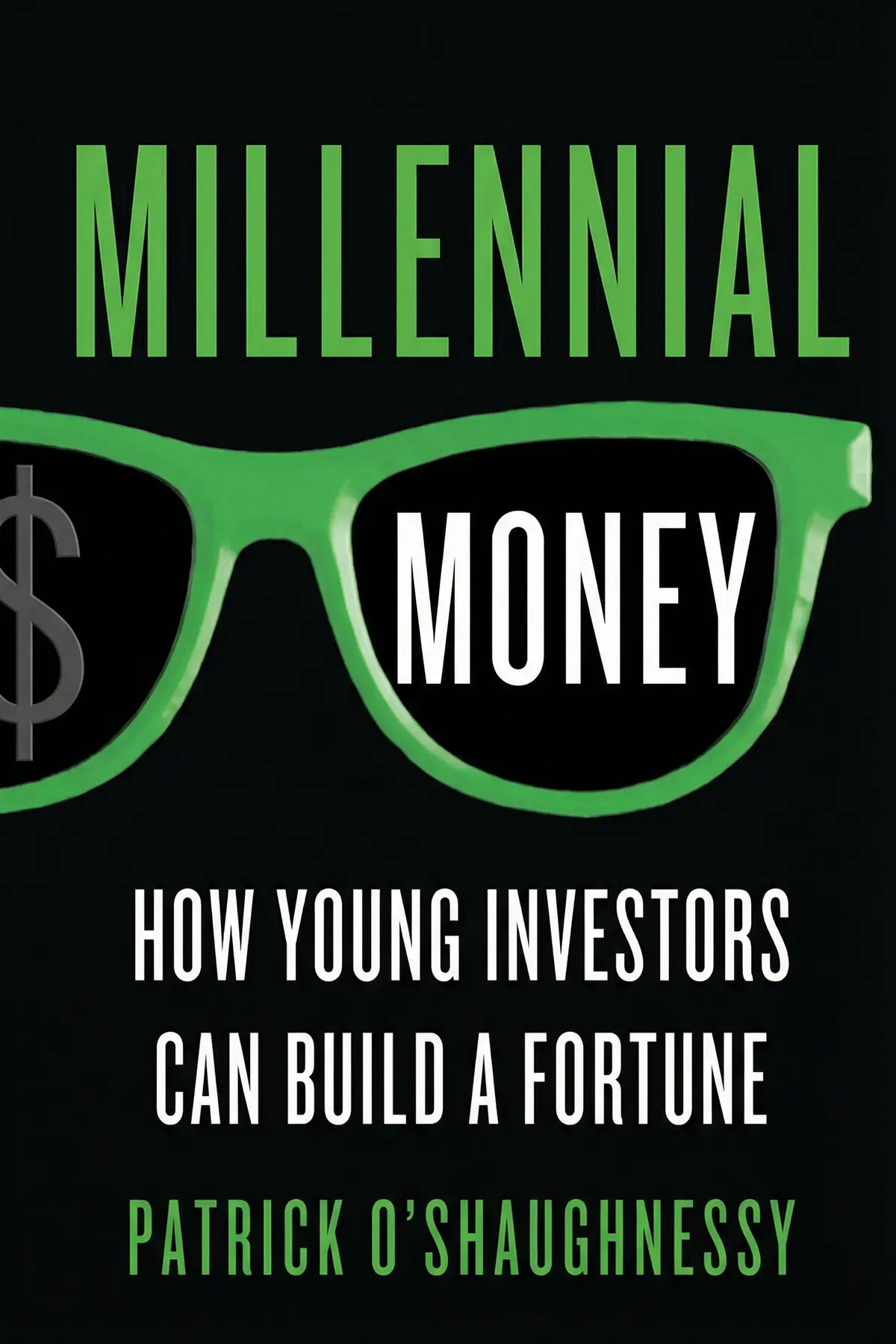
Table of Content
1. Introduction
1 min 00 sec
Retirement feels like someone else’s problem when it is forty years away, yet those forty years are the most valuable thing a young investor owns. In Millennial Money, portfolio manager Patrick O’Shaughnessy shows the math: put $10,000 a year into stocks earning 7 percent from age 22, and you could have about $4.7 million at 65. Start the same habit at 40 and you end near $1 million.
His argument is that young people, who may not be able to count on a government pension, can build real wealth by owning stocks early and widely, choosing them differently from the crowd, and then keeping their own instincts out of the way for decades. Each idea that follows is one part of that plan, from where your money should go to how to stop fear from pulling it back out. By the end, retirement stops being a vague worry and becomes a system you can set up this month.
2. Turn your twenties into your biggest financial advantage
1 min 50 sec
Two people put the same yearly sum into the same market at the same return, yet one ends up with nearly five times more. The gap comes from a single decision most young people keep putting off.
3. Plan your retirement as if no pension comes
1 min 37 sec
Your taxes pay for today’s retirees, and the math behind that arrangement has a multi-trillion-dollar hole in it. That hole matters to anyone quietly counting on a pension decades from now.
4. Spread your money across countries and currencies
1 min 49 sec
In 1989, Japan’s market looked like one of the strongest bets around. An investor who trusted it was still far behind a generation later, and the same instinct shapes most portfolios today.
5. Avoid the biggest companies to protect your returns
1 min 52 sec
The fund nearly every expert recommends is cheap, safe and sensible. It also has a ceiling built into its design, and the giants at its top have a habit worth knowing about before you buy.
6. Buy sound companies while their shares are cheap
1 min 46 sec
A low share price can signal a bargain or a business in trouble. A few checks, plus one six-month signal, help separate the two, and the combination has a track record going back to 1972.
7. Keep fear and greed away from your money
1 min 51 sec
Students offered a bet with even odds and a payout of two and a half times their stake still backed away. This reaction helps explain why so many investors wind up purchasing at high prices and selling at low ones.
8. Think in decades to profit from the market
1 min 44 sec
Over a single year, stocks look like a nervous gamble and bonds look safe. Stretch the window to two decades and the picture changes in a way that should reshape how you react to bad news.
9. Conclusion
1 min 09 sec
What O’Shaughnessy offers young investors is a way to turn their least visible asset, time, into the main engine of their wealth. The math of starting at 22 favors them, and the shaky outlook for pensions pushes them. The rest of his advice keeps them from wasting that head start: own the world, look where the crowd is not looking, and protect the plan from the very instincts that made a whole generation cautious after 2008.
The first moves are small. Set up an automatic transfer into an investment account, deciding the amount, the regularity and the fund ahead of time, and make sure it spreads your money beyond your own country. When you pick individual shares, favor low prices backed by real cash, ideally in companies the market has just started to notice. And mind taxes: in the system he describes, holding a winning stock for at least a year means its gains are taxed at the lower long-term rate.
A single lost dollar made Stanford students walk away from a winning bet. Over thirty years, simply staying in may be the most valuable decision a young investor ever makes.
About this book
What is this book about?
For someone in their twenties or thirties, retirement can seem too distant to be worth worrying about. Patrick O'Shaughnessy argues that this is exactly when it matters most. Savings accounts tend to lose ground to inflation, and because the population is aging, with a $9.6 trillion gap between promised benefits and expected taxes, young workers might not be able to count on government pensions. His answer is to start investing in stocks as early as possible and let decades of growth do the work. He lays out a plan in several parts. Spread money across companies and currencies worldwide, as the collapse of Japan's Nikkei after 1989 makes clear. Look past the biggest names and the standard index fund toward cheap shares in financially sound companies, especially ones gaining momentum. Then protect the plan from fear, greed and short-term thinking by automating contributions and judging results over 20 or 30 years. Readers get the numbers behind each step, from $4.7 million versus $1 million to a Stanford coin-toss study, and a clear sense of what to set up first.
Book Information
Who it's for
Putting off retirement saving
Twenty- and thirty-somethings who keep putting off retirement saving because it feels decades away.
Savers wary of stocks
Young professionals with cash in a savings account who have been wary of stocks since 2008.
New to investing
First-time investors who want a simple, automatic plan and a way to pick shares beyond the famous names.
About the Author
Patrick O’Shaughnessy
Patrick O'Shaughnessy is a portfolio manager and a principal at O'Shaughnessy Asset Management, as well as a Chartered Financial Analyst with a philosophy degree from the University of Notre Dame. His work focuses on investment strategy and investor behavior, drawing on research that covers 90 years of market returns. He has written for publications including the Wall Street Journal and helped write the fourth edition of James O'Shaughnessy's What Works on Wall Street.
Ratings & Reviews
Ratings at a glance
What people think
Listeners find this to be a valuable resource for the younger generation, praising its effective strategies and extensive data-backed evidence. Furthermore, the material is accessible and clear, with one listener pointing out the straightforward three-step process included. Listeners also value the deep perspective offered to Millennials, as one review specifically mentions the book's focus on the psychological side of investment.
Top reviews
Bee
Patrick O’Shaughnessy manages to demystify the stock market without talking down to his audience. This book is a refreshing departure from the usual dry financial manuals that populate the "Business" section of bookstores. He lays out a clear, data-backed strategy that focuses on three primary steps to building long-term wealth. While some might find his quantitative background intimidating, he translates complex concepts into actionable advice for the average person. I particularly appreciated the emphasis on staying disciplined during market volatility. It’s not just about picking winners; it’s about avoiding the psychological traps we all fall into. My only gripe is that some of the charts are a bit small to read on a Kindle, but the core message remains incredibly powerful. If you’re just starting your career, this is the blueprint you need.
Show moreSupranee
Finally got around to reading this after it sat on my nightstand for three months. Wow. Why did I wait? The way O’Shaughnessy tackles the psychological aspects of investing is where this book truly shines. We are often our own worst enemies when it comes to money, and this book serves as a mirror for those bad habits. It’s less about picking the "hottest" stocks and more about understanding the math of compounding and the danger of high fees. I’ve read a few other books on index funds, but this one provides a more aggressive, quant-based approach that feels tailored for someone with a long time horizon. The writing style is punchy and direct, which I love. It’s a fundamental guide for anyone who wants their money to actually work for them over the next thirty years.
Show moreTippawan
As a 20-something trying to navigate the market for the first time, I found this to be an absolute godsend. Most investment advice feels like it's written for my grandfather, but O’Shaughnessy speaks our language. He provides a specific "recipe" for wealth that doesn't require a finance degree to understand. The focus on global diversification and avoiding "expensive" stocks makes so much sense when you see the historical data he presents. I’m not saying it’s easy—sticking to a plan when the market is crashing takes guts—but having this roadmap makes me feel a lot more confident. It’s the kind of book you want to buy for every friend who asks, "What should I do with my savings?" It’s practical, it’s evidence-based, and it’s genuinely fun to read.
Show moreWipawan
After hearing the author on a podcast, I knew I had to check out his written work. This book did not disappoint. It’s rare to find a quant-focused professional who can write with this much clarity and empathy for the common investor. He strips away the jargon and focuses on what actually moves the needle: fees, taxes, and behavior. The strategy he outlines is designed to beat the market over the long haul, and he provides the data to back up that claim. I’ve started implementing his "Millennial Money" strategy in my own brokerage account and already feel more in control. It’s more than just a finance book; it’s a mindset shift. If you want to stop gambling and start investing, buy this today.
Show moreRin
Ever wonder why you're bad at saving even when you know you should be doing it? O'Shaughnessy dives deep into the behavioral science of why we fail as investors. This isn't just a book about "buy low, sell high." It's a comprehensive look at the traps we fall into and how a systematic approach can save us from ourselves. The strategy is virtually guaranteed to work if you have a 20-year horizon, but the author is honest about the "bad times" you’ll have to endure. That honesty is refreshing. I've read dozens of finance books, and this is the one I'll be gifting to my younger brother. It's concise, it's powerful, and it's backed by a level of rigor you don't usually see in mainstream personal finance.
Show moreTum
Look, most finance books are a total snooze-fest, but this one actually kept my attention. Patrick O’Shaughnessy has a knack for making data feel like a story. He doesn’t just throw numbers at you; he explains the narrative of the market. The three-step approach is brilliant in its simplicity. I’ve always been intimidated by the stock market, but this book made me realize that I don’t need to be a genius to succeed—I just need to be disciplined. There were a few moments where the "quant" side got a little heavy, but he always brings it back to practical applications. It’s an essential read for my generation. It’s time we stop being afraid of the market and start using it to our advantage.
Show moreSuthee
Picked this up after seeing it recommended by a few finance bloggers I follow. Truth is, I was skeptical because "Millennial" is often used as clickbait, but the content here is genuinely substantial. The three-step process for building a portfolio is easy enough for a novice to implement by the end of a weekend. O’Shaughnessy doesn't just tell you what to do; he uses empirical data to explain the why behind every recommendation. Some of the personal anecdotes felt a bit detached from the reality of people struggling with massive student debt, though. However, if you can look past the slightly privileged tone, the investment logic is bulletproof. It’s a quick read that cuts through the noise of day-trading and "get rich quick" schemes. Definitely worth the price of admission for the behavioral finance insights alone.
Show moreNong
The chapter on compounding is arguably the best part of the entire book. It serves as a necessary wake-up call for anyone who thinks they can wait until their 40s to start taking their retirement seriously. Patrick does an excellent job of breaking down the math without making your eyes glaze over. The book is incredibly easy to read, and I finished it in just two sittings. While I found the strategy to be very sound, I do think he oversimplifies how difficult it is to remain unemotional during a market downturn. He mentions cognitive biases, but knowing they exist and overcoming them are two very different things. Still, as a general principle-based guide, it’s hard to beat. It’s a solid four-star read that I would recommend to anyone in their early 20s.
Show morePing
To be fair, the advice is solid, but the book feels a little repetitive toward the middle. Once you get the core concept—avoiding high-priced stocks and letting compounding do the heavy lifting—the rest of the chapters just feel like reinforcements of the same point. That’s not necessarily a bad thing for a beginner who needs the message to sink in, but for someone with a bit of experience, it could have been shorter. The writing tone is very accessible, which is a huge plus. I also enjoyed the sections on how our brains are literally wired to make bad financial decisions. It’s a good foundational text, even if it doesn't reinvent the wheel. I'd give it a 3.5 if I could, but I'll round up to 4 for the quality of the data, though I'm keeping my official rating at a cautious three.
Show moreRod
Not what I expected given the glowing recommendations from some of the "big names" in finance. Frankly, if you’ve read any classic investment book like The Intelligent Investor or even a basic Bogleheads guide, you won't find much new here. The author leans heavily on his personal experiences, which often fail to account for the actual economic constraints most millennials face today. It feels like it was written for people who already have a decent chunk of change to play with, rather than those starting from zero. The anecdotal evidence is thin, and the "original" strategies are just repackaged value and momentum factors that have been discussed ad nauseam in academic circles. It’s an okay primer if you’ve never thought about a 401k, but otherwise, it's a bit of a letdown. I'd suggest looking for free resources online instead.
Show moreQuestions about this book
What is the main idea of Millennial Money?
Patrick O’Shaughnessy argues that young people ought to begin putting money into the stock market as soon as they can, because savings accounts tend to lose value to inflation and future pensions are uncertain. He recommends spreading investments across the world, choosing cheap shares in financially sound companies instead of following the crowd, automating contributions to keep emotion out, and judging results over decades instead of single years.
How much can starting to invest early make a difference, according to Millennial Money?
O’Shaughnessy’s example assumes $10,000 invested every year at a 7 percent annual return. Starting at age 22, the total reaches about $4.7 million by 65. Starting the same habit at 40 leaves you with about $1 million. The extra eighteen years let the money multiply far longer, which is why he urges young readers not to wait.
What is the Millennial Money Strategy?
It is O’Shaughnessy’s approach of buying cheap stock in companies of real value. He suggests checking a company’s earnings and its actual cash, then comparing the share price with its cash flow. He adds momentum: cheaper stocks whose prices have risen substantially over the past six months. Since 1972, he reports, companies meeting these tests grew at twice the market’s annual rate.
How does Millennial Money suggest controlling emotions when investing?
O’Shaughnessy says people are wired to fear losses and to chase unlikely rewards, citing a Stanford coin-toss study where students avoided a good bet after losing. His fix is automation: a regular transfer into an investment account, with the amount, timing and fund decided in advance. He also urges long-term thinking, since stock indexes, by his figures, have never lost money over 20 years.
Who should read Millennial Money?
It suits young adults who feel retirement is too far away to think about, people holding cash in savings accounts who distrust stocks after the 2008 crisis, and first-time investors who want a clear plan. It also helps anyone who keeps all their money in familiar companies from one country and wants to understand the case for spreading it worldwide.
Readers also enjoyed


AUDIO SUMMARY AVAILABLE
Listen to Millennial Money in 15 minutes
Get the key ideas from Millennial Money by Patrick O’Shaughnessy, plus 5,000+ more nonfiction titles.
- 5,000+ titles
- Listen as much as you want
- 7-day free trial
- Cancel anytime









