
12 min 36 sec
Available in: English
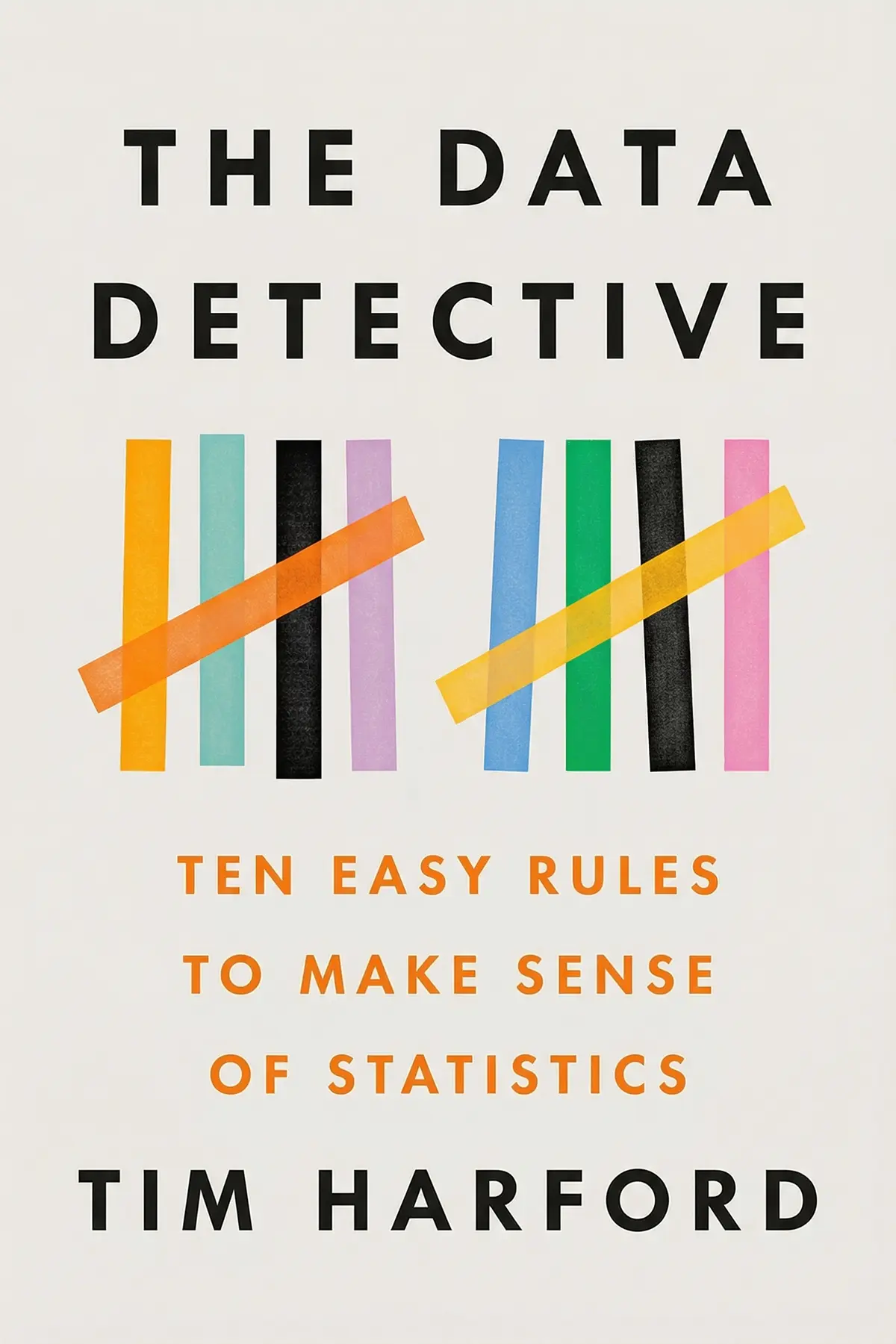
Messy: The Power of Disorder to Transform Our Lives
By Tim Harford
Shows why noisy data, disruptions, distractions, loose networks and unplanned time often lead to better ideas and decisions than tidy systems, and how to use disorder at work and at home.
Table of Content
1. Introduction
1 min 03 sec
A cluttered desk, a plan that falls apart, a calendar with holes in it: most of us treat these as failures to fix. In Messy, Financial Times columnist Tim Harford argues the opposite, and his first case is a striking one. A forecasting model fed every scrap of available data often predicts worse, because it swallows the random noise along with the signal.
Harford’s throughline is that disorder, used well, makes people more creative, more adaptable and more successful than the neat order we instinctively reach for. He builds it from a broken piano in Cologne, a mathematician who wrote papers with strangers, a Google engineer who knocked down a wall and a chess champion who wins by confusing his rivals.
The payoff is practical. Expect permission to stop filing every email, to leave gaps in your week, to seek out people unlike you and to treat the next disruption as raw material instead of a disaster.
2. Make sharper forecasts by trimming the noise
1 min 27 sec
More information should mean better predictions, yet a model that uses everything can end up less accurate. And the moment you start counting something, the people being counted may start changing what you see.
3. Turn a broken setup into your best work
1 min 18 sec
A famous pianist walked on stage to find an instrument almost nobody would choose to play. What he did next shows why the worst conditions sometimes produce the work people remember for decades.
4. Let distraction feed your original ideas
1 min 20 sec
Being confused on purpose sounds like a recipe for bad thinking. Two studies, one with colored slides and one with students who had published a novel or released an album, suggest that distraction and creativity are somehow linked.
5. Find fresh ideas through loose connections
1 min 46 sec
One technology region let its talent and ideas leak between companies; another locked everything down. The winner was not the one you might expect, and the same rule applies to your own circle.
6. Shape your own workspace and stop over-filing
1 min 24 sec
The famous slides and games at Google are not what made it inventive. A knocked-down wall and a study of office filing habits point to what actually helps people do their best work.
7. Avoid over-automation and rigid schedules to stay flexible
1 min 24 sec
The tools that make life smoother can leave us helpless on the one day they fail. Airline pilots and a governor with a nearly blank diary show what to do about it.
8. Win by improvising when others follow scripts
1 min 35 sec
One of the most famous speeches in history was not the one its author wrote. A chess champion and a group of jazz pianists reveal what happens in the mind when people dare to go off-plan.
9. Conclusion
1 min 19 sec
Messy is a defense of the things we usually apologize for: the noisy data point, the faulty instrument, the meeting that wanders, the colleague from another field, the calendar with empty space. In each case the tidy option feels safer and often performs worse, because it shuts out the surprises that make people adapt and invent. Harford’s message is that disorder is nothing to fear, and that welcoming it in how we act, speak and think makes us more creative and more successful.
He carries the idea into childhood too. Rather than relying on elaborate toys, he suggests letting children invent their own games. Informal play asks more of them, and it teaches empathy and compromise, because the game only continues if everyone stays involved.
The same holds for adults at work. Leave a few hours unplanned this week, search your inbox instead of sorting it, and spend an hour with someone outside your field. And when something breaks just before an important moment, remember Keith Jarrett standing at a tired piano in Cologne, playing harder, and finding music no perfect instrument would have given him.
About this book
What is this book about?
Most of us feel guilty about a messy desk, an inbox nobody has sorted or a week without a detailed plan. Tim Harford argues that this instinct for order often works against us. Tidy systems shut out the surprises that push people to adapt, invent and perform. Harford builds his case from a wide range of stories. A jazz pianist turns a nearly unplayable piano into a historic concert. People thrown off balance by wrong answers come up with more original word associations. Silicon Valley beats a more orderly rival region, and a Hungarian mathematician writes papers with strangers. Along the way he shows how measurement can distort what it measures, how automation wears away skill, and how a chess champion wins by being unpredictable. Readers get a practical case for loosening control: trim noisy data, welcome disruption, widen their circle of acquaintances, let people shape their own workspace, search instead of filing and leave room in the calendar. The result is a more relaxed and more inventive way to work and live.
Book Information
Who it's for
Guilty about cluttered inboxes
Knowledge workers who feel guilty about cluttered inboxes and want permission to work more loosely.
Weighing planning and control
Founders and team leads deciding how much to plan, measure and control.
Creatives stuck in routines
Creative people stuck in routines who want to turn disruption into new ideas.
About the Author
Tim Harford
Tim Harford is a senior columnist at the Financial Times, where his long-running column The Undercover Economist looks at the economics behind everyday life. He has presented More or Less on BBC Radio 4 since October 2007 and hosts the podcast Cautionary Tales. He is an honorary fellow of the Royal Statistical Society and an associate member of Nuffield College, Oxford, and in 2019 he was made an OBE for services to improving economic understanding.
The Undercover Economist
Tim Harford
Ratings & Reviews
Ratings at a glance
What people think
Listeners find the content both engaging and meticulously researched, with one review pointing out how it effectively draws from historical context and research. Furthermore, they enjoy the innovative take on living naturally, while one listener emphasizes its usefulness in enhancing productivity. The prose itself is highly praised, and listeners find great value in the compelling anecdotes and illustrations shared throughout. There is also significant appreciation for the book’s approach to disorder and creativity; one review mentions that it offers the core elements necessary for survival and creativity.
Top reviews
Aurora
Finally got around to reading Tim Harford’s take on the chaos of life, and it is a revelation. The opening story about Keith Jarrett’s Cologne concert—where he was forced to play a tinny, out-of-tune piano—perfectly sets the stage for why rigid planning often kills the soul of creativity. Harford argues that we are too seduced by the blandishments of tidiness, often ignoring how improvisation and disorder can actually lead to more resilient systems. I found the section on the 'paradox of automation' particularly chilling, explaining how over-reliance on tidy algorithms can leave us helpless when a real crisis occurs. His writing is crisp, energetic, and avoids the usual dry economic jargon. It’s a liberating read for anyone who feels smothered by the modern obsession with standardization and micro-management.
Show moreTern
Tim Harford manages to turn the mundane struggle against clutter into a compelling argument for human spontaneity and resilience. The way he weaves together the history of jazz, the evolution of antibiotics, and the mechanics of Jeff Bezos’s business strategy is nothing short of masterful. I was particularly struck by the idea that we find our soulmates or our best ideas when we ignore the questionnaires and the rigid data points. This book isn't just a 'how-to' for being disorganized; it's a philosophical defense of the human qualities that machines can’t replicate. It’s a fast-paced, thought-provoking read that will make you feel much better about your cluttered desk and your unplanned weekends. Truly, Harford's best work since his early economic deep-dives.
Show morePrayoon
Look, if you’re tired of the obsessive 'life-hacking' culture that treats humans like robots, read this immediately. Harford shows that the very things we try to eliminate—distraction, ambiguity, and difficulty—are often the primary drivers of our most significant breakthroughs. I loved the counter-intuitive findings, like how kids playing in 'messy' wastelands actually have fewer accidents than those on padded, safe playgrounds. It's a refreshing perspective that values responsiveness over rigid discipline. The book is filled with excellent stories and examples that stay with you long after you've closed the cover. I finished it feeling much more confident in my own ability to navigate a world that doesn't always fit into a neat little box. Highly recommended for any creative professional.
Show moreCherry
As someone who has always felt guilty about my overflowing inbox, this book felt like a personal vindication. Harford essentially provides the antithesis to the Marie Kondo craze, suggesting that a bit of clutter might actually be the sign of a productive, creative mind. I appreciated the varied examples, ranging from the military tactics of Erwin Rommel to the collaborative genius of the mathematician Paul Erdos. However, to be fair, the book does occasionally feel like a collection of interesting anecdotes rather than a singular, airtight thesis. Some chapters, like the one on digital dating, felt slightly disconnected from the core message. Still, the prose is incredibly engaging and it really makes you question why we prioritize neatness over actual functionality in our offices and schools.
Show moreDream
Ever wonder why the most sterilized, perfectly planned offices feel like such a soul-crushing drag to work in? Harford explores this through the lens of autonomy, showing that when workers can't control their own 'messy' spaces, productivity actually plummets. I loved the examples of 'marginal gains' in British cycling versus the radical, disruptive innovations of Graham Obree. The book is well-researched and challenges the idea that we should all be striving for a frictionless, automated existence. My only real gripe is that the role models presented are overwhelmingly male, which felt like a missed opportunity given the themes of diversity and collaboration. Despite that, the chapter on how 'filter bubbles' in social media are the antithesis of a healthy, messy world was remarkably prescient.
Show moreSombat
This wasn't just another business book; it felt more like a history of how unexpected obstacles lead to genius. I found the section on 'Oblique Strategies' and David Bowie’s creative process to be worth the price of admission alone. Harford’s writing style is accessible and he has a knack for picking out the one detail that makes a story stick in your mind. Truth is, the book makes a very strong case for why we should stop trying to iron out every outlier in our lives. While some of the transitions between chapters felt a little forced, the overall message about the dangers of over-optimization is vital in our data-driven age. It’s an entertaining and deeply researched look at why the best-laid plans often fail because they are too 'neat' to survive reality.
Show moreChatchai
Picked this up on a whim and was surprised by how much the 'paradox of automation' stayed with me. We often think that making things easier and more 'tidy' through technology makes us safer, but Harford proves it can actually make us more fragile. The specific examples of plane crashes caused by pilots losing their manual skills because of automation were genuinely eye-opening. The book is an excellent reminder that being 'messy' is just another word for being adaptable. I enjoyed the anecdotes about Paul Erdos’s chaotic lifestyle and how it catalyzed the mathematical world. Even though some of the 'messiness' definitions felt a bit stretched, the overall entertainment value and the quality of the research make this a solid four-star read for me.
Show moreAmara
The premise is fascinating, but the execution felt a bit like a grab bag of stories without a unifying thread. Harford uses the word 'messy' to describe everything from ethnic diversity and improvisational jazz to political strategy and bacterial growth. When a word means everything, it starts to mean nothing. Look, I enjoyed the individual segments—especially the bit about Brian Eno’s 'Oblique Strategies' cards—but I didn't come away with a clear framework for when disorder is actually helpful versus when it's just a nuisance. It definitely feels like an attempt to capture that Malcolm Gladwell magic, though it lacks the same punchy, world-shifting conclusions. It is a fun read for a weekend, but don't expect it to radically change your life or your filing system.
Show moreNutnicha
While the writing style is undeniably engaging, I couldn't help but notice how few women were featured as role models in these stories of 'messy' success. The book leans heavily on the usual suspects—Steve Jobs, Martin Luther King, and various male scientists and musicians. This bias made some of the arguments about 'diversity' feel a little hollow. Frankly, I also found the chapter on the NHS and ambulance response times to be a bit simplified for such a complex public policy issue. There are certainly some gems of wisdom here, especially regarding the limits of GPS and computer-aided navigation. However, the lack of a tidy summary or concrete 'takeaways'—while perhaps intentional—left me feeling like the book lacked a clear destination. It’s a decent read, but not quite life-changing.
Show moreFah
To be fair, I expected a more rigorous economic analysis from the author of The Undercover Economist. Instead, what we have here is a series of 'no duh' statements wrapped in historical trivia. Harford falls into the 'man with a hammer' syndrome, where every successful event in history is suddenly attributed to some form of messiness. He ignores the countless times where disorder leads to total failure, focusing only on the rare outliers that fit his narrative. The chapter on Donald Trump’s campaign tactics already feels incredibly dated and lacks the nuance required for such a complex topic. It’s not a terrible book, and Harford is a talented storyteller, but the central argument is so loosely defined that it becomes almost impossible to argue against—or learn from.
Show moreQuestions about this book
What is the main idea of Messy by Tim Harford?
Harford argues that our instinct to impose order often backfires. Noisy data can spoil forecasts, rankings can distort behavior, and tidy systems shut out the surprises that drive creativity. Disruptions, distractions, loose networks, self-shaped workspaces and flexible plans, he says, tend to make people more inventive and successful. His core message is that life is messy and that embracing this in how we act, speak and think pays off.
What is the Keith Jarrett Cologne concert story in Messy?
In 1975 Jarrett had to play a concert in Cologne on an old Bösendorfer that was out of tune, too quiet, had sticky pedals and tinny high notes. He adapted by playing rumbling bass lines and standing to strike the keys harder for volume. The result became a historic performance. Harford uses it to show that disruption forces people to find new and sometimes better approaches.
What does Messy say about weak ties and creativity?
Drawing on sociologist Mark Granovetter’s 1973 idea of the strength of weak ties, Harford explains that close teams drift toward the same views, while a broad network of loose acquaintances offers more varied opinions and challenges your thinking. He points to mathematician Paul Erdös, who collaborated constantly and wrote papers with strangers, and to Silicon Valley’s open exchange of people and ideas.
How can I apply the ideas in Messy at work?
Harford’s examples suggest several moves. Question metrics that may be noisy or gamed. Let people shape their own workspace. Stop filing every document and email, since researchers at AT&T Labs found careful filers built archives they could not use, and search is faster than folders. Leave open space in your calendar, as Arnold Schwarzenegger did as governor, and practice skills you usually hand to machines.
Is a messy desk really better according to Tim Harford?
Harford’s point is less about clutter itself than about who controls the space and whether order serves a purpose. He argues that being free to shape your own environment makes people more engaged and creative, as at Google, where an engineer knocked down an office wall without complaint. Meticulous filing, he notes, often wastes time and produces bloated archives that make things harder to find.
Readers also enjoyed



A Liberated Mind: How to Pivot Toward What Matters
Steven C. Hayes


Acting with Power: Why We Are More Powerful Than We Believe
Deborah Gruenfeld


Age of Propaganda: The Everyday Use and Abuse of Persuasion
Anthony Pratkanis


AUDIO SUMMARY AVAILABLE
Listen to Messy in 15 minutes
Get the key ideas from Messy by Tim Harford, plus 5,000+ more nonfiction titles.
- 5,000+ titles
- Listen as much as you want
- 7-day free trial
- Cancel anytime









