Four Thousand Weeks: Time Management for Mortals
Oliver Burkeman
 English
 ไทย
A four-week set of daily reflections on dropping the hope of total control. It shows how to choose, start, finish and stay present while knowing you will never get everything done.
1 min 05 sec
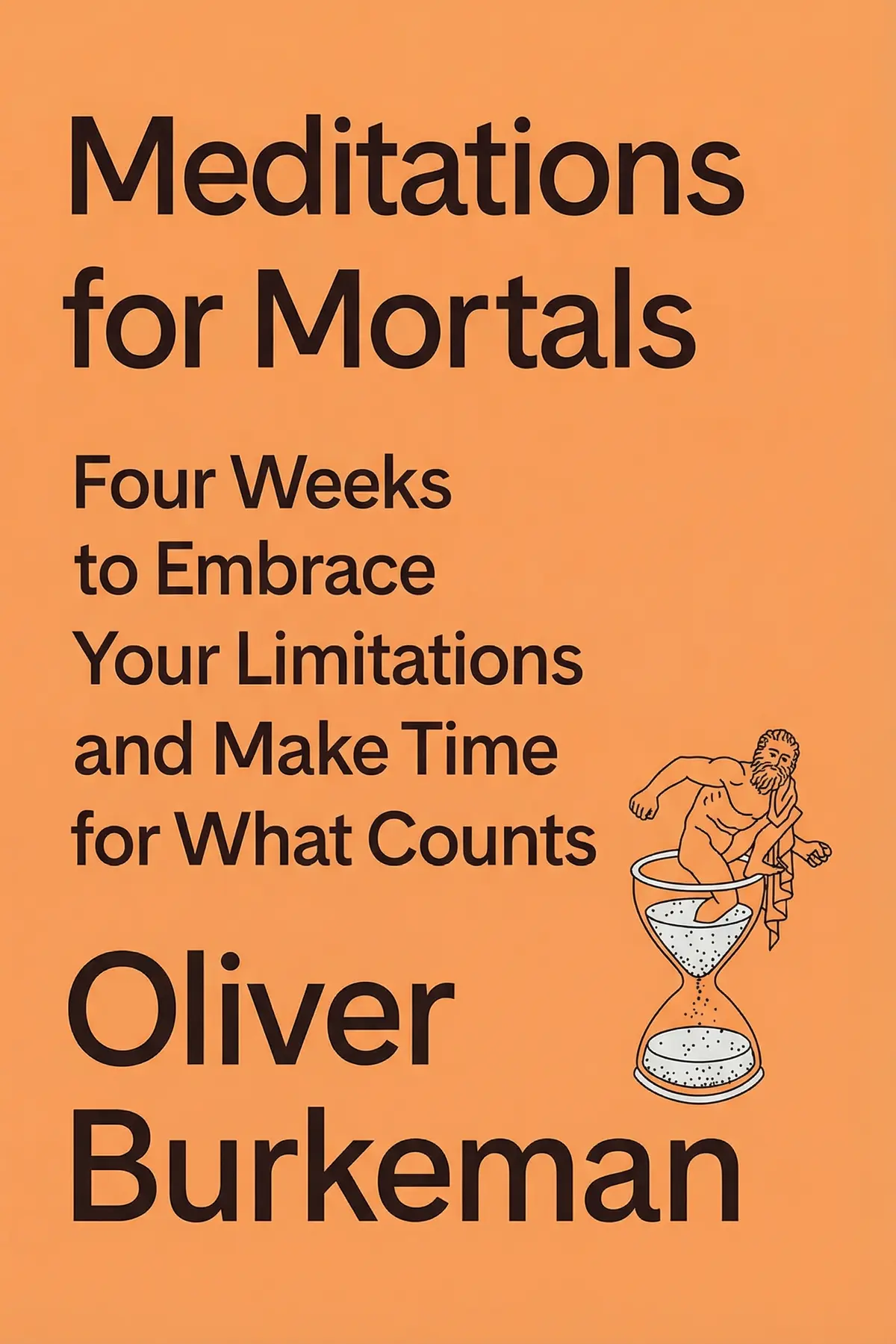
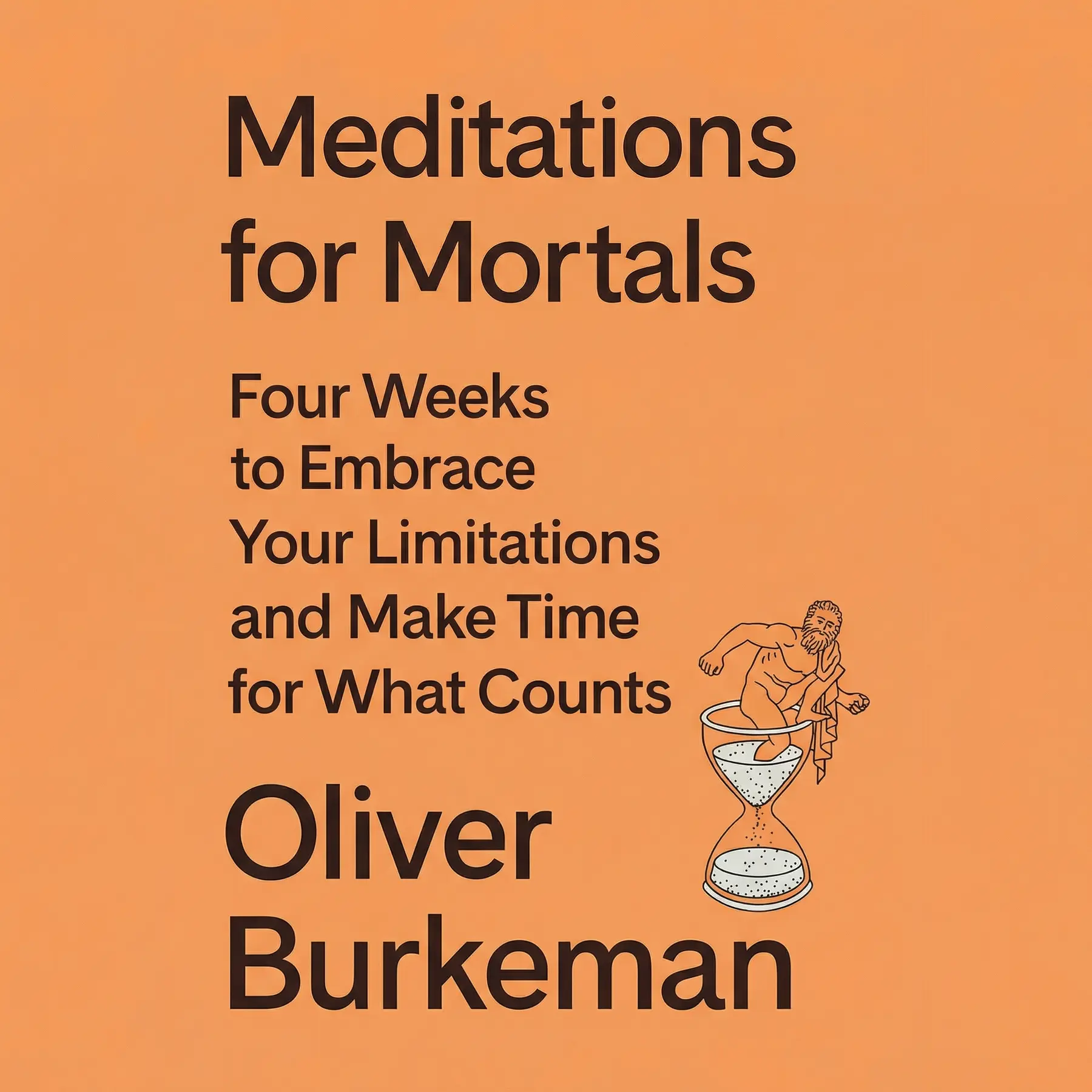
If your days feel like a race against a to-do list you never win, the fault may not lie with your system. In Meditations for Mortals, British journalist Oliver Burkeman argues that the real problem is the belief that life can be fully managed in the first place. He writes in daily reflections spread over four weeks, following the example of the Stoic master Marcus Aurelius, and each day brings a fresh angle on the challenges of work and life. Because you are finite, trying to control everything only feeds anxiety, and accepting your limits is what frees you to act on what counts, imperfectly and now.
The tools that follow are small enough to try tomorrow. A list that records what you did instead of what you missed. A rule you keep daily, more or less. A question that makes heavy work feel lighter. A way of welcoming friends that has nothing to do with clean floors. Each one turns the same admission, that you cannot do it all, into a reason to begin today.
1 min 33 sec
Most busy people carry an unspoken deal with themselves about when they will finally relax. Burkeman argues the deal can never be honored, and that seeing why is the first real relief.
1 min 30 sec
Indecision often passes for careful thinking, and it can stretch on for months. A distinction borrowed from another author, plus a very simple list, shows how to turn waiting into motion.
1 min 31 sec
Completing a big project sounds like it should leave you drained. Burkeman claims the reverse, and he pairs it with a rule about quality that sounds wrong until you try it.
1 min 50 sec
Long days feel like proof of commitment, and missed days feel like failure. Several famous writers and one odd little word suggest that both feelings are misleading you.
1 min 45 sec
Plans break, attention drifts and the news never stops. The usual advice is to fight harder against all of it, yet Burkeman finds a calmer and more interesting response.
1 min 36 sec
Being busy is not the same as knowing what to choose. An idea from Carl Jung offers a test for the right challenge, along with a humbling thought that turns out to be freeing.
1 min 37 sec
Goals promise that real life begins once things are sorted out. A stained kitchen and a dinner with friends show why that promise keeps moving, and what to do instead.
1 min 10 sec
Meditations for Mortals adds up to a change in what counts as a good day. The anxious version measures it by what was left undone and treats calm as a reward for getting everything under control. Burkeman’s imperfectionist version starts from the other end. You are finite, the list will never be empty, and the mess of life is the material you work with. Fighting it, or building walls against uncertainty, only produces stress. Accepting it leaves room for real work and real presence.
That acceptance shows up in plain habits. Write a done list tonight, so the day is judged by what you finished. Give your hardest project a few focused hours and let the rest of the day be untidy. Keep your new routine dailyish and forgive the gaps. When a challenge in front of you feels like a good difficulty, treat it as your life task and take one small step on it now.
Limits, in this reading, are simply part of being human, and they can point you toward a more honest way to live. You will never stay dry in the rain. You can still enjoy the walk home.
Many people believe life will finally feel calm once every task, relationship and duty is under control. Oliver Burkeman argues that this belief is the reason so many feel anxious and burned out. The trouble is rarely the productivity system. It is the idea that a life can be perfectly managed at all. Meditations for Mortals is written as daily reflections across four weeks, in the tradition of the Stoic Marcus Aurelius. Each week takes one turn of the argument: letting go of the impossible, moving forward through choices and finished work, rethinking the roadblocks of effort and distraction, and being present instead of waiting for a better future. Readers get small, usable tools along the way: a done list that records progress, a dailyish approach to routines, a few hours of focused work instead of endless effort, the question of what a task would look like if it were easy, and scruffy hospitality for friends who come over. Underneath them is one steady point. Limits are part of being human, and accepting them is how meaningful action starts.
Professionals who have tried every productivity system and still feel permanently behind.
Perfectionists who stall on big choices or break a habit after one missed day.
Anyone burned out by chasing control who wants a calmer way to work and live.
Oliver Burkeman, born in 1975, is a British author and journalist. As a feature writer at The Guardian he wrote the weekly psychology column This Column Will Change Your Life. He has won the Foreign Press Association's Young Journalist Award and was shortlisted for the Orwell Prize. His 2021 book Four Thousand Weeks, subtitled Time Management for Mortals, draws on philosophy and psychology to explore how people use their time and find happiness.
Oliver Burkeman
Listeners find this work intellectually stimulating and articulately composed, valuing its rejuvenating perspective change and dry British wit. Furthermore, the content is accessible and produces a sense of tranquility, with one listener highlighting that it functions as a daily sanctuary from mental clutter. They also cherish its realistic insights and view it as a perfect follow-up to "4,000 Weeks."
Oliver Burkeman has a peculiar talent for delivering existential dread with a side of cozy British dry humor. I’ve always felt the weight of an infinite to-do list, but this book finally gave me permission to stop trying to be a productivity machine. Instead of the usual hustle-culture nonsense, we get 28 bite-sized chapters that focus on the reality of being a finite human. While some might find his approach a bit nihilistic, I found it incredibly liberating to accept that I will never get everything done. It’s a much more practical companion to Four Thousand Weeks, offering actual steps rather than just abstract philosophy. My only real gripe is that a few meditations felt a bit repetitive toward the end of the four-week cycle. Still, it’s a refreshing shift in mindset that I’ll likely return to whenever my anxiety starts to spike.
Show morePicked this up on a whim after struggling with burnout, and it feels like a long-overdue exhale in a very noisy world. The book doesn't offer gimmicky hacks; instead, it provides a calming framework for understanding why we feel so much pressure to be perfect. To be fair, some of the meditations are quite short, but they pack a punch if you actually take the time to contemplate them. I particularly connected with the idea of 'nihilistic optimism'—the world is huge and our time is short, so why not just do what matters? It’s written with that signature dry wit that makes even the most difficult truths about mortality feel manageable. This isn't just another self-help book; it’s a manual for living a more meaningful, less frantic life. I’ve already bought two more copies to give to friends who are chronically stressed.
Show moreWow. This isn't your typical hustle harder manual, and thank God for that. I was hooked by the subtitle about embracing limitations because I’m so tired of feeling like I’m failing at an impossible game. The daily format is genius for those of us with short attention spans or busy schedules. Burkeman’s writing is sharp and thought-provoking, often making me stop and rethink my entire approach to my morning routine. I loved the section on how we treat life as a trial run for some future version of ourselves. That realization alone was worth the price of the book. It’s a daily retreat from mental chaos that doesn’t require a yoga mat or a silent retreat. If you want to feel more at peace with your imperfect life, this is the one you need to read.
Show moreNot what I expected from a book with meditations in the title, but I’m actually glad it avoided the usual breath-work clichés. Instead of telling you to clear your mind, Burkeman invites you to fill it with more realistic ideas about what a human can actually achieve. The focus on imperfectionism is a game-changer for anyone who has ever felt paralyzed by their own high standards. I’ve read my fair share of self-help, but this feels different because it doesn't promise you’ll become a superhero. It just promises that you can be a slightly more peaceful mortal. Actually, the writing style is so crisp and engaging that I finished several days in one sitting. I did feel that a few chapters were a bit too similar to his previous book, but the practical application here makes it a better daily tool.
Show moreEver wonder why you're constantly rushing toward a finish line that doesn't actually exist? Burkeman’s latest is a much-needed antidote to the optimized life we’re all supposed to be living. I love how he breaks the concepts down into a 28-day plan, making the philosophy feel way more attainable than a dense textbook. Each meditation is a bite-sized morsel of sanity that helps you embrace your limitations as a finite human. Truth is, I tried to speed-run the whole thing in two days, but I realized it works better if you actually sit with the ideas. Some of the advice on imperfectionism really hit home, even if a couple of the prompts felt a bit repetitive. If you’re tired of being shamed by productivity gurus, this book will feel like a long-overdue retreat for your brain. It’s a solid companion to his previous work and well worth the time.
Show moreAs someone who typically avoids the self-help aisle like the plague, this was a surprisingly grounded read. Burkeman doesn't try to shame you into being better, which is a breath of fresh air compared to most productivity gurus. Instead, he offers a series of 28 meditations that are more like practical mindset shifts than breathing exercises. I appreciated the focus on finitude and the reality of our limited energy. Truth is, I found a few of the earlier chapters a bit glib, particularly the one about minding your own business. However, the overall message about imperfectionism is powerful enough to outweigh those minor gripes. It’s a calming, easy read that feels more like a conversation with a wise friend than a lecture. I would recommend this to anyone who feels like they’re constantly drowning in their to-do list.
Show moreFinally got around to finishing this 28-day journey, and frankly, I wish I hadn't rushed the first week of reading. The book is designed to be savored slowly, one bite-size philosophy at a time, to let the ideas actually sink in. Burkeman’s dry humor is present throughout, which keeps the tone from becoming too preachy or overly philosophical. I found the practical applications much easier to digest than the abstract concepts in his last book. While some of the daily entries resonated more than others, the collective impact is a significant shift in how I view my time. It’s not about doing more; it’s about doing what counts and accepting that the rest won't happen. Personally, I think every perfectionist needs this on their nightstand. It’s a solid four-star read that offers a lot of clarity in a very chaotic era.
Show moreAfter hearing so much hype about Four Thousand Weeks, I jumped straight into this more practical guide to see what the fuss was about. The book is structured around 28 daily meditations that are really more like short, sharp philosophical essays on how to stop hating your own limitations. One of the most impactful messages for me was the idea that we treat our current life as a trial run for something better later. That hits hard when you realize you've been waiting to be happy until you reach some arbitrary milestone. Not gonna lie, the British dry humor makes some of the harder truths much easier to swallow without feeling judged. I did find the formatting a little bit restrictive at times, but the calming effect it had on my morning routine was undeniable. It’s a thought-provoking shift for the modern age.
Show moreThis book is essentially a warm hug for the chronically overwhelmed and the perfectionists among us. After hearing about Burkeman's finitude philosophy for months, I finally decided to dive into these daily meditations. The layout is fantastic—you get 28 manageable pieces of wisdom that take maybe five minutes to read but stay with you all day. I especially appreciated the nihilistic optimism that permeates the writing, reminding us that since we’re all going to die anyway, we might as well enjoy the present. It’s less about breathing exercises and more about deconstructing the mental cages we build for ourselves. Look, it’s not going to solve every problem in your life, but it provides a much-needed calming effect in a world of constant noise. I’ve already started recommending this to my friends who feel like they’re stuck in a perpetual trial run.
Show moreThe chapter on minding your own business really rubbed me the wrong way because it felt a bit dismissive of community care and empathy. I expected something more transcendental or deeply meditative, but this felt more like a collection of mindset tips for the modern professional. To be fair, the 28-day structure is manageable, but the tone often feels a bit too 'shrug-your-shoulders' for my personal taste. I missed the depth of traditional philosophy and found some of the advice a bit glib. If you’re looking for a rigorous system to overhaul your life, this probably isn't it. It’s more of a series of reminders to lower your standards, which I found more frustrating than helpful at times. It’s well-written, but it certainly didn't hook me the way his previous work did. It's okay, just not life-changing.
Show moreIt is a set of daily reflections spread over four weeks, written in the tradition of Marcus Aurelius. Burkeman argues that the belief that life can be perfectly managed is what leaves people anxious and burned out. Because we are finite, he suggests accepting our limits and acting on what matters now, imperfectly, instead of waiting until everything is under control.
A done list is Burkeman’s alternative to judging yourself by an unfinished to-do list. Each time you complete a task, you add it to the list, so it grows through the day. The aim is to shift your view of yourself from constant deficit to visible progress, which makes it easier to keep starting and finishing meaningful work.
Dailyish is Burkeman’s flexible approach to routines such as exercise, diets or creative projects. Instead of a rule that you must tick a box every day, where one missed day feels like failure, you aim for steady consistency without the pressure of an unbroken streak. His point is that rules should serve your life, and imperfect progress still counts.
Burkeman argues that concentrated bursts of focus get more done than long hours of effort. He points to writers including Charles Dickens, Alice Munro and J. G. Ballard, who found three to four focused hours a day to be the right amount. Beyond that, he says, results suffer. Protect those few deep hours and let the rest of the day be messy.
Start with small steps from the book. Make a choice and act on it today. Break projects into parts you can finish in one sitting and set quantity goals instead of chasing perfect quality. Ask what a hard task would look like if it were easy. Think of the chores on your list as dishes to pick from, and invite friends over without scrubbing the whole place first.

Richard Wiseman







William B. Irvine


Andrew D. Thompson
AUDIO SUMMARY AVAILABLE
Get the key ideas from Meditations for Mortals by Oliver Burkeman, plus 5,000+ more nonfiction titles.