
12 min 21 sec
Available in: English
 ไทย
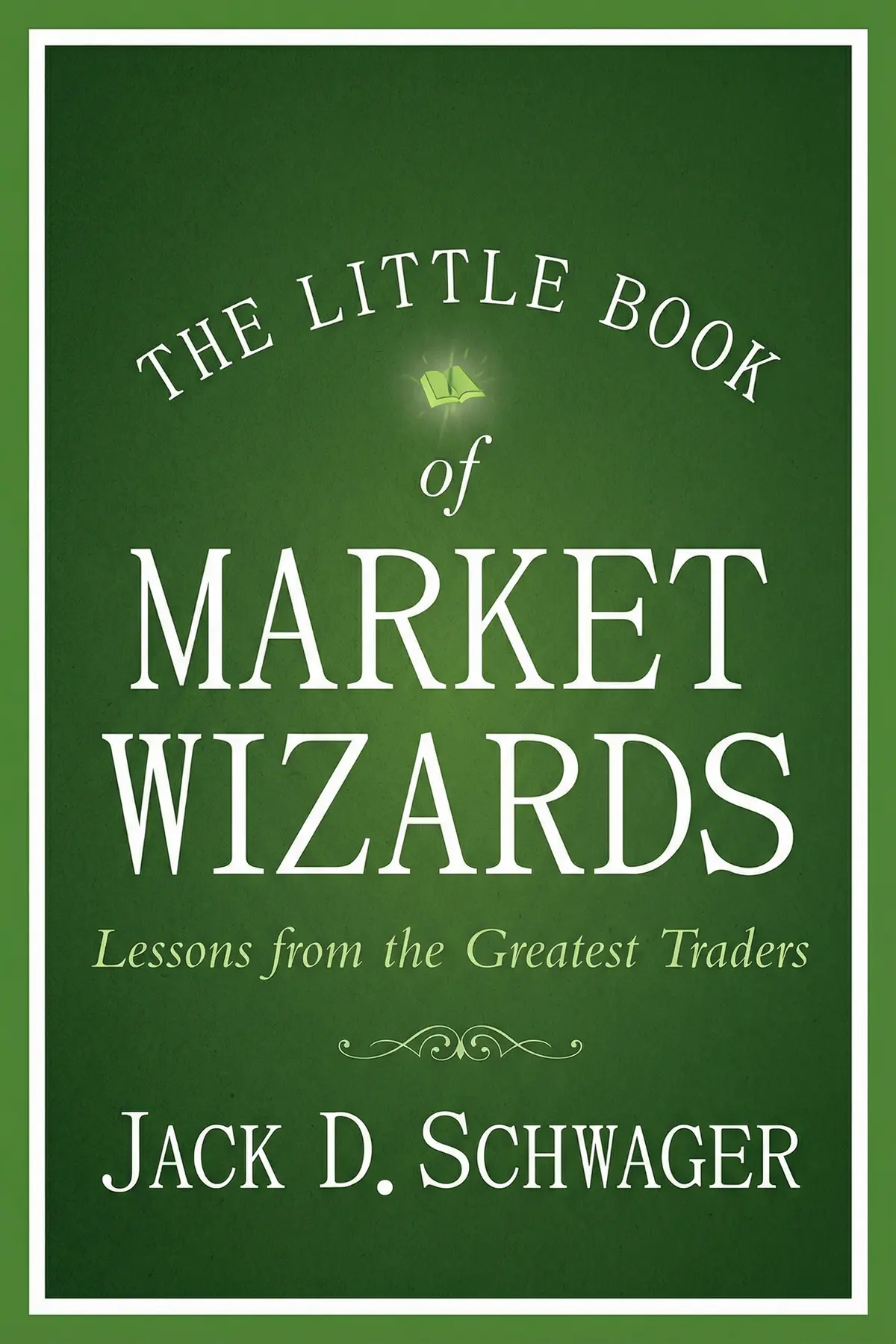
EnglishไทยMarket Wizards: Interviews with Top Traders
Shows how some of the most successful traders of their era found an edge, sized their bets to survive mistakes and kept fear and overconfidence out of their decisions.
Table of Content
1. Introduction
1 min 00 sec
Traders who stick with conventional wisdom tend to earn only conventional returns, and the book shows how following the crowd, betting too big and letting fear or overconfidence take charge can undermine even skilled traders. In Market Wizards, Jack D. Schwager, who spent decades as a futures research director on Wall Street, interviewed some of the most successful traders of his time to learn how they did it.
Their methods clash. One buys only stocks hitting new highs, another never looks at a chart, a third waits for a single election to move a whole country’s market. Yet the same pattern keeps showing up underneath. Several of these traders found an edge others overlooked; some relied on careful position sizing, and others worked to keep their minds calm and disciplined under pressure.
Follow these interviews and you gain three tests for any trading idea, including your own: what is the edge, how much is at risk, and who is really making the decision when it gets hard.
2. Profit from what the crowd gets wrong
2 min 06 sec
Agreeing with everyone earns ordinary returns, but disagreeing is not enough either. Two famous investors show the missing ingredient that turned an unpopular opinion into a position in one of history’s great bull runs.
3. Buy the stocks already making new highs
2 min 05 sec
Most beginners wait for a stock to fall and then buy it cheap. A study of one remarkably successful fund’s records turned that instinct upside down and eventually produced a seven-letter checklist.
4. An edge built from hours of watching
1 min 53 sec
One of the biggest bond traders of his day never looked at a chart or an economic report. What he studied instead reveals something about prices that analysis on a screen can easily miss.
5. Size every bet so you survive being wrong
2 min 10 sec
A skilled trader with a fortune already made lost more than $600,000 in five days, all because of a castle. What he changed afterward turned a small account into tens of millions.
6. Calm decisions when the market turns on you
2 min 03 sec
Plenty of traders own a sound system and still lose money with it. A psychologist who studied winners for decades found the trouble starting somewhere no chart can show.
7. Conclusion
1 min 04 sec
Schwager’s traders disagree about almost everything. Steinhardt hunted for catalysts, O’Neil bought stocks at their highs, and Baldwin ignored charts entirely. That disagreement may be the book’s most useful finding. There is no single correct method waiting to be copied. What the winners share is a structure: an edge they can describe in plain words, a limit on what any one bet can cost them, and a mind steady enough to follow their own rules when the market is loud.
That structure reaches beyond the trading screen. Any decision made under uncertainty can be tested the same way. Write down what you see that others miss and which event would prove you right. Fix the most you are willing to lose before you commit, the way Marcus did after the soybean disaster. Then watch for the moment fear or pride starts choosing for you, as Tharp’s clients learned to do.
Marcus lost more than $600,000 chasing a castle. He made more than $80 million once the castle stopped deciding his size.
About this book
What is this book about?
Many people who try trading earn only conventional returns, while a rare few stand apart. Usually they follow the crowd, bet too much on one idea, or let fear and excitement make their choices. Jack D. Schwager set out to learn what the rare consistent winners do differently, and he asked them directly in long interviews. Their answers clash on method. Michael Steinhardt and Jim Rogers bet against the consensus when they could name the event that would prove them right. William O'Neil built a seven-part checklist for picking stocks that are already making new highs. Floor traders Tom Baldwin and Brian Gelber relied on reading the pit, with Baldwin skipping charts entirely and Gelber watching for the footprints of large orders. Michael Marcus and Tony Saliba show how position sizing decides who survives, and psychologist Van K. Tharp explains how the mind undermines good systems. Readers get a way to judge any trading idea, including their own: what the edge is, how much is at risk, and whether a calm mind or an anxious one is placing the order.
Book Information
Who it's for
Beginning traders losing money
Beginning traders who keep losing money and want to see how professionals think about edge and risk.
Investors questioning their discipline
Active investors who suspect their position sizes or emotions, not their ideas, are hurting their results.
Professionals curious about traders
Professionals curious how the most successful traders of an era actually made decisions.
About the Author
Jack D. Schwager
Jack D. Schwager, born in 1948, is an American trader and author whose Market Wizards began a series of interview books with top traders, followed by The New Market Wizards and Stock Market Wizards. He spent more than two decades as a futures research director at major Wall Street firms and ten years as co-principal of a commodity trading advisor. He later co-founded FundSeeder, a platform for finding trading talent. He holds economics degrees from Brooklyn College and Brown University.
Ratings & Reviews
Ratings at a glance
What people think
Listeners find this title to be a premier tool for novice traders, loaded with wisdom and practical guidance on effective market strategies. It features authentic interviews with leading figures and addresses a diverse range of methods, establishing it as an essential guide for those starting out. Listeners feel it is a valuable purchase and appreciate the inspiring themes, with one listener mentioning that it helps build confidence. While some find the observations to be enduring, others feel the text comes across as slightly outdated.
Top reviews
Pear
Wow. This is essentially the holy grail for anyone wanting to get inside the heads of the greatest market minds. Jack Schwager managed to pull together legendary figures like Paul Tudor Jones and Bruce Kovner, making their abstract strategies feel tangible and accessible. The overarching message isn't just about technical indicators; it's deeply rooted in the psychology of winning and the absolute necessity of discipline. I found the section on risk management to be a complete game-changer for my own portfolio. While the markets have changed since the 80s, the human emotions driving them remain exactly the same. Truth is, you won't find a magic formula here, but you will find a blueprint for the right mindset. It’s a masterclass in resilience and mental toughness that applies as much to life as it does to the S&P 500.
Show moreNatchaya
Picked this up after hearing it recommended on every finance podcast imaginable, and it lived up to the hype. The interview format keeps the pace brisk even when the subjects are discussing complex futures or treasury markets. What struck me most was how many of these ‘wizards’ started with massive losses before they eventually found their rhythm. It’s incredibly motivating for a novice like me to hear that Michael Marcus wiped out multiple times before succeeding. Schwager does a great job of summarizing the common threads in his commentary, specifically the obsession with risk control. Every trader had their own style, but they all shared a maniacal focus on not losing their chips. This isn't just a book; it's a mentorship in print form.
Show moreKob
The chapter on risk management alone is worth ten times the price of this book. Frankly, I wish I had read the interview with Larry Hite before I started trading five years ago. His 'never risk more than 1 percent' rule is so simple yet so profound when you see it in action. Jack Schwager asks the right questions, pushing these secretive titans to reveal the failures that forged them into legends. It’s fascinating to see how Jim Rogers views the world as a giant three-dimensional puzzle compared to other traders who strictly follow the charts. The book highlights that there is no one 'right' way to trade, only the way that fits your personality. If you are serious about protecting your capital, you need to internalize these stories. This is the definition of essential reading.
Show moreFang
Finally got around to reading this classic and it’s easily the best investment I’ve made this year. Most trading books are full of fluff and 'get rich quick' schemes, but Schwager’s interviews are refreshingly honest about the pain of failure. The stories of Bruce Kovner and Paul Tudor Jones are legendary for a reason—they offer a window into a high-stakes world that most of us will never see. I particularly enjoyed the sections on macro-investing and the way these guys look at global political events. It’s like watching a group of grandmasters play a multidimensional game of chess. The emphasis on 'playing great defense' is something every investor needs to hear. It doesn't matter how much you make if you can't keep it when the market turns. This book is a mandatory addition to any serious trader's library.
Show moreSam
In my experience, most people lose money in the markets because their ego gets in the way of their math. Market Wizards addresses this head-on by showing how the best in the world learned to separate their self-worth from their P&L. One of my favorite quotes was about how once you think you're good, you're dead. That level of humility is rare in finance, but it seems to be a common denominator among the truly successful. The book is filled with these little nuggets of wisdom that you’ll find yourself highlighting on every page. Whether you are into technicals or fundamentals, the lessons on patience and waiting for the 'right' wave are universal. It’s an incredibly motivating read that pushed me to take my own research and discipline much more seriously. If you want to win, you have to love the process as much as these guys do.
Show moreKoi
As someone who leans toward academic finance, I went into this with a healthy dose of skepticism regarding technical analysis. The interviews definitely favor gut-feel and chart-reading over efficient market hypotheses, which might irritate the ivory-tower types. However, seeing the results these men achieved makes it impossible to ignore their methods entirely. Some sections felt a bit repetitive, as the 'cut your losses' mantra is hammered home in almost every single chapter. I actually appreciated the niche focus on things like Malaysian palm oil and coffee futures, as it offers a broader perspective than typical stock-heavy books. It’s a bit dated in terms of the technology mentioned—lots of talk about floor trading—but the core principles of psychology are timeless. A solid four stars for the sheer amount of wisdom packed into these conversations.
Show moreSamuel
Ever wonder what separates the millionaires from the people who blow up their accounts in three months? This book answers that question by focusing on the psychological traits of winners rather than just their entry signals. I loved the insight that the market is not random because it is driven by human emotion and trends. There’s a lot of talk about 'following your own light,' which really resonated with me. You can't just copy someone else's system and expect it to work; you have to find a style that fits your own risk tolerance. My only gripe is that it feels a little stuck in the past. Hearing about traders waiting for boats to arrive in London or calling their brokers on the phone reminds you how much the game has changed since 1989. Still, the underlying truth about human greed remains relevant today.
Show moreNutnicha
Look, this isn't a textbook that’s going to teach you how to draw trendlines or read a balance sheet. Instead, it’s a collection of philosophies that govern the behavior of the world's most successful speculators. The truth is that trading is 10% strategy and 90% discipline, and Schwager captures that perfectly. I enjoyed the contrast between traders who used opposite techniques but still found success—it proves that there isn’t just one path to the top. The 'turkey in the box' story about the dangers of not cutting losses is something I’ll never forget. My only minor complaint is that the bios at the start of each chapter can feel a bit overly dramatic. However, the raw honesty in the interviews makes up for the occasional purple prose. It’s a great reality check for anyone who thinks they can conquer the market.
Show moreJob
Frankly, I found the middle section of this book to be a bit of a slog. After the first five or six interviews, the responses start to sound nearly identical, and the repetition becomes taxing. Every trader says the same thing: have discipline, cut your losses, and manage your risk. While these are vital lessons, I don't think I needed four hundred pages to get the point. Schwager tries to paint these colorful biographies for everyone, but many of the traders have very dry, uninspiring personalities that don't translate well to the page. I would recommend just reading the first few chapters and then jumping straight to the summary at the end. It's an important historical document for the financial world, but as a reading experience, it’s quite repetitive. Definitely not the page-turner I was promised.
Show moreAva
Not what I expected given the 'wizard' title. To be fair, some of the interviews are fantastic, especially the ones with the big-name hedge fund managers. But a good portion of the book focuses on technical trading methods that have been largely debunked by modern academic research or replaced by high-frequency algorithms. It feels very much like a product of the late 80s, and I struggled to stay engaged during the long-winded technical explanations. The writing style is a bit dated, and the Q&A format can feel clunky at times. I appreciate the historical value of hearing from these legends, but for a modern day trader, there are more concise resources available. If you're a history buff, you'll love it. If you're looking for a step-by-step guide to the current markets, you might find this frustratingly obsolete.
Show moreQuestions about this book
What is the main idea of Market Wizards?
Jack D. Schwager interviewed highly successful traders and found that their methods differ widely, from contrarian macro bets to stock checklists to pure floor instinct. What they share is a clear edge the crowd lacks, strict control of how much they risk on each trade, and the mental discipline to follow their own rules under pressure. The book shows each of these through the traders’ own stories.
What is the CANSLIM method from Market Wizards?
CANSLIM is William O’Neil’s seven-part system for picking stocks, drawn from his study of thousands of past winners. The letters stand for current earnings, annual earnings, something new, supply and demand, industry leadership, institutional sponsorship and market direction. O’Neil also wanted the price breaking into new highs on heavy volume, a pattern he first noticed in 1959 when studying the Dreyfus Fund’s records.
What does Market Wizards teach about risk management?
The clearest lesson comes from Michael Marcus, who lost more than $600,000 in soybeans after betting far too big because he wanted to buy a castle in France. Afterward he risked only a small share of his capital per trade and kept personal wants out of sizing decisions, then turned $30,000 into more than $80 million. Tony Saliba’s carefully balanced options positions earned him $4 million during the 1987 crash.
How can I apply the lessons of Market Wizards?
Before any trade, state what the market believes, why it is wrong and what event will prove it. Decide the most you can afford to lose and size the position from that number. After losses and winning streaks, check whether fear or overconfidence is steering you, as psychologist Van K. Tharp’s clients learned to do, using tools such as meditation and visualization to stay focused.
Featured in
Readers also enjoyed



AUDIO SUMMARY AVAILABLE
Listen to Market Wizards in 15 minutes
Get the key ideas from Market Wizards by Jack D. Schwager, plus 5,000+ more nonfiction titles.
- 5,000+ titles
- Listen as much as you want
- 7-day free trial
- Cancel anytime









