



14 min 17 sec
Available in: English
 ไทย
EnglishไทยMan’s Search for Meaning
Viktor Frankl draws on his time in Nazi concentration camps to show why people need meaning to endure, and how his logotherapy helps you build that meaning through your own choices, even when life feels out of control.
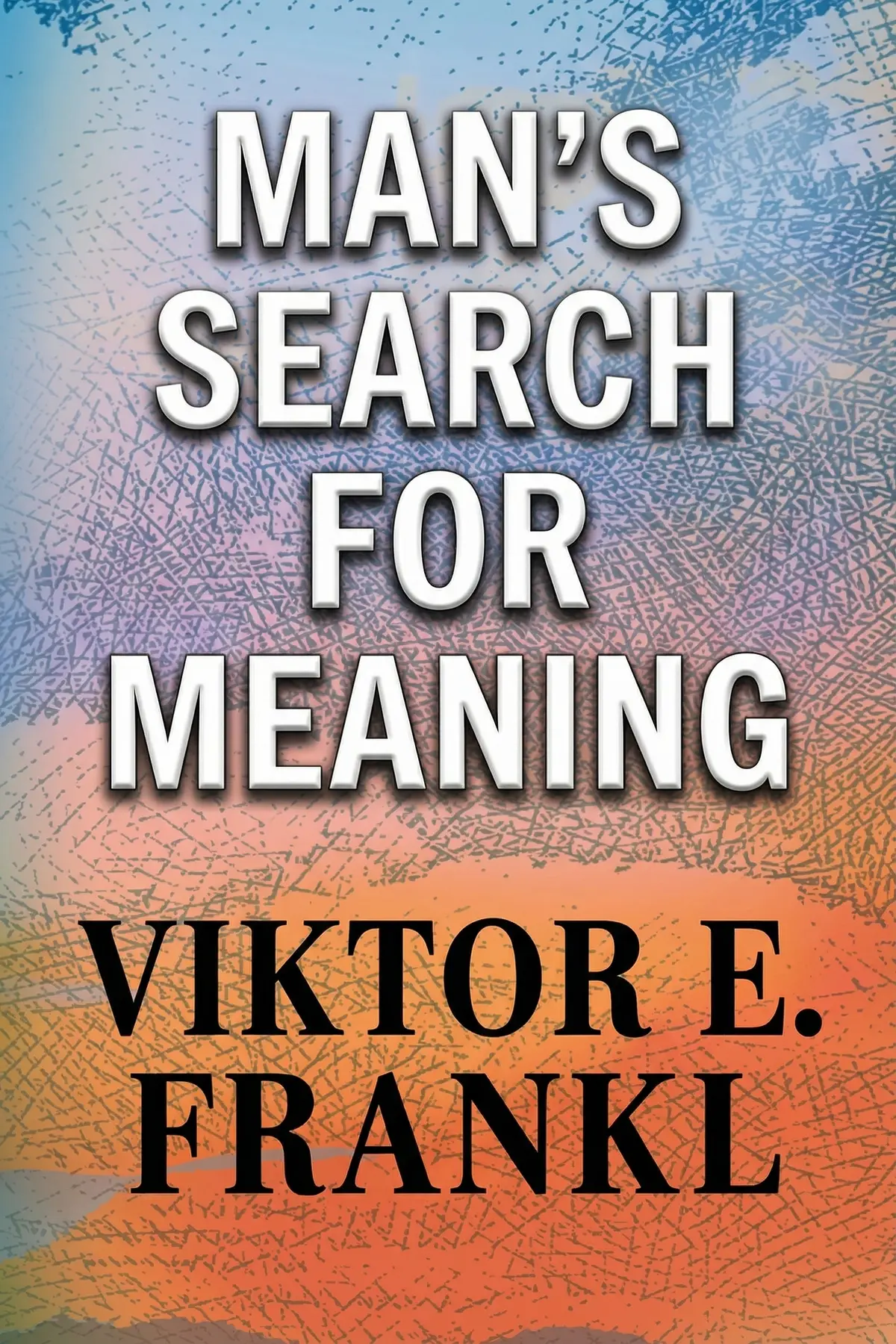
Table of Content
1. Introduction
1 min 06 sec
If your days feel full but empty, or a hard season has you wondering what keeps a person going, Viktor Frankl offers an answer tested in the worst conditions imaginable. In Man’s Search for Meaning, the Viennese psychiatrist, himself a survivor of the Nazi concentration camps, reports that prisoners who kept a sense of meaning proved tougher and better able to endure than those who lost it. That observation became evidence for his theory, logotherapy, which holds that people are driven above all by the search for meaning.
The idea running through the book is demanding and hopeful at once: meaning is something we make, through the choices we take responsibility for, even when almost every choice has been taken away. Frankl’s camp years show how meaning drains away and how some people held on to it. His theory then turns those lessons into tools: a way to read the emptiness of a free weekend, a better question to ask about your purpose, and an odd method for shrinking a fear by inviting it.
2. Recognize the false hope that comes with shock
1 min 31 sec
Prisoners arriving at Auschwitz had heard the stories, yet many felt hope as they stepped off the train. Frankl explains where that hope came from, and why its collapse left people so exposed.
3. What numbness protects, and what it costs
1 min 54 sec
Within days, prisoners could look at the dead without flinching. That dullness kept them alive, but it took something with it, and the loss did not end when the gates finally opened.
4. Find shelter in memory, nature and humor
1 min 45 sec
Guards controlled the work, the food and the cold. Yet a few prisoners found something the camp could never reach, and the ones who found it tended to last longer than the rest.
5. Keep one small freedom: how you choose to act
1 min 43 sec
A transfer to an unknown camp could mean rescue or death. Frankl describes two opposite ways prisoners faced such decisions, and one of them kept a person’s values alive even while hungry.
6. Spot the empty feeling that hurts even without hardship
1 min 37 sec
More than three in four students in one university study named the same thing as the center of their lives. Missing it produces an emptiness that often shows up on the most relaxing day of the week.
7. Build your meaning one move at a time
1 min 46 sec
Many people wait to discover their purpose before they act. A chess grandmaster’s answer to a simple question suggests they have the order backwards, and that nobody else’s meaning will fit you.
8. Shrink a fear by trying to make it happen
1 min 38 sec
A man who dreads blushing in a crowd turns red every time. Frankl’s cure sounds absurd at first, and it works by turning a familiar trap about fear inside out.
9. Conclusion
1 min 17 sec
Man’s Search for Meaning begins in places built to strip people of everything and ends with a claim about ordinary life. The prisoners Frankl watched lost their freedom, their comfort and any sense of a future, and many lost hope. What some kept was the ability to decide how to act: whom to picture in the cold, where to look at sunset, whether to hand over a piece of bread. Those decisions gave them a reason to go on, and logotherapy turns that observation into a principle. Meaning is something we make, move by move, in the position we are actually in.
That shrinks the question to a usable size. Meaning, in Frankl’s sense, need not be grand; a personal one, fitted to your present circumstances, is enough. When a free Sunday feels hollow, treat the emptiness as information worth listening to. When a situation is mostly out of your hands, find the decision still left to you and make it deliberately. When a fear keeps coming true, try to summon it and see whether it fades.
The guards controlled almost everything in the camps. They could not control what a hungry prisoner chose to do with his bread.
About this book
What is this book about?
Most people sense that a good life needs more than a full calendar, but few can say what the missing piece is or how to find it. Viktor Frankl, a psychiatrist who survived the Nazi concentration camps, answers from experience few could match. He describes how prisoners moved through shock, false hope and despair, then a protective numbness, and finally, after liberation, disbelief and bitterness. He also shows what helped some of them endure: memories of loved ones, moments of beauty and humor, and small choices made by their own values, such as giving bread to someone hungrier. Those observations support his theory, logotherapy, which holds that the search for meaning is our strongest motivation. Frankl argues there is no general meaning of life, only the meaning each person creates through choices in a specific situation, much as a chess move is only best in its position. Readers learn to recognize the emptiness he calls the existential vacuum, to reframe the question of purpose, and to use paradoxical intention, a technique for weakening a fear by trying to provoke it.
Book Information
Who it's for
Feeling busy but empty
People who feel busy but empty and want to understand what is missing.
Facing a long hardship
Anyone facing a long hardship, illness or loss who wants to know how others endured far worse.
Curious about psychology
Readers curious about psychology who want a clear account of logotherapy and its technique for fear.
About the Author
Viktor Frankl
Viktor Frankl, born in Vienna in 1905, died in 1997. He held doctorates in both medicine and philosophy from the University of Vienna, where he later became a professor of neurology and psychiatry at the medical school, and he taught as a visiting professor at Harvard, Duquesne and Southern Methodist Universities. Frankl founded logotherapy, presented as the third Viennese school of psychotherapy after the work of Sigmund Freud and Alfred Adler. During World War II he spent three years in concentration camps, among them Auschwitz and Dachau.
Ratings & Reviews
Ratings at a glance

What people think
Listeners find this to be a remarkable, quick listen that offers deep-seated wisdom and evocative ideas. They value how it encourages people to seek out their own significance and journey in life, while also presenting a poignant story of survival amidst historical tragedies. Listeners call it a life-altering book that shifts their perspective, with one listener highlighting how it places first-world concerns into the correct context.
Top reviews
Ratchanee
Wow. This book is a gut-punch that somehow leaves you feeling lighter. Frankl’s descriptions of the concentration camps are detached but haunting, making the horror feel more immediate than any flowery prose could. I found myself re-evaluating every minor inconvenience in my life after reading about his search for meaning in a crust of bread. It’s a fast read, yet I had to stop frequently to sit with my own thoughts. The second half is more academic, focusing on the principles of logotherapy, but it provides the necessary psychological framework for his survival. If you feel lost in the modern world, read this. It is a luminous, insightful work that demands your full attention.
Show moreSara
Picked this up during a particularly dark month, and it changed my entire outlook on life. Truth is, we often feel like victims of our circumstances, but Frankl proves that our response is the one thing no one can take from us. The way he describes holding onto the image of his wife to survive is beautiful and deeply empowering. It makes first-world concerns look absolutely trivial by comparison. I didn't mind the shift to the 'science' of logotherapy in the latter half because it helped me understand why those survival mechanisms worked. It’s a short volume, but it carries the weight of a thousand-page epic.
Show moreKomsan
As someone who usually avoids 'self-help' literature, I found this to be the most grounded book on the human condition I've ever encountered. Frankl doesn't offer platitudes; he offers a strategy for survival born from the literal ashes of Auschwitz and other camps. His focus on 'meaning' rather than 'happiness' is a distinction that more people need to understand in our current culture. Life isn't about avoiding pain, but finding a reason to keep going despite it. The prose is spare and unsentimental, which actually makes the emotional moments hit much harder. Every student of psychology or history should have a copy of this on their shelf.
Show moreBrooklyn
Ever wonder what keeps a person going when everything is stripped away? This book answers that question with chilling clarity and incredible heart. Frankl’s insight into the 'inner hold' that prisoners kept—or lost—is a profound look at the human spirit under pressure. I was struck by how he could find meaning in the simple possibility of rewriting his lost manuscript. It’s a testament to the idea that we are not just products of our environment, but architects of our internal world. It’s a small book that you can finish in an afternoon, but you’ll be thinking about the implications for years.
Show moreYulia
Gotta say, this is one of those rare books that actually deserves its massive reputation. It’s a fast, intense read that puts your own life into perspective immediately. I loved the way Frankl talked about the 'freedom to choose one's attitude' in any given set of circumstances. It’s such an empowering concept, especially when you realize where he was when he formulated these thoughts. The second half is more technical, but if you pay attention, it bridges the gap between the horrors he saw and the therapy he developed. It’s a masterclass in turning tragedy into something constructive and universal.
Show moreTim
After hearing about this book for years, I finally sat down with it and was floored by the gravity of the narrative. The writing style is surprisingly dispassionate, which makes the descriptions of the gas chambers and the daily struggle for soup even more devastating. Frankl isn't asking for your pity; he's asking for your attention. I found the concept of 'logotherapy' to be much more practical than traditional psychoanalysis because it focuses on the future and what you can still contribute to the world. If you're going through a period of transition or searching for a 'why,' Frankl’s words are a lighthouse in the dark.
Show moreTantipat
Finally got around to this classic after years of seeing it on every must-read list. I loved the first section where Frankl details the psychological stages of being a prisoner; it feels like a masterclass in human resilience and the sheer power of the mind. However, I’ll be the first to admit that the second half slowed down significantly for me. It shifts from a gripping personal narrative to what feels like a psychiatric lecture on his theory of logotherapy. While the concepts are vital, the transition is a bit jarring and the tone becomes much more clinical and pedantic. Still, the message about our ultimate freedom to choose our own attitude is worth the price of admission.
Show morePrapaiwan
The chapter on the 'existential vacuum' hit me right where I live. Personally, I found the first half of the book to be a staggering achievement in memoir writing, especially how he avoids the typical psychobabble while in the camp. Frankl’s ability to analyze his own suffering as a doctor while experiencing it as a victim is fascinating. My only gripe is that the second half feels a bit repetitive and occasionally pokes too much at other psychological schools. It’s clear Frankl was trying to establish his own legacy, which is fine, but it lacks the narrative flow of the first 100 pages. Regardless, the core idea—that meaning is found in work, love, or suffering—is a powerful tool.
Show morePracha
Not what I expected based on the hype surrounding it. To be fair, the historical account of life in the concentration camps is moving and well-written, illustrating the 'tragic optimism' Frankl maintained in a horrific environment. But once the book moves into the theoretical explanation of logotherapy, I lost interest almost immediately. It felt like reading a medical journal from the mid-20th century, filled with jargon and constant Freud-bashing that felt a bit dated. I was looking for more of a personal journey and less of a dry textbook. It’s an important historical document, but not necessarily an engaging cover-to-cover read for a casual reader.
Show moreGift
Look, I respect the man’s experience immensely, but the book feels a bit disjointed in its current format. The first half is a 5-star account of survival that everyone should read at least once; it’s haunting and informative. But the second half, the part where he dives into 'Logotherapy in a Nutshell,' felt very dry and academic to me. It felt like I was reading two different books that were glued together at the spine. I struggled to stay engaged once the personal stories stopped and the psychological theories began. It’s definitely informative, but maybe not as 'life-changing' for me as the reviews suggested it would be.
Show moreQuestions about this book
What is the main idea of Man’s Search for Meaning?
Frankl argues that people need meaning to endure, and that meaning comes from how they choose to act. In the Nazi camps he saw that prisoners who kept a purpose were stronger than those who lost it. His theory, logotherapy, builds on this: the search for meaning is our deepest motivation, there is no single meaning of life, and each person creates theirs through decisions in a specific situation.
What is logotherapy according to Viktor Frankl?
Logotherapy is the school of psychotherapy Frankl founded. It holds that searching for meaning is the greatest motivation in human life and aims to help people find it. Where the psychotherapy he contrasts it with explains fears through a patient’s environment, logotherapy assumes people can make decisions and define their purpose independently of their surroundings. It also offers techniques for people who have developed disorders, such as paradoxical intention.
What is the existential vacuum and Sunday neurosis?
The existential vacuum is the inner emptiness people feel when they cannot find meaning or cannot live by their values. Frankl notes that no trauma is needed to produce it. His example is Sunday neurosis: after a structured week of hard work, people relax and suddenly realize their lives feel hollow. Logotherapy tries to help people find meaning before this emptiness leads to more serious problems.
What is paradoxical intention and how does it work?
Paradoxical intention asks a person to try to do the very thing they fear. Frankl’s example is a man who blushes whenever he is in a crowd because he constantly fears blushing. Told to blush as much as possible, he finds he cannot force it, and the fear fades. It relies on a pattern Frankl describes: feared outcomes tend to happen, while forced ones tend not to.
How can I apply Man’s Search for Meaning in daily life?
Start small. On a free afternoon, notice whether you feel empty, a possible sign of the existential vacuum. Instead of hunting for one grand purpose, ask what the best move is in your current situation, as Frankl’s chess example suggests. When things feel out of your control, find the one choice still yours, such as how you treat someone nearby, and make it on purpose.
Readers also enjoyed

A Promised Land
Barack Obama


A River in Darkness: One Man’s Escape from North Korea
Masaji Ishikawa

A Spy Among Friends: Philby and the Great Betrayal
Ben Macintyre



59 Seconds: Change Your Life in Under a Minute
Richard Wiseman

A Year in the Life of William Shakespeare: 1599
James Shapiro

AUDIO SUMMARY AVAILABLE
Listen to Man’s Search for Meaning in 15 minutes
Get the key ideas from Man’s Search for Meaning by Viktor Frankl, plus 5,000+ more nonfiction titles.
- 5,000+ titles
- Listen as much as you want
- 7-day free trial
- Cancel anytime









