

14 min 11 sec
Available in: English
Making a Psychopath: My Journey Into Seven Dangerous Minds
A forensic researcher looks inside the minds of people labeled psychopaths. He shows how genes, childhood, prisons and a crime-heavy test shape the diagnosis, and why one violent man's recovery suggests treatment can work.
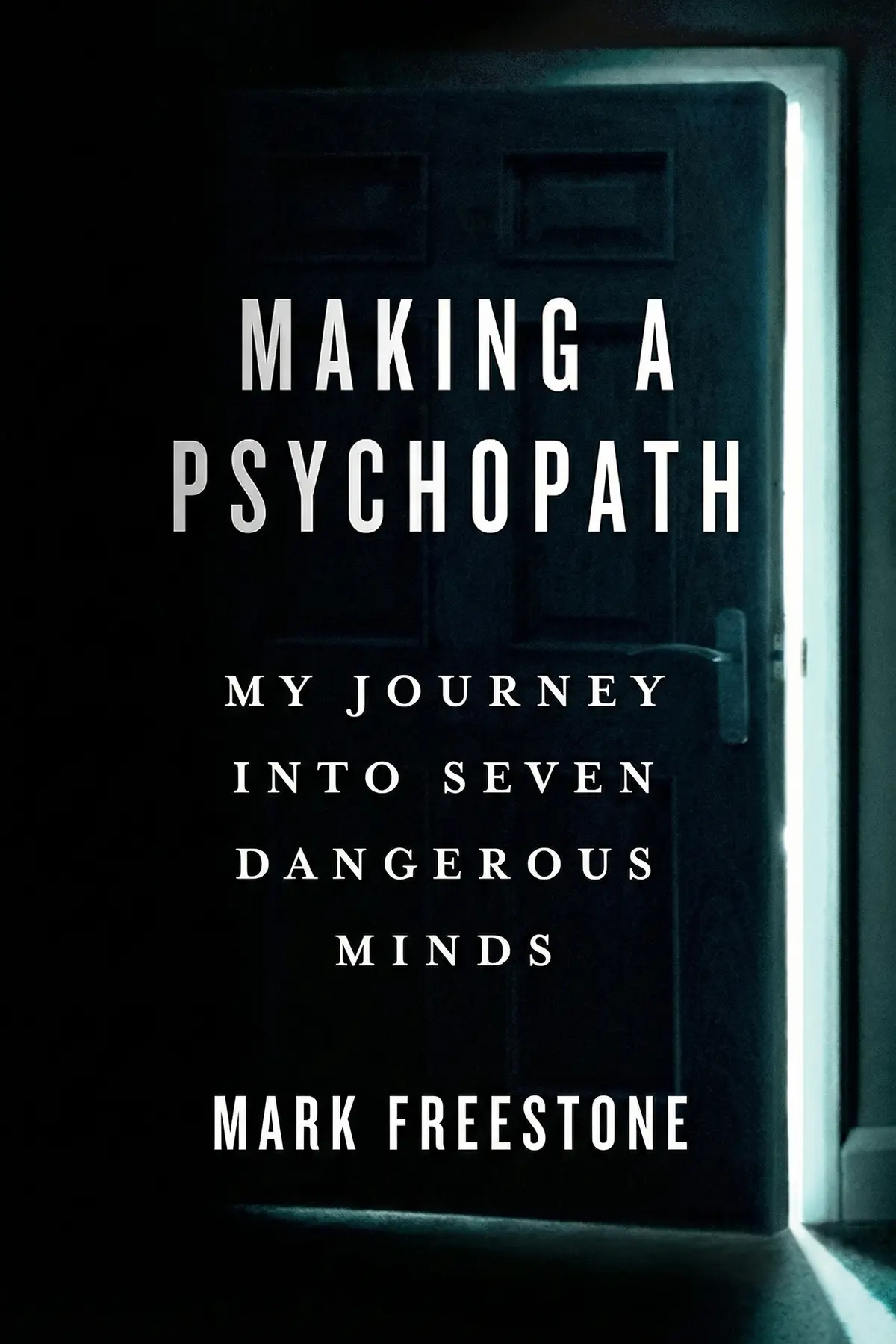
Table of Content
1. Introduction
1 min 07 sec
Most people picture a psychopath as one kind of person: the cold, clever killer from a thriller. In Making a Psychopath, Mark Freestone shows that the same label can fit a debt collector who tortures, a businessman who runs Ponzi schemes and a dependent man who cannot look after himself. Those three share a high score on one checklist, and very little else. Freestone is a researcher and clinician who has spent more than 15 years in prisons and secure hospitals.
His argument is that psychopathy is real and dangerous, but the word covers very different people. Brains, childhoods, institutions and a flawed test all shape them. Seeing those differences, rather than writing everyone off as evil, is what makes prevention and treatment possible. Through a series of real cases, you will learn how a psychopathic mind is formed, why the diagnosis can take in people who don’t truly fit it, and what it took for one violent man to change.
2. Separate what a diagnosis explains from what it can't
1 min 53 sec
A man set out to kill his stepfather, changed his mind over a few drinks, then killed someone else instead. His story shows exactly where the word psychopath stops being useful.
3. A psychopathic brain is not a life sentence
2 min 00 sec
A respected neuroscientist looked at a brain scan and saw a textbook psychopath. Then he checked the name on the file. What happened to him next changes how much we should trust biology alone.
4. Guard against charm inside closed institutions
1 min 59 sec
A senior prison officer began by accepting a compliment and ended up losing her career. The way one inmate drew her in, step by step, is a warning for anyone who works where power and secrecy meet.
5. Learn why the psychopath checklist catches the wrong people
1 min 55 sec
A self-harming orphan was diagnosed as a psychopath even though his symptoms pointed somewhere else entirely. The reason lies in how the standard test is built, and it matters wherever that score decides a person’s fate.
6. Look for female psychopathy in control and manipulation
2 min 02 sec
Thrillers are full of cold female killers, yet official estimates suggest they are extremely rare. Either women are spared the condition, or the test is looking in the wrong place. One shocking exception tests both ideas.
7. Patient therapy can turn a violent life around
1 min 55 sec
A man who killed in a street fight spent 16 years in prison with every sign of a lost cause. What happened in a weekly therapy room challenges the belief that psychopaths can never change.
8. Conclusion
1 min 20 sec
Freestone’s cases add up to a word stretched too far. Ben, Paul, Danny, Angela and Eddie share a label and a record of harm to others, from lies and manipulation to torture and murder. What links them is a failure to grasp, or to care, how their actions land on other people. That is why Freestone sets psychopathy apart from conditions such as depression or schizophrenia, which mainly torment the person who has them. With psychopathy, most of the damage falls on everyone else.
It would be easy to stop there and call these people evil. Freestone sees that as the lazy choice. Most were victims first, denied the love and care in childhood that others take for granted, and writing them off does nothing to prevent the next case.
The next time someone is called a psychopath, in a headline or in an argument at work, listen carefully and ask what the word actually explains. Remember that charm can be used as a tool, and that a checklist score is only a place to start. When change seems impossible, picture Eddie walking away from a fight he once would have finished. The label is where understanding should begin, and the person behind it can still be reached.
About this book
What is this book about?
Popular culture treats psychopaths as one type: the cold, brilliant killer. Mark Freestone has worked for more than 15 years with offenders in UK prisons and secure hospitals, and the reality he describes is far messier. The same diagnosis covers a debt collector who tortures, a self-harming orphan and a dependent man who cannot look after himself. Freestone tells the stories of people he has met or studied to show what the label tells us and what it leaves out. Brain scans point to low activity in the prefrontal cortex and the amygdala, yet one neuroscientist with exactly that brain lived a respectable life. Genes matter, but nearly every violent psychopath grew up with abuse or neglect. Prisons can make things worse, as one charming inmate proved when he drew a senior officer into an affair. The standard test also leans so heavily on criminal history that it labels the wrong people and misses most women. Readers get a clear, humane map of a frightening subject, along with a case for treatment. One man killed, served 16 years and, after years of therapy, built a settled life without reoffending.
Book Information
Who it's for
Fans of true crime
True crime fans who want the real psychology behind the screen version of the psychopath.
Trainees and practitioners
Students and professionals in psychology, social work, nursing or prisons weighing what a diagnosis really means.
Those who've faced manipulators
Anyone who has dealt with a charming manipulator and wants to understand how such people work.
About the Author
Mark Freestone
A sociologist by training, Mark Freestone has worked for over 15 years as a researcher and clinician in prisons and forensic mental health services. That work took him into Category A prisons in the UK and high secure hospitals, where he was part of the Dangerous and Severe Personality Disorder Programme. He edits the Journal of Forensic Psychiatry and Psychology, has advised NHS England on services for people diagnosed with severe personality disorder, and advised on Killing Eve during its first two series.
Ratings & Reviews
Ratings at a glance

What people think
Listeners consider this book an educational and stimulating deep dive into forensic psychiatry, though perspectives differ on the author’s sociological lens compared to a standard clinical psychology approach. Many listeners value how the text debunks popular misconceptions while investigating the role of genetics and early childhood trauma in shaping behavior. Furthermore, they emphasize the captivating breakdown of different personality profiles, with one listener remarking that the sections on female psychopathy are especially eye-opening. Additionally, they describe the prose as both empathetic and authoritative. They also observe that the storytelling is very easy to follow, as one listener notes that the opening chapter on the "masks of psychopathy" offers a superb introduction to the topic.
Top reviews
Lars
Ever wonder why female psychopaths are so rarely discussed in mainstream literature? This book finally tackles that gap with a fascinating chapter that highlights how diagnostic tools designed for men often fail when applied to women. I’ve read a lot of true crime and psychology books, but Freestone’s perspective as a consultant for high-profile forensic settings brings a unique authority to the table. The way he breaks down 'The Conman' and 'The Parasite' was absolutely riveting and helped me understand the subtle differences between various antisocial behaviors. It’s not just about violence; it’s about the underlying lack of empathy and the genetic predispositions that shape these individuals from a young age. The writing is incredibly engaging and dispels so many common myths that we see in fictional portrayals. I found the entire experience thought-provoking and couldn't put it down. This is essential reading for anyone interested in forensic psychiatry or the complexities of the human psyche.
Show moreAisha
Mark Freestone’s exploration of the criminal mind offers a refreshingly grounded perspective compared to the sensationalized versions we see on TV. The book excels in its opening chapter, 'The Masks of Psychopathy,' which provides a sturdy foundation for understanding how these individuals navigate the world undetected. While the seven case studies are actually composites, they effectively illustrate how childhood trauma and genetics weave together to create different antisocial profiles. I found the chapter on the 'Hitman' particularly gripping because it challenged my assumptions about cold-blooded violence. Personally, I appreciated that he wrote with compassion for his subjects rather than just treating them as monsters. Some might find the sociological angle a bit dry, but I felt it added necessary weight to the narrative. It’s a thoughtful look at a misunderstood diagnosis that manages to be both informative and accessible to a general audience. If you want to look past the Hollywood tropes and see the real people involved, this is a solid choice.
Show moreRin
Finally got around to reading this after hearing Freestone was a consultant for Killing Eve, and it’s certainly not what the flashy marketing suggests. Instead of a sensationalist gore-fest, we get a measured and often empathetic look at how systems fail the most dangerous members of society. The case study of 'The Redeemed' was especially striking, as it raised difficult questions about whether someone with these traits can ever truly be rehabilitated. Freestone argues that while the brain chemistry might be fixed, behavior can sometimes be managed through the right environment. I loved how he dismantled the idea of the 'staring eyes' psychopath that we see in movies. Truth is, real psychopaths are often much more boring and tragic than fiction leads us to believe. The book is well-written and flows at a good pace, making complex forensic concepts easy to grasp for a layman. It definitely made me rethink my own biases about criminal behavior.
Show moreSamira
The chapter on 'The Masks of Psychopathy' set a high bar that the rest of the book mostly managed to clear. Freestone does a fantastic job of explaining how childhood trauma acts as a catalyst for certain genetic predispositions. I found the presentation of 'The Remorseless' to be chilling yet deeply humanizing in a way I didn't expect. It’s rare to find an author who can write about such dark subjects with a sense of authority and genuine compassion. The sentence structure varies enough to keep the reading experience dynamic, though some of the more medical sections require a bit of extra concentration. Gotta say, his insights into how these individuals manipulate their environments were eye-opening. Even if you aren't a fan of true crime, the sociological questions raised about our prison systems are well worth the price of admission. It’s a compelling, accessible, and ultimately very informative read for anyone curious about the mind.
Show moreKamol
Picked this up on a whim and was surprised by how much compassion the author shows toward his subjects. Instead of just listing horrific crimes, Freestone asks *why* these people are the way they are, tracing their development back to early environmental factors. The chapter on 'The Redeemed' really stayed with me because it challenges the idea that a diagnosis of psychopathy is a life sentence of bad behavior. I found his prose to be quite engaging, with a good mix of short, punchy observations and longer, more analytical passages. To be fair, there are moments where the sociological theory gets a bit heavy-handed, but it’s usually balanced out by a compelling anecdote. It’s a refreshing change of pace from the typical 'serial killer' books that flood the market. If you’re looking for a thoughtful, authoritative look at the spectrum of psychopathy, this book provides an excellent and highly readable starting point.
Show moreElan
To be fair, this book sits in an odd space between a sociological textbook and a true crime memoir. While I found the specific details about the UK’s forensic psychiatric hospitals interesting, the narrative structure felt a bit disjointed at times. Each chapter focuses on a specific 'type' of psychopath, such as 'The Liar' or 'The Remorseless,' but the stories often ended just as they were getting interesting. I was left with so many questions about the long-term outcomes for these patients. One thing I did enjoy was the author’s critique of how the 'psychopath' label is over-diagnosed and weaponized within the justice system. It’s a nuanced take, though the prose can get a bit dense when he dives into the medical history of his subjects. Not gonna lie, I expected something a bit more visceral given the marketing, but it’s still a decent primer on the subject if you don’t mind a more academic tone.
Show moreAnong
As someone who follows forensic psychology closely, I found the chapter on 'The Borderline' particularly contentious given the author’s sociological background. While he has clearly spent years in the trenches of the prison system, his attempts to re-diagnose patients felt a bit out of his lane at times. Look, the anecdotes are definitely interesting, but they lack the clinical depth you’d get from a practicing psychiatrist. The book shines when it focuses on the systemic issues within forensic care, specifically how the UK approach differs from the more punitive American model. However, the use of composite characters made the 'journeys' feel slightly less authentic than a straight biography would have. It’s an easy read and provides some decent trivia about psychopathy, but it doesn't quite reach the heights of classics in the genre. It’s fine for a weekend read, but don’t expect a definitive scientific breakthrough on the nature of evil.
Show moreTen
Truth is, the author’s focus on the UK prison system and how it differs from the US was the most enlightening part for me. This book feels like a hybrid between a memoir and a series of case studies, which sometimes works and sometimes doesn't. While the seven personality types—like the Conman and the Liar—are well-defined, the narrative feels a bit repetitive by the end. The author frequently reminds us that he isn't a psychologist, which actually made me question some of his more bold assertions about the patients' true conditions. Still, the writing is clear and he avoids the most common cliches of the genre. It’s an okay introduction to the field of forensic psychiatry, but I think I would have preferred more focus on the science and less on the author’s personal career path. A decent three-star read that offers some interesting tidbits for the casual reader.
Show moreJackson
I really wanted to dive deep into these case studies, but the title 'My Journey into 7 Dangerous Minds' felt like a bit of a stretch for me. Frankly, these felt more like brief clinical snapshots than deep dives, and I never felt like I truly got to know the individuals behind the pseudonyms. It was frustrating to learn halfway through that the author is a sociologist and not a clinical psychologist, which explains why so much of the book felt like a re-evaluation of previous diagnoses. He spends a significant amount of time suggesting that these people might actually have autism or borderline personality disorder, which felt more like rambling pontification than actual medical insight. The writing style fluctuates between being overly technical like a textbook and then oddly loose in its storytelling. To be fair, I did appreciate the insights into the UK prison system, but the overall execution left me wanting more substance and less psychobabble.
Show moreAurora
Not what I expected from someone billed as a leading expert on the world's most violent criminals. I found the author’s frequent references to his work on TV shows to be a bit of a red flag, and it translated into a writing style that felt a bit self-indulgent. He spends a lot of time talking about his own feelings and personal stories rather than providing a deep psychological understanding of the seven individuals. The 'dangerous minds' mentioned in the title were barely explored before he’d pivot back to his own theories on sociology. Many of the vignettes felt incomplete, leaving out the most compelling details of the crimes in favor of mind-numbing jargon. I was looking for a gritty, insightful look at the criminal psyche, but this felt more like a collection of loose observations from someone who spent more time observing than actually treating patients. It was a struggle to finish, honestly.
Show moreQuestions about this book
What is Making a Psychopath by Mark Freestone about?
Freestone, a forensic researcher and clinician, uses real cases to show that people diagnosed as psychopaths are very different from one another. He looks at the brain regions involved, the role of genes and childhood abuse, the way prisons can make things worse and the flaws in the standard test. He argues that seeing the person behind the label makes prevention and treatment possible.
What causes psychopathy according to Making a Psychopath?
Freestone describes a mix of genes and early experience. Brain scans show low activity in the prefrontal cortex and amygdala, yet neuroscientist James Fallon had that brain profile and a gene variant linked to serial killers and still lived a normal, successful life. Almost every violent psychopath, Freestone notes, grew up with neglect or abuse, so childhood shapes how those genes play out.
Why does Freestone say the psychopath test is flawed?
More than half of the test’s questions concern a person’s criminal and antisocial history instead of their psychology. That makes it good at flagging dangerous people, but it can label someone like Danny, whose symptoms fit borderline personality disorder, as a psychopath. It also misses callous, manipulative people who never commit crimes, including most female psychopaths, who tend to show the condition through control in relationships.
Can psychopaths be rehabilitated?
Freestone says recovery is rare but possible. Eddie killed a man and served 16 years for manslaughter. Through years of weekly, nonjudgmental therapy with a psychotherapist called Dr. C, he learned to spot his anger rising and walk away from fights. He was released, now lives in north London with a job and two dogs, and has not reoffended.
What can I apply from Making a Psychopath in everyday life?
Treat the word psychopath with care and ask what it actually explains in a given case. Be alert to charm used as a tool. Paul drew a senior prison officer in through small favors that grew step by step. And if you have a quick temper, borrow Eddie’s habit: notice the anger rising and leave before it takes over.
Readers also enjoyed

Acting with Power: Why We Are More Powerful Than We Believe
Deborah Gruenfeld


Age of Propaganda: The Everyday Use and Abuse of Persuasion
Anthony Pratkanis




59 Seconds: Change Your Life in Under a Minute
Richard Wiseman


AUDIO SUMMARY AVAILABLE
Listen to Making a Psychopath in 15 minutes
Get the key ideas from Making a Psychopath by Mark Freestone, plus 5,000+ more nonfiction titles.
- 5,000+ titles
- Listen as much as you want
- 7-day free trial
- Cancel anytime









