
13 min 42 sec
Available in: English
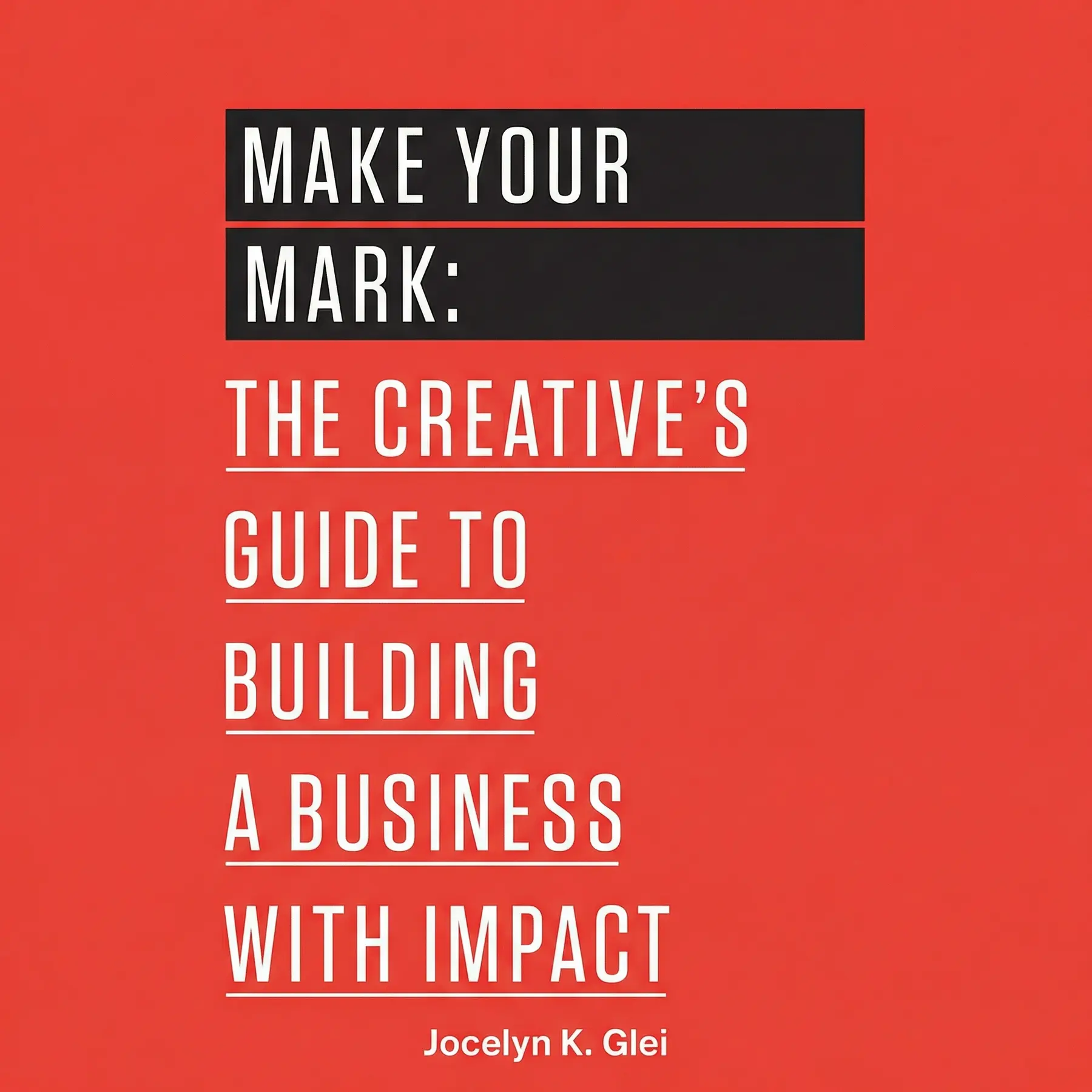
Make Your Mark: The Creative’s Guide to Building a Business with Impact
A practical guide for creative people who want to turn a skill or passion into a real business. It covers finding a purpose, building one product people love, winning loyal fans and leading a team well.
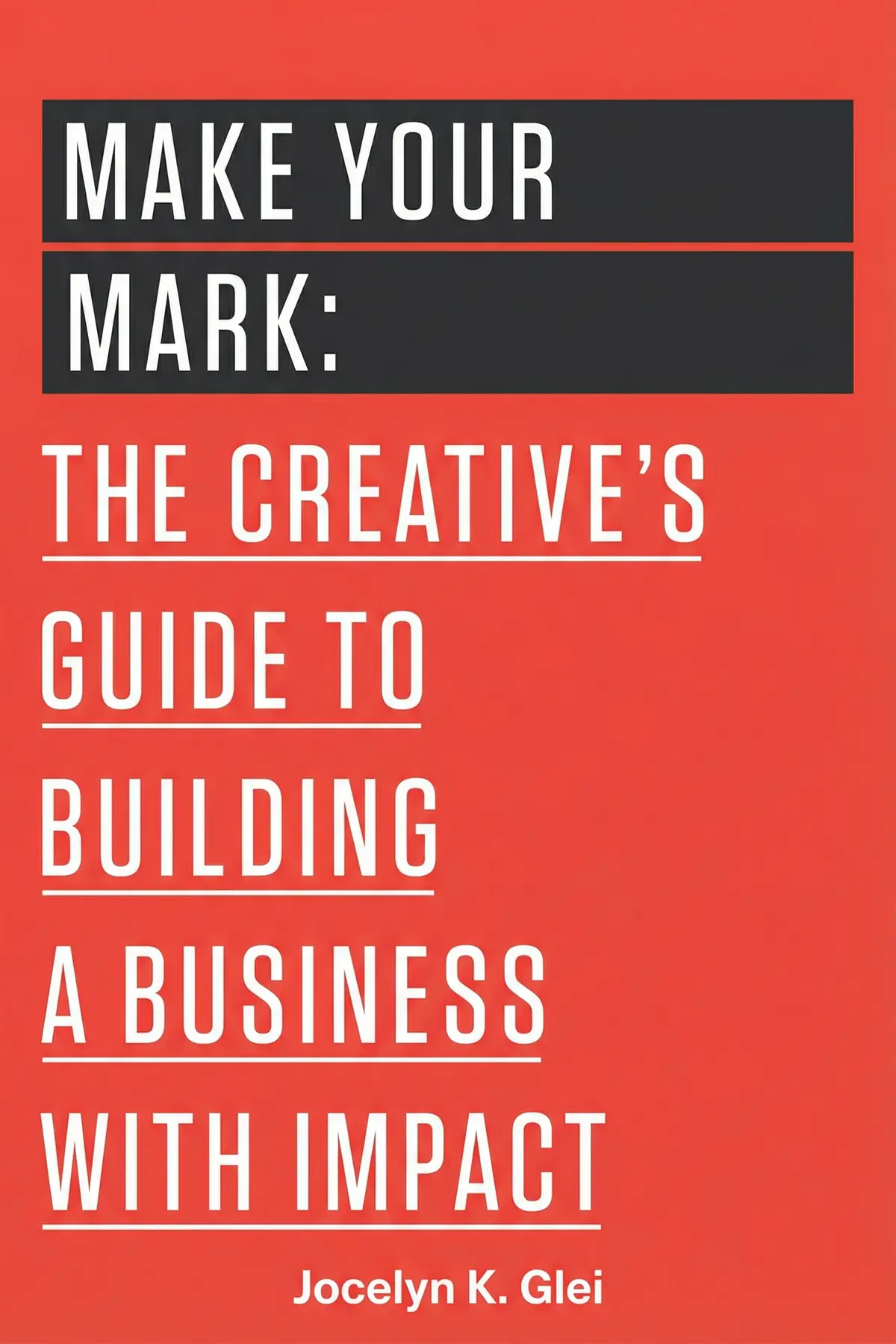
Table of Content
1. Introduction
57 sec
Many creative people have a skill someone would pay for but no idea how to turn it into a business that lasts. In Make Your Mark, Jocelyn K. Glei, founding director of the 99U Conference, argues that the first step comes before features, prices or marketing. A business needs a clear answer to why it exists, and many start-ups can’t give one.
From that answer the book builds four principles: purpose, product, customers and leadership. Focus on all four, and a passion can grow into a successful business. The examples include a pants maker that reached a million dollar run rate in six months by doing one thing well, a blog post that raised $22,000 in a single day, and a company where every email goes to the whole team. Each one leaves a test you can run on your own idea this month.
2. Answer why your business exists first
1 min 24 sec
Founders love to talk about clever features and lower prices. Yet those answers miss the one thing every lasting company can explain, and a kettle that takes voice commands shows how easily it slips out of view.
3. Stay small enough to take risks and learn
1 min 26 sec
Most companies grow slower and more cautious every year they succeed. A handful of famous firms deliberately refuse that path, and one of their rules is simple enough to fit on a takeaway menu.
4. Win with one product people love
1 min 21 sec
We picture creative genius as an endless stream of inventions. A clothing start-up that sold just one kind of pants suggests the opposite habit is what makes a business grow, and fast.
5. Grow a rough idea into a great product
1 min 26 sec
Nobody has a map for a product that does not exist yet. A Google Glass pioneer and the inventor of a moldable glue explain what to do instead, and who can help you find the way.
6. Turn your first customers into a loyal army
1 min 35 sec
Most companies post an offer and hope it spreads. One author raised $22,000 in a day without going viral, and Airbnb’s founders broke a basic business rule to get their very first users.
7. Tell a story customers want to share
1 min 26 sec
Few people who own a Patagonia coat have ever climbed a mountain in it. Their loyalty comes from somewhere else, and so does the threat that can undo a carefully built image overnight.
8. Share everything to build a team that trusts
1 min 26 sec
Imagine every email you send at work landing in your colleagues’ inboxes too. One company does exactly that, and the result runs against almost every instinct about privacy and good management.
9. Lead by serving the people you manage
1 min 36 sec
Ask creative people whether they want to lead and most picture giving up their craft to boss others around. The book argues that image is wrong, and that the real job looks very different.
10. Conclusion
1 min 05 sec
Make Your Mark treats a creative business as a chain of linked choices. Purpose decides which product is worth making. Testing with real users shapes that product. Early users can show what works and what doesn’t, and a story people relate to can win loyal followers. Inside the company, openness and service keep the team aimed at the same purpose that started everything. Each link holds up the next, and a weak one slows all the rest.
That makes the starting point clear. Write down in one sentence why your business exists and whom it helps, and use that sentence to cut the feature that is there only because it seems cool. Show a rough version of your one product to real users before it feels ready, and do something for your earliest customers that you could never do for thousands. If you lead others, share one thing they cannot see today.
Bonobos began with a single style of pants that fit. The book’s wager is that your own mark can start that small: one thing, made well, for people who need it.
About this book
What is this book about?
The internet lets creative people sell their skills and knowledge in ways that were never possible before. Most of them still don't know how to turn a passion into a business that pays. Make Your Mark gives that problem a structure built on four principles: purpose, product, customers and leadership. Jocelyn K. Glei starts with a question many start-ups cannot answer: why does the business exist? From there the book argues for lean companies that take risks and learn from them, and for one great product improved through real user feedback. It shows how to recruit first customers by giving generously and doing things that will never scale, and how a brand story connects with what people believe. It ends inside the company, with leadership built on transparency and service. The examples are concrete: Bonobos selling a single style of pants, Chris Guillebeau raising $22,000 in a day, Airbnb's founders staying with their first hosts, Buffer sharing every email with the whole team. Readers get a set of simple checks for their own idea, from asking why each new feature matters to its purpose to keeping the route from first look to purchase short.
Book Information
Who it's for
Creatives wanting a business
Designers, writers and other creatives who want to turn a skill into a paying business.
Founders eyeing many products
Early founders tempted to build many products at once instead of one great one.
Creatives turned managers
Creative people promoted into management who are unsure what leading should look like.
About the Author
Jocelyn K. Glei
Jocelyn K. Glei writes about bringing more creativity and meaning to everyday work. She was the founding director of the 99U Conference and edited the website 99u.com, which won two Webby Awards for Best Cultural Blog. Her books include Manage Your Day-To-Day and Make Your Mark, practical guides to managing time, careers and businesses, and Unsubscribe, which tackles email anxiety and distraction.
Ratings & Reviews
Ratings at a glance
What people think
Listeners find this work highly beneficial because of its extensive actionable tips and well-structured material, which is particularly appropriate for experienced creative professionals. They prize its accessibility as a fast-paced guide, with one listener describing it as a must-have for all entrepreneurs. The title provides significant motivation, with one listener highlighting its fierce dedication to business development, and listeners value the succinct format.
Top reviews
Rod
This book is an absolute powerhouse for those of us trying to bridge the gap between art and commerce. Jocelyn K. Glei has assembled a diverse group of thinkers who challenge you to stop overcomplicating your workflow. Every page feels like a fierce nudge to stop planning and start executing with more intentionality. To be fair, you might recognize some of the contributors if you follow the 99U blog, but having these insights in a physical, digestible format is a game-changer. It’s a handbook I keep on my desk for those moments when I feel stuck in the weeds. A must-read for any entrepreneur who values clarity over noise and wants to build something that actually matters.
Show moreOmar
Wow. This little book packs a punch that I wasn't anticipating when I first cracked the spine. It’s a fierce dedication to the idea that business can be a force for good if we approach it with enough intention and heart. I love how concise each section is because it prevents the reader from getting bogged down in useless theory. Not gonna lie, I finished the whole thing in one sitting and immediately started highlighting sections to share with my co-founder. If you’re looking for a jolt of inspiration and some sensible, grounded advice, look no further. This belongs on every creative's shelf as a reminder of what's possible when you lead with purpose.
Show moreSiriphen
The chapter on finding your core purpose was worth the price of the book alone for me. In my experience, most business guides focus too much on the mechanics of scaling and not enough on the underlying mindset. This collection flips that script, offering a wealth of practical advice that feels tailored for the modern creative professional. It’s refreshing to read something that emphasizes human connection over mere profit margins. I found the different viewpoints to be complementary rather than conflicting, providing a well-rounded look at what it takes to succeed in a crowded market. I'm already looking forward to checking out the next conference in NYC after reading through this 99U gem.
Show moreWatchara
After hearing so much about the 99U series, I decided to dive into this one first. It’s essentially a curated collection of essays that serve as a blueprint for anyone trying to build a business with soul. While some chapters feel a bit brief, the wisdom from established creative leaders is undeniably sharp. I found the advice on defining your purpose to be particularly helpful for my current project. Truth be told, it reads like a high-end magazine, making it the perfect companion for a short commute or a coffee break. It doesn’t overstay its welcome, which is a rare quality in business literature these days. Just don't expect a deep academic dive into economics; it's much more about the immediate application of ideas.
Show morePhimwan
As someone who has struggled to turn a passion project into a sustainable career, I found these perspectives incredibly grounding. The book avoids the usual 'get rich quick' fluff and focuses on the grit required to make a lasting impact. I particularly enjoyed the sections on leadership and how to treat your customers like actual human beings rather than just data points. Some critics might say the chapters are too 'snackable,' but I think that’s the beauty of it. It’s easy to pick up, read one essay, and immediately apply that mindset to your work. A few more female voices would have been nice to see, but the core content remains solid and worth the time for any aspiring founder.
Show moreKaen
Ever wonder why some creative businesses flourish while others fizzle out despite having great ideas? This guide attempts to answer that by focusing on the 'why' behind the work rather than just the 'how.' The formatting is beautiful, with clear headers and pull quotes that make the information stick. Personally, I think the strongest chapters are the ones that deal with the emotional labor of leading a team. There’s a certain vulnerability in the writing that you don’t often find in standard business manuals. Even if you don't agree with every contributor—and some do contradict each other—the variety of perspectives is enough to spark some serious reflection on your own professional path.
Show moreSiriporn
Finally got around to finishing the 99U trilogy, and 'Make Your Mark' is a solid conclusion to the set. While it might be the shortest of the three, the content is well-conceived and feels essential for anyone at the helm of a growing brand. I appreciated the focus on building a legacy rather than just chasing a quick exit strategy. Some of the advice is common sense, like treating your employees well, but it’s framed in a way that feels fresh and urgent. It’s a great companion for a flight or a quiet afternoon when you need to zoom out and look at the big picture. Definitely worth a spot in your professional library if you value concise, impactful wisdom.
Show moreRatthapong
Picked this up at the library because I enjoyed the previous installments in this series so much. Gotta say, this one didn't quite hit the same heights as the others. It feels very much like a 'best of' list from a website rather than a cohesive book with a singular narrative thread. The advice is definitely practical, but seasoned entrepreneurs might find the insights a bit elementary or repetitive. It's a great starter guide for someone just beginning their journey, but it lacks the depth for veteran business owners. Still, for a two-hour investment, you could certainly do worse with your time. It functions fine as a bit of 'metro reading' when you need a quick spark of motivation.
Show moreJiraporn
Look, the presentation of these ideas is fantastic and the physical book itself feels great in your hands. However, I can't shake the feeling that I've read most of this content online for free already. It functions well as a curated handbook, but the lack of truly original, exclusive content is a bit of a letdown for the price point. In my experience, the insights provided by the successful entrepreneurs featured are valuable, but they often end just as they are getting interesting. It’s essentially the 'CliffsNotes' of business strategy. Good for a quick refresh or a gift for a new graduate, but perhaps not a deep-dive resource for those already in the trenches.
Show moreNong
Not what I expected given the hype surrounding the 99U brand. Frankly, the content feels incredibly dated now, especially with the way it praises companies like Facebook and Amazon as models of ethics and purpose. It’s hard to take business advice seriously when the 'paradigms of success' have since become examples of corporate overreach. Some contributors suggest knowing your audience perfectly, while others tell you to just wing it and hope people show up eventually. This lack of consistency across the short chapters made it difficult to walk away with a clear action plan. It’s a quick read, sure, but I didn’t find much original substance here that hasn't been done better elsewhere. It's probably better as a library borrow than a purchase.
Show moreQuestions about this book
What is the main idea of Make Your Mark by Jocelyn K. Glei?
The book argues that any creative person can turn skills and passions into a successful business by focusing on four principles: purpose, product, customers and leadership. It starts with knowing why your business exists, then moves to building one product people love, winning loyal supporters with generosity and a relatable story, and leading a team through transparency and service.
Why does Make Your Mark recommend focusing on just one product?
Trying to develop many products at once tends to leave a pile of half-finished work. The book points to Bonobos, which sold a single style of pants in several colors online and reached a one million dollar run rate in six months, then two million six months later. Only after that early success did the founders branch out into other products.
How do you build a loyal customer following, according to Make Your Mark?
Give people something they want, as TED does by putting its talks online for free, or as coach Pamela Sim does with her free monthly Ask Pam Anything sessions. With your first customers, go far beyond the norm even if it cannot scale. Airbnb’s founders held meet-ups and stayed with early users, which helped start a community that is still growing.
What does Make Your Mark say about leadership?
The book argues that good management means serving people, not bossing them. A leader brings different talents together toward one goal and helps each person reach their potential. That requires strong communication: a public record of what everyone is working on, such as a company-wide forum, and repeating key messages often. It also recommends transparency, citing Buffer, which shares emails, metrics and decisions with the whole team.
Who should read Make Your Mark?
It suits creative people who want to turn a skill or passion into a profitable business but don’t know where to begin. Early founders get tests for purpose and product, people building an audience get tactics for recruiting first fans, and creatives moving into management get a different picture of leadership based on service and openness.
Featured in
Readers also enjoyed




Alibaba: The House That Jack Ma Built
Duncan Clark



7 Powers: The Foundations of Business Strategy
Hamilton Helmer
Bad Blood: Secrets and Lies in a Silicon Valley Startup
John Carreyrou
AUDIO SUMMARY AVAILABLE
Listen to Make Your Mark in 15 minutes
Get the key ideas from Make Your Mark by Jocelyn K. Glei, plus 5,000+ more nonfiction titles.
- 5,000+ titles
- Listen as much as you want
- 7-day free trial
- Cancel anytime









