

14 min 01 sec
Available in: English
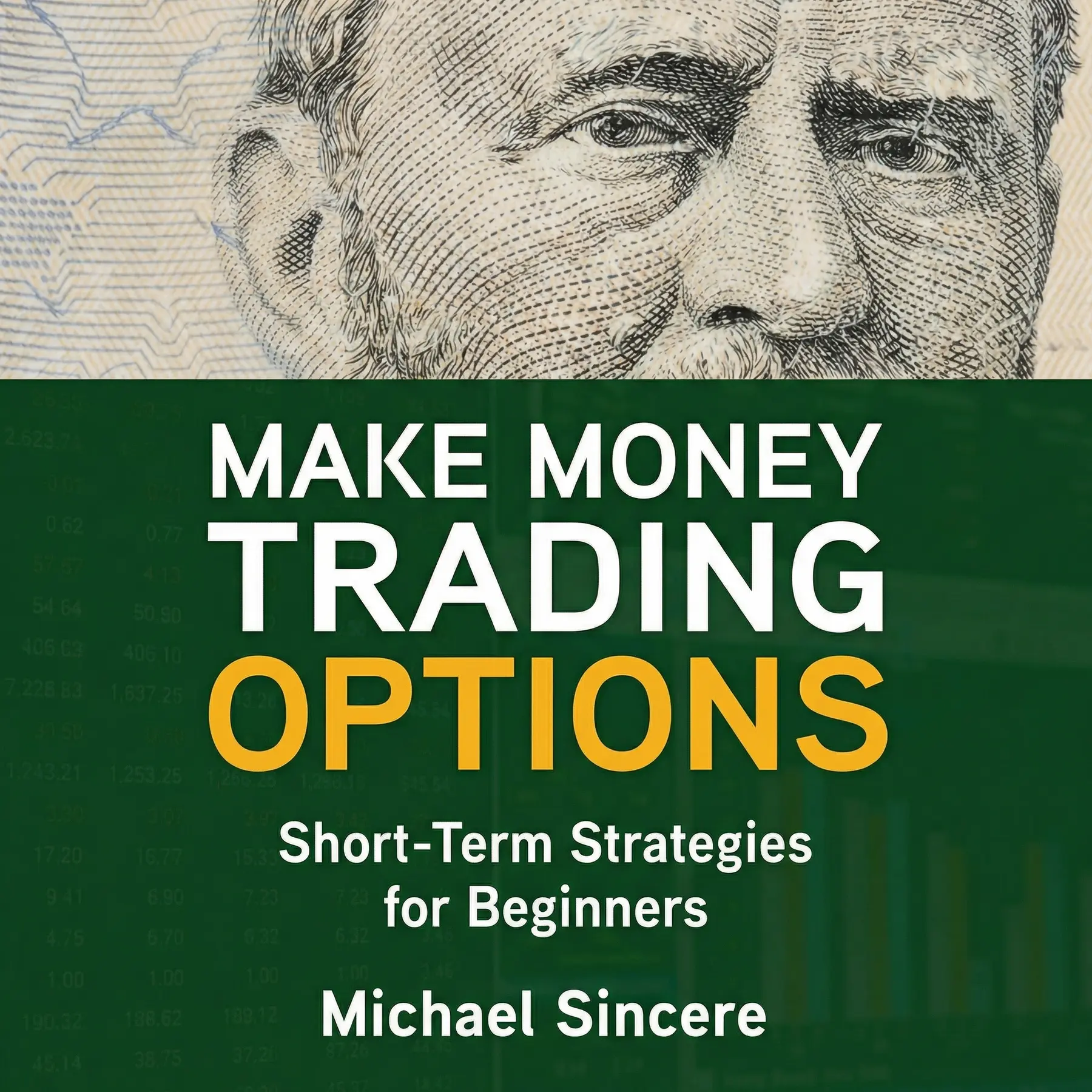
Make Money Trading Options: Short-Term Strategies for Beginners
A beginner's method for trading call options without gambling your savings: test stocks with paper money, buy only the morning's steady risers, check every order in five minutes, and protect each trade with a time stop or stop-loss.
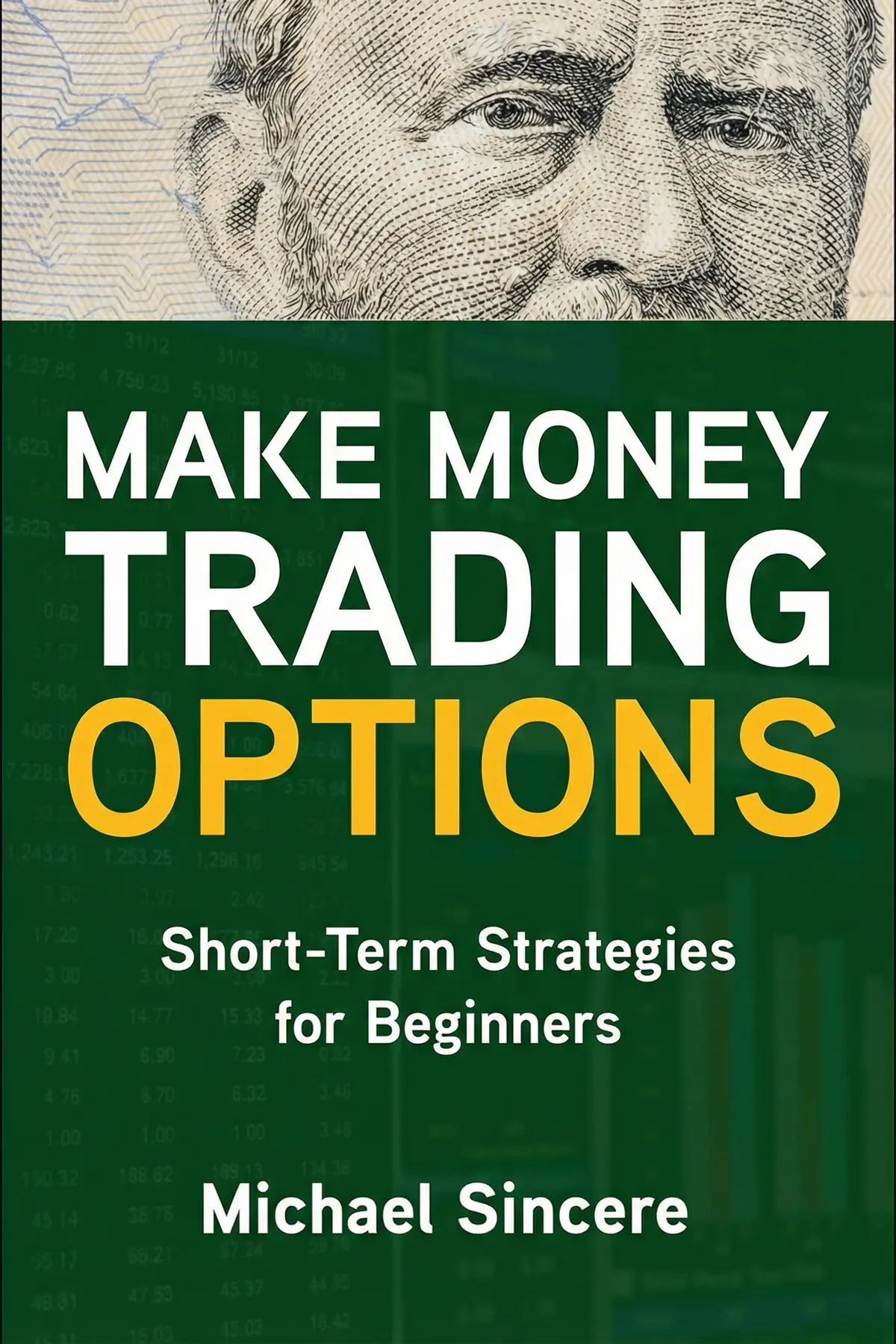
Table of Content
1. Introduction
1 min 01 sec
Options look like a fast way to grow a modest savings account, and beginners who lose on them usually lose for a dull reason: they never understood what they bought. In Make Money Trading Options, investing author and MarketWatch columnist Michael Sincere argues that a newcomer can add to their income steadily by following trends instead of predicting them. One contract controls 100 shares, which makes options cheap to enter and easy to get badly wrong.
Sincere promises no overnight fortune. The market always wins in the end, he concedes, and nobody profits on every trade. His case is that a disciplined daily routine keeps losses small enough for the wins to matter: rehearse each trade with fake money, check it before real money moves, and decide your exit in advance. What follows is that routine, from the first quote before the market opens to the notes written after it closes.
2. Control a hundred shares for a small premium
1 min 51 sec
A contract costing a few dollars can control a block of shares that would take a thousand to buy outright. That leverage explains both the appeal of options and why a relative’s winning streak deserves suspicion.
3. Count the shares behind every contract
1 min 39 sec
One wrong word on an order screen can multiply a beginner’s risk a hundred times. Before guessing where a stock is headed, there is a simpler calculation that losing traders tend to skip.
4. Avoid losing money even when your prediction is right
1 min 39 sec
A trader reads a Netflix move perfectly and still walks away poorer. The culprit is a feature options have that shares never do, and it starts working against you the minute you buy.
5. Test your trades with paper money first
1 min 51 sec
Horse players must commit before the race begins. Options traders do not have to, if they are willing to rehearse with fake money and build the right list of stocks to watch each morning.
6. Let the first hour pick your winners
1 min 43 sec
The old advice to buy low and sell high sounds sensible and rarely works. A short morning routine with paper money points to a less glamorous approach, and a simple probe to confirm it.
7. A five-minute checklist that stops costly typos
1 min 29 sec
Real money changes everything, including the price of a mistyped number. A short routine before each order catches the errors that sink beginners, and it costs only a few minutes of the trading day.
8. Decide your exit before the trade turns
1 min 36 sec
Every tested pick can still reverse, and distraction after a trade costs careful people real money. Two automatic exits and one habit after the close decide whether a bad trade stays small.
9. Conclusion
1 min 12 sec
Sincere’s method turns options from a bet placed at the starting bell into a routine with checkpoints. The market wins in the end, so the aim is to stay in the game: follow stocks already rising, rehearse with fake money, check every order and leave before a small loss grows. Options magnify everything, the gains on 100 shares and the damage of a mistyped order alike, which is exactly why discipline pays more here than cleverness.
The habits he supports are modest and repeatable. Count the shares behind any contract before buying it, remembering that 50 options means 5,000 shares. Put a stock through the five-call probe in a paper account before it touches real money, and sit out mornings when no winner pulls ahead. Give every real trade a stop, by time or by price, and write down the day’s results after the close.
The retired teacher with $150,000 does not need the nephew’s lucky streak. What that savings account needs is a race watched before the bet, and the nerve to skip the days when no horse is pulling ahead.
About this book
What is this book about?
Options look like an easy way to grow modest savings. A small premium controls 100 shares, and a friend or relative always seems to be winning. Michael Sincere argues that this is exactly why so many beginners lose money. They misread what a contract controls, forget that every option expires, or rush an order and type the wrong number. His answer is a daily routine built for newcomers. Instead of trying to predict the market, you follow the trend. A paper trading account and a Watch List of large, heavily traded stocks let you see which ones climb steadily in the first hour. A five-call probe confirms the winners before real money is used. A Five-Minute Rule checks each order's details, spread and limit price, and time stops or stop-losses close a trade before a loss grows. Readers learn how calls and puts work, why a correct prediction can still lose money, and how to end each day with notes that make the next one better. Sincere promises no overnight fortune, only a way to keep losses small while looking for consistent gains.
Book Information
Who it's for
Curious about options income
Savers and new retirees curious about options who want to add income without risking their nest egg.
Beginner traders
Beginner traders who keep making costly order mistakes or holding options until they lose value.
Professionals wanting a routine
Professionals who want a short, repeatable morning routine for testing trades before using real money.
About the Author
Michael Sincere
Michael Sincere has written ten books on investing and personal finance, including Understanding Stocks and Understanding Options. Both were McGraw-Hill bestsellers that sold more than 100,000 copies each and were translated into 13 languages. He writes a column for MarketWatch, has contributed hundreds of articles for brokerage firms, and has appeared on CNBC, ABC's World News Now and many national radio programs. Make Money Trading Options follows Understanding Options, first published in 2014.
Ratings & Reviews
Ratings at a glance
What people think
Listeners find the book accessible and value its concentration on options trading, with one listener highlighting how it simplifies intricate ideas into manageable segments. Furthermore, the work prioritizes risk management, and listeners appreciate the author’s prose. One listener also mentions that it provides a functional and useful summary of the market.
Top reviews
William
After finishing 'Understanding Options,' I felt compelled to grab this sequel immediately. This is a fantastic follow-up that bridges the gap between theory and actual market practice. Sincere doesn’t just tell you what to do; he illustrates the emotional rollercoaster of being a novice through some very relatable stories. The way he details the mistakes of others helps you visualize where you might go wrong before you lose real capital. I love his writing style because it feels like a mentor talking to you over coffee rather than a lecture. It’s an essential bridge into an exciting financial world. Truly a necessary read for beginners who want to build a real foundation!
Show moreManop
Michael Sincere has a way of making the terrifying world of options feel remarkably approachable. Instead of burying the reader under a mountain of Greeks and jargon, he breaks down the core concepts into digestible chunks. I particularly appreciated the heavy emphasis on risk management, which many other authors treat as an afterthought. It’s written in a conversational tone that keeps you engaged even when the subject matter gets a bit technical. However, I did find the chart patterns difficult to spot in real-time trading scenarios. They always look so clear in the book, but the actual market is much messier. Still, it is a practical overview for anyone wanting to survive their first year.
Show moreLaddawan
Finally got around to reading Michael Sincere’s take on risk management, and it was quite an eye-opener. Most people enter the options world looking for a quick payout, but this book forces you to look at the potential downside first. The way he breaks down the anatomy of a failing trade is brilliant and painful to read if you’ve been there. I appreciated the practical tips on philosophy, even if the chart examples felt a little too perfect for the real world. This is a solid resource for anyone who has the basics down but isn't sure how to manage their trades effectively in a volatile environment.
Show moreRatthapong
What a refreshing change of pace from the typical dry finance textbook! Michael Sincere writes with a clarity that is rare in this industry, turning what could be a boring subject into a fascinating study of human behavior and market dynamics. The emphasis on avoiding pitfalls is worth its weight in gold for anyone just starting out. I loved the follow-up feel of this book; it really feels like the natural next step after his introductory work. Even though it doesn't cover every single strategy, the foundational knowledge it provides is vital. It’s one of those books you’ll want to keep on your desk for a quick reference.
Show moreSuthee
Is this the holy grail of trading guides? Probably not, but it serves a very specific purpose for those of us still finding our feet. The book focuses heavily on the psychological pitfalls that ruin new traders, which I found incredibly valuable. Frankly, the technical strategy side felt a bit thin compared to other manuals I’ve picked up recently. You won't find detailed breakdowns of complex spreads or butterflies here. It sticks to the basics of buying and selling, which might frustrate more advanced players. If you need a refresher on discipline and mindset, it’s worth the price of admission. Just don't expect a masterclass in advanced mathematics.
Show moreIsabelle
The opening story about the novice trader hitting rock bottom resonated with me on a spiritual level. We’ve all been there, thinking we’re geniuses until the market humbles us. Sincere does a great job detailing exactly where that trader went wrong and how to avoid those same traps in our own journeys. However, the book lacks depth when it comes to the technical execution of specific strategies like spreads. It feels more like a guide on how not to lose money rather than a manual on how to maximize profits. Still, the risk management sections are top-tier and provide a lot of much-needed clarity.
Show moreNatchaya
Look, the market is a volatile beast, but this book provides a solid leash through its focus on capital preservation. While Sincere is great at breaking down complex concepts into digestible chunks, I felt the pace was a little slow for someone who already knows the basics. He spends a lot of time on the writing style and tone, making it easy to read, but the actual market overview feels a bit surface-level. It’s an excellent choice for a novice who is terrified of losing their shirt. However, more experienced traders might find the lack of detailed technical strategies frustrating. It’s more about the 'why' than the 'how.'
Show moreChloe
Picked this up on a whim after a string of bad trades left me feeling discouraged. The focus on basic psychology was exactly what I needed to hear at the time. Not gonna lie, I was hoping for more specific playbooks for different market conditions. Instead, you get a broad, practical overview that stresses patience and discipline above all else. It’s a simple read for traders who already have a tiny bit of knowledge but keep making the same rookie mistakes. The writing is clear and the chapters are short, making it easy to digest in small sittings. It's a decent addition to the library.
Show moreAndrew
Gotta say, the chart patterns included here are a bit of a double-edged sword. On one hand, they give you a visual representation of what to look for, but on the other, they are incredibly hard to spot when the ticker is actually moving. I found myself second-guessing his examples more than once. The book is definitely an easy read, and the author's voice is very relatable. It’s just that it feels a bit light on the 'meat' of options trading—the actual strategies. If you want to know about butterflies or complicated spreads, you will likely have to look elsewhere for that information.
Show moreBam
To be fair, I was expecting a deep dive into complex iron condors and butterfly spreads, but that isn't what this is. The author stays in the shallow end of the pool for the entire duration of the book. While the focus on psychology is nice, I wanted more 'how-to' on specific, multi-leg strategies. The chart patterns provided in the later chapters felt almost impossible to identify in a live market environment without the benefit of hindsight. It's an easy read, but it didn't provide the level of technical sophistication I was looking for. If you're beyond the absolute beginner stage, you might find this a bit too basic.
Show moreQuestions about this book
What is the main idea of Make Money Trading Options?
Michael Sincere argues that beginners can add to their income with call options if they follow the trend instead of predicting it and manage risk at every step. His Test Trading Strategy uses a paper account to find stocks rising steadily in the first hour, a five-call probe to confirm them, a Five-Minute Rule to check each real order, and time stops or stop-losses to limit losses.
Why can you lose money on an option even when your prediction is right?
Every option expires, and its premium falls quickly as the expiration date nears because there is less time for a big price move. In Sincere’s Netflix example, a trader pays $10 for a call, the stock finally reaches the expected $25 two days before expiry, but the premium has dropped to $2. The prediction was correct and the trade still lost money.
What is the Five-Minute Rule in options trading?
It is Sincere’s checklist before every real trade. Check the expiration date, strike price and number of contracts in the options chain. Check the bid-ask spread and choose another stock if the gap is too wide. Use a limit order set between the bid and ask instead of a market order. Then review the stock charts once more. Beginners should also hold only one or two open positions.
How do beginners use paper trading to pick options?
Sincere suggests a simulator with at least $100,000 in paper money and a Watch List of broad market funds and large, heavily traded stocks priced at $50 or more. At the open, buy 100 paper shares of each, watch which climb steadily, then buy five in-the-money calls on the winners. If they gain, buy five at-the-money calls, and move to real money once those earn $100 to $300.
What is revenge trading and how do you avoid it?
Revenge trading is trying to win back a loss by trading the same stock again and again, usually with poorly planned trades that make the loss bigger, sometimes for days. Sincere recommends accepting the loss as it stands, stepping away for a while and then moving forward. Setting a time stop or stop-loss before entering a trade also takes the emotional decision out of your hands.
Readers also enjoyed





AUDIO SUMMARY AVAILABLE
Listen to Make Money Trading Options in 15 minutes
Get the key ideas from Make Money Trading Options by Michael Sincere, plus 5,000+ more nonfiction titles.
- 5,000+ titles
- Listen as much as you want
- 7-day free trial
- Cancel anytime









