
14 min 06 sec
Available in: English
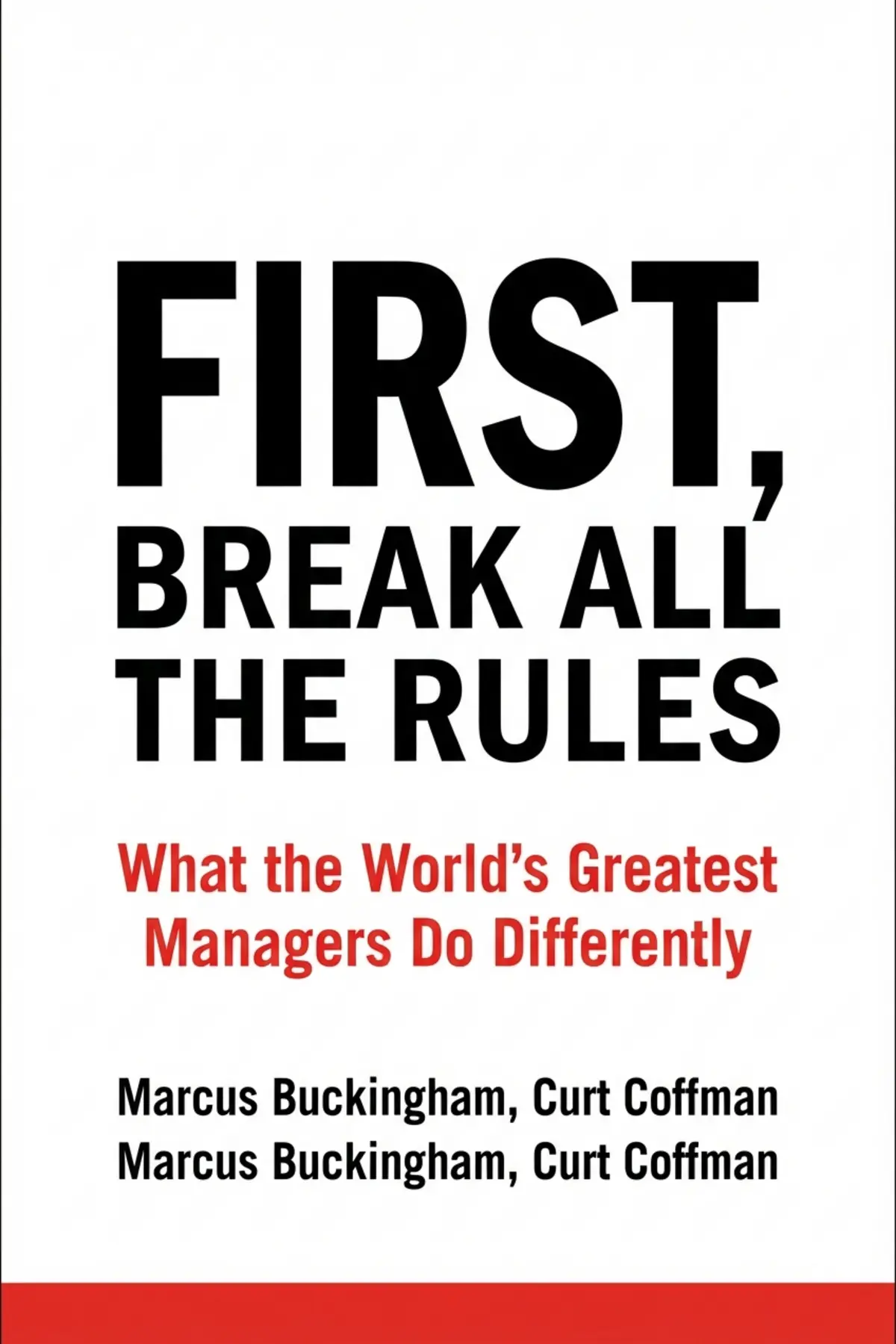
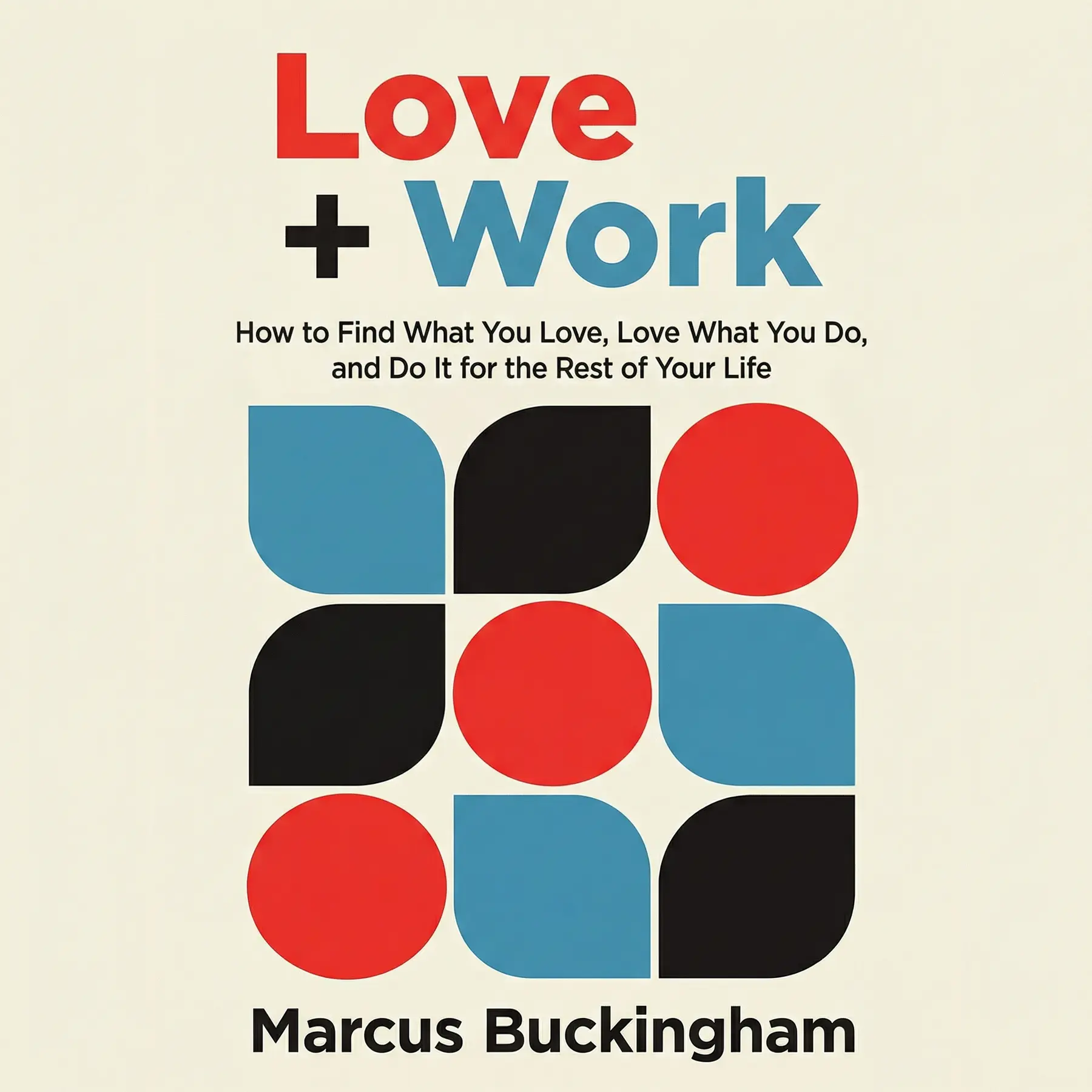
Love + Work: How to Find What You Love, Love What You Do, and Do It for the Rest of Your Life
Shows how to notice the specific activities that energize you, describe them precisely and build more of them into the job you already have. It also explains how leaders and schools can help others do the same.
Table of Content
1. Introduction
1 min 06 sec
If your days at work feel like trading hours for a paycheck, you have plenty of company. In Love + Work, former Gallup researcher Marcus Buckingham cites data that only a minority, under 16 percent, are fully engaged in their jobs, and he traces the cause to how schools and workplaces were designed. They were built, he says, to treat your particular loves as a flaw to correct, when those loves are the most useful thing you bring.
His remedy is a discipline: learn to notice the specific activities you love, then weave more of them into whatever work you do, because in his view love and work cannot be separated. The path runs from an ancient Norse word for each person’s spirit to a simple question about when a day last flew by, a threshold of roughly one fifth of your week, and a fifteen-minute weekly habit for team leaders. By the end you will have a way to read your own energy, words to describe it exactly, and a plan for reshaping the job you already hold.
2. Understand what drained the love from your work
1 min 58 sec
A huge share of working people feel little more than tired. Buckingham thinks the cause was built into classrooms and offices long before your first job, and one teacher’s unusual question hints at a way back.
3. Treat your particular loves as useful data
1 min 59 sec
Most of us learn early to dismiss our odd preferences as quirks. An old Norse word and a fact about the human brain suggest those quirks may be the most reliable guide you have.
4. Find the red threads that make time fly
2 min 04 sec
Some activities pull you in so completely that hours vanish. Buckingham gives three signs for spotting them and a surprisingly modest figure for how much of your week they need to fill.
5. Name your loves in exact detail
1 min 58 sec
Telling someone you love music or are good with people sounds informative, yet it says almost nothing. The difference between a broad label and a precise one can change which work you choose.
6. Reshape the job you already have
1 min 51 sec
Most people assume loving their work means finding a different job. Buckingham’s survey suggests nearly three in four could change the one they have, and his data on stress shows why being good at something is not enough.
7. Put love back into teams, schools and homes
2 min 07 sec
Whether you feel engaged at work may depend less on your company than on a handful of people around you. Buckingham’s team data, and a painful episode from his own family, push the argument into offices and classrooms.
8. Conclusion
1 min 03 sec
The book’s bet is that the energy you feel in certain moments is the raw material of good work. School and the workplace taught many of us to file those moments away as quirks, or to trade them for grades, degrees and a steady salary. Buckingham asks you to take them back out, name them precisely and build your week around them, at least one day in five.
The practice is small enough to begin today. Ask the teacher’s question about when a day last flew by, and keep asking it for a week. When an answer comes, describe it in detail until it sounds like you and nobody else. Then find a way to do a little more of it in the job you have, and watch how people react to what went well instead of collecting their advice. If you lead a team, give each person fifteen minutes every week, and start from what they tell you.
The Norse had a word for the spirit each of us is born with. Buckingham’s case is that work, done well, is how that spirit reaches other people.
About this book
What is this book about?
Most people spend their working lives trading time for a paycheck. Marcus Buckingham cites data that fewer than 16 percent are fully engaged at work, and he blames design, not character. High school, college and the workplace, he argues, were built to steer attention away from what each person distinctly loves, treating uniqueness as a flaw to correct. His answer is a new vocabulary and a daily discipline. Every person has a Wyrd, an old Norse word for a distinct spirit, and it shows up in red threads: activities that come by instinct, absorb you completely and teach you fast. Buckingham shows how to spot them, describe them in exact detail and weave them into whatever role you hold, since you do not need to love every task to love your work. The book then widens the lens to teams, leaders and schools. It brings data on why belonging to a team protects against stress, a weekly fifteen-minute habit for managers, and proposals for putting love back into learning. Readers get a way to read their own energy and a practical case for reshaping work around it.
Book Information
Who it's for
Professionals feeling flat
Professionals who feel flat at work and suspect they are good at things they do not enjoy.
Changing careers
Career switchers who want a way to read their own energy before choosing a next role.
Team leads, teachers, parents
Team leads, teachers and parents who want to help others find and use what they love.
About the Author
Marcus Buckingham
Marcus Buckingham is an English author, speaker and business consultant based in California. After a Cambridge master's in social and political science in 1987, he spent many years as a senior researcher at Gallup. He co-wrote the best sellers First, Break All the Rules and Now, Discover Your Strengths, co-created the StrengthsFinder assessment and created the StandOut assessment. He has also worked with the ADP Research Institute, and Love + Work appeared in 2022.
Ratings & Reviews
Ratings at a glance
What people think
Listeners find this book highly insightful, offering well-researched and practical advice for both personal growth and professional settings. They value its accessible style, particularly for the freelance community, and one listener mentions its utility in refining the recruitment of talented managers. The content is praised for its transformative impact, with one review noting how it sparked fresh leadership dialogues, and listeners cherish the personal narratives, viewing it as a truly beneficial read.
Top reviews
Bae
Wow. This is easily Buckingham’s most revelatory and personal work to date. The chapter on 'vessels' versus 'Wyrd' completely shifted my perspective on why I felt so hollow despite having a 'successful' career. He argues that we are taught to be empty containers to be filled by the world, when we should be listening to the unique spirit we were born with. This book has invigorated my leadership conversations and helped me help my team find their own 'red threads.' The stories about mirror neurons and how we instinctively react to others' excellence were fascinating. It’s a brave book that isn't afraid to use the word 'love' in a business context. If you feel like you're just a passenger in your own life, read this immediately. It might just be the catalyst you need to reclaim your agency.
Show moreTee
Ever wonder why you're short-tempered at home even when your bank account is healthy? This book explains the soul-destroying reality of working in a 'loveless' environment and how that toxicity leaks into our personal lives. Buckingham uses powerful ADP research to show that those who play to their strengths every day are far more resilient and engaged. I loved the concept of 'Wyrd'—that unique, enduring spirit that makes us who we are. It’s a refreshing change from the 'growth mindset' narrative that suggests we can be anything if we just have enough grit. Not gonna lie, some of the personal stories about his family's struggles made me tear up. This is a deeply human book about work, which is something the corporate world desperately needs right now. Five stars for the courage to be this vulnerable.
Show moreNannapat
Finally got around to reading this, and it’s arguably his most vital contribution to the leadership space. The way he dismantles traditional performance ratings and centralized surveys is masterclass in organizational psychology. He correctly identifies that the reality of work is always a function of your immediate team and your team leader. If you can't give people weekly attention that starts with their own unique loves, you're driving talent out the door. The 'Red Thread' metaphor is simple yet profound, allowing for a new language of contribution. I've already recommended this to several HR directors I work with. It's a call to action for every leader to stop treating employees like data points and start treating them like the unique 'galaxies' they are. Truly an essential read.
Show moreSarawut
As someone who has struggled with chronic burnout, this book felt like a lifeline. The idea that work is actually for love—that it’s a place for us to discover and give our best selves—is a radical shift from the usual 'grind' culture. Buckingham's writing is lyrical and engaging, making complex research feel accessible and personal. I found the Red Thread Questionnaire to be eye-opening; it helped me realize that I was focusing on the 'why' of my job instead of the 'what.' When you find those activities where you disappear and time flies, that’s where your contribution lies. While the school system critiques were a bit surprising, they actually made sense within the context of how we are conditioned to ignore our uniqueness. This book is a beautiful manifesto for living a life that is truly your own.
Show moreRin
After hearing Marcus speak on a podcast, I wanted to see how his research at the ADP Research Institute translated into a full framework for organizational life. The data regarding team engagement is unequivocal: trust is everything. This book provides a solid foundation for managers who want to improve how they hire and retain talent by looking at uniqueness rather than just 'filling a vessel' with skills. I particularly liked the 'Love + Work Organization Interview' section at the end. It offers a practical way to audit whether a company culture actually supports human flourishing or just demands compliance. My only gripe is that the narrative gets a bit flowery at times, which might turn off more analytical readers. Still, it’s a vital read for anyone leading people in the modern era.
Show moreAroha
Gotta say, this is a much easier read than your typical dry management tome. As a freelancer, I often feel like the 'odd one out' in corporate advice books, but Buckingham’s focus on individual 'Red Threads' feels remarkably inclusive. The idea isn't to love every minute of your day, which is impossible, but to find that 20% sweet spot where your unique spirit connects with your tasks. Truth is, most management books treat people like replaceable parts, but this one argues for the specific energy we each bring to the table. I found the Red Thread Questionnaire to be a solid, practical tool for auditing my current client list. Some parts about his personal life felt a bit indulgent, and the tangent on the school system was definitely a choice, but the core message is invigorating.
Show moreRania
The chapter on the three signs of love—instinct, flow, and rapid learning—provided the clarity I’ve been looking for in my career transition. This isn't just a 'follow your passion' book; it's a 'find the activities you can't help but do well' book. In my experience, the distinction between outcomes and activities is where most people get stuck, and Buckingham explains this brilliantly. I’ve started using his 'Red Thread' terminology with my coaching clients, and the results have been immediate. To be fair, the section on his ex-wife's legal issues felt like a distraction from the main point, but I understand he was trying to illustrate a point about trust. Overall, it’s a highly readable and impactful guide for anyone feeling stuck in the 'loathe' cycle of their 9-to-5.
Show morePatchara
Is it possible to love 100% of your job? Buckingham says no, but suggests that finding love in just 20% of your tasks is the secret to thriving. Personally, I found the Red Thread Questionnaire quite helpful for identifying specific activities that energize me. Thanks to NetGalley and the publisher for the ARC, as it gave me some good food for thought regarding my current leadership style. However, the last section of the book goes off on a tangent about the school system and parenting that felt entirely out of place in a business book. While the 'Wyrd' concept is interesting, the writing style fluctuates between insightful research and overly emotional prose. It is a decent read, but you have to filter out a lot of the author's personal anecdotes to get to the actionable nuggets.
Show moreLuke
Picked this up because I enjoyed Buckingham's earlier work on strengths, but this felt like a massive detour into his personal drama. The repeated mentions of his ex-wife’s involvement in the college admissions scandal were awkward and felt like a defensive diatribe against grading systems rather than helpful career advice. Look, the basic premise of finding 'flow' to avoid burnout is fine, but it’s buried under layers of privilege. This advice only seems to work if you have a supportive boss and the financial freedom to 'weave your loves' into your day. For the average worker struggling in a rigid corporate structure, telling them to focus on their 'spirit' feels almost insulting. It’s more of a memoir than a toolkit. I would suggest reading the original 'Flow' by Mihaly Csikszentmihalyi instead if you want actual psychology.
Show moreIsabella
Not what I expected from a Harvard Business Review Press title, frankly. I anticipated a data-heavy deep dive into strengths, but instead, I was met with pseudo-spiritual language about 'galaxies within' and an ancient Norse term called 'Wyrd.' Where is the actual science? To be fair, the book only contains about seven references, and most of them point back to the author’s own previous work or poetry like 'The Prophet.' The inclusion of a deeply personal journal entry from his fiancée felt invasive and added nothing to the central thesis. Furthermore, his dismissive attitude toward the education system as a place that only 'hinders' children is a massive, unsubstantiated leap. If you want a book grounded in peer-reviewed research, this isn't it. It feels more like a collection of personal musings and diary extracts than a professional development guide.
Show moreQuestions about this book
What is the main idea of Love + Work by Marcus Buckingham?
Buckingham argues that schools and workplaces have designed love out of daily life, steering people away from their particular loves and loathes. He calls each person’s uniqueness their Wyrd, an old Norse word, and the activities that express it red threads. Finding those threads, describing them precisely and building them into your work is, in his view, how you come to love what you do for life.
What are red threads in Love + Work?
Red threads are activities you love so fully that you lose self-awareness and time seems to disappear. Buckingham gives three signs: instinct, flow and rapid learning. The book includes a Red Thread Questionnaire with prompts such as the last time you lost track of the hours. Red threads do not tell you which job to choose; they show how you in particular will do well in any job.
Do you have to love your whole job to be happy at work?
No. Buckingham says you need to find the love inside what you already do, without loving every task. One reviewer reports the book’s threshold that your loves should make up about 20 percent of your work. His survey found that 73 percent of people believed they could reshape their jobs to fit themselves better.
How can managers use the ideas in Love + Work?
Buckingham argues that what work feels like depends on your team and team leader, and his data shows that people on a team are far more likely to be engaged and resilient. He recommends a fifteen-minute check-in with each team member every week instead of only setting goals at the start of the year, and he wants spans of control renamed spans of attention.
How can I apply Love + Work this week?
Ask yourself when a day last flew by, and note any moment that shows instinct, flow or rapid learning. Describe each one in specific detail, avoiding broad labels like a love of challenge. Then look for a way to do a little more of it in your current job, and learn from how people react to what went well, which Buckingham prefers to collecting advice.
Readers also enjoyed


60 Seconds & You’re Hired!
Robin Ryan




Be A Free Range Human: Escape the 9 to 5, Create a Life You Love,
Marianne Cantwell
Be the Unicorn: 12 Data-Driven Habits That Separate the Best Leaders from the
William Vanderbloemen
AUDIO SUMMARY AVAILABLE
Listen to Love + Work in 15 minutes
Get the key ideas from Love + Work by Marcus Buckingham, plus 5,000+ more nonfiction titles.
- 5,000+ titles
- Listen as much as you want
- 7-day free trial
- Cancel anytime









