
14 min 50 sec
Available in: English
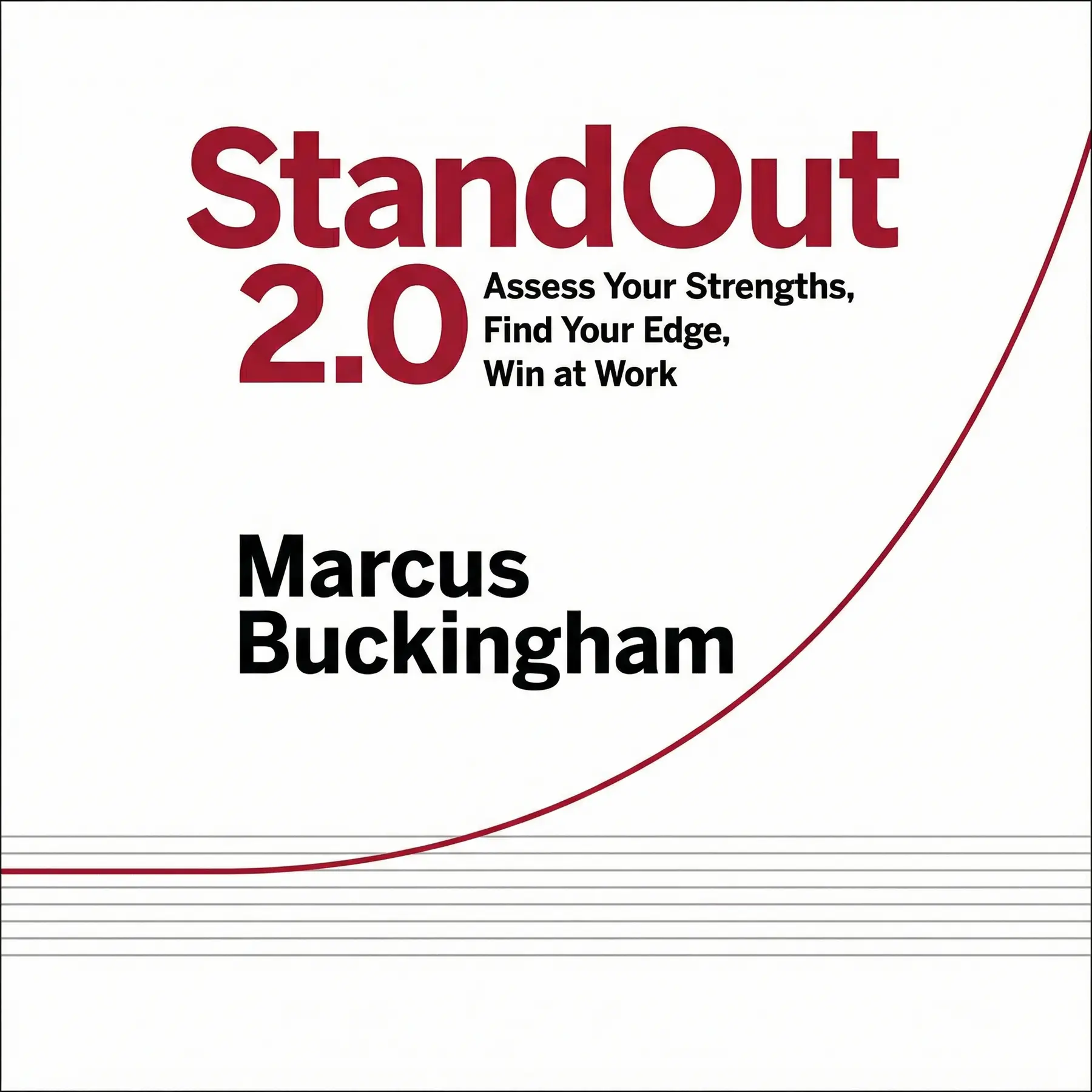
Standout 2.0: Assess Your Strengths, Find Your Edge, Win at Work
Shows how to identify your top two strength roles, the narrow edge where you contribute best, and how to protect and sharpen that edge at work instead of fixing weaknesses or copying others.
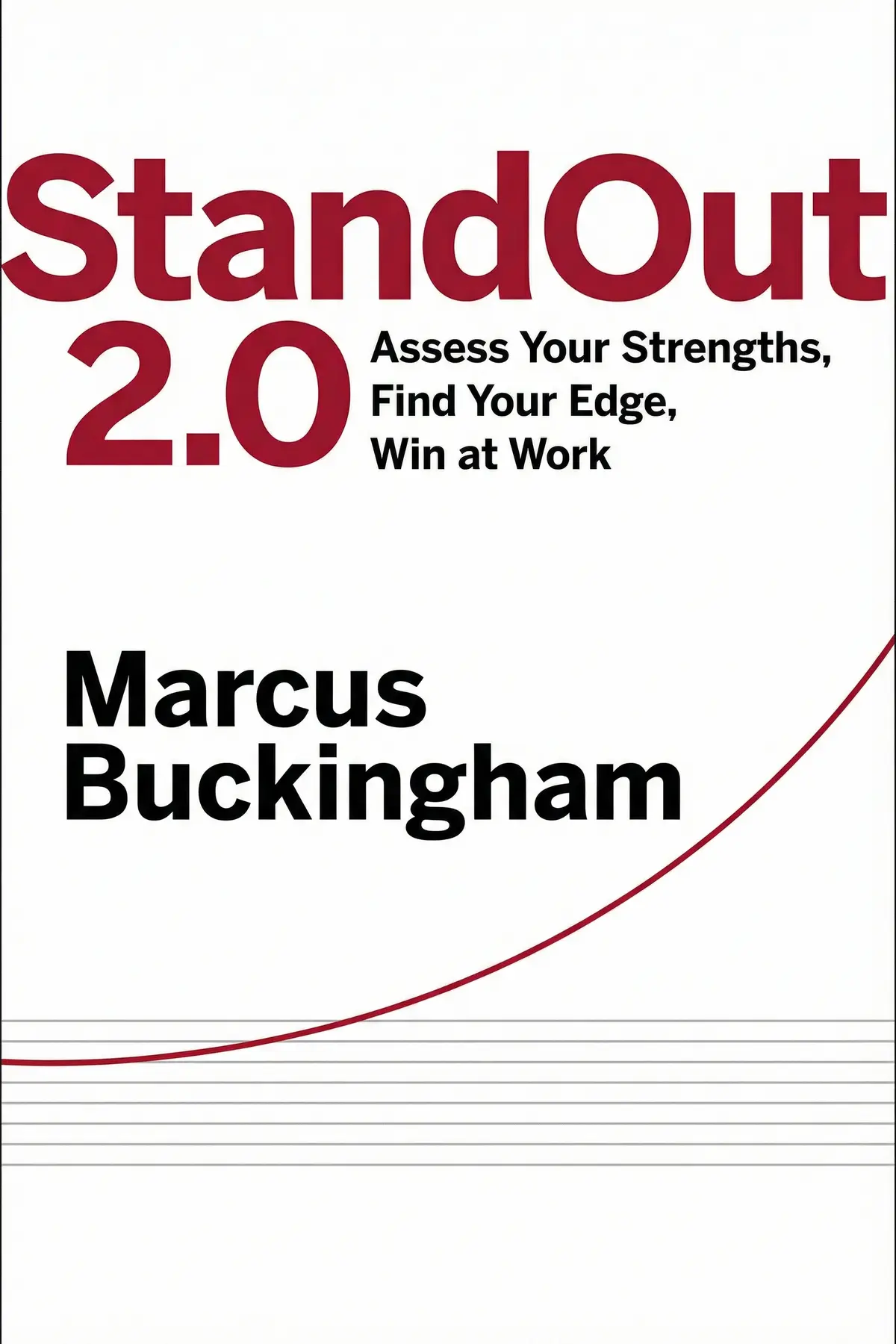
Table of Content
1. Introduction
1 min 02 sec
Most people can list their weaknesses in seconds but struggle to name the one thing they do better than almost anyone around them. In Standout 2.0, Marcus Buckingham, a longtime senior researcher at Gallup, argues that this blind spot is costly, because everyone has a precise, natural edge. Organizations, he notes, praise the strengths approach yet still build appraisals, training and succession plans around measuring skills and plugging gaps.
His alternative is an assessment that sorts people into nine strength roles and names their top two, the pair he calls your edge. The argument runs like this: you win at work by naming that edge, staying loyal to it under pressure and sharpening it inside your strengths zone, instead of copying someone else’s success. Along the way come a ballet dancer, a burned-out engineer and a hotel manager with a turtle mascot, plus a one-week notebook exercise that shows where your energy really comes from.
2. Spot the natural gift you keep overlooking
1 min 44 sec
A small child’s remark about a necklace revealed a talent most adults never notice in themselves. The same gift that wins people over can also go badly wrong, depending on one thing.
3. Get an honest read on your strengths
1 min 58 sec
Ask people to describe themselves and they tell you who they wish they were. A test built on short, stressful scenarios tries to catch the reaction that comes before the polished answer.
4. Read the nine roles in yourself and colleagues
2 min 06 sec
Each strength role begins with a different question running through a person’s head. Learn to hear those questions in a meeting, and the reasons colleagues clash or click start to make sense.
5. Find the narrow field where your talent wins
1 min 36 sec
One of the most gifted athletes of his era struggled when he changed sports. A young dancer hit a wall in classical ballet. What each did next shows how far talent actually travels.
6. Stay true to your strengths when promoted
1 min 36 sec
A good software engineer earned a promotion and lost fifteen years of working life. The memory that eventually brought him back is a clue to what anchors anyone through a bad stretch.
7. Grow by stretching inside your strengths zone
1 min 30 sec
The usual advice says growth only happens when you feel uncomfortable. Buckingham points the discomfort somewhere else, and offers a one-week notebook test that reveals where your effort pays back most.
8. Spread a star's habits only where they fit
1 min 57 sec
One hotel’s turtle mascot lifted its staff, and a copycat hotel tried bees. A store’s whistles, two brilliant coders and a famous X-ray instruction reveal which best practices travel and which fall flat.
9. Conclusion
1 min 21 sec
Standout 2.0 is, finally, an argument about attention. Most workplaces, Buckingham says, look at people through their gaps, and so they miss the narrow, natural pattern that makes each person useful. His nine roles, and the edge formed by your top two, give that pattern a name you can explain to a manager, ask for work around and recognize in the people beside you.
The stories all lean the same way. Pippa stopped forcing pirouettes and found her stage. Michael was promoted into a project manager role that called for other strengths, broke down and could not work for fifteen years, and later recalled that his real strength was writing tutorials. Diana’s turtle worked because it was hers, and the bees did not.
If you take the assessment, treat your top two roles as working instructions for the weeks ahead. Keep a Love It, Loathe It log for seven days and move your time toward the first column. Before you say yes to a promotion, set what it demands beside what you do best. And when you lead a team, resist cloning the star; help each person find their own version of excellent work.
Your edge was there long before any test gave it a name. The work is keeping it sharp.
About this book
What is this book about?
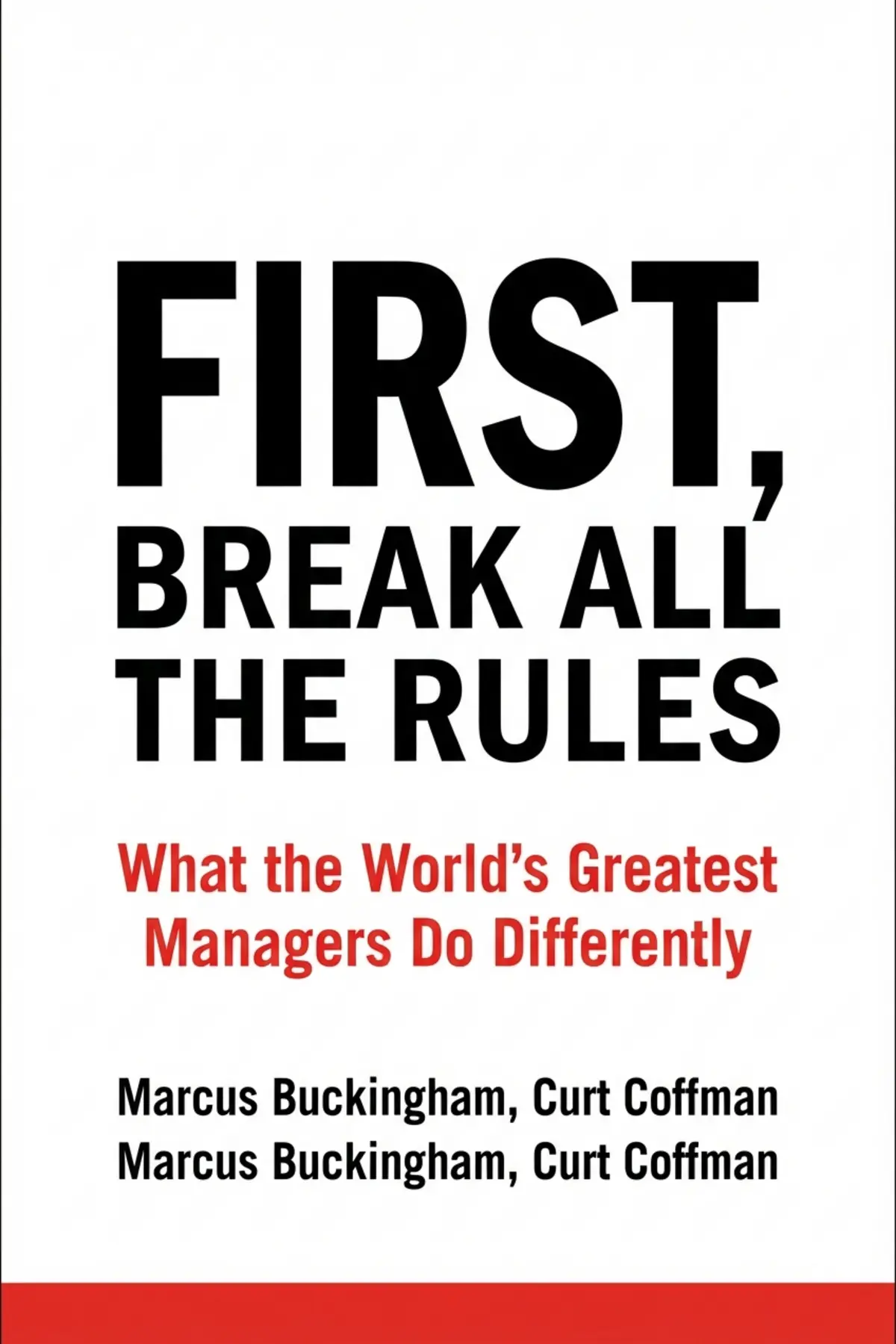
Most workplaces say they believe in building on strengths. Yet their appraisals, training and succession plans still focus on measuring skills and fixing gaps. Marcus Buckingham helped bring the strengths approach to millions with First, Break All the Rules and Now, Discover Your Strengths. Here he argues that this habit of looking for gaps leaves people blind to the natural pattern that makes them valuable. Standout 2.0 pairs that argument with an assessment. It uses timed, mildly stressful scenarios to draw out gut reactions, ranks nine strength roles, from Advisor and Connector to Stimulator and Teacher, and names your top two. That pair is your edge: the place where you contribute fastest and most naturally. The book then shows what to do with that edge, through three lessons and stories that run from Michael Jordan's baseball detour to a burned-out software engineer and hotel managers whose best practices could not be copied. Readers learn to describe their strengths, choose roles that fit, keep a one-week log of what energizes and drains them, and help each member of a team excel in their own way.
Book Information
Who it's for
Professionals unsure of strengths
Professionals who can list their weaknesses but struggle to name what they do best.
Weighing a career move
Employees weighing a promotion or career move and wondering whether it fits their strengths.
Team leads
Team leads who want each person working from their edge instead of copying the star performer.
About the Author
Marcus Buckingham
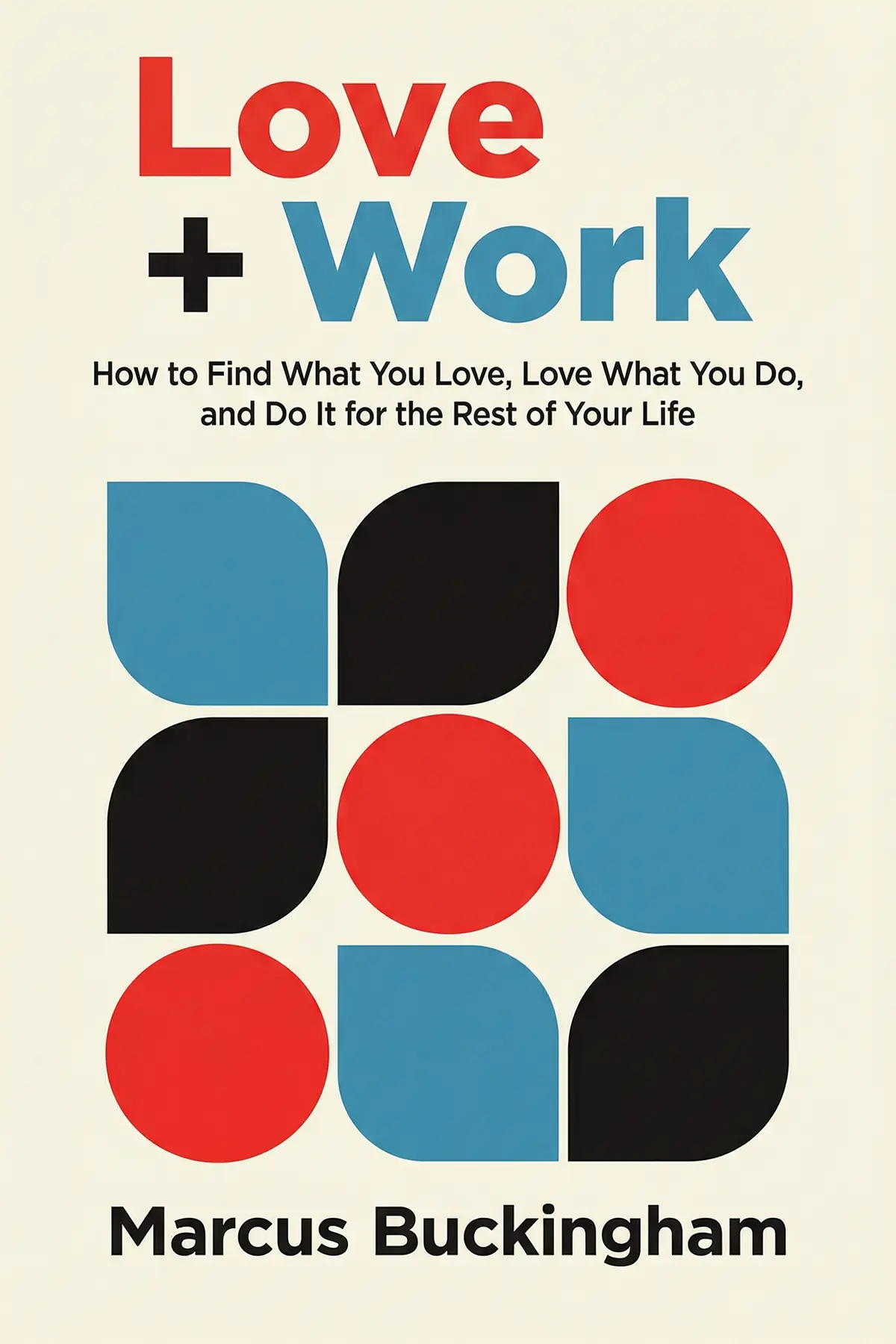
Marcus Buckingham is an English author, speaker and business consultant based in California. After earning a Cambridge master's in social and political science in 1987, he spent many years as a senior researcher at Gallup. He co-wrote the New York Times best sellers First, Break All the Rules and Now, Discover Your Strengths, co-created the StrengthsFinder assessment and created the StandOut assessment. His later work includes Love + Work, published in 2022, and work with the ADP Research Institute.
Ratings & Reviews
Ratings at a glance
What people think
Listeners find the work to be a productive tool for self-discovery and praise its easy-to-read style. They value the shared insights, with one listener specifically praising the personality analysis rooted in science, and appreciate how it aids in uncovering strengths. However, reactions to the assessment's precision are varied, as one listener pointed out that assessment data is missing from the Kindle edition. Additionally, listeners mention trouble with code validity, citing missing access codes, and voice frustrations concerning the overall pacing.
Top reviews
Pakpoom
Marcus Buckingham has a knack for simplifying complex human behavior into something you can actually use on a Monday morning. The book is incredibly readable and doesn’t get bogged down in academic jargon, which I appreciated. I found the 'Creator' and 'Stimulator' breakdowns particularly enlightening for my current role in marketing. It gave me a new vocabulary to describe my work style to my boss. While some might say it's just another personality test, the specific 'How to Win' sections for each of the nine categories offer practical, science-driven steps that most corporate books lack. Truthfully, the insights here are worth the price of admission alone. I frequently found myself nodding along, thinking, 'Yes, that is exactly why I approach problems that way.' It's a quick read but one that stays with you.
Show moreJames
Wow, I finally understand why I clash with certain coworkers who have that 'Influencer' energy. This book is a spot-on personality test that does a fantastic job of identifying leadership blind spots. I've taken several career assessments before, but none provided such concrete examples of how to apply my strengths as a 'Teacher' in a team setting. The writing is incredibly accessible. It’s the kind of book you can pick up, flip to your section, and find something useful in five minutes. Some people complain about the technical issues with the website, but mine worked perfectly on Safari. I’d recommend this to anyone seeking to improve their workplace dynamics or just looking for a bit of self-reflection. It’s easily one of the most applicable books on my shelf right now.
Show moreSudarat
This book is a game-changer if you actually take the time to download the full report and apply the 'Immediate Impact' strategies. I read this during a very introspective season of my life, and it helped me realize why I was feeling so burnt out in my previous role. It turns out I was working against my natural 'Pioneer' strengths every single day. The book helped me identify not just my own strengths, but also how to spot the 'Equalizers' and 'Connectors' on my team. It provides a robust framework for better collaboration. I often found myself saying, 'Oh! That’s why I do that,' while reading my profile. It’s a super easy, quick read that is relevant for anyone on a team. If you want to stop guessing and start performing, buy this book.
Show morePakinee
As someone who has managed teams for a decade, I'm usually skeptical of 'strength-based' frameworks that feel like corporate astrology. StandOut 2.0 surprised me. The science-driven analysis of how traits cluster into roles like 'Equalizer' or 'Influencer' felt more grounded than typical personality quizzes. I loved the emphasis on how to be managed by others. That is a perspective you rarely see in these types of books. My only gripe is that the Kindle version I purchased didn't clearly provide the assessment code, which required some annoying back-and-forth with customer support. Despite the technical hiccup, the content is solid. The writing style is punchy and direct. It helped me realize that my 'Provider' tendencies were actually hindering my team's growth. Highly recommended for leaders who want to understand their impact better.
Show moreA
Finally got around to reading this during a career transition, and it gave me the vocabulary I needed to explain my value to recruiters. The 'How to Make an Immediate Impact' sections are pure gold for anyone starting a new job. I discovered I'm a 'Connector/Pioneer' mix, which explains why I'm always trying to start new projects with people from different departments. The book is short enough to finish in a weekend but dense enough to revisit when you're feeling stuck. I did notice some of the 'How to Win' advice felt repetitive across different categories, but the core message remains powerful. In my experience, focusing on what you're already good at is much more productive than fixing flaws. It's a refreshing take on professional development that focuses on excellence rather than just adequacy.
Show moreFatima
Look, if you've already done StrengthsFinder, you might feel like you've been here before, but StandOut 2.0 offers a more action-oriented lens. The synthesis of many strengths into just nine categories makes it much easier to remember and apply than a list of thirty-four. I particularly liked the sections on how to win as a manager and how to lead a team based on these traits. My top criticism is that if you don't resonate with your two primary roles, the rest of the book becomes a bit of a waste of time. Luckily, my results as a 'Creator' were very accurate. It’s a great book for team-building exercises. Just make sure everyone has a working code before you start the session. It's a quick, easy, and relevant read for modern professionals.
Show moreValentina
The assessment itself is the core of this experience, but getting the website to work was a frustrating ordeal on my phone. To be fair, once I switched to a desktop and finally got my results, the 'Advisor' profile felt relatively accurate. However, the book feels a bit thin if you don't find your specific results resonating with your actual career path. It identifies nine different types like 'Pioneer' and 'Connector,' but the advice for those who aren't in management roles felt a little sparse. If you are a powerless employee with no one to lead, you might find the 'How to Lead' sections irrelevant. It's a decent self-awareness tool, but don't expect it to solve every professional hurdle. It's helpful but not necessarily top-shelf material compared to his earlier works.
Show moreChanpen
The Best Buy anecdote at the beginning was actually the highlight for me because it grounded the theory in real-world retail stakes. It illustrated how a unique manager found success by ignoring the 'standard' corporate playbook. Unfortunately, the rest of the book didn't quite live up to that opening story. While the nine boxes—Advisor, Provider, etc.—are interesting, they feel a bit like fortune-telling at times. I enjoyed reading about my own results, but I found myself skimming the other seven sections because they felt totally irrelevant to my life. Not gonna lie, I was hoping for more depth in the 52 pages of actual text provided. It’s a useful tool if you’ve never done a personality assessment before, but seasoned professionals might find it a bit elementary. Good, but not groundbreaking.
Show morePloy
Is it just me, or is this book basically just a very long marketing brochure for an online quiz? I felt the pacing was incredibly slow, with way too much filler before you even get to the meat of the nine strength categories. Frankly, the descriptors for types like 'Teacher' or 'Stimulator' are so broad that they feel like business horoscopes where anyone can see themselves in the description. I took the test, and my results didn't match my lived experience or how my colleagues perceive me at all. Also, the website kept hanging on Chrome, making the whole process more of a chore than a discovery. If you have already done StrengthsFinder, you probably don't need this. It feels like an oversimplified version of better tools that are already out there.
Show morePatchara
Truth is, I found the nine categories far too rigid to capture the nuance of a modern professional role. The standards the author sets for the 'industry-standard' statistics at the end of the book seemed a bit thin to me. It feels like the book is trying to force everyone into these pre-defined boxes that don't allow for much overlap or growth over time. I am a 'Provider' according to the test, but none of the job types mentioned in that section match my current gig. This made the 'How to Win' advice almost entirely useless for my specific situation. Plus, the website hanging every time I tried to view my full report was the final straw. It's a shiny package with very little substance inside for anyone looking for deep psychological insights.
Show moreQuestions about this book
What is the main idea of Standout 2.0?
Marcus Buckingham argues that everyone has a precise, natural edge, made up of their top two strength roles, and that success at work comes from naming that edge, staying true to it and sharpening it. He criticizes organizations that praise strengths but still build appraisals and training around fixing gaps, and he offers the StandOut assessment as a way to find and apply your edge.
What are the nine strength roles in StandOut?
Nine roles make up the set: Teacher, Stimulator, Provider, Pioneer, Influencer, Equalizer, Creator, Connector and Advisor. Each starts from a different question. The Advisor asks what the best thing to do is, the Connector asks whom they can connect, the Provider asks whether everyone is okay, and the Stimulator asks how to raise the energy. Your report ranks all nine and singles out your top two as your edge.
How does the StandOut assessment work?
Instead of asking you to describe yourself, StandOut presents mildly stressful everyday scenarios under a time limit, so you answer on instinct instead of picking the socially desirable reply. Each role is measured twelve times across thirty-four situations. According to the book, 90 percent of people retested after six months still had their leading role in their top three. Each copy of the book includes a key for one free use.
How can I apply Standout 2.0 at work?
Start with the Love It, Loathe It exercise: carry a notepad for a week, noting activities that energize or absorb you and those you delay or find draining, then move more of your time toward the first group. Before accepting a promotion, compare its demands with your top roles. If you lead people, check whether a star’s best practice depends on that person’s particular strengths before rolling it out.
How is StandOut different from StrengthsFinder?
Buckingham, who co-created StrengthsFinder, says it describes talent themes and personal style, while StandOut is meant to prescribe how to use your edge at work. StandOut groups correlated themes into nine strength roles. Its early alpha version was completed by 232,000 people within two months, compared with fewer than a thousand people behind StrengthsFinder a decade earlier.
Readers also enjoyed


60 Seconds & You’re Hired!
Robin Ryan



Be A Free Range Human: Escape the 9 to 5, Create a Life You Love,
Marianne Cantwell
Be the Unicorn: 12 Data-Driven Habits That Separate the Best Leaders from the
William Vanderbloemen
AUDIO SUMMARY AVAILABLE
Listen to Standout 2.0 in 15 minutes
Get the key ideas from Standout 2.0 by Marcus Buckingham, plus 5,000+ more nonfiction titles.
- 5,000+ titles
- Listen as much as you want
- 7-day free trial
- Cancel anytime









