

14 min 13 sec
Available in: English
Losing The Signal: The Untold Story Behind the Extraordinary Rise and Spectacular Fall of BlackBerry
Shows how two Canadian founders turned a wireless email gadget into the phone every executive carried. It then shows how rushed products, a changed customer base and broken trust at the top brought it down within a few years.
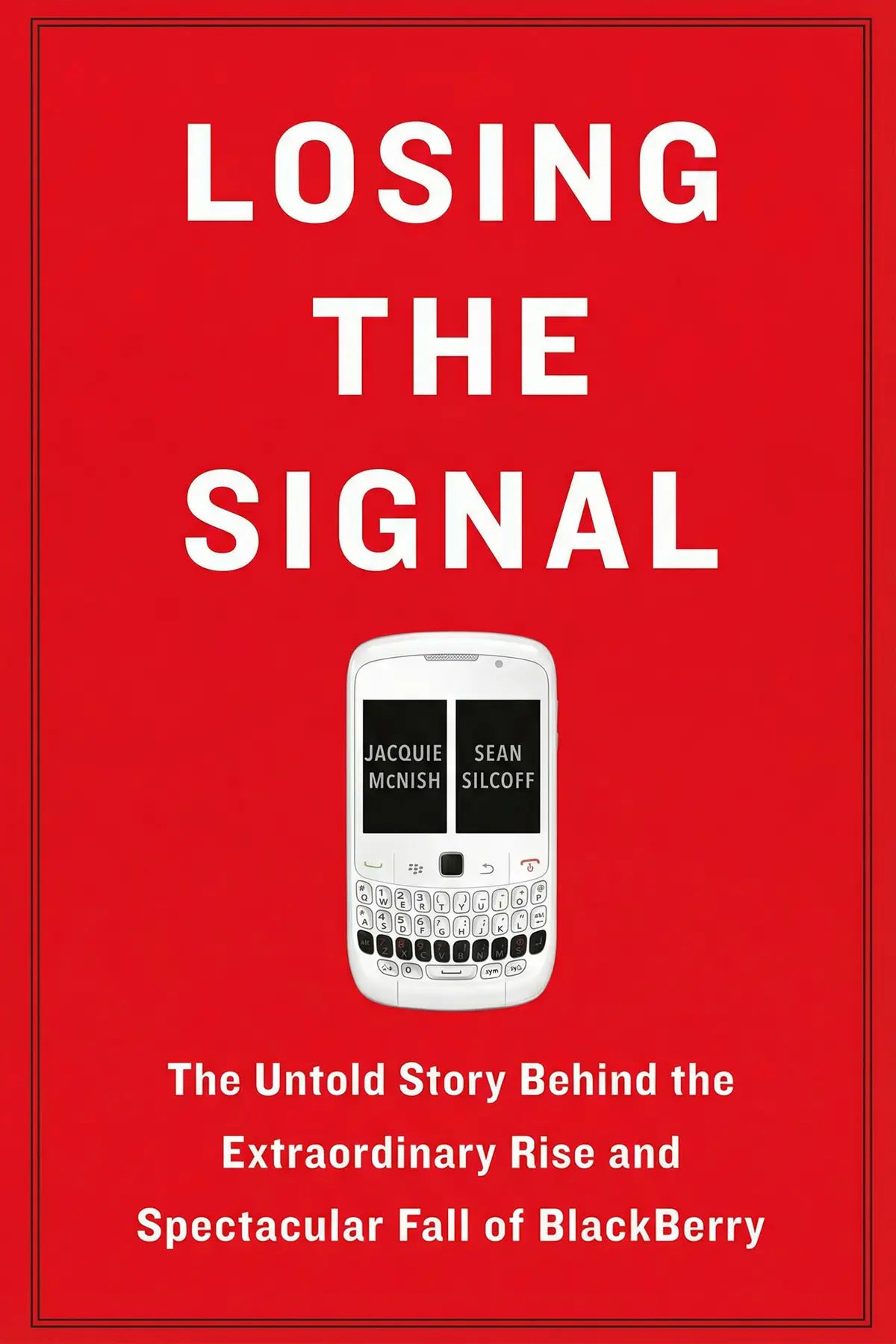
Table of Content
1. Introduction
1 min 01 sec
If you run a company or a team that is winning today, the hardest thing to see is the moment the ground starts to move. In Losing The Signal, Globe and Mail journalists Jacquie McNish and Sean Silcoff tell how BlackBerry went from the device nearly every executive carried to almost nothing within a few years, much as Kodak sank when photography went digital. Their lesson is blunt: building a company and running one are different skills.
Two Canadian founders with opposite talents made a run of shrewd bets on partners, buyers and rivals that put a BlackBerry in millions of hands. Then the iPhone changed what customers wanted, rushed products let them down, and trust between the two men broke, taking the whole company with it.
Follow the story from a student gadget called Budgie to the PlayBook tablet and you get a working map of both sides: the moves that make a young company grow, and the warning signs that a grown one has stopped adapting.
2. Pair opposite strengths to start a company
1 min 57 sec
An engineer who often asked teachers for time with the school’s equipment and a salesman inspired by The Art of War seemed to have little in common. That mismatch built a global brand, and it carried a hidden risk.
3. Find the partner who needs you as much
2 min 15 sec
One cancelled order nearly killed RIM. The fix came from a phone company about to shut down a network nobody wanted, and from a name chosen to calm stressed executives.
4. Win the one buyer whose choice spreads
1 min 44 sec
The people who approve technology purchases distrusted any gadget that sent company secrets over an outside network. RIM found a way around them, and one bank order set off a chain reaction nobody predicted.
5. Buy time with a fake alliance
1 min 54 sec
Balsillie offered his biggest rival access to RIM’s prized software. It looked like generosity. What he kept to himself explains how a small Canadian firm held off much larger competitors for years.
6. Rushed answers to a rival only deepen the damage
2 min 17 sec
Apple changed what people expected from a phone, then from a tablet. RIM had nine months to respond, and the products it shipped under that pressure taught its loyal fans to look elsewhere.
7. Protect trust at the top to keep your company alive
1 min 52 sec
A single accounting lapse made Lazaridis see his partner fail for the first time. What followed spread from two offices to every engineer and marketer, and the authors suspect it mattered more than any product.
8. Conclusion
1 min 13 sec
Losing The Signal is the story of a company that was brilliant at getting started and poor at staying current. Lazaridis and Balsillie found a partner who needed them, won over the one buyer at Merrill Lynch whose choice others copied, and stalled bigger rivals long enough to make the BlackBerry the device of the business world. Every one of those moves depended on reading people outside the company. When the iPhone and iPad changed what people wanted, RIM answered with speed instead of understanding, and two founders who had once completed each other stopped trusting each other.
The authors’ central message is that founding a company and running one call for different abilities, because customers and competitors never stop changing. If you lead anything, keep asking who your customers are today, and treat a rival’s breakthrough as a reason to study your buyers before you rush a reply. Guard the trust at the top, starting with honest books, because blame travels downward faster than any product can be fixed.
Kodak and BlackBerry both once held their markets in their hands. Neither lost it overnight. They lost it by not noticing the market had moved.
About this book
What is this book about?
For a few years, the BlackBerry was the device business people everywhere carried. Then it all but vanished. Jacquie McNish and Sean Silcoff, two Globe and Mail journalists, tell how that happened, and why it echoes Kodak's collapse when photography went digital. The story starts with an unusual partnership. Mike Lazaridis, an engineer who founded Research in Motion in 1984, and Jim Balsillie, a salesman raised on The Art of War, made a string of shrewd moves. They struck a deal that kept a dying wireless network alive, won over Merrill Lynch in 1999, and stalled Nokia with an alliance Balsillie never meant to succeed. Users grew from 25,000 to about two million in five years. Then Apple launched the iPhone and later the iPad. RIM answered with the buggy Storm and the clumsy PlayBook, while an accounting lapse and growing distrust split its two leaders and set their teams against each other. Readers get a vivid case study in both halves of business life: the moves that make a young company grow, and the warning signs that an established one has stopped adapting.
Book Information
Who it's for
Successful founders and operators
Founders and operators whose first product worked and who wonder what could undo it.
Leads watching departments clash
Team leads watching departments blame each other after a failed launch.
Curious about BlackBerry's arc
Readers curious about how BlackBerry won business users and lost them to the iPhone.
About the Author
Jacquie McNish
Jacquie McNish built her career at The Wall Street Journal and the Globe and Mail and has won eight National Newspaper Awards. Three of her four books won Canada's National Business Book award. Sean Silcoff, a Globe and Mail business writer, led the paper's reporting on BlackBerry's rise and fall and has also covered the Molson and Coors merger and Bombardier's struggles. Losing The Signal won the 2016 National Business Book award and was shortlisted for the 2015 Financial Times/McKinsey business book prize.
Ratings & Reviews
Ratings at a glance
What people think
Listeners find the work highly absorbing, with one listener noting that it reads like a novel that illuminates the history. It is also seen as deeply researched and full of compelling insights; one listener even depicts the real-life tale as having the feel of a motion picture. Additionally, listeners enjoy the prose and find it full of business lessons, with one listener highlighting it as an essential read for tech entrepreneurs. However, the speed of the narrative gets a split reaction, as one listener likes how it avoids dense technicalities, while another feels it drags in certain spots.
Top reviews
Luckana
Remember when everyone was obsessed with their 'Crackberry' and the tactile click of those tiny keys? This book perfectly captures that era of tech history with the pacing of a high-stakes thriller rather than a dry business text. I was particularly struck by how Mike and Jim’s partnership, which was the company’s greatest strength, ultimately became its fatal flaw as they stopped communicating. The authors managed to get incredible access to the key players, and it shows in the level of detail regarding the disastrous BlackBerry Storm launch. Look, it’s a tragic story for the Canadian tech scene, but the lessons on the 'innovator’s dilemma' are timeless. It really makes you realize how fragile a billion-dollar empire actually is when leadership loses its vision. If you’ve ever wondered how a company with a 50% market share disappears, this is the definitive answer.
Show moreRyan
This is a mandatory case study for any tech entrepreneur who thinks they are currently untouchable in their niche. McNish and Silcoff do a brilliant job of highlighting the specific moment when RIM stopped listening to the market and started listening to their own press releases. The contrast between the security-focused BlackBerry and the 'shiny' iPhone illustrates a massive shift in what consumers actually value. I loved the insider quotes from the boardrooms and the vivid descriptions of the infighting that paralyzed the company during their most critical years. Truth is, the book reads more like a movie script than a journalistic account, which keeps the energy high despite the sad ending. It’s a sobering look at how overconfidence can blind even the most brilliant engineers to an incoming tidal wave.
Show moreSkylar
Whatever happened to the keyboard? This book answered all the questions I had about why my favorite device of the 2000s eventually became a paperweight. The level of detail about the early pager days was fascinating, showing how they basically invented the concept of the 'always-on' workforce. I think the most important takeaway is how the shift from B2B to B2C caught them completely off guard. The authors have a great way of making the technical side of packet-switched data sound interesting to a non-engineer. Got to say, the rivalry between the Waterloo offices and the Silicon Valley giants is portrayed with great tension. It’s a fast-moving account that doesn't get bogged down in too much fluff. It’s easily one of the best tech-industry books I’ve picked up in years.
Show moreChanon
McNish and Silcoff have crafted a masterpiece of investigative journalism that feels more like a thriller than a history book. From the opening chapters in the bagel store to the final desperate attempts to save the company with BB10, the narrative never loses its grip. I was fascinated by the deep dive into the 'Innovator’s Dilemma' and how the very things that made BlackBerry successful eventually became its anchors. The descriptions of the lavish lifestyles the founders led toward the end provide a sharp contrast to the struggling employees on the ground. Look, if you work in any kind of product management or leadership role, you need to read this to see the warning signs of stagnation. It is a brilliant, well-researched, and ultimately heartbreaking story of missed opportunities. Five stars for the writing quality alone.
Show moreSomchai
The collision between Mike Lazaridis’s engineering genius and Jim Balsillie’s aggressive, often abrasive business tactics makes for a gripping narrative. It’s a classic story of a company that owned the world only to be blindsided by a shift in consumer taste they refused to believe in. I found the sections on the early days above the bagel shop particularly charming, showing how humble beginnings can lead to global dominance. To be fair, the book does get slightly bogged down in the legal minutiae of patent wars and stock option scandals near the middle. However, the way it captures the sheer panic when the iPhone was first unveiled is worth the price of admission alone. It serves as a stark reminder that even the most secure and efficient technology can be toppled by something that is simply 'prettier.' A fascinating read for anyone interested in how corporate culture eventually eats itself from the inside out.
Show moreNoppadol
As a Canadian, reading this felt like watching a slow-motion car crash involving a national hero. We were so proud of RIM and what it represented for Ontario’s tech corridor, which makes the downfall described here even more painful to digest. The book does a great job of explaining the complex relationship between the carriers and the manufacturers, which most people usually ignore. I hadn't realized how much the company relied on those relationships until the iPhone came along and completely changed the power dynamic. Some of the anecdotes about Jim Balsillie's ruthless negotiation tactics are actually quite funny, if a bit terrifying. The only reason I’m not giving it five stars is that the ending feels a little rushed compared to the painstaking detail of the early years. Still, it’s an essential piece of Canadian business history.
Show moreGung
It’s rare that a business book manages to be both informative and genuinely entertaining, but this one hits the mark. The authors use their journalistic background to strip away the corporate jargon and tell a human story about two men who changed the world and then lost it. I found the 'Storm' chapter to be the most revealing, as it showed exactly how a rushed product can destroy a brand's hard-earned reputation for quality. Not gonna lie, I felt a bit of nostalgia for my old Bold after finishing this, even though I know the iPhone is objectively better. The writing is crisp and the pacing is generally good, though it does dip slightly when discussing the complexities of the NTP patent lawsuit. It’s a cautionary tale that proves no company is too big to fail if they ignore the changing winds of technology.
Show moreKan
I really wanted to love this more given the legendary status of the BlackBerry brand, but the execution felt a bit uneven. The first half is an exhilarating account of invention and scrappy survival, yet the momentum seems to stall once the legal troubles start piling up. Frankly, the authors spend a lot of time on the backdated options scandal, which is important but lacks the drama of the product development stories. I also felt the narrative was somewhat biased against Jim Balsillie, painting him as the primary villain while giving Mike a bit of a pass. That said, the technical explanations of how RIM managed data more efficiently than its competitors were surprisingly clear and easy to follow. It’s a solid history, but you might find yourself skimming through the dryer, corporate-governance-heavy chapters toward the end.
Show morePawinee
The level of dysfunction detailed in this book is almost hard to believe, especially for a company that was once so dominant. While the reporting is top-notch, the story itself is just so frustrating that it makes for a difficult emotional experience as a reader. I was constantly shouting at the pages for Mike to just look at what consumers actually wanted instead of obsessing over network bandwidth. To be fair, the authors do a good job of presenting the facts without being overly judgmental, but the sheer volume of mistakes made by RIM is exhausting. It felt a bit like a funeral for a brand that didn't have to die. If you’re into corporate politics and 'he-said-she-said' board disputes, you will love this, but others might find it a bit too cynical. It provides a good overview.
Show moreHarper
While the research is clearly there, I found the tone of 'Losing the Signal' to be overly pessimistic and at times quite repetitive. The authors hammer home the same points about Mike and Jim’s personality clashes in almost every single chapter until it starts to feel like a broken record. Personally, I was hoping for more deep dives into the software engineering challenges rather than a constant focus on executive ego. The narrative jumps around chronologically in a way that can be confusing if you aren't already familiar with the timeline of 2000s tech. Also, it felt like it ignored many of the external market forces beyond just Apple and Google to make the 'internal failure' thesis fit better. It’s an okay reference book for the facts, but I struggled to stay engaged.
Show moreQuestions about this book
What is Losing The Signal about?
Jacquie McNish and Sean Silcoff tell the rise and fall of BlackBerry and its maker, RIM. Founders Mike Lazaridis and Jim Balsillie built a wireless email device that executives everywhere carried, growing from 25,000 users in 1999 to about two million in 2004. After the iPhone arrived in 2007, rushed products and a breakdown of trust between the founders sent the company into steep decline.
Why did BlackBerry fail according to Losing The Signal?
The authors point to two causes. RIM failed to adapt when the iPhone and iPad changed what customers wanted, answering with the buggy Storm and the clumsy PlayBook while its buyers shifted from companies to consumers it barely knew. Inside, an accounting lapse damaged trust between Lazaridis and Balsillie, and their engineers and marketers began blaming each other instead of fixing problems.
How did BlackBerry become so popular?
RIM aimed its sales at top executives rather than skeptical technology buyers. Once Merrill Lynch’s Chief Technology Officer, John McKinley, approved an order in 1999, colleagues wanted the device too and other big corporations followed. A deal with BellSouth to keep and expand the Mobitex network, plus cheap airtime, made the service affordable and reliable.
What was BlackBerry Connect?
BlackBerry Connect was a project in which RIM offered its email software to hardware makers such as Nokia, who would build the devices. According to the authors, Balsillie never wanted it to succeed. It let him learn Nokia’s plans and kept rivals from building their own email systems, buying RIM time to strengthen its brand.
What lessons does Losing The Signal offer business leaders?
The book’s main lesson is that starting a company and running one demand different skills, because customers and competitors keep changing. Leaders should keep checking who their customers are now, avoid rushing products just to answer a rival, keep their accounting in order and watch for blame between teams as a sign that trust at the top has broken down.
Readers also enjoyed


Alibaba: The House That Jack Ma Built
Duncan Clark



7 Powers: The Foundations of Business Strategy
Hamilton Helmer

Bad Blood: Secrets and Lies in a Silicon Valley Startup
John Carreyrou
AUDIO SUMMARY AVAILABLE
Listen to Losing The Signal in 15 minutes
Get the key ideas from Losing The Signal by Jacquie McNish, plus 5,000+ more nonfiction titles.
- 5,000+ titles
- Listen as much as you want
- 7-day free trial
- Cancel anytime









