

14 min 39 sec
Available in: English
Living Presence: A Sufi Way to Mindfulness and the Essential Self
A Sufi teacher's guide to presence: how full attention to the moment quiets the fearful ego, deepens love for yourself and others, and turns that love into better creative work and genuine service.
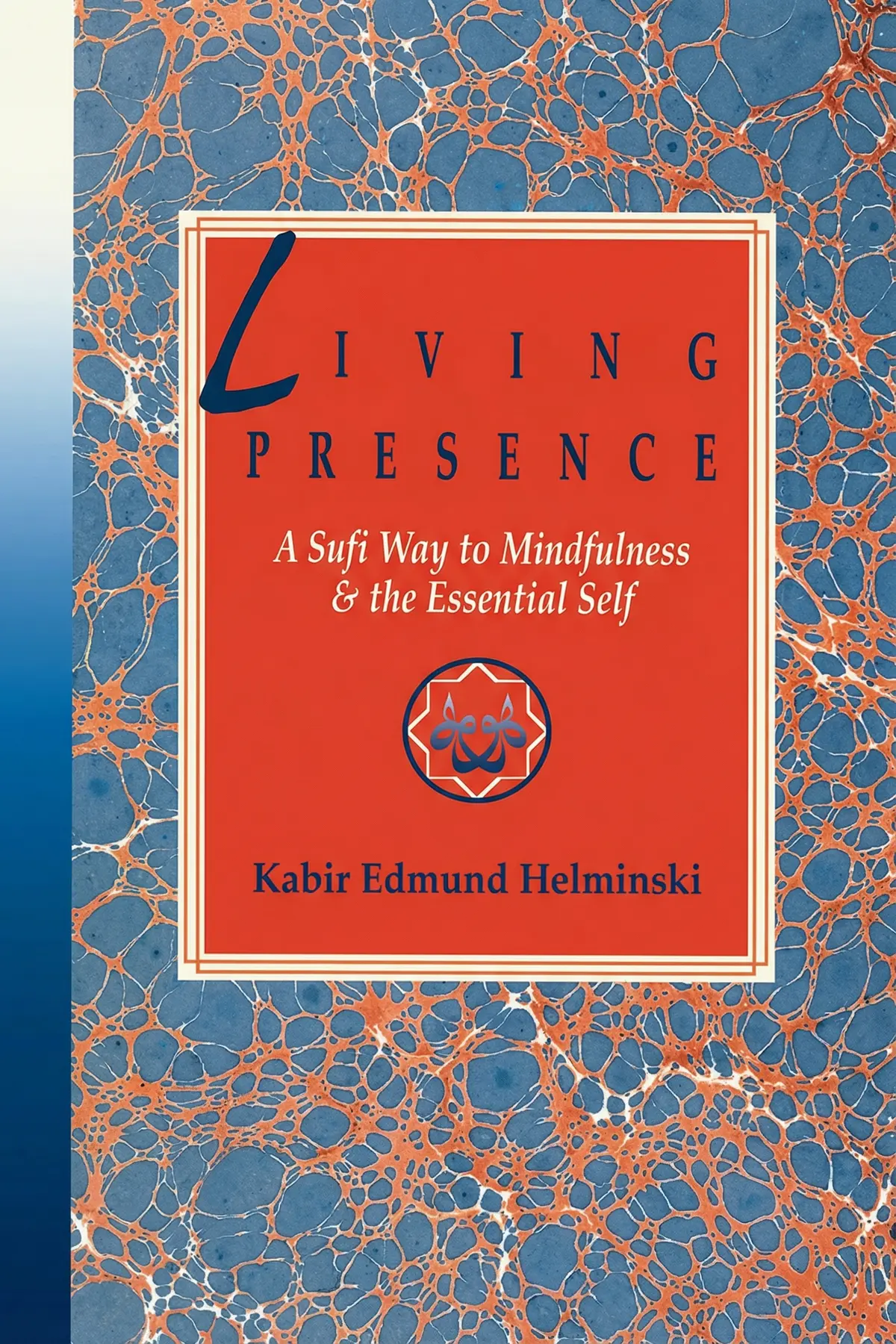
Table of Content
1. Introduction
1 min 00 sec
If your mind is crowded with worry and a sense of falling short however much you achieve, Sufism offers a way back to steady attention. In Living Presence, Sufi teacher Kabir Edmund Helminski argues that no experience matters more than presence: full awareness of this moment, which he says opens a door to an infinite spirit running through everything. Sufism, the mystical tradition within Islam, is meant to be lived while you cook, teach and work.
His thread is simple to state. Presence tames the compulsive, fearful ego and lets love move through you into everything you make and do. Helminski builds the case with a city lost in fog, a badly groomed horse, a king who rewards silence and a troupe of Balinese dancers. Along the way you get a daily practice for clearing the mind, a way to answer your ego when it flares, and two tests for telling whether a good deed comes from love or from vanity.
2. See yourself as part of one living whole
1 min 46 sec
A city lost in fog, a village of anxious kind people, warriors and saints: Helminski maps four ways of living. The Sufi idea that all things share one infinite spirit, he claims, even lines up with what physicists say about energy.
3. Give one ordinary task your total attention
1 min 54 sec
A young student spent hours brushing a horse and did a sloppy job of it. His teacher smiled anyway, and the reason points to a practice anyone can use between meetings or chores.
4. Make your fearful ego a loyal servant
1 min 40 sec
The restless voice that judges, envies and keeps score is usually treated as an enemy. Sufism takes a different view of it, one that changes what you do the moment fear or resentment takes hold.
5. Letting go of grievance ends needless suffering
1 min 57 sec
A poor student kept failing to win a generous king’s gifts, disguise after disguise. His final trick worked, but the king’s reply exposes a kind of pain most of us carry without noticing it.
6. Find love in the very act of longing
1 min 46 sec
A man whispering to God under a park tree is mocked for getting no reply. Then an angel arrives with an answer that sounds cold at first and turns out to mean the opposite.
7. Create better work by getting out of its way
1 min 40 sec
Balinese dancers describe a ball of energy passing between stage and audience. What keeps it alive, and what kills it, gives four guidelines for anyone whose work depends on creativity.
8. Tell selfless service apart from ego service
1 min 44 sec
Helping others can slowly turn into a stage for the ego, leaving you proud or bitter. Two simple checks help you tell which kind of service you are really offering.
9. Conclusion
1 min 12 sec
What Helminski describes is one motion, repeated for a lifetime. The fog city, the horse, the whining student and the Balinese stage all show the same turn: away from the ego’s fearful chatter and toward a moment fully lived, where the spirit can be felt and love can flow into what you make and whom you serve.
That is why Sufism, with practices reaching back 13 centuries, holds its rituals loosely. You may know the whirling dervishes, who spin as a way of praying. For Helminski, though, right action, worship included, grows out of presence. Paying attention through the day, sitting to polish the mirror, surrendering to love and serving others all count as sincere devotion.
Give the next routine task your complete attention, the way a young student once gave his to a horse he did not know how to brush. When fear or resentment flares, take it as a signal to come back to presence. After you help someone, check whether the help left you more loving.
Worship, in this view, is seeing what is real once the self steps aside.
About this book
What is this book about?
Many people carry a steady hum of fear, envy and the feeling that they are never enough, no matter what they achieve. Kabir Edmund Helminski, a teacher in the Mevlevi Order of Sufi Islam, argues that the way out is presence: full, living awareness of the moment, which in Sufism connects you to an infinite spirit that runs through all things. Helminski treats the ego as a useful part of you that has taken charge. Rather than fighting it, he teaches readers to return to presence whenever fear or resentment flares, so the ego can go back to serving the essential self. He draws on Sufi parables, including a king who rewards silence and a lonely man answered by an angel. He also uses his own early lesson grooming a horse for his teacher, and a Balinese dancer's account of performance. Readers get a simple meditation for clearing the mind and a new way to face suffering. They also get practical tests for creative work and service: whether it comes from love, and whether it leaves them more loving or more bitter.
Book Information
Who it's for
Professionals wanting deeper meditation
Professionals worn down by anxious, judging thoughts who want a meditation practice with spiritual depth.
Curious about Sufism
Spiritual seekers curious about Sufism and Rumi's tradition as a way of daily life.
Artists, makers and volunteers
Artists, makers and volunteers who want their creative work and service to come from love.
About the Author
Kabir Edmund Helminski
Kabir Edmund Helminski, born in 1947, is a shaikh, or spiritual teacher, in the Mevlevi Order of Sufi Islam and the author of several books on contemporary Sufism. With his wife, Camille Helminski, he co-founded and co-directs the Threshold Society, a nonprofit devoted to sharing Sufi knowledge and practice, and he has translated several volumes of Rumi's poetry. In 2001 he became the first Muslim to deliver Harvard Divinity School's Harold M. Wit Lectures on Spirituality in Contemporary Life, and in 2009 he was named among the 500 Most Influential Muslims in the World.
Ratings & Reviews
Ratings at a glance
What people think
Listeners find this book to be a quality introduction to spiritual psychologies, with one listener noting it effectively explains the Sufi journey. Additionally, the writing is expertly composed, and listeners appreciate its lucidity, with one listener mentioning how it effectively conveys complex ideas. They also value the heart-centered perspective, with one listener highlighting its focus on purification of the heart.
Top reviews
Narongrit
This book is a profound guide to the inner landscape. Helminski manages to articulate the Sufi journey with such transparency that complex ideas about the "Essence" feel intuitive rather than academic. It isn't just a lecture on theology; it’s a heart-centered manual for purification. I particularly appreciated the distinction between the compulsive ego and the presence that allows us to connect with the divine. The writing is incredibly well-crafted—elegant yet accessible. While some might find the scientific analogies regarding electromagnetic fields a bit of a stretch, the core message of love and mindfulness is undeniable. I found myself slowing down my reading just to savor the quiet wisdom in each chapter. It’s a rare find that feels both ancient and contemporary. Truly a gem for anyone seeking to deepen their spiritual psychology.
Show morePear
Finally got around to writing a review for the book that sits permanently on my nightstand. I first read this over a decade ago, and I still return to my dog-eared copy whenever I feel lost in the noise of daily life. The way Helminski describes "Presence" as the end result of evolution is just stunning. It’s a catalyst for real change because it focuses on the heart’s purification rather than just intellectual gymnastics. Not gonna lie, some of the Fourth Way concepts involving the monk, fakir, and yogi took a few reads to sink in, but the effort was worth it. His use of Rumi’s poetry isn't just window dressing; it breathes life into the text. This is more than a book; it's a companion for anyone trying to live more authentically and consciously.
Show moreConnor
After hearing so much about Sufism, I wasn't sure where to start, but this felt like the perfect entry point. Helminski writes with a level of clarity that is hard to find in spiritual literature. He doesn't just tell you to be present; he explains the mechanics of how the ego operates and why we feel so alienated in the modern world. The metaphor of the journey from the foggy city to the village of the saints really stuck with me. It’s a well-crafted journey from alienation to surrender. Personally, I found the chapter on the purification of the heart to be the most moving part of the entire text. It’s a reminder that spirituality isn't about escaping the world, but about engaging with it more fully through love.
Show moreWachira
Picked this up during a particularly chaotic month and it became an anchor. There is a "quiet wisdom" here that you don't find in many modern books. Helminski’s prose is so clean and accurate; it feels like he’s speaking directly to your soul rather than your intellect. I especially appreciated the glossary at the end because he uses terms like "heart" and "love" in ways that go far beyond their dictionary definitions. The idea that we carry a seed of the Essence that just needs the right vehicle to bloom is such a hopeful message. It helped me reframe my daily struggles as opportunities for "Presence." This is a book I’ll be gifting to friends for years. It effectively conveys complex ideas without losing its emotional resonance.
Show moreNitaya
A masterclass in spiritual psychology. Look, if you want a book that actually explains the "how" of the Sufi journey without getting bogged down in rigid dogma, this is it. Helminski’s focus on the purification of the heart is both practical and poetic. He describes the ego not as an enemy to be hated, but as a servant that has simply overstepped its bounds. That shift in perspective changed everything for me. The writing is incredibly well-crafted, making even the most complex ideas about the "infinite spirit" feel accessible to a layperson. It’s a heart-centered work that demands multiple readings to fully grasp. I came away feeling more grounded and significantly more aware of the "Living Presence" in my own life. Highly recommended.
Show moreAndrew
The way Helminski bridges the gap between ancient Sufi wisdom and modern psychological insights is remarkable. He takes these incredibly dense, esoteric concepts and translates them into a framework that makes sense for a modern reader. I was fascinated by the discussion of how we can balance the paths of the mind, body, and emotions within our ordinary, messy lives. Frankly, the middle chapters get a bit dense and lean toward the overtly academic, which might lose some readers looking for a lighter touch. However, the clarity of his prose usually wins out. The focus on surrendering the fearful ego to the infinite spirit is handled with a lot of grace and practical advice. It’s a solid 4-star read that offers much-needed perspective on the nature of the self.
Show moreLars
Ever wonder what mindfulness looks like when it's stripped of the corporate buzzwords? This book offers an answer through the lens of Sufi Islam. It’s a beautiful exploration of how we can quiet the "compulsive self" to find a deeper connection with reality. I loved the emphasis on service and creativity as natural outgrowths of presence. My only gripe is that it occasionally feels a bit repetitive, circling back to the same themes of "oneness" without always providing new angles. Still, the heart-centered approach makes it feel much warmer than your typical self-help book. The quotes from the Mathnawi are perfectly placed and really drive the emotional points home. Definitely worth a spot on your shelf if you are interested in the purification of the soul.
Show moreBella
As someone who usually finds spiritual texts a bit dry, the clarity of the prose here was a breath of fresh air. Helminski avoids the academic trap for the most part, though he does get deep into the weeds of spiritual psychology. I found his brief mention of the female perspective to be surprisingly insightful—specifically how women might struggle with the idea of "submission" or "service" due to societal expectations. It showed a level of awareness that is often missing from these types of books, which are usually dominated by male anecdotes. The book provides a great framework for becoming "fully human." It’s not a quick read, but it’s a rewarding one if you’re willing to sit with the concepts of the infinite spirit and the Fourth Way.
Show moreArjun
To be fair, I have mixed feelings about how Helminski navigates the religious roots of his subject matter. On one hand, his writing is beautiful and his insights into the human ego are quite sharp. On the other hand, he seems to gloss over the specific Islamic foundations of Sufism in favor of a more universalist, almost Buddhist-adjacent tone. As someone interested in the specific history of the dervishes, I felt like I was getting a filtered version of the tradition. The book is definitely heart-centered and offers great advice for mindfulness, but it can feel a bit too "New Agey" during the sections on electromagnetic fields. It’s a good primer for spiritual psychology, but perhaps not the definitive text on Sufism I was originally hoping for.
Show moreChanon
Not what I expected based on the subtitle. I was looking for a deep dive into historical Islamic Sufism, but this felt more like "New Age" mindfulness with a thin Sufi coat of paint. Truth is, the chapters on creative energy in minerals and the parallels to subatomic particles felt a bit pseudoscience-y for my taste. Helminski is clearly a talented writer, but the way he de-emphasizes the traditional religious framework makes the teachings feel unanchored. If you're looking for a rigorous theological study, you will likely be disappointed. It's more of a spiritual psychology primer than an authentic treatise. The prose is clear enough, but the message that our thoughts and feelings are just "false constructions" to be annihilated felt dismissive of the actual human experience. I found it difficult to engage with his interpretations.
Show moreQuestions about this book
What is the main idea of Living Presence?
Helminski argues that presence, full awareness of the present moment, opens you to an infinite spirit that Sufism sees in all things. Practicing it quiets the compulsive, fearful ego, deepens love for yourself and others, and lets that love flow into creative work and service. He presents Sufism as a practical faith, something lived while working, cooking and cleaning rather than only studied.
What does Sufism teach about the ego?
In Helminski’s account, the ego is the compulsive self, focused on survival and prone to fear, resentment, judgment and envy. Yet it has a good essence: formed in childhood to cope with hardship, it supplies ambition, self-respect and diligence. The aim is to make it serve the essential self. Whenever something triggers it, he advises returning to presence and letting yourself be humbled, reassured and loved.
How do you practice the meditation described in Living Presence?
Helminski uses Rumi’s image of polishing the mirror of awareness. Find a free moment and a comfortable position, then attend to your breath, heartbeat and senses. Watch emotions and thoughts pass without holding on to them. As the mirror clears, he writes, the mind shows its true capacity for awareness, which he describes as a living channel to the infinite spirit.
How can you tell if your service to others comes from love or from ego?
Helminski offers two checks. First, remember that everyone is connected, so using others never brings lasting well-being, and real happiness involves sacrifice and work. Second, notice the effect on you: service rooted in presence should increase your capacity for love. If a good deed leaves you bitter, resentful or uneasily self-important, the ego has taken over, and the remedy is to return to presence.
Readers also enjoyed

A Force for Good: The Dalai Lama's Vision for Our World
Daniel Goleman


A Return to Love: Reflections on the Principles of a Course in Miracles
Marianne Williamson

Abundance: The Inner Path to Wealth
Deepak Chopra

Alcoholics Anonymous
Alcoholics Anonymous World Services

A New Earth: Awakening to Your Life’s Purpose
Eckhart Tolle


Aflame: Learning from Silence
Pico Iyer
AUDIO SUMMARY AVAILABLE
Listen to Living Presence in 15 minutes
Get the key ideas from Living Presence by Kabir Edmund Helminski, plus 5,000+ more nonfiction titles.
- 5,000+ titles
- Listen as much as you want
- 7-day free trial
- Cancel anytime









