

14 min 12 sec
Available in: English
Liftoff: Elon Musk and the Desperate Early Days That Launched SpaceX
By Eric Berger
How a laughed-at startup survived blocked launch sites, a failed predecessor's shadow, three failed launches and a rocket crushed in transit to reach orbit in 2008, and what its early years teach about building against the odds.
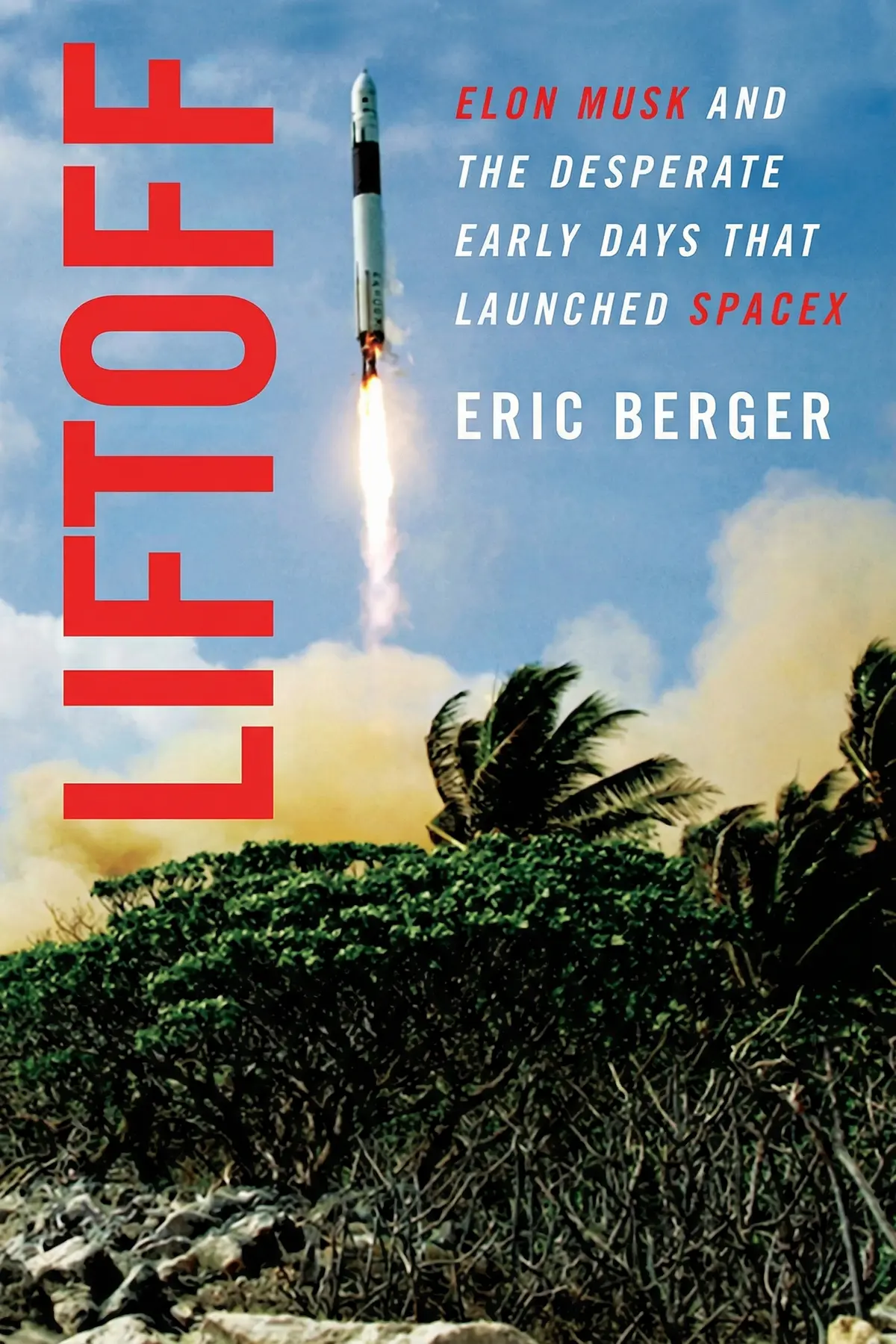
Table of Content
1. Introduction
59 sec
If people who know your field better than you have ever called your plan a fantasy, the early story of SpaceX is worth hearing. In Liftoff, space journalist Eric Berger shows that the company almost died several times before it reached orbit. Speed, stubbornness and a team that would not quit kept it alive. Elon Musk started it after PayPal, convinced that America had lost its ambition in space, and many experts expected him to burn through his fortune as others had done before him.
Berger follows the company from a car ride in 2000 to a launch in 2008 that would decide whether it lived or died. His case is that a huge goal survives contact with reality only when it is joined to a fast way of learning from failure and the nerve to take on entrenched players. On the way you’ll hear about a riddle used as a job interview, a rocket crushed inside a cargo plane, and a gamble on challenging a potential future client.
2. Spot the gap the giants left open
1 min 43 sec
A successful founder assumed the experts already had his dream in hand. One evening of searching proved him wrong, and the room full of engineers he gathered next reacted in a way that only made him more stubborn.
3. Hire for thinking, then build and break fast
1 min 44 sec
A 21-year-old job candidate was handed a compass, a flag and a puzzle instead of the usual questions. His answer reveals how the young company picked its people and why it was willing to fail so often.
4. Hype without depth sinks a rocket company
1 min 42 sec
Years before SpaceX, a Hollywood stunt arranger with famous friends set out to make space travel routine. Good engineers joined him. What went wrong explains why the industry greeted Musk with such open doubt.
5. When the front door closes, find an island
1 min 43 sec
The Air Force never said no to SpaceX. It simply stopped answering. The way around that silence ran through a phone call that ended with a hang-up and a remote atoll in the middle of the Pacific.
6. Grieve the crash, then go back to the pad
1 min 37 sec
Seconds before the first launch, Musk turned away from the countdown to talk about metal for a rocket that did not yet exist. What happened next, and what the islanders did the following morning, shaped the team.
7. Pick the public fights you can actually win
1 min 43 sec
Friends warned Musk that challenging NASA would cost him a future customer. He went ahead anyway, after first parking a rocket in the capital. The outcome arrived by phone just as the money was getting tight.
8. Deliver when one more failure ends everything
1 min 46 sec
With money running out and clients losing faith, SpaceX had one launch left. Then, on the flight to the island, the crew heard popping sounds from the cargo bay and found their rocket crumpling.
9. Conclusion
1 min 15 sec
Liftoff is the story of how close a now-famous company came to becoming another AMROC. The engineers who laughed at the Los Angeles hotel were not foolish, because history had given them good reasons. Set beside Koopman’s story, Musk’s path shows a different set of traits: a founder who worked on the rocket himself, hires he interviewed one by one, a habit of building fast and learning from mistakes, and a readiness to fight when he saw the old guard favoring its own.
For anyone attempting something others call impossible, the book backs a few habits. Check whether the established players are really pursuing the goal, the way Musk searched NASA’s website and found nothing. Build early and treat each failure as information, as the team did after Falcon 1 fell into the Pacific. When an authority stalls you, look for another island, and when it treats you unfairly, challenge it on the rules it broke. And value the people who turn up at the port the morning after a disaster.
The rocket that finally reached orbit had been crushed inside a cargo plane only days earlier. It flew because a tired team took it apart, rebuilt it and refused to call it finished.
About this book
What is this book about?
In 2000, Elon Musk had money from PayPal and a question nobody seemed to be asking: why had America stopped trying to send people anywhere new in space? When he found that NASA had no plans to put humans on Mars, he decided to build rockets himself. Seasoned aerospace engineers laughed at him. Their scepticism had a reason, because they had already watched a rich, charismatic dreamer fail at the same idea. Eric Berger, a journalist who covers the space industry, tells the story of SpaceX's desperate early years. Musk interviewed every hire himself and let engineers build fast and learn from mistakes. When the Air Force stalled him he moved to a remote Pacific island, and when NASA handed a contract to an insider he challenged the decision. Three launches failed. Money ran low. Days before the fourth attempt, the rocket was crushed inside a cargo plane. Readers get a close look at how an outsider beats an entrenched industry: what to borrow from the method, what to learn from the failures, and why a team that refuses to quit can count for as much as a big vision.
Book Information
Who it's for
Building what experts doubt
Founders and operators building something experts say cannot be done.
Team leads
Team leads who want to see how fast iteration and careful hiring work under real pressure.
Space and tech fans
Space and technology fans curious how SpaceX survived its first, nearly fatal years.
About the Author
Eric Berger
Eric Berger is an American journalist who covers everything from new space companies to NASA policy for Ars Technica. He studied astronomy at the University of Texas and holds a master's degree in journalism from the University of Missouri. He spent 17 years at the Houston Chronicle, a paper whose Hurricane Ike coverage earned it a place as a 2009 Pulitzer Prize finalist. He is also a trained meteorologist, runs the Houston weather site Space City Weather and lives in Houston.
Ratings & Reviews
Ratings at a glance
What people think
Listeners find this book captivating and skillfully crafted, describing it as a compelling account that unfolds like an action-packed adventure. It offers an in-depth history of SpaceX’s initial years, and listeners appreciate the brisk pacing and the poignant depiction of the crew's struggles. They prize the quality of the prose; one listener notes how it clarifies technical advancements for the audience, while another describes it as a masterpiece of reporting.
Top reviews
Valentina
This book reads like a high-stakes thriller rather than a dry technical manual, which is a testament to Berger's reporting. The narrative captures the absolute chaos of the early Falcon 1 days on Omelek Island, where the team was basically fighting nature as much as physics. Frankly, I was gripped by the descriptions of the 'misfit' engineers who left stable careers to build something in the middle of nowhere. From the giant crabs to the heartbreak of three failed launches, the emotional weight of their struggle is palpable. It is a masterpiece of reporting that makes complex aerospace concepts accessible to anyone. Even if you aren't a space nerd, the sheer human drama of the Texas and Kwajalein sites is worth the read.
Show moreJai
As someone who follows space news closely, I thought I knew the SpaceX origin story, but Berger digs up details that even hardcore fans will find new. The specific account of the rocket nearly imploding inside a C-17 transport plane at 30,000 feet was absolutely nail-biting. It’s rare to find a non-fiction book that balances technical precision with such a driving, adventurous tone. The author avoids the trap of dry prose by centering the story on the eccentric personalities who actually turned the wrenches. You really get a sense of the 'do or die' atmosphere that defined the company before it became a global powerhouse. This is essential reading for anyone interested in the grit required to innovate.
Show moreWararat
Wow, what a ride! Eric Berger has managed to turn a series of engineering hurdles into a page-turning adventure that highlights the genius behind the Falcon 1. I loved the focus on the people like Hans Koenigsmann and Tom Mueller rather than just the guy at the top. The book perfectly captures the 'ball of twine and thumbtacks' energy of the early days. It’s a story about a bunch of mavericks who were constantly on the edge of bankruptcy and total failure. The writing is punchy, clear, and makes you feel the heat of the South Texas sun. If you want to understand why SpaceX is currently dominating the industry, you have to start here.
Show moreRafael
The chapter on the Kwajalein launch site alone is worth the price of admission, featuring everything from tropical storms to the literal collapse of a fuel tank. Berger’s writing style is excellent; he knows exactly when to lean into the technicalities and when to focus on the human drama. Personally, I found the stories about the logistics of living on a remote island while trying to launch a revolution into orbit to be the most compelling part. It’s an underdog story at its finest. The book doesn’t just tell you that space is hard; it shows you through the sweat and ruined vacations of the original team. A truly gripping account of modern exploration.
Show moreFord
Ever wonder how a tiny group of engineers actually manages to disrupt a billion-dollar industry dominated by giants? Liftoff provides the answer through a series of wild, almost unbelievable anecdotes that feel like they belong in a movie. The writing is sharp and the pacing is perfect for a weekend read. I especially liked how the author gave credit to the early employees who are often overshadowed by the CEO's public persona. It’s a gritty, realistic look at what it takes to build a rocket from scratch in a tent. Not gonna lie, the ending made me want to go out and build something myself. This is a definitive account of the new space race.
Show moreSai
Not what I expected from a non-fiction book about aerospace, but in the best way possible. Instead of a dry timeline, Berger gives us a collection of vivid profiles and nail-biting cliffhangers. The story of the team trying to save the rocket as it imploded on a plane is the stuff of legends. It’s an outstanding book that manages to be both informative and genuinely exciting. The level of detail regarding the Falcon 1's development is impressive, yet it never feels like a textbook. Truly, it’s a remarkable achievement in tech journalism that highlights the sheer willpower required to reach the stars. Highly recommended for anyone who loves a good underdog story.
Show moreAnucha
Finally got around to reading this and I’m struck by the intensity of those early years. Berger focuses heavily on the boots-on-the-ground perspective, which provides a refreshing break from the usual Musk-centric media coverage. The first-hand accounts of the technical hurdles are fascinating, though I occasionally felt the book leaned a bit too much into the 'heroic' framing of 90-hour work weeks. To be fair, achieving orbit on a shoestring budget is incredible, but the human cost mentioned here is staggering. It’s a fast-paced, engaging journey that explains the 'how' behind the hardware quite effectively. I just wish there was a bit more analysis of the broader commercial industry at the time.
Show moreManee
After hearing so much buzz, I jumped in and found a narrative that is both incredibly detailed and surprisingly emotional. The technical explanations are handled with a light touch, ensuring the reader never feels bogged down by 'rocket science.' Look, it’s a gripping story, but it does feel slightly narrow in its scope by ignoring the larger competitive landscape of the early 2000s. I appreciated the first-hand accounts from the engineers who were actually there in the trenches. The descriptions of the failed launches were particularly moving, capturing the collective heartbreak of a team that had given up everything for a vision. It’s a solid, fast-read that mostly lives up to the hype.
Show moreAmara
Pick this up if you want to understand the 'how' behind the hardware, though I'll admit the relentless focus on the 'work-until-you-collapse' culture left me uneasy. The engineering challenges are presented as thrilling puzzles, which kept me turning the pages late into the night. It is a very well-constructed narrative that manages to make the success of the fourth launch feel like a personal victory for the reader. My only real gripe is that it feels a bit rushed toward the end. I would have loved more elaboration on how the team learned to iterate so much faster than their traditional competitors. Still, it’s a fascinating, first-hand look at a pivotal moment in history.
Show moreChon
While the pacing is undeniable, the truth is that the book often feels like a polished piece of SpaceX public relations rather than a critical history. It moves fast. However, it frequently glosses over the systemic issues of burnout and mismanagement that the sample reviews hinted at. I wanted more context on the global launch market and how these decisions were contextualized financially. Instead, we got a hero’s journey that feels a bit too curated for comfort at times. It’s an interesting look at the engineering feats, certainly, but I left wanting a more objective analysis of the company's culture. Great for fans, perhaps less so for those seeking a balanced corporate biography.
Show moreQuestions about this book
What is Liftoff by Eric Berger about?
Liftoff tells the story of SpaceX’s early years, from Elon Musk’s decision in 2000 to pursue space travel to the company’s first successful orbital launch in 2008. Berger covers Musk’s hiring methods, the iterative engineering approach, the move to a Pacific atoll, a fight with NASA over an unfair contract, and three failed launches before the fourth Falcon 1 finally reached orbit.
Why did Elon Musk start SpaceX?
According to Berger, Musk was disappointed by how little ambition he saw in US space exploration. When he searched NASA’s website for Mars mission plans, he found none, and space conferences confirmed that no crewed Mars trip was coming soon. Musk believes humanity should eventually settle Mars, partly because of threats such as global warming, so he decided to build rockets himself.
Why were experts skeptical of SpaceX at first?
Many had watched wealthy dreamers lose fortunes on rockets before. The clearest example was George Koopman, who founded AMROC in 1985 to make space travel routine. Engineers came to see him as a dealmaker with shallow technical knowledge who exaggerated progress to donors. After Koopman died in 1989, AMROC’s first test rocket collapsed in flames and the company soon folded.
What lessons does Liftoff offer founders and team leads?
The book shows a few practical habits. Hire carefully, as Musk did by personally interviewing the first three thousand employees. Build quickly and learn from mistakes rather than testing every part slowly. Find another route when an authority stalls you, as SpaceX did by moving to Omelek Island. Challenge unfair decisions when a rule was clearly broken, as Musk did when NASA skipped open bidding.
How did SpaceX finally succeed with Falcon 1?
After three failed attempts, with clients doubtful and Musk’s money running low, SpaceX set a fourth launch for September 29, 2008. On the flight to Kwajalein the rocket was crushed by a pressure change in the cargo plane. Engineer Zach Dunn released the pressure, and the team rebuilt the rocket in days. It passed its tests and reached orbit.
Readers also enjoyed



Alibaba: The House That Jack Ma Built
Duncan Clark



7 Powers: The Foundations of Business Strategy
Hamilton Helmer

Bad Blood: Secrets and Lies in a Silicon Valley Startup
John Carreyrou
AUDIO SUMMARY AVAILABLE
Listen to Liftoff in 15 minutes
Get the key ideas from Liftoff by Eric Berger, plus 5,000+ more nonfiction titles.
- 5,000+ titles
- Listen as much as you want
- 7-day free trial
- Cancel anytime









