
12 min 29 sec
Available in: English
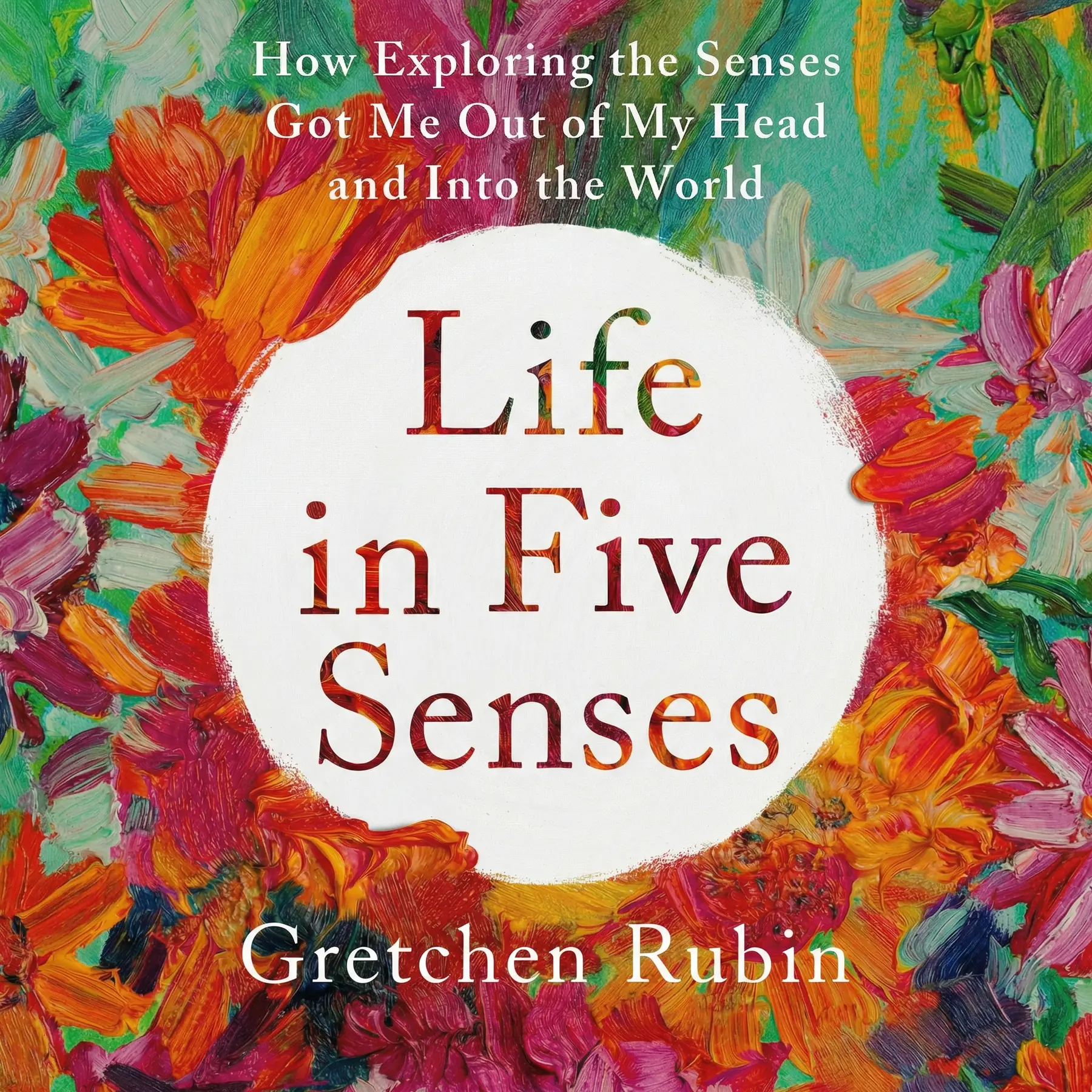
Life in Five Senses: How Exploring the Senses Got Me Out of My Head and Into the World
Shows how to train sight, hearing, smell, taste and touch with small, mostly free exercises. The aim is to notice more, calm down faster and enjoy ordinary days instead of living mostly in your head.
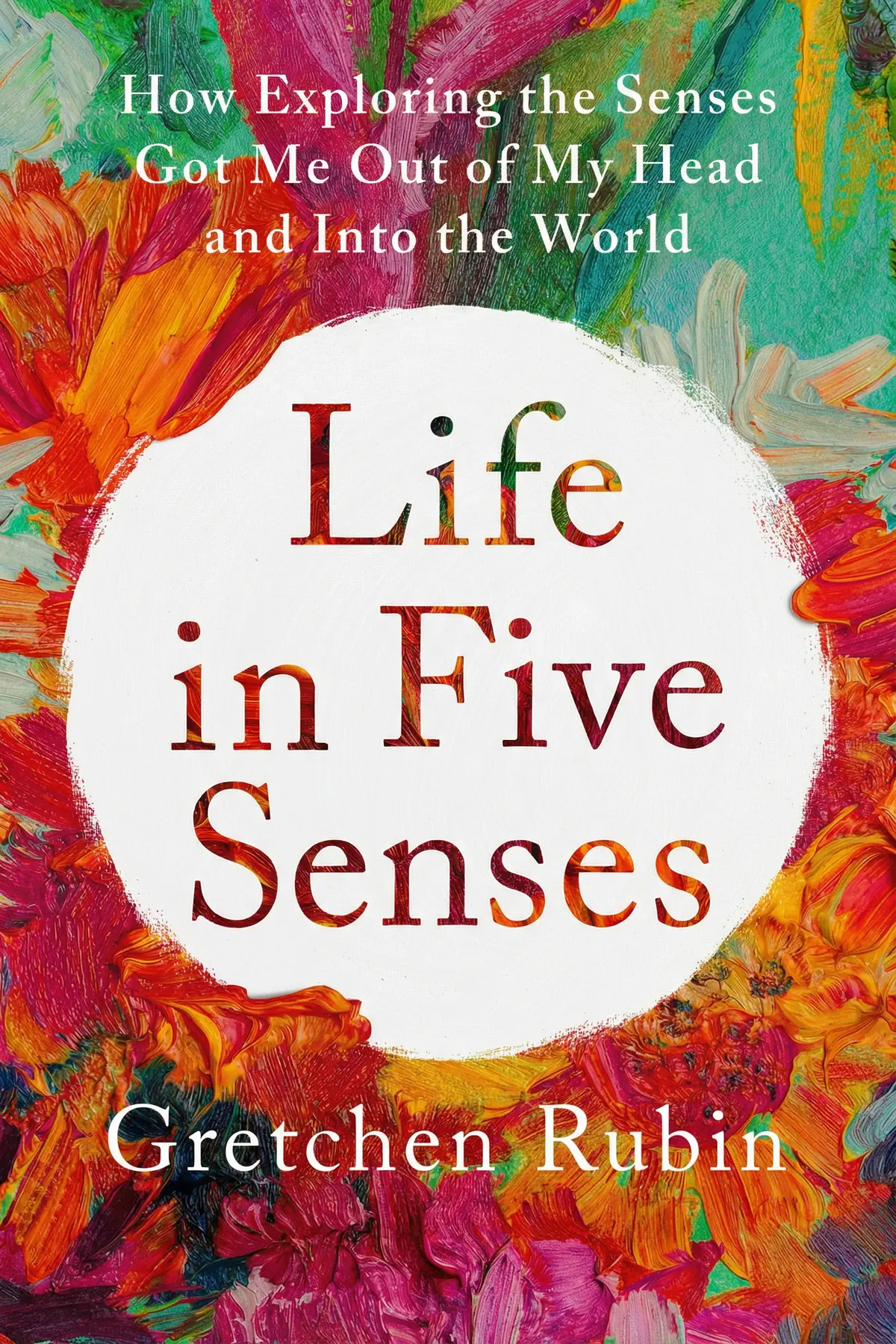
Table of Content
1. Introduction
57 sec
If your body feels like a machine you maintain more than a place you live in, Gretchen Rubin says the way back in is through your five senses. In Life in Five Senses, the bestselling author of The Happiness Project argues that most people treat their bodies the way a janitor treats a building. They keep it clean and running and notice little else. She suggests treating the body more like a temple, with the senses as its doors.
One idea carries the whole book. Each sense can be trained with small, specific practices, and doing that moves your attention out of your head and into the world around you. Sight, hearing, smell, taste and touch each get their own exercises, from tasting a spoonful of ketchup like a judge to carrying a small object in your pocket for hard moments. Most of them cost nothing, and you could try one on the way home tonight.
2. Look closely and ordinary days stop blurring
1 min 59 sec
Your eyes are open all day, yet a famous artist claimed almost nobody truly uses them. A coffee cup that slipped into a hit fantasy series shows how much a busy mind can miss in plain view.
3. Use music and silence as everyday medicine
2 min 06 sec
Music does nothing to keep our species alive, yet every human group in history has made it. That puzzle leads to a playlist built like a medicine cabinet, and to a sound most people avoid.
4. Get more flavor from food you already eat
2 min 09 sec
A cheap condiment in almost every kitchen turns out to be one of the most complex things you can taste. Discovering why changes how you might approach every meal, from cheese boards to unfamiliar cuisines.
5. A scent that pulls you into the present
2 min 09 sec
One island people builds its calendar around smells, and Andy Warhol used perfume as a filing system for his memories. Your own nose may be the most neglected tool you have for feeling present.
6. Calm your nerves and sharpen thinking through touch
2 min 02 sec
Babies held skin to skin cry less, and adults who are touched sleep better. Touch can also help you remember a recipe or survive a tense meeting, often with nothing more than an object in your pocket.
7. Conclusion
1 min 07 sec
At bottom, Rubin’s book is an argument about attention. Your senses never switch off, but most of the time they serve errands: find the milk, cross the road, eat lunch at the desk. She argues that the same equipment, aimed with a little intention, turns an ordinary day into one you actually experience. A spiderweb on the ceiling, the clatter of cutlery in a café, the first taste of morning coffee are all already there. Most of the time they simply go unnoticed.
What she asks for is mostly cheap and quick. Choose one sense this week and give it a single small assignment. Switch your phone to grayscale and look out the window instead. Leave the headphones off on one walk and listen to the silence. Taste a spoonful of ketchup as if you were judging it. Or carry a small, pleasing object in your pocket into the next meeting that makes you tense, and let your fingers find it.
The janitor and the worshiper live in the same body. What separates them is whether they are paying attention.
About this book
What is this book about?
Most people use their senses like tools for errands: spotting the bus, finding the milk, eating lunch without tasting it. Gretchen Rubin argues that this leaves a great deal of life unlived. In Life in Five Senses, she sets out to change how readers relate to their own bodies, moving from routine upkeep to real enjoyment. The book takes each sense in turn and pairs it with simple practices. For sight, give a walk a small assignment and switch your phone to grayscale. For hearing, build a playlist of songs that work like remedies and look for silence. For smell, train your nose with a blindfolded test and choose a signature scent. For taste, find all five basic tastes in a spoonful of ketchup. For touch, steady yourself with a pocket talisman and make your thinking more physical. Readers get a set of quick, low-cost experiments that bring attention back to the present and make familiar days feel fuller. Rubin backs them with examples ranging from Andy Warhol's perfume habit to studies on touch in babies and adults.
Book Information
Who it's for
Screen-bound professionals
Busy professionals who spend their days in their heads and on screens, and want quick ways to feel present.
Stressed or on edge
People dealing with stress or nerves who want simple, physical tools to steady themselves.
Curious about sensory pleasure
Anyone curious about getting more pleasure from food, music, scent and everyday sights.
About the Author
Gretchen Rubin
Gretchen Rubin started out in law. During a clerkship with Supreme Court Justice Sandra Day O'Connor, she realized she wanted to write. Several of her books, including The Happiness Project, Better Than Before and The Four Tendencies, have been New York Times bestsellers, and The Happiness Project reached number one. Her books have sold millions of copies in more than thirty languages. With her sister, Elizabeth Craft, she hosts the podcast Happier with Gretchen Rubin.
Ratings & Reviews
Ratings at a glance
What people think
Listeners find this book an enchanting experience that provides an intensive exploration of the senses, increasing their awareness of daily perceptions. They value the informative content, with one listener mentioning that every chapter contains useful practical exercises. The text is commended for its level of detail, including one review that points out intriguing information about vision, and listeners specifically appreciate the material regarding the sense of smell. While the writing style draws a range of responses, several listeners describe it as exceptionally well written.
Top reviews
Sayan
Finally got around to reading this during a long commute, and it completely shifted my perspective on my surroundings. Rubin’s exploration of the five senses is both educational and deeply personal. I hopped in delight when she described finding the 'bowl with feet' at the Met because it made me want to go find my own hidden treasures in the world. The book is packed with interesting facts about sight and smell that I had never considered before. Not gonna lie, I’ve already started implement some of her mindfulness tricks into my daily routine to help me stay present. It is a delightful read that offers a deep dive into the senses, making every mundane moment feel a bit more magical. This is exactly the kind of inspiration I needed this year.
Show morePreeda
After hearing so much buzz about this, I was delighted to find that Rubin's deep dive into the senses is actually quite educational. She doesn't just list her experiences; she enriches the narrative with the psychology of perception. The chapters on smell were especially fascinating to me, as I’ve always been sensitive to scents but never knew the science behind them. I appreciated how she used her daily Met visits to train her eyes to spot small details usually overlooked by the casual observer. In my experience, this book is perfect for anyone looking to accumulate more memories of 'perfect moments.' It’s a wholesome read that manages to be interesting without becoming overly difficult or academic. I finished it feeling much more connected to the natural world and the people around me.
Show moreMeen
Wow, I never realized how much I was missing by living entirely in my head. This was a delightful deep dive into the five senses that brought me so much joy to read. It brought me so much joy to follow along as Rubin trained herself to notice the small details we usually overlook in our busy lives. The chapters on smell were my favorite, but the whole book is packed with practical applications for mindfulness. I’ve already started my own sensory project by choosing a 'color of the day' to hunt for on my walk to work. It’s a wholesome, well-written guide that I would recommend to everyone. Even the section on making homemade slime was fun! It’s a beautiful reminder to be more present and sharpen our view of the world.
Show moreIff
Gretchen Rubin has a knack for making self-help feel like a conversation with a very organized friend. In this latest installment, she explores how tuning into our physical environment can cure the mental fog of modern life. I particularly enjoyed her daily visits to the Metropolitan Museum of Art, which felt like a beautiful exercise in seeing the familiar with fresh eyes. While some of the experiments seemed a bit simplistic, like making homemade slime or smelling old books, the overall message is quite powerful. Personally, it encouraged me to put down my phone and actually taste my morning coffee for once. It’s a well-written, gentle reminder that the world is much more vivid than we give it credit for. To be fair, her lifestyle is specific, but the practical tips are universal.
Show moreYuki
Ever wonder why we ignore eighty percent of what's happening right in front of us? Rubin tackles this question with her signature Type A intensity, and the result is a very practical guide to sensory awareness. I loved the section on hearing, particularly the idea that listening to silence is just as vital as listening to sound. Some critics might find her experiments boring, but I found the 'potato chip taste test' and the chocolate babka descriptions quite charming. It’s about finding beauty in the ordinary. Look, she isn't claiming to be an explorer in the Amazon; she's exploring her own life. The book provides practical applications in every chapter that anyone can use. It’s extremely well written and serves as a great reminder to appreciate the small details of our everyday lives.
Show moreWin
Picked this up on a whim and found the chapters on smell and taste particularly fascinating. I enjoyed the way she explored the Lower East Side to find childhood memories through food like knishes and bagels. It reminded me that our senses are the strongest link we have to our past. While I agree with other reviewers that she lives in a bit of a bubble, her enthusiasm for 'the ordinary' is infectious. The writing quality is top-notch, and the facts about how our brains process color were brand new to me. It’s a great book for anyone who feels like they are living on autopilot. I’ve started being much more attentive to the textures and sounds in my own home. Overall, it’s a very solid and thought-provoking read for fans of the genre.
Show moreRapee
As someone who has followed Gretchen’s work since The Happiness Project, I found this latest entry to be a bit of a mixed bag. The core premise is fascinating, especially the psychology behind how we perceive our surroundings. However, the actual experiments she conducts—like making homemade slime or noticing when her husband changes his shirt—felt incredibly pedestrian. It's a mildly interesting read, but it never quite reaches the insightful heights of her earlier books. Truth is, many of the 'revelations' felt like things most mindful people already do, like noticing the color of the sky or listening to silence. The writing is polished and professional, yet the scope feels narrow. It’s a decent reminder to stay present, even if it lacks a certain spark or sense of adventure beyond her comfort zone.
Show moreMint
Truth is, I have very mixed feelings about this sensory journey. On one hand, Rubin’s personality makes for a very structured and educational look at human perception. On the other hand, the constant focus on food and restrictive habits occasionally felt uncomfortably close to a discussion on disordered eating. I appreciate her dedication to visiting the museum daily, but there’s a sense of elitism that’s hard to shake off throughout the narrative. She writes beautifully about the importance of listening, but then dismisses entire categories of sensory experience because they don't fit her fussy preferences. It’s a polished book with some great mindfulness tips, but her narrow perspective might make it hard for the average reader to fully connect. It was hard to get through the parts where she just lists song titles.
Show moreHemp
This book felt like a peek into a world of extreme privilege that I simply cannot relate to. While Rubin is a gifted writer, her 'adventures' mostly involve walking to the Met every day and hosting fancy ketchup tastings in her Upper East Side apartment. I found her reluctance to try new cuisines or global music a bit stifling for a book about exploration. She spends an entire chapter discussing a basic playlist as if she discovered music for the first time in her fifties. It’s difficult to find the 'profound' in someone realizing that flowers are pretty or that Hershey’s chocolate tastes like sugar. Frankly, the whole thing read like a high school research paper padded with mundane daily vlogs. I expected more depth and perhaps a bit more sensory risk-taking.
Show moreAudrey
Not what I expected from an author of her caliber, unfortunately. I’ve read nearly all of her books, but this one failed to deliver on its promise of a deep sensory examination. The information presented is extremely superficial, relaying facts most people already know from a quick search. She spends so much time on mundane tasks like comparing different brands of ketchup or buying flowers and discovering they’re pretty. It felt like she was trying too hard to be observant without actually stepping outside of her very comfortable Upper East Side life. Why not try a sound bath or travel somewhere new? Everything she did was just super boring and lacked any real insight for someone who is already a naturally observant person. It was a struggle to finish this one.
Show moreQuestions about this book
What is the main idea of Life in Five Senses?
Gretchen Rubin argues that most people use their senses only to get things done, like crossing a street or finding groceries, and miss much of their own lives as a result. By training sight, hearing, smell, taste and touch with small, specific exercises, she says you can move out of your head and into the present, and get more enjoyment from ordinary days.
What are some exercises from Life in Five Senses?
Rubin suggests giving a walk a small assignment, such as spotting three hats, and switching your phone to grayscale. She recommends a playlist of songs that work like remedies, a blindfolded smell test with a friend, and slowly tasting a spoonful of ketchup, which hits all five basic tastes. For touch, she suggests carrying a small pocket talisman to steady yourself.
How can touch help with stress, according to Gretchen Rubin?
Rubin cites studies linking touch from another person to lower blood pressure, better sleep and the release of natural painkillers. When you are alone, a physical prop can calm you, like holding a clipboard during a presentation or a coffee cup on a first date. She also suggests a talisman, a small object you run your fingers over when you feel overwhelmed.
Why does Rubin say smell connects you to the present?
Smell is fleeting. It cannot be stored or saved for later, so it only exists in the moment you notice it. Rubin turns that into a tool: when you want to feel grounded, take one slow, appreciative breath through your nose. She also describes how a signature scent becomes tied to memory, as it did for Andy Warhol, who changed perfumes every three months.
Who should read Life in Five Senses?
It suits people who feel stuck in their heads, glued to screens or worn down by stress and want simple ways to feel more present. It also suits readers who want more pleasure from food, music, scent and the sights around them. Most of the exercises are free or low-cost, and many take only a minute or two.
Readers also enjoyed

59 Seconds: Change Your Life in Under a Minute
Richard Wiseman





A Guide to the Good Life: The Ancient Art of Stoic Joy
William B. Irvine


A High-Performing Mind: Strengthen Your Mind and Live Your Best Life
Andrew D. Thompson


Abundance: The Inner Path to Wealth
Deepak Chopra
AUDIO SUMMARY AVAILABLE
Listen to Life in Five Senses in 15 minutes
Get the key ideas from Life in Five Senses by Gretchen Rubin, plus 5,000+ more nonfiction titles.
- 5,000+ titles
- Listen as much as you want
- 7-day free trial
- Cancel anytime









