

A Room of One’s Own
Virginia Woolf
 English
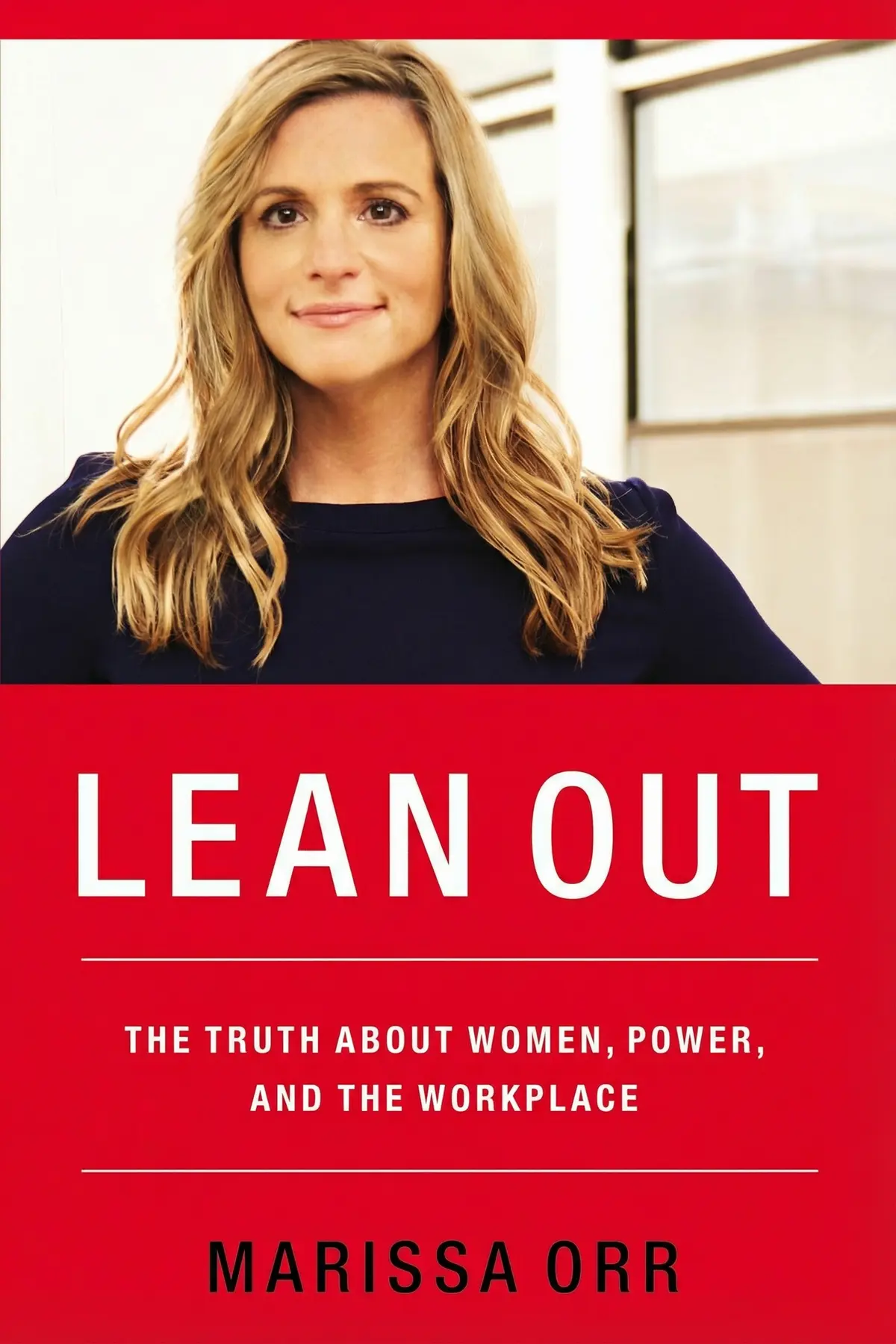
Marissa Orr argues that women are not the problem in the corporate gender gap. She shows how workplaces reward performed confidence, authority and looking busy, and what companies could change so more women rise.
55 sec
If you work in a large company, you have probably been told that rising means speaking louder, apologizing less and sounding certain. In Lean Out, Marissa Orr, who spent more than fifteen years at firms including Google and Facebook, argues that this advice asks women to copy the very figure feminism blames: the white, wealthy, straight alpha male.
When women seem to lack ambition, confidence or networking skill, she says, look first at how the workplace measures and rewards people. That is usually where the fault lies, and it can be fixed by redesigning the conditions people work in. Her evidence runs from blind orchestra auditions to a Danish driver’s license form.
Expect a sharper way to read your own career choices and, if you lead people, concrete changes that would let more of them rise without pretending to be someone else.
1 min 50 sec
A campaign against one small word was meant to free ambitious women from a double standard. Orr argues that its advice traps them inside a second one, and she asks who really gains from it.
1 min 58 sec
Only a small share of women in corporate America say they want the top job. Instead of fixing their ambition, Orr asks the majority why they said no, and the answer sits largely outside the office.
1 min 51 sec
Women are told to stop hesitating, stop apologizing and stop asking questions. Orr looks again at those three habits and at what confidence actually means, and the corporate definition does not survive the inspection.
2 min 03 sec
Men are said to be poor at relationships at home yet brilliant at networking at the office. A 2013 experiment hints at what corporate networking really runs on, and why women tend to play it differently.
1 min 55 sec
Women earn most university degrees in the United States, yet that lead vanishes once they start working. A change American orchestras made to their auditions shows exactly where the advantage goes missing.
1 min 51 sec
Plenty of capable people turn down promotions that would put them in charge. Orr suggests they may be rejecting one particular kind of power, while companies overlook another kind that gets just as much done.
2 min 06 sec
A small edit to a Danish form achieved what an American public health campaign could not. Orr uses the contrast to explain why workshops for women keep failing and what companies could do instead.
1 min 14 sec
Lean Out changes where the complaint gets sent. For years the message about women at work has been addressed to women: be bolder, sound surer, want more. Orr readdresses it to the workplace, where grades disappear, authority outranks influence, alliances pass for friendship and hours spent at home go unseen. From that angle, the woman who hesitates, asks a question or turns down a promotion looks like evidence about the system.
Orr’s parting advice is to negotiate like a woman. Men, she notes, have a reputation as stronger negotiators because they refuse to give way until they have everything they asked for. Women, in her account, tend to be subtler and more strategic, and more likely to land compromises that leave everyone satisfied, deals she considers better for all sides over time. She would have workplaces teach that style to everyone.
In your next negotiation, aim for the deal both sides can live with. If you shape hiring or reviews, look for your version of the orchestra’s screen.
Danish drivers did not suddenly grow more generous. Someone rewrote the form.
Women in corporate jobs hear the same advice again and again: speak up, stop apologizing, sound certain, ask for the raise. Marissa Orr, who spent more than fifteen years at companies including Google and Facebook, noticed what that advice amounts to. It asks women to behave like the white, wealthy, straight alpha male whom feminism names as the problem. In Lean Out, Orr turns the question around. Instead of asking why women lack ambition or confidence, she asks what the workplace measures and rewards. She looks at the women who choose not to chase the top job and the unpaid work they carry at home. She also examines networking that runs on alliances and reviews that reward the impression of success, along with a corporate idea of power built on giving orders. Her evidence ranges from blind orchestra auditions to a Danish organ donor form and Google's research on its best teams. Readers get a clearer way to read their own career choices and a set of concrete changes that managers and companies could make, from team goals to flexible work and better parental leave.
Women in corporate jobs who are tired of being told to sound tougher, apologize less and want the corner office.
Managers and HR or learning teams running diversity programs that train women instead of changing reviews, goals and leave.
Anyone weighing a promotion they are not sure they want.
Marissa Orr is a tech industry veteran who worked for more than fifteen years at major corporations, including Google and Facebook, while raising three children as a single mother. Seeing corporate efforts to close the gender gap from the inside led her to criticize mainstream corporate feminism and to argue that the workplace system itself needs to change.
Listeners find the material well-supported by behavioral science and extensive research, which helps shift their mindsets. The writing is also approachable and punctuated by clever humor, and one listener considers it a mandatory read for women in the workplace. Additionally, they value the author’s use of personal anecdotes, with one review highlighting the book's unique perspective on the dysfunction found in corporate life.
Ever wonder why the standard advice for women in business feels so hollow and exhausting? Marissa Orr provides a refreshing antidote to the 'Lean In' philosophy by questioning why we are trying to fix the women instead of fixing the broken system. Her writing style is incredibly easy to digest, blending behavioral science with a self-deprecating humor that made me laugh out loud. I particularly loved the focus on empathy and consensus-building as underappreciated strengths that should be valued in leadership roles. Instead of demanding we change our personalities to fit a rigid hierarchy, she encourages us to define success on our own terms. This book changed my entire perspective on my career trajectory and relieved a lot of the hidden guilt I felt about not wanting to be a CEO. It is truly an essential guide for anyone who feels out of place in a male-dominated corporate culture.
Show moreAfter hearing the author speak at a conference, I knew I had to grab a copy immediately to see if her writing was as sharp as her talk. It did not disappoint! Orr has a gift for taking complex behavioral science concepts and making them applicable to the everyday office grind. She captures the sentiments so many of us feel but can’t quite put into words. This isn't just a 'women's book'; it’s a critique of how we value human capital in the 21st century. The way she weaves her personal journey through Facebook with broader observations about leadership is masterful. Not gonna lie, I highlighted nearly half the book because so many sentences felt like they were written specifically for me. It is easily one of the most honest books on business I have read in years. Every manager, regardless of gender, should have this on their shelf to understand why their best people are leaving.
Show moreFinally got around to finishing this after seeing it recommended on several leadership blogs. The author’s voice is remarkably authentic, and she manages to articulate the exact frustrations I’ve felt during my ten years in tech. Her insights into how reward systems are skewed toward specific personality traits are spot on. Frankly, the way she deconstructs corporate dysfunction is more valuable than any standard HR manual I have ever been forced to read. I did find some of her generalizations about human resources departments to be a bit broad and slightly unfair, but her core message remains powerful. The blend of personal stories from her time at Google and research on motivation kept the pacing brisk and engaging. It is a thought-provoking read that will definitely spark some uncomfortable but necessary conversations in the office. I wish I had read this right after college graduation.
Show moreWow, Marissa Orr really doesn't hold back when describing the 'broken' nature of our current work culture. Her honesty regarding the pressure to conform to a specific type of 'power' is a breath of fresh air in a sea of corporate platitudes. The writing is punchy, smart, and filled with a sarcasm that hits the mark more often than not. I found the sections on how we define success to be the most moving parts of the book. Personally, I have struggled with the idea that my desire for balance was a sign of weakness, and this book helped me realize that’s a systemic lie. My only minor gripe is that the narrative flow can be a bit disjointed in the middle sections. Regardless, her message about individual values is something every working professional needs to hear. It is an empowering call to stop playing a game that was never designed for us to win.
Show moreLook, we’ve been having the same conversation about women in the workplace for decades, but Orr actually adds something new. She moves past the tired tropes of 'confidence gaps' and looks at the underlying structures that drive corporate behavior. I found the analysis of how competition is framed in the office to be particularly enlightening. Her tone is casual and inviting, making the medicine of her systemic critique go down much easier. I did find myself wanting more detail on her experiences at Facebook, as those sections were the most riveting. The book occasionally leans too heavily on her own perspective, but her insights are grounded in enough reality to be genuinely useful. It’s a smart, funny, and deeply human look at what it means to work today. I finished the book feeling much more hopeful about my own career choices. This is a must-read for anyone feeling burnt out by the corporate machine.
Show moreThis book offers a fascinating look at the internal politics of Silicon Valley giants like Facebook and Google, but it often struggles to balance personal grievances with broader systemic analysis. To be fair, Orr makes several compelling points regarding how corporate dysfunction specifically penalizes those who don't fit the aggressive, extroverted mold. I appreciated her rejection of the typical 'act like a man' advice that dominates most business bestsellers. However, the reliance on her own lived experience sometimes feels like a double-edged sword. While her anecdotes are witty and sharp, they don't always translate into a universal solution for the gender gap in management. I found her dismissal of certain peer-reviewed studies a bit hand-wavy, even when her intuition felt right. It is a solid, provocative read for any woman questioning the current corporate ladder, though it lacks the data-driven punch I was hoping for.
Show moreAs someone who has spent fifteen years in middle management, I found the chapters on talent evaluation particularly biting and relevant. Orr does a great job of identifying why so many talented women eventually decide to 'lean out' of the traditional career path. Her critique of the modern workplace as a system that prioritizes ego over results is something that resonated deeply with my own observations. Look, the truth is that the book is quite anecdotal, which makes it feel intimate but occasionally less than authoritative. I appreciated her wit, but I sometimes felt like I was listening to a friend vent over drinks rather than reading a strategic business book. It is a quick read, and her perspective as a mother in a high-pressure environment is valuable. I would recommend it for the perspective shift, even if I didn't agree with every single conclusion she drew about gender dynamics.
Show morePicked this up because I was tired of being told to 'lean in' to a system that doesn't seem to want me there. The author makes some very strong points about the psychological differences in how people approach power and competition. It’s not a boring textbook; the prose is lively and she integrates research on motivation in a way that is easy to follow. Gotta say, I enjoyed the 'insider' feel of her stories from her time at Google, though they occasionally felt a bit settled-score-ish. Her argument that we should value empathy and collaboration is great, but she doesn't offer many practical steps for changing a stubborn organization from the bottom up. It’s more of a philosophical shift than a 'how-to' guide for the corporate world. All in all, it's an important addition to the conversation, even if it feels incomplete in its solutions.
Show moreThe truth is, while I appreciated the counter-perspective on traditional business tropes, the narrative structure felt a bit disjointed. I enjoyed the author's personality and her willingness to go against the grain of the current zeitgeist regarding women in leadership. She brings up excellent points about how the definition of 'ambition' is often too narrow. However, the transition between her personal anecdotes and the academic research felt clunky at times. To be fair, her humor keeps the pages turning, and she never becomes overly preachy or academic. I think the book serves as a great starting point for a larger discussion about workplace culture reform. It’s a bit light on actual data compared to some of its competitors, but it makes up for it with heart and relatability. It’s a 3.5-star read for me, rounded down because I wanted more concrete examples of her theories in action.
Show moreNot what I expected based on the marketing blurb, which promised a deep dive into behavioral science. While the author has an impressive resume at major companies, the book felt more like a collection of personal blog posts than a rigorous thesis. To be direct, her arguments against mainstream feminism often rely on logical leaps that aren't backed up by much more than her own office interactions. I struggled with the way she dismissed decades of research with a few sarcastic remarks. There were moments of genuine insight regarding how corporations value the wrong traits, but those were buried under layers of cynicism. If you enjoy memoirs about working at Facebook, you might find this entertaining, but don't expect a comprehensive roadmap for reform. It felt a bit one-sided and lacked the macro-level perspective needed to really change the industry. I was disappointed by the lack of actionable data.
Show moreOrr argues that the gender gap at the top of companies persists because workplaces reward a performed, masculine style of confidence, authority over influence and the appearance of success over real work. Corporate feminism responds by coaching women to act like alpha males. Orr says the fix lies with companies: change how work is judged, how power is shared and what rewards are offered, instead of asking women to change who they are.
Sandberg’s Ban Bossy campaign held that women are punished for assertiveness and should get past their fear of seeming bossy to get ahead. Orr agrees that gender stereotypes hurt both sexes but rejects the remedy. Telling women to adopt masculine traits, she argues, punishes those who refuse and creates a small elite of women inside a system that still disadvantages most of them. She asks why women lean out instead.
Orr suggests replacing individual objectives with team ones, creating management roles built on influence, and offering rewards women value, such as flexibility and collaboration, in place of extra responsibility. Companies should listen to why women avoid senior roles and respond with better parental leave or onsite childcare. She points to Google’s finding that psychologically safe teams were more creative and earned more revenue, and to blind orchestra auditions that judged only performance.
Orr notes that on average just 30 percent of women in corporate America say they want top-tier jobs. One major reason is unpaid work: a 2018 study found women spend about 2.8 hours a day on housework against 1.9 for men, whatever their job, and childcare widens the gap. Many women also find authority-based power unappealing, preferring influence, which most companies reward less.
Orr writes that men are seen as better negotiators because they hold out until they get everything they want. Women, she argues, tend to negotiate more subtly and strategically and are more likely to reach compromises that satisfy everyone involved. Because win-win deals serve all sides better over the long term, she recommends that workplaces encourage every employee, of any gender, to negotiate this way.
Virginia Woolf

Tracy Rosenthal

Jessica Valenti



Johny Pitts


bell hooks

Margaret Heffernan

AUDIO SUMMARY AVAILABLE
Get the key ideas from Lean Out by Marissa Orr, plus 5,000+ more nonfiction titles.









