
15 min 27 sec
Available in: English
Late Bloomers: The Hidden Strengths of Learning and Succeeding at Your Own Pace
Shows why finding your talents slowly is normal, how brains and abilities keep maturing for decades, and how to step away from the early-success script and the settings that stop you growing.
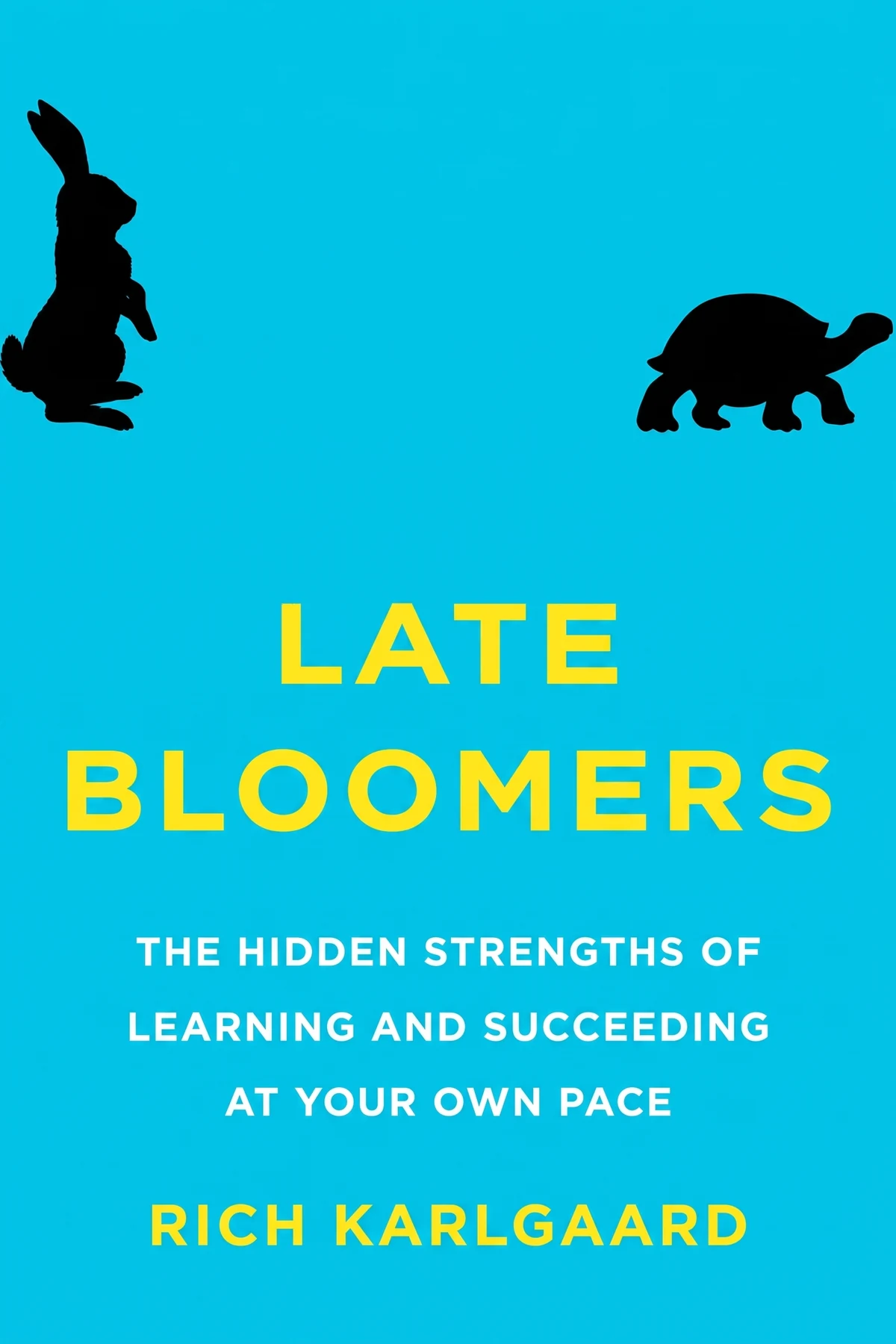
Table of Content
1. Introduction
51 sec
If you are past 25 and still waiting for your working life to take shape, Rich Karlgaard offers a reassuring fact: the human brain is often not fully mature until about that age. In Late Bloomers, the former Forbes publisher, who earned average grades at Stanford and drifted through odd jobs in his twenties, argues that our worship of early success is a cultural standard the brain was never built to meet. People mature at different speeds, and many rewarding paths open late.
Blooming late is normal, and it becomes a strength once you drop the wunderkind script and leave the settings that hold you back. Ahead are the hidden cost of the race to shine early, what brain science says about timing, and the abilities that grow with age. Then come two people who rebuilt their lives by moving into bigger pots.
2. Stop measuring your life against the wonder child
1 min 43 sec
Jonah Lehrer had three books, huge speaking fees and a Hollywood Hills home by 31. Stories like his set the bar for a whole generation, and the message they carry is harsher than it looks.
3. Escape the test score trap to protect young minds
1 min 54 sec
Tutors charging $1,000 an hour are one sign of a fierce admissions race. A researcher who studies teenagers points to a less obvious change: what young people are now taught to want.
4. Give your brain until 25 to finish
1 min 37 sec
At 25, the author discovered that a guard dog was doing the same job he was. What changed a few years later says a lot about how young brains really develop.
5. Use your twenties to explore on purpose
1 min 48 sec
Today’s 25-year-olds are far more likely than their parents were to still be studying. One psychologist sees a valuable life stage in that, on one condition about how the time is spent.
6. Count on new mental strengths after forty
1 min 41 sec
Some mental skills fade early, while others keep climbing for decades. A study of nearly 50,000 people and a look at air-traffic controllers show which abilities improve as you get older.
7. Build a career as a series of arcs
1 min 41 sec
Many firms push experienced people out the moment they stop rising. Karlgaard proposes a different shape for a career, and it asks something of employers and of the employees who stay.
8. Break free of the script your family wrote
1 min 31 sec
When the 2008 crash wiped out Erik Wahl’s business within weeks, the formula he had grown up with stopped working. What he tried next ended up paying more than his old career.
9. Repot yourself when you've outgrown your place
1 min 36 sec
A nickname from high school can follow you for twenty years, and so can an old role at work. One copywriter moved across the country and found an unexpected way out.
10. Conclusion
1 min 05 sec
Karlgaard’s book adds up to permission backed by evidence. Our culture invented the deadline that says you must have arrived by 30, and the brain does not keep to it. The brain finishes building itself in the mid-twenties and keeps adding strengths for decades after that. The security guard who once worked beside a barking Rottweiler became the publisher of Forbes. A Los Angeles copywriter wrote her first book in Vermont at 50.
The book supports a few practical habits. Judge your progress by your own growth, and leave the lists of the youngest and richest to the magazines. Spend slow years on curious, demanding work. Look after your health and keep learning, since some of your best abilities have not peaked yet.
Karlgaard also defends something many people feel ashamed of: quitting. Walking away from a bubble, a relationship or a job that keeps you small is not weakness if it frees you to chase something better. A rose bush that has stopped flowering in a cramped pot has not failed. It needs more room, and so, perhaps, do you.
About this book
What is this book about?
Magazines celebrate founders under 30. Families pour money into test preparation. Anyone who has not made it by their late twenties is made to feel they missed their chance. Rich Karlgaard spent his own twenties as an average Stanford graduate working odd jobs, and later became publisher of Forbes. He argues that the obsession with early achievement does real harm and fits badly with how people actually develop. His evidence comes from brain science and psychology. A National Institute of Mental Health study found brains maturing around 25. Jeffrey Arnett describes a life stage he calls emerging adulthood. Research by Laura Germine and Joshua Hartshorne shows that different mental abilities peak at ages ranging from the late teens to the early seventies. Karlgaard also looks at what the pressure is doing to young people's mental health, and at workplaces that push people out at their peak. He then turns to people who bloomed on their own terms. Erik Wahl became a performance artist after the 2008 crash. Kimberly Harrington left Los Angeles advertising for rural Vermont and wrote her first book at 50. Readers get a case for patience, plus practical permission to quit, reinvent themselves and change their surroundings.
Book Information
Who it's for
Twentysomethings who feel behind
Twenty-somethings who feel behind their peers and want evidence that a late start is normal.
Worried parents and teachers
Parents and teachers worried about test pressure and early-success expectations.
Rethinking work at mid-career
Mid-career professionals and managers rethinking promotion, retirement or a fresh start somewhere new.
About the Author
Rich Karlgaard
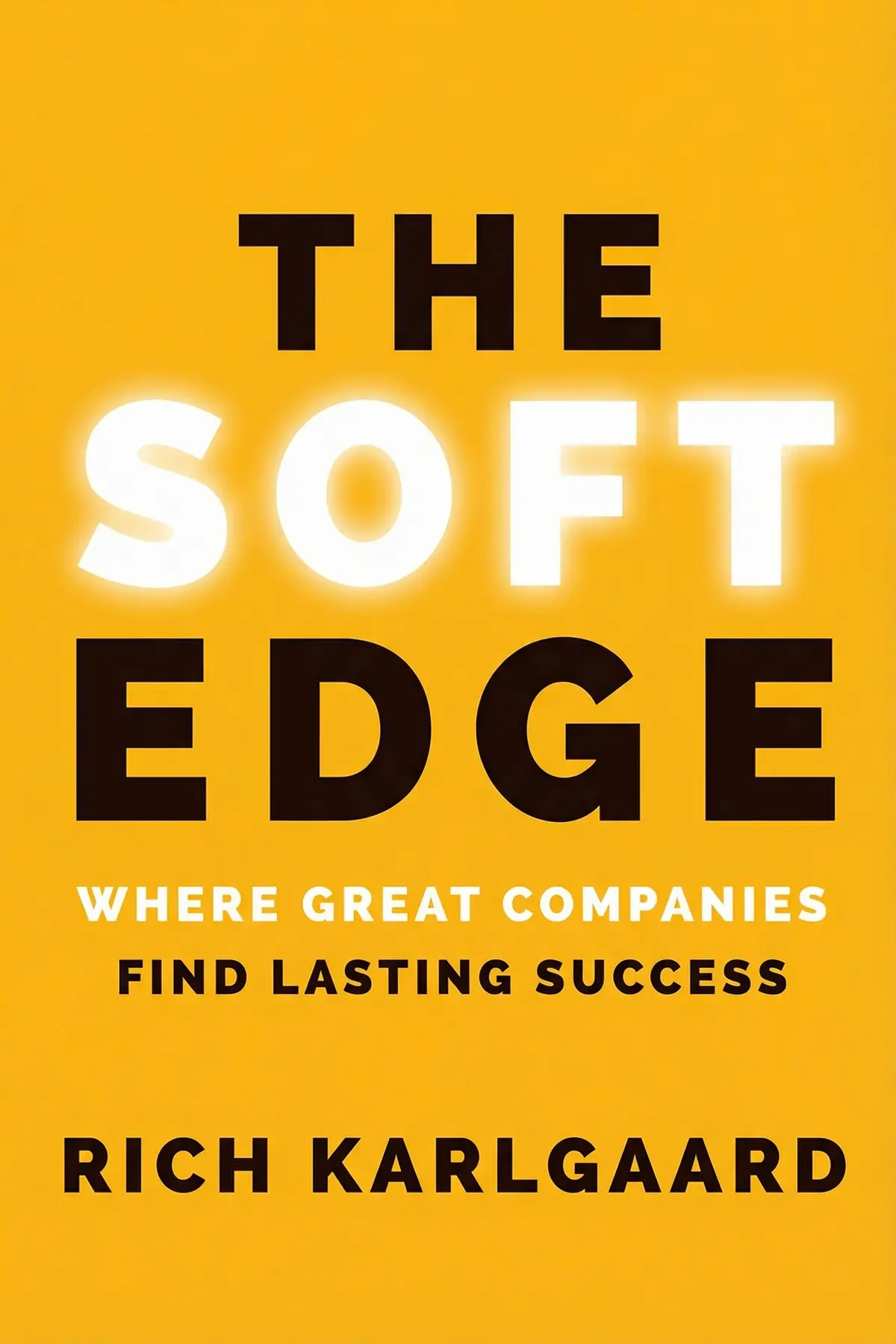
Rich Karlgaard is an entrepreneur, columnist, speaker and angel investor who has also served as a board director. In 1998 he took over as publisher of Forbes magazine, and he later advised the Forbes School of Business & Technology. His earlier books are Life 2.0, a Wall Street Journal business bestseller, and The Soft Edge, which looks at how great companies achieve lasting success. His own start was slow: average grades at Stanford and odd jobs through much of his twenties.
Ratings & Reviews
Ratings at a glance
What people think
Listeners find the book both motivating and heartening, with one listener remarking that it can be life-changing. The text also earns praise for being highly readable, as one listener highlights it as required reading for graduating seniors. However, the caliber of the writing and analysis yields a mixed reception; some find the prose well-written, but others criticize the poor analysis. Similarly, the content and characterizations provoke differing opinions, with one listener valuing the chapter about strengths of late bloomers, while another listener notes the author regurgitates well-known information. Finally, the book's post-modern approach is another element that divides opinions among listeners.
Top reviews
Ott
As someone who has always felt a step behind my peers, this book was a breath of fresh air. Rich Karlgaard provides a much-needed antidote to our society's obsession with early achievement and the 'Wunderkind' ideal. The concept of 'repotting' yourself into a more supportive environment really resonated with my own career path. It is incredibly reassuring to learn that our executive function and crystallized intelligence don't even peak until much later in life. While some sections delve deep into data, the stories of people like Frank McCourt kept me engaged. This should be required reading for anyone who feels like they missed their chance. It’s a life-changing perspective on human potential.
Show moreJoshua
Wow, I finally feel seen. This book is an emotional lifesaver for anyone struggling with self-doubt in a world that rewards 'raw synaptic speed' over everything else. Karlgaard uses his own fumbling start to show that a slow bloom is still a beautiful one. I loved the scientific breakdown of how our brains actually mature, specifically the bit about how innovation peaks in our late 40s. The advice to talk to yourself in the third person was a quirky but useful tip I’ve already started using. Not gonna lie, I cried a little reading about how we treat kids who don't fit the mold. This is an essential, sane perspective for our high-pressure times.
Show moreLayla
Ever wonder why we assume our brains are done evolving by twenty-five? This book explains why that's a total myth. Karlgaard breaks down the difference between fluid and crystallized intelligence in a way that is both accessible and inspiring. I’ve been feeling stagnant in my career lately, but reading about peak innovation ages gave me a second wind. The research is well-sourced and covers everything from neurobiology to the history of testing. It’s not just a self-help book; it’s a sociological critique of our obsession with youth. For those of us in our 40s and 50s, this is the ultimate validation that our best work is still ahead.
Show moreKaen
After hearing so much about the 'early achievement' cult, I found Karlgaard’s research on 'repotting' yourself to be life-changing. He effectively argues that our culture's obsession with 'raw synaptic speed' ignores the deep wisdom that only comes with age and experience. I loved the examples of people who didn't hit their stride until their 60s, like the author of 'The Boys in the Boat.' It gave me a burning sense of hope that my own greatest accomplishments are still on the horizon. The book is full of realistic strategies for those of us who feel like we're playing catch-up. If you've ever felt like a failure for not being a billionaire by thirty, buy this book immediately.
Show moreMethinee
Picked this up for a graduating senior but ended up devouring it myself first. The book is remarkably readable and serves as a powerful encouragement for those of us who didn't peak at twenty-two. Karlgaard’s exploration of why we shouldn't worship at the altar of standardized testing is timely, especially considering the current pressure on students. I particularly enjoyed the chapter detailing the unique strengths of late bloomers, such as increased curiosity and resilience. To be fair, the middle section can feel a bit like a collection of magazine articles stitched together. There is some 'fluff' that slows the tempo, but the overall message is too important to ignore. It’s a solid four-star read for any age.
Show moreMia
Truth is, we live in a culture obsessed with the 'Wunderkind' narrative, and Karlgaard provides a necessary, if slightly wordy, correction. The strengths he attributes to late bloomers—like compassion and resilience—are qualities we desperately need more of in leadership. I found the section on 'repotting' to be the most practical part of the text. It gave me the courage to look at my current environment and realize it wasn't my talent that was the problem, but the soil I was planted in. My only complaint is that the book is quite dense and could have been edited down. A 'Reader's Digest' version might actually be more effective for busy professionals. Still, it’s a very encouraging read.
Show moreSuthee
Finally got around to reading this during the recent college admission scandals, and it couldn't be more relevant. The pressure we put on children to be 'perfect' by age eighteen is clearly leading to a national mental health crisis. Karlgaard documents this toll with sobering statistics on teen depression and anxiety. I appreciated the stories of famous late bloomers like Winston Churchill, which reminded me that non-standard learning styles aren't defects. To be honest, I think he gives short shrift to the financial challenges of changing gears late in life. However, his psychological strategies for coping with self-doubt are genuinely helpful. It’s a very persuasive debunking of the cult of youth.
Show moreSuthida
The core message here is vital, yet the execution is frustratingly sloppy at times. Frankly, the author lost some credibility with me when he misidentified what the SAT stands for today and conflated IQ with standardized testing. These aren't just nitpicks; they suggest a superficial understanding of the academic metrics he spends so much time criticizing. Additionally, his analysis of the Elizabeth Holmes and Theranos situation felt misguided, as if he was trying too hard to fit a criminal case into a broader societal narrative about burnout. There is a good book hidden in here about the value of experience and wisdom. However, you have to wade through a lot of repetition and questionable logic to find it.
Show moreMeen
This book has an incredibly strong start that unfortunately devolves into a bit of a scattered mess. The premise—that we all bloom at different rates—is fantastic and highly relatable. However, the author gets sidetracked trying to tie every modern societal ill to the late bloomer problem. His take on the Theranos debacle felt particularly out of place and weakened his credibility for me. I also found the writing to be quite repetitive; he often takes three pages to explain a point that could be made in one paragraph. It’s an okay read if you’re looking for some motivation, but don't expect a tight, focused argument. It’s a bit of a disappointment overall.
Show moreWaree
I really wanted to love this, but the author’s definition of 'blooming' feels incredibly narrow and materialistic. Most of his examples are about people who eventually made millions or reached the top of their corporate ladder. What about the late bloomers who find peace, better relationships, or artistic fulfillment without a massive paycheck? He also glosses over the socio-economic realities that make 'starting over' impossible for many people. It’s easy to talk about resilience when you have a safety net, but much harder when you're living paycheck to paycheck. The writing is fine, but the analysis lacks the depth I was hoping for. It felt like a long-winded Forbes column rather than a rigorous study.
Show moreQuestions about this book
What is the main idea of Late Bloomers by Rich Karlgaard?
Karlgaard argues that society’s fixation on early achievement does harm and does not match how people develop. Brains are often not fully mature until about 25, and abilities such as reading emotions and accumulated knowledge peak decades later. Late bloomers, he says, reach their potential by resisting the wunderkind standard, shedding cultural expectations that do not fit them and leaving environments that box them in.
What does Late Bloomers say about brain development and age?
Karlgaard cites a National Institute of Mental Health study that followed 5,000 children into early adulthood and found that brains matured at 25 or later, with the prefrontal cortex developing last. He also cites research by Laura Germine and Joshua Hartshorne showing that skills peak at different ages. Processing speed peaks in the late teens, reading emotions in the forties or fifties, and accumulated knowledge in the late sixties or early seventies.
What is emerging adulthood?
Jeffrey Arnett, who teaches psychology at Clark University, coined the term emerging adulthood for a life stage that runs from about 18 to 30, between adolescence and young adulthood. He links it to fewer entry-level jobs, longer education and less hurry to marry. Karlgaard presents it as a useful time of discovery, especially when it is filled with demanding activities that help keep the brain flexible.
How can I apply the ideas in Late Bloomers?
Start by checking which influences from family, peers or society may be pushing you down a path that does not fit, as Erik Wahl found after 2008. If a job or community keeps you in an old role, consider repotting yourself with new people, a new job or a new place, as Kimberly Harrington did. Keep investing in your health, learning and curiosity, and do not be afraid to quit something that holds you back.
Readers also enjoyed


A High-Performing Mind: Strengthen Your Mind and Live Your Best Life
Andrew D. Thompson


Abundance: The Inner Path to Wealth
Deepak Chopra


60 Seconds & You’re Hired!
Robin Ryan



59 Seconds: Change Your Life in Under a Minute
Richard Wiseman

AUDIO SUMMARY AVAILABLE
Listen to Late Bloomers in 15 minutes
Get the key ideas from Late Bloomers by Rich Karlgaard, plus 5,000+ more nonfiction titles.
- 5,000+ titles
- Listen as much as you want
- 7-day free trial
- Cancel anytime









