

15 min 24 sec
Available in: English
 ไทย
EnglishไทยKnow My Name: A Memoir
Chanel Miller, known for years only as Emily Doe, tells how reporters, a defense team and a judge spoke over her after her assault at Stanford, and how she took back her voice and helped change the law.
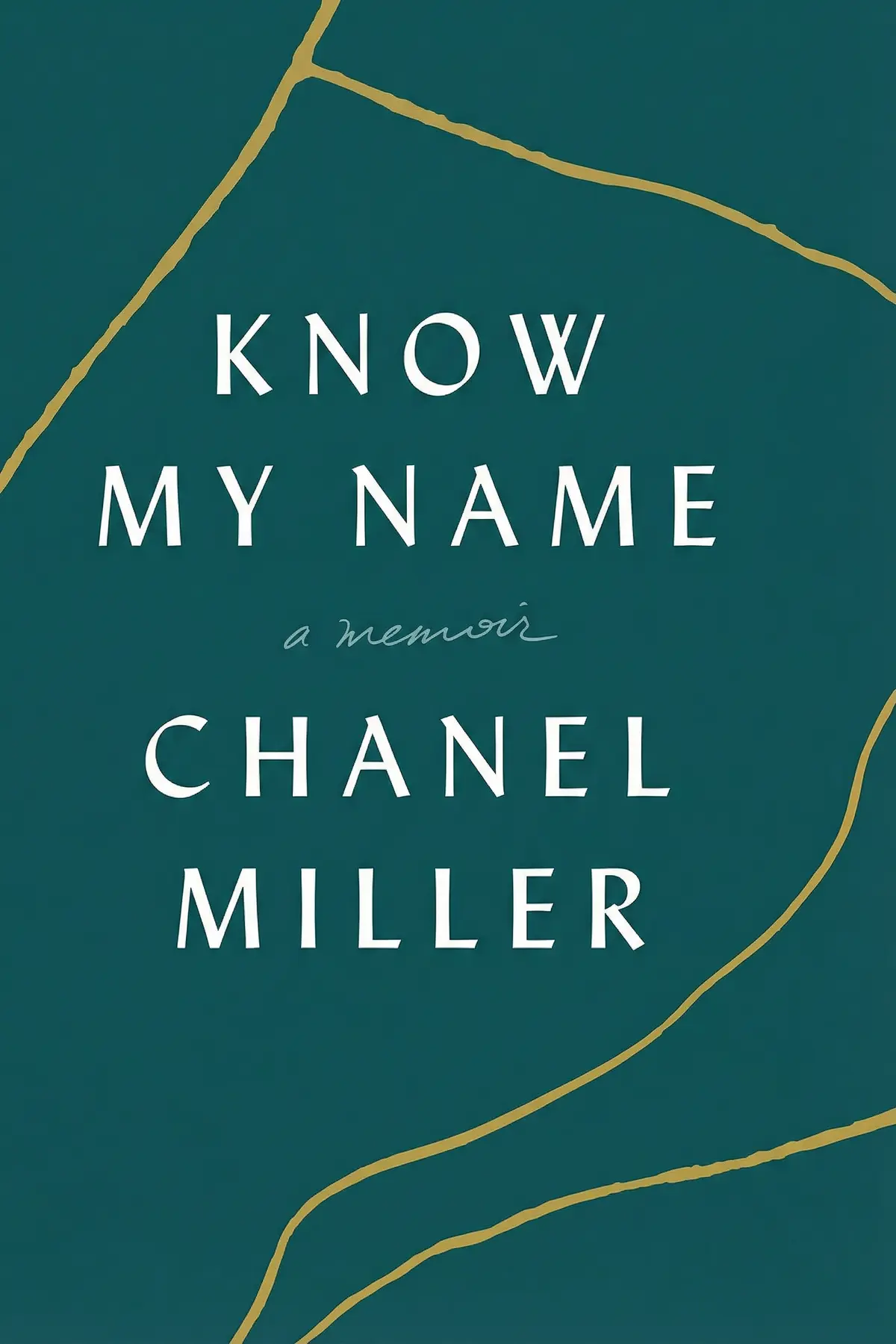
Table of Content
1. Introduction
59 sec
If you only know this case as a headline, you know it the way others chose to tell it: through the man who was charged. In Know My Name, Chanel Miller takes back the part of the story that was taken from her, beginning with her name. After Brock Turner sexually assaulted her on the Stanford University campus in January 2015, court papers called her Emily Doe. The press called her the victim, or Brock Turner’s victim, as if she were his property.
Miller shows that losing her name became a second injury on top of the first. Reporters, defense lawyers, a probation officer and a judge each spoke for her, and each bent what she meant. Her memoir follows how she won her voice back, in a courtroom, online, on a comedy stage and finally in the law. It trains your eye to see how blame drifts onto victims, and it shows how to stop passing it along.
2. See why the news knew her story first
1 min 38 sec
She woke beside a police officer with bruises she could not explain, and nobody would say what had happened. Ten days later, a text message at work told her where to look.
3. Spot the double standard in how victims are described
1 min 55 sec
Miller figured that anyone reading her words would feel the same horror she did. The comment section had other ideas, and the reporting itself gave one person a résumé and the other only a body.
4. Understand why a strong case still wounds the witness
1 min 57 sec
Her case had the eyewitnesses, nurses, detectives and prosecutor most survivors never get. That should have made the trial bearable. A question about rice or quinoa shows why it did not.
5. Hear whose voice a lenient sentence really served
1 min 49 sec
A probation officer asked Miller what she wanted and seemed to understand the answer. Then the report arrived. The gap between the two set up a sentence whose leniency would later spark a campaign to recall the judge.
6. Watch one statement reach fifteen million readers
1 min 58 sec
The words that changed nothing in court went online one afternoon, and Miller doubted anyone would read them. What happened over the following week reached newsrooms, Congress, the vice president and a ballot box.
7. Find what steadies someone when healing will not hurry
1 min 54 sec
The author of a statement that moved millions still could not sleep through the night. Her recovery never followed a neat arc, and what helped came from places a courtroom would never think to look.
8. Turn a private wound into a shared cause
1 min 57 sec
For years Miller wished the night had simply never happened. A message from a teenager she had never met changed that wish, and her case went on to change what California law says about rape.
9. Conclusion
1 min 17 sec
Know My Name is, finally, the story of a name given back. For years a young woman was described by a role, a body and a list of drinks. The man charged was described by his sport and his prospects. Each voice that claimed to speak for her, from the comment threads to the probation report to the bench, swapped her meaning for its own. What turned things was her account in her own words. Millions read it, it sparked a recall drive with more than 95,000 signatures, and it fed into changes to California law.
Miller argues that Stanford’s profile and Turner’s privilege drew unusual attention to her case. What she endured, though, is shared by countless women in the court system, so her story is useful far from one courtroom. When you read about an assault, notice which person the story treats as fully human. When someone tells you about harm done to them, leave out the question of why they did not fight back. And when talk at work or among friends turns to jokes that demean women, say so plainly.
She entered court as Emily Doe. She leaves this book as someone whose name you know.
About this book
What is this book about?
Between January 2015, when she was assaulted sexually on the campus of Stanford University, and September 2019, Chanel Miller went without a public name. Court papers called her Emily Doe, and news stories called her the victim. Readers blamed her for drinking, and reporters praised the swimmer charged with the crime. A probation officer and a judge then reshaped her wishes and her pain to suit their own conclusions. In this memoir, Miller tells the story from inside that silence. She covers learning the facts of her assault from an online article, a trial built to make her look unreliable, and a lenient sentence. Then her victim impact statement was viewed over 15 million times, led to a judge's recall and helped bring changes to California law. She is just as honest about the slower work of healing, through family, printmaking and stand-up comedy. Readers get a clear view of how victim blaming works in headlines, courtrooms and everyday talk, and practical ways to stop repeating it.
Book Information
Who it's for
Followed the Stanford case
Readers who followed the Stanford case in headlines and want the survivor's own account.
Handling reports of harm
Team leads and HR staff who handle reports of harm and want to see how blame gets shifted.
Survivors and their supporters
Survivors and the people supporting them who need an account of healing that is honest about setbacks.
About the Author
Chanel Miller
Chanel Miller is a writer and artist from Palo Alto, California, born in 1992, and a literature graduate of the University of California, Santa Barbara. Following her assault at Stanford University in January 2015, court papers and news reports referred to her as Emily Doe. Her victim impact statement, later posted online by BuzzFeed, found an enormous readership. In September 2019 she made her name public and released Know My Name, her first book. It became a New York Times bestseller and earned the National Book Critics Circle Award for Autobiographies that year.
Ratings & Reviews
Ratings at a glance
What people think
Listeners find this memoir exceptionally well-crafted and believe it is essential reading for women, praising the eloquent and impactful way Chanel recounts her survival. The story is both heart-wrenching and deeply stirring, with listeners noting that the author’s raw emotion is felt throughout the narrative. Listeners describe the account as immensely inspiring; one listener highlights Chanel’s transition from trauma to a life of strength and dignity. Listeners appreciate the author’s vulnerability in detailing her brutal experiences, while one listener points out how the book serves as a powerful indictment of the system.
Top reviews
Sook
This memoir is a masterclass in reclaiming one's narrative after the world tries to strip it away. I remember reading the viral victim impact statement years ago, but hearing the full context of what Chanel endured is devastating. Her writing is poetic yet sharp, cutting through the legal jargon to reveal the raw humanity underneath the "Emily Doe" label. It's an indictment of a system that protects "promising" young men while putting survivors under a microscope. I was moved to tears by her resilience and her choice to include the kintsugi metaphor on the cover. This isn't just a book about assault; it’s about a woman finding the strength to be whole again.
Show moreAir
How can a system designed for justice be so inherently cruel to the people it’s supposed to protect? Miller answers this question with heartbreaking precision as she recounts the years spent fighting for a shred of accountability. I appreciated the connections she drew between her experience and broader issues of institutional bias. Frankly, the descriptions of the trial are harrowing, but they are necessary to feel the exhausting, slow-motion torture of the legal process. Her prose is stunningly beautiful, almost too beautiful for such a dark subject matter. It is a necessary, albeit painful, look at the reality of being a survivor in modern America. Everyone should read this.
Show moreBee
Everyone needs to stop what they’re doing and read this immediately. I expected it to be powerful, but I didn't expect Miller to be one of the best writers I've encountered in years. The way she describes her inner life—the fear, the confusion, and eventually the rage—is so vivid it feels like you're standing right beside her. Not gonna lie, I had to put it down a few times because the emotional weight was just so heavy. Seeing her step out from behind the dumpster and take back her name is the most inspiring thing I’ve read all year. It’s a survival story that refuses to be silenced or minimized.
Show moreMikael
Wow. I am completely speechless after closing the final page of this book. Chanel Miller has a gift for words that is almost transcendent. She takes a horrific event and turns it into a beacon of hope and a call for radical change. The contrast between the cold, sterile courtroom and her rich, vibrant internal world is striking. I loved the mention of her dream to write children’s books; she is such a phenomenal role model regardless of what happened to her. This book is a gut punch, a warm hug, and a battle cry all rolled into one. It is a stunning achievement that I will never forget.
Show morePia
The sheer bravery required to write this book is unfathomable to me. Miller doesn't just tell her story; she dissects the entire culture that allowed her attacker to be treated as the victim because of his athletic potential. To be fair, the details of the cross-examination were some of the most infuriating things I’ve ever read. You feel her frustration and her exhaustion in every sentence. It is a vital piece of literature that should be required reading in every college orientation program. We need more voices like hers to expose the cracks in the foundation of our society. Her rise from trauma to such strength and dignity is absolutely breathtaking.
Show moreAnong
After hearing about the Brock Turner case for years, I thought I knew everything there was to know. I was wrong. Miller provides a perspective that the news headlines never could, detailing the quiet moments of despair and the small victories of healing. The kintsugi theme—the idea that something broken can be mended with gold—is woven so perfectly through the narrative. It’s a gorgeous metaphor for her journey from a nameless victim to a woman standing tall in her own identity. I finished this book feeling a mix of incandescent rage and profound hope. Truth is, we don't deserve Chanel Miller, but we desperately need her words. This is a life-changing memoir.
Show moreAey
“Stay tender with your power.” That quote from the end of the book will stay with me for the rest of my life. Chanel Miller is a force of nature, and her ability to remain soft while fighting such a hard battle is inspiring. The way she describes the aftermath of the assault—the feeling of being a "discarded body"—is visceral and haunting. Yet, she refuses to let that be the end of her story. This book is an elegant, fierce reclamation of self. It’s about more than just a trial; it’s about what it means to be a woman in a world that often refuses to see you as a person.
Show moreSuthee
Miller’s prose is so melodic and thoughtful that it almost feels like reading poetry at times. Even when she is describing the most stomach-churning facts of her assault and the subsequent investigation, her voice remains steady and insightful. She has this incredible way of using metaphors to explain complex emotions that are usually impossible to articulate. Personally, I found the chapters about her family and her sister especially moving, showing the ripple effect that trauma has on everyone in a survivor's life. It is an emotionally devastating read, but it is also incredibly empowering. She is no longer just a headline or a case number. She is Chanel, and her name carries weight.
Show moreNim
Picked this up because I wanted to support the author, but I stayed for the incredible storytelling. It’s rare to find a memoir that is this well-written and this socially significant at the same time. Look, the book is quite a heavy commitment and the middle portion regarding the depositions felt a bit drawn out at points. However, those details are necessary to understand how the legal system tries to break a person down. Miller’s resilience is nothing short of heroic. She took the gold of her own spirit and filled in the cracks left by her trauma. I’m giving this four stars for the pacing, but the message itself is a ten.
Show moreJack
I struggled to finish this one. Chanel Miller is an incredible writer and her ability to analyze her own trauma with such clarity is truly remarkable, especially during the chapters about the trial. However, the book felt significantly longer than it needed to be. I found myself skimming several sections in the middle because the narrative became quite repetitive. While I believe her voice is essential and her victim impact statement was world-shifting, the editing could have been tighter to keep the momentum going. It's a heavy, important read, but the pacing made it a bit of a slog for me personally. I respect her journey, but the length was a hurdle.
Show moreQuestions about this book
What is Know My Name by Chanel Miller about?
It is the memoir of the woman known in court as Emily Doe, who was sexually assaulted by Stanford student Brock Turner in January 2015. Miller describes learning the details from a news article and facing victim blaming in comments and coverage. She also covers a hostile trial, a guilty verdict, a lenient sentence and her victim impact statement reaching 15 million readers. Running through it all is her fight to be heard in her own words.
Why was Chanel Miller called Emily Doe?
Emily Doe was the name used in court to protect her anonymity during the case against Brock Turner, which lasted three years and eight months. It kept strangers from knowing she was the woman in the news. Miller describes how it also isolated her and left her with no public voice. Reporters, lawyers and officials described her while she could not answer. Choosing to share her real name became the heart of the book.
What happened to Judge Aaron Persky after the Brock Turner sentence?
Persky gave Turner six months in county jail and three years of probation, and Turner served three months. Stanford law professor Michele Dauber then led a campaign to recall the judge, which is very unusual. Volunteers needed at least 90,000 signatures to reach the ballot and gathered over 95,000. In the vote, 61.51 percent of Santa Clara voters chose to remove him from the bench.
How can I apply the lessons of Know My Name?
Miller’s story suggests a few habits. When reading about an assault, notice who is given a name and a future and who is reduced to what she drank. When someone shares harm done to them, avoid asking why they did not fight back, a question nobody asks victims of other crimes. If you are male-identified, watch your own language and call out friends or colleagues who make sexist jokes.
Readers also enjoyed

A Promised Land
Barack Obama


A River in Darkness: One Man’s Escape from North Korea
Masaji Ishikawa


A Spy Among Friends: Philby and the Great Betrayal
Ben Macintyre

A Biography of Loneliness: The History of an Emotion
Fay Bound Alberti


A Force for Good: The Dalai Lama's Vision for Our World
Daniel Goleman

A Year in the Life of William Shakespeare: 1599
James Shapiro
AUDIO SUMMARY AVAILABLE
Listen to Know My Name in 15 minutes
Get the key ideas from Know My Name by Chanel Miller, plus 5,000+ more nonfiction titles.
- 5,000+ titles
- Listen as much as you want
- 7-day free trial
- Cancel anytime









