

13 min 56 sec
Available in: English
 ไทย
EnglishไทยKnife: Meditations After an Attempted Murder
Rushdie's account of surviving a near-fatal stabbing in 2022: how he rebuilt his body with patient work and his wife's support, faced his attacker in imagination, and recommitted to fighting extremism with words.
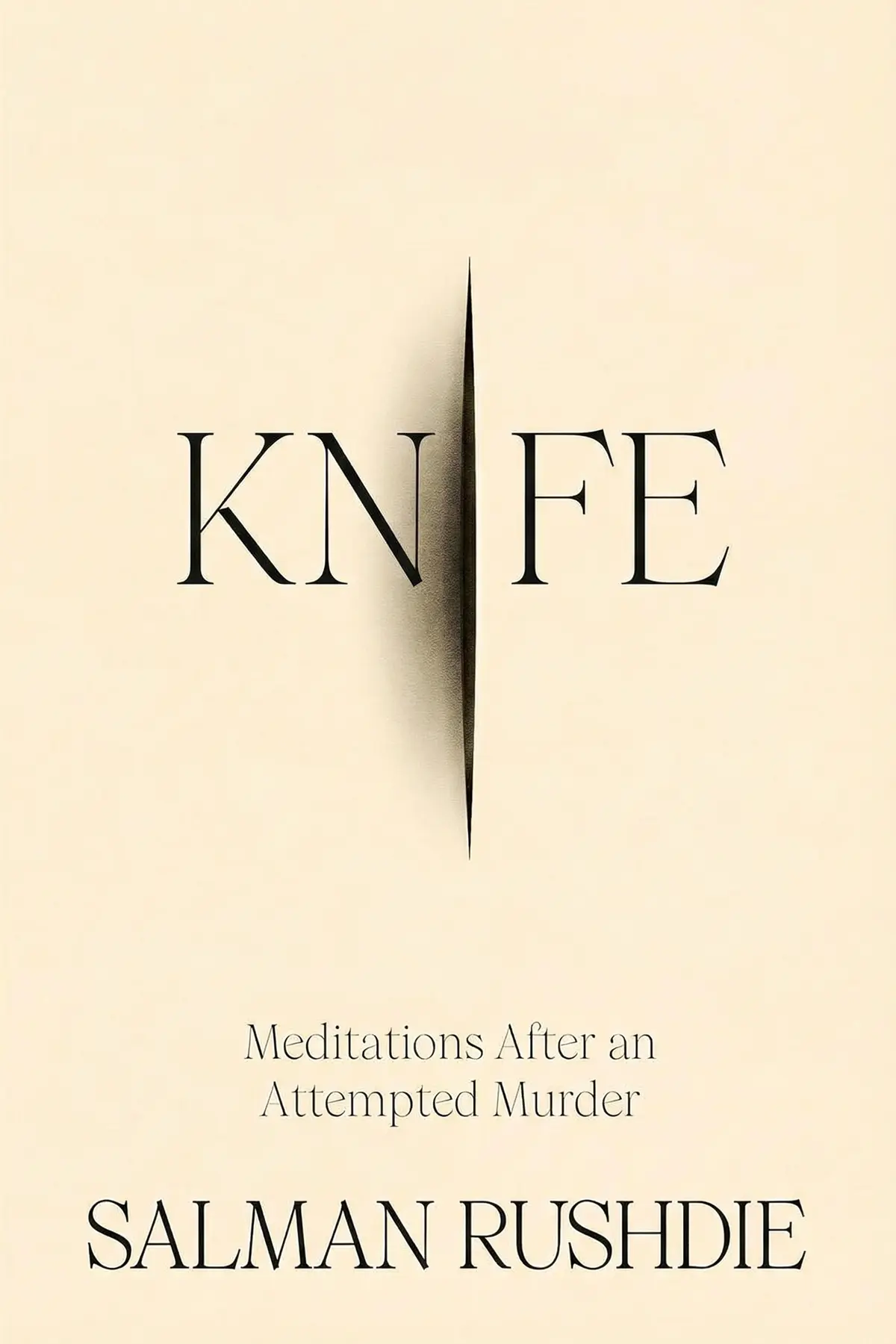
Table of Content
1. Introduction
1 min 06 sec
When something terrible happens, the instinct is to get past it as quickly as possible. Salman Rushdie found the opposite: after a knife nearly killed him, he could not move on until he had written his way through it. Knife: Meditations After an Attempted Murder is the result. In August 2022, over three decades after Iran’s ruler demanded that he be killed, a man aged 24 ran at him at a public event and knifed him roughly fifteen times. Even his surgeons doubted he would live.
The book follows what the attack took, what it cost to stand up again, and what a survivor owes the time he never expected to have. The thread running through it is easy to say and hard to live: Rushdie answered the knife with the very things it was meant to silence, love, stubborn daily effort and language itself. Along the way you hear how a man rebuilds a hand one finger at a time, argues with his attacker inside his own imagination, and walks back onto the stage where he fell.
2. Twenty-seven seconds that reveal what you truly love
1 min 50 sec
A talk about keeping writers safe was moments away when a man ran at the stage. What Rushdie thought about as he lay bleeding is stranger, and more revealing, than anyone would guess.
3. Survival starts with the people at your bedside
2 min 04 sec
The surgeons who saved him did not expect him to live, and his first visions were made of letters. A date on the hospital calendar made the boundary between his life and his novels feel thin.
4. Relearn the basics and keep your sense of humor
1 min 56 sec
A famous novelist arrived at rehab disguised as a corpse and then had to learn the simplest tasks all over again. A comic-book hero, of all things, helped him through it.
5. Small physical wins can rebuild a whole life
1 min 45 sec
Six months with a demanding therapist came down to one tiny movement of two fingers. Then a dinner date fell on an anniversary he had stopped counting long ago.
6. Disarm hatred by imagining the mind behind it
2 min 12 sec
His attacker had read two pages of the novel he hated. So Rushdie gave him a voice, argued with him, and found out exactly where that conversation had to end.
7. A second chance comes with work attached
1 min 52 sec
A famous novelist once wrote that we only get to live once. Back in his own bed, Rushdie disagreed, and the use he chose for his extra time led him back to the scene.
8. Conclusion
1 min 11 sec
Knife is a short title for a book about the oldest contest in Rushdie’s life, words against violence. The blade was meant to end a writer. Instead it produced another book, written by a man who lost an eye, regained a hand and refused to let 27 seconds decide what his life would mean.
What makes the story useful beyond the headlines is how ordinary the rebuilding was. A hand therapist named Monica and six months of painful exercises. A wife who arranged guards and apartments. A son who heard a Wolverine joke. A dinner out on a date that once marked a call for his death.
If you are recovering from something, the book supports a few plain habits. Count the specific things you can do again, the way Rushdie celebrated a thumb meeting a little finger. Let the people who love you carry what you cannot. When someone wishes you harm, try to imagine them fully, even if they never do the same for you.
Rushdie went back to the stage where he fell and stood there holding Eliza. The fight continues, he says, and he means to wage it as he always has, with language.
About this book
What is this book about?
In August 2022, Salman Rushdie was about to give a talk in Chautauqua, New York, when a 24-year-old man ran onto the stage and stabbed him around fifteen times. More than three decades had passed since Iran's Ayatollah Khomeini called for his death over The Satanic Verses. Rushdie lost his right eye, and his doctors did not expect him to survive. Knife is his reckoning with that attack. He describes the 27 seconds themselves, the trauma center in Pennsylvania, the long months of rehab and hand therapy, and the part played by his wife, Eliza, who guarded his recovery. He also does what only a novelist can: he imagines a conversation with his attacker and tests the certainty behind the knife. Readers get an intimate picture of how a life is rebuilt from small, painful steps. They also get a clear statement of what Rushdie means to do with the time he was given: keep fighting intolerance, disinformation and the use of religion as a weapon, with words.
Book Information
Who it's for
Still recovering
Readers recovering from illness, injury or trauma who want an honest picture of slow, unglamorous healing.
Caring about free expression
Writers, journalists and students who care about free expression and what it can cost.
Unsettled by extremism
People unsettled by extremism and online disinformation who want a survivor's answer to hatred.
About the Author
Salman Rushdie
Salman Rushdie was born in Bombay in 1947 and studied history at King's College, Cambridge. His second novel, Midnight's Children, won the Booker Prize in 1981, and his fiction often blends magical realism with history to explore the ties and fractures between East and West. After The Satanic Verses appeared in 1988, he lived under death threats, including a fatwa from Ayatollah Khomeini, and he described those years in Joseph Anton: A Memoir. He was knighted in 2007, has lived in the United States since 2000, and became a Distinguished Writer in Residence at New York University in 2015.
Ratings & Reviews
Ratings at a glance

What people think
Listeners consider this work a valuable account of resilience and affection, featuring refined writing that offers a glimpse into the writer's personal history. Listeners call the story gripping, with one listener suggesting it should be mandatory reading for high schoolers, while another points out its close-up depiction of selfhood amidst tragedy. The memoir is touching, as one listener remarks on its inclusion of a gentle romance, and listeners value the nuanced imagery alongside the writer's remarkable bravery.
Top reviews
Kevin
Wow. This is a staggering testament to the human spirit that manages to be both horrifying and incredibly hopeful. Rushdie takes an act of senseless brutality and answers it with the only weapon he has left: his words. I was particularly moved by the way he describes his wife, Eliza, and the community of writers who rallied around him. While some might find the medical minutiae a bit tedious, it highlights the grit required for such a recovery. He doesn't just recount a stabbing; he reclaims his life from the man he calls 'Mr. A.' It's a meditation on survival that feels like a necessary piece of history. The prose is elegant, stripping away the usual ornaments to get to the core of his experience.
Show moreChanpen
Ever wonder how an artist survives the very thing they’ve feared for decades? Rushdie provides a profound answer in this volume, blending his sharp wit with a new, quiet vulnerability. This isn't just a book about a knife attack; it's a tender love story about the people who pull us back from the brink. The way he discusses his loss of sight in one eye is handled with such grace and lack of self-pity that it’s hard not to be moved. It is a mandatory read for anyone who cares about the intersection of art and political courage. Truly, his head is bloody but remains unbowed against the ignorance of his attacker.
Show moreBoss
Finally got around to reading this, and I'm struck by how Rushdie uses language to heal. The prose is elegant and precise, stripping away the usual ornaments to get to the core of his experience. It’s an intimate self-portrait that doesn’t shy away from the gruesome reality of his injuries or the fear that haunted his family for months. Seeing him return to the site of the attack at the end of the book provided a sense of closure that felt earned. This is a masterclass in how to turn a tragedy into a work of enduring art. It's a small book but carries the weight of a lifetime.
Show moreWacharapol
As someone who found 'Midnight's Children' to be a bit of a slog, I was surprised by how quickly I flew through this. It’s a compelling narrative that moves between the terrifying seconds of the attack and the long, slow months of hospital stays and surgeries. Rushdie captures the absurdity of being targeted for a book written thirty years ago with his signature intelligence. While I think the section where he talks to 'Mr. A' was a bit of a misfire, the rest of the book is incredibly strong. It’s heartwarming to see how much support he received from the world during his darkest hour. Truly a courageous piece of writing.
Show morePierre
After hearing about the Chautauqua attack, I felt compelled to read Rushdie’s own perspective on that day. The truth is, this book is far more than a simple true crime memoir; it’s an intimate portrait of a man confronting his own mortality. I appreciated the shift from his usual flamboyant, magical realism style to something much more sober and direct. The focus on his physical rehabilitation was eye-opening and deeply humanizing. Some might say it feels a bit like a diary, but that’s exactly what makes it feel so authentic and raw. It’s a powerful statement on why we must protect the freedom to write, even when the cost is unimaginably high.
Show moreManee
The chapter on the 'imaginary interview' was easily the strangest part of this entire experience. I understand why Rushdie felt the need to confront his assailant on the page, but it came across as a bit staged and repetitive compared to the rest of the text. Still, the book offers a fascinating look at the logistical nightmare of surviving such a public assassination attempt. I found his reflections on the long-term impact of the fatwa to be the most compelling sections. It's a solid read—informative and important, though it occasionally loses its way in the weeds of his personal life. His resilience is undeniable, even when the narrative flow stumbles.
Show moreGame
This memoir caught me off guard with its sheer emotional weight. I’ve always found Rushdie’s fiction a bit dense, but 'Knife' is remarkably lucid and accessible. He navigates the trauma of August 2022 with a poise that is frankly inspiring, focusing on the 'victory' of living rather than the victimhood of the event. My only minor gripe is that he occasionally name-drops his famous friends in a way that feels a bit like a social register. However, his gratitude toward the medical staff and his family is so genuine that it balances out the moments of self-importance. It’s a heartwarming narrative of survival that reminds us why stories matter.
Show moreLandon
Look, this is a very worthy narrative of survival, but it doesn't quite reach the heights of his best work. It functions well as a direct account of the medical and emotional logistics following a tragedy. I liked the focus on his wife and children, which added a layer of warmth to the otherwise clinical descriptions of his surgeries. It’s a bit surface-level in parts, and I would have loved more deep philosophical reflection on how this changed his view of fiction. That said, it’s a brave book that deserves a spot on any contemporary bookshelf. It provides a rare, firsthand look at the cost of free speech in our modern world.
Show moreFon
Picked this up with high expectations, but I found the execution to be a bit of a mixed bag. To be fair, the account of the attack itself is gripping and harrowing, yet the middle section drags significantly. Rushdie spends an inordinate amount of time on his social circle and certain luxury items—like a ruined suit—that felt strangely out of place given the gravity of the situation. The imagined dialogue with his attacker was particularly jarring and didn't offer the psychological insight I was hoping for. It felt more like a therapy exercise than a cohesive narrative. He is undeniably a master of prose, but here the ego sometimes overshadows the actual trauma.
Show moreSelin
Personally, I struggled to finish this because the tone felt so incredibly self-centered at times. I have nothing but sympathy for the horrific violence Rushdie endured, but the writing here feels remarkably bereft of any real self-reflection or humility. He spends pages gushing about his relationship in a way that feels more like a performance than a deep exploration of love. The obsession with his status in the literary world and the trivial details of his recovery made it hard to connect with the larger themes of survival. It’s a disappointing follow-up to such a monumental life event, feeling more like a basic diary than a polished, philosophical memoir.
Show moreQuestions about this book
What is Knife by Salman Rushdie about?
Knife is Rushdie’s account of the 2022 attack in which a 24-year-old man stabbed him around fifteen times at the Chautauqua Institution in New York. He describes the attack, his surgeries, months of rehabilitation and hand therapy, and the support of his wife, Eliza. He also imagines a conversation with his attacker and explains how the experience renewed his commitment to fighting extremism and disinformation with words.
What injuries did Salman Rushdie suffer in the Chautauqua attack?
The knife struck his left hand, abdomen, neck and right eye. Surgeons in Erie, Pennsylvania, treated wounds to his eye, chest, neck and liver, and doctors told him they had not expected him to survive. He lost his right eye permanently. After six months of painful therapy, his left hand recovered enough to type, tie shoelaces and hold a full glass of water.
Who is the A. in Knife?
Rushdie calls his attacker only the A., for assailant or would-be assassin. From news reports and a New York Post interview, he learned the young man from New Jersey admired Ayatollah Khomeini and had read just two pages of The Satanic Verses. Rushdie writes an imagined dialogue with him, questioning his certainty about religious truth, before tiring of a man who never imagined him as a real person.
What does Rushdie decide to do with his second chance?
Disagreeing with Milan Kundera’s view that we live only once, Rushdie treats his survival as a second chance with a purpose. He commits to opposing oppressive ideologies, false narratives and the use of religion as a weapon, while respecting private faith. He accepts his role as a symbol of free expression and names love and work as the principles that will guide him.
Who should read Knife?
It suits readers facing a long recovery who want an honest view of how healing actually happens, through small physical milestones and the help of loved ones. It also speaks to writers, students and anyone concerned about free speech, religious extremism and online disinformation, offering a survivor’s reply to violence that relies on imagination, love and language rather than revenge.
Readers also enjoyed

A Promised Land
Barack Obama


A River in Darkness: One Man’s Escape from North Korea
Masaji Ishikawa

A Spy Among Friends: Philby and the Great Betrayal
Ben Macintyre


A Year in the Life of William Shakespeare: 1599
James Shapiro


Agent Sonya: The Spy Next Door
Ben Macintyre
AUDIO SUMMARY AVAILABLE
Listen to Knife in 15 minutes
Get the key ideas from Knife by Salman Rushdie, plus 5,000+ more nonfiction titles.
- 5,000+ titles
- Listen as much as you want
- 7-day free trial
- Cancel anytime









