
13 min 44 sec
Available in: English
Just Keep Buying: Proven ways to save money and build your wealth
Shows how to decide what to save, invest, borrow and spend from your own income and goals instead of one-size-fits-all rules. It also argues that steadily buying stocks is the surest way to grow wealth.
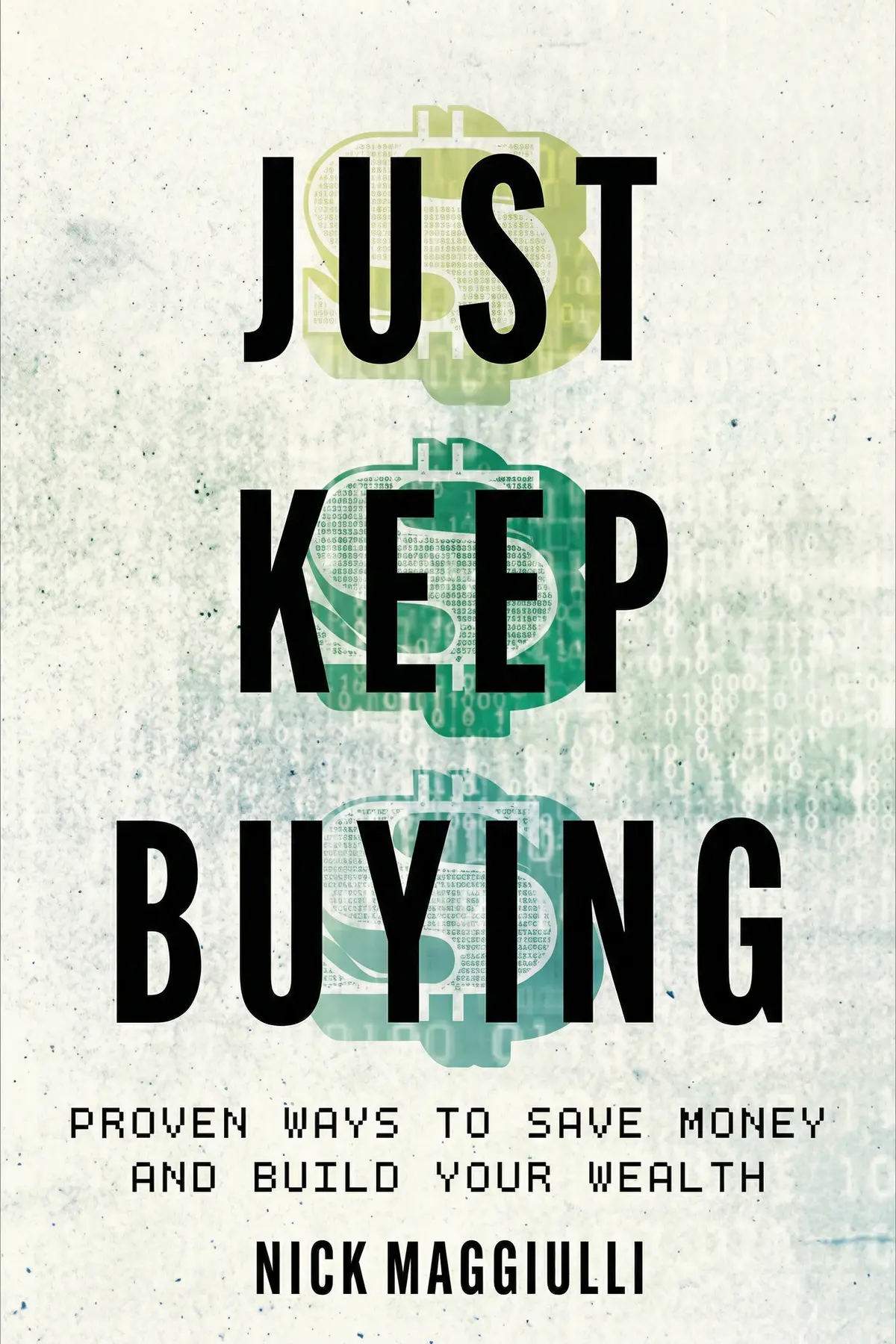
Table of Content
1. Introduction
59 sec
If money advice leaves you guilty about every coffee and still unsure how much to save, the fault may lie with the advice, not with you. In Just Keep Buying, data scientist Nick Maggiulli argues that most money rules fail because they pretend one answer fits everyone. In the United States, the lowest-earning fifth of people typically save about 1 percent of their income, while the top fifth save 25 percent. A single savings target ignores that arithmetic.
Maggiulli’s alternative is a realist’s approach. The right choice about saving, investing, borrowing or spending depends on your situation, and he builds the case with help from an Alaskan fish, a racehorse buyer, desert flowers and a lot of data. Follow his reasoning and you get a savings number you can actually reach and a reason to keep investing when markets disappoint. You also get a fairer view of debt and permission to spend on what makes your life better.
2. Save more in good years and less in lean ones
2 min 14 sec
Biologists were puzzled by a fish that thrives in streams with almost nothing to eat for most of the year. Its survival trick turns out to be the best savings rule most people have never heard.
3. A savings target built from your real numbers
2 min 09 sec
Tracking every cent you spend is standard advice, and almost nobody manages it, including the author. There is a faster way to learn what you can really save, and what to do if it falls short.
4. Keep buying stocks, even when markets disappoint
2 min 28 sec
A racehorse buyer measured nostrils, bloodlines and even droppings before one overlooked organ revealed the winners. Investing has a similar single fact, and it holds up even in a market that has gone nowhere for decades.
5. Use debt as a tool that serves your goals
2 min 19 sec
Paying off a credit card the moment you can looks like the obvious smart move. Desert flowers that refuse to sprout in perfect weather suggest that, for some people, it can be the riskier choice.
6. Spend without guilt on what fulfills you
2 min 24 sec
Money worries top the list of stresses year after year, and even multimillionaires fear they have not saved enough. Researchers found that the guilt itself may be doing more harm than the spending it targets.
7. Conclusion
1 min 11 sec
The thread through Just Keep Buying is that money rules only make sense once you know whose life they apply to. The charr eats heavily when the salmon come and lives lean when they leave. The desert flower keeps seeds in reserve. Neither follows a fixed quota, and both survive. Maggiulli asks you to handle your finances the same way. Be a realist who works from the truth about your income, your risks and your values, and stop chasing someone else’s percentage.
That realism is also a relief. It lifts the guilt from a lean year, from a card balance kept for safety and from a coffee that helps you work well. What it asks in return is honesty and patience. Write down your income and your estimated spending, save what that gap allows this month, and save more when it widens. Put the money into a broad spread of stocks and keep adding, especially when the market looks dull. Before you borrow, repay or buy, ask whether the choice moves you toward the life you want.
Buying every year through Japan’s long slump still turned $33,000 into $59,000. Steady beats perfect.
About this book
What is this book about?
Most money advice comes as fixed rules. Save 20 percent. Never carry credit card debt. Skip the daily coffee. Nick Maggiulli argues that these rules often rest on poor data and on the false idea that what is good or bad is the same for everyone. In practice, they leave many people feeling guilty and anxious instead of helping them. Maggiulli, a data scientist, takes a realist's view: the right financial choice depends on context. He draws lessons from an Alaskan fish that resizes its own organs, a racehorse buyer who finally found the one measurement that mattered, and desert flowers that hold back seeds. These lead to a set of practical positions. Save what you can when you can. Raise your income instead of gutting your quality of life. Keep buying stocks, even in weak markets. Treat debt as a tool. Spend on what builds long-term fulfillment. Readers come away with a simple method for finding a realistic savings figure, a data-backed reason to keep investing through dull years, and a way to judge debt and spending that replaces guilt with clear questions.
Book Information
Who it's for
Young professionals second-guessing spending
Young professionals who feel guilty about spending and confused by conflicting savings rules.
Living on irregular incomes
People with irregular or changing incomes who need a savings approach that bends with their lives.
New investors second-guessing buying
New investors tempted to stop buying when markets look weak or flat.
About the Author
Nick Maggiulli
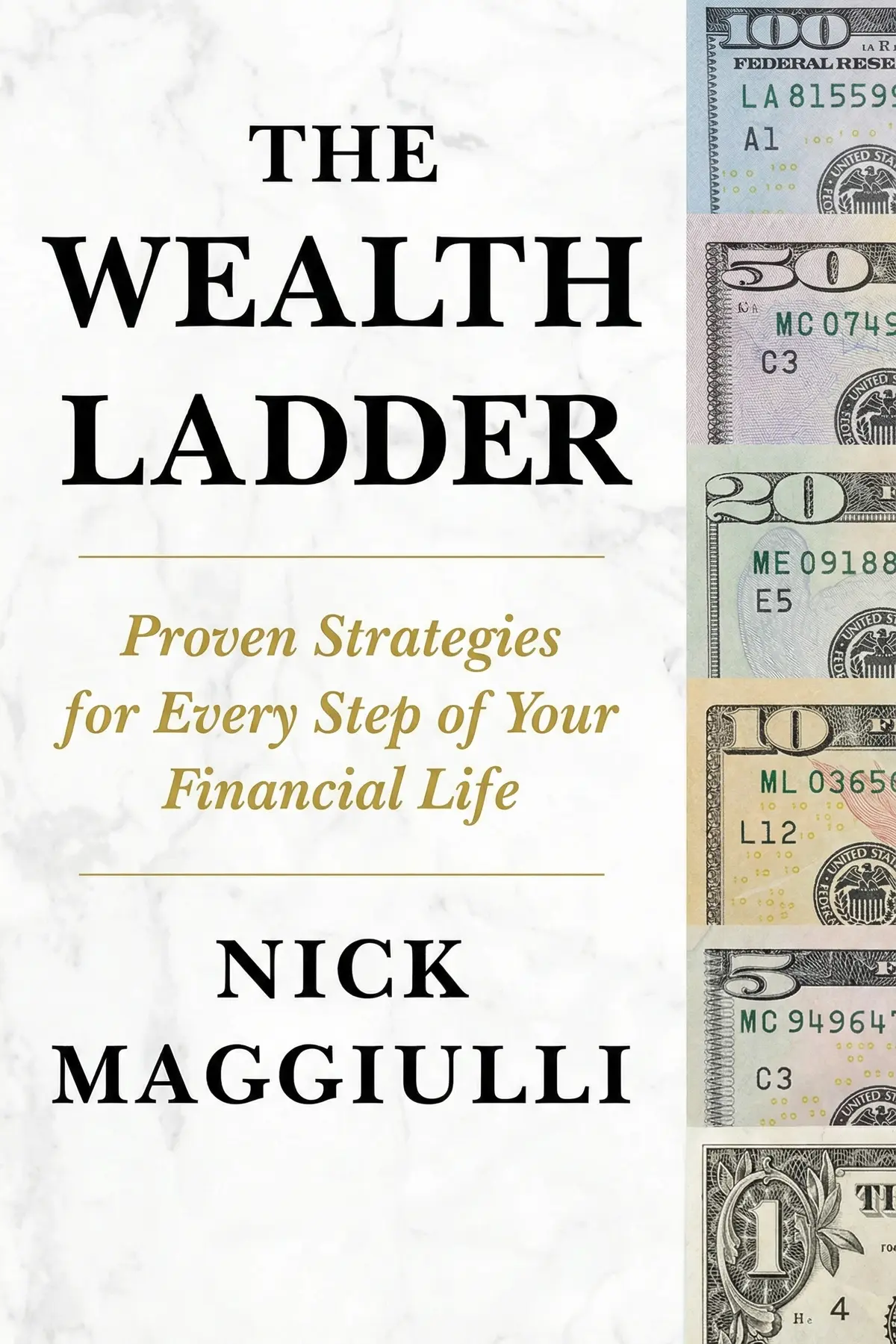
Nick Maggiulli runs operations at Ritholtz Wealth Management, where he also works as a data scientist. He studied economics at Stanford University. On his blog, Of Dollars and Data, he looks at personal finance through data. Just Keep Buying became an international bestseller, and he has also written The Wealth Ladder. His work has appeared in Forbes, CNBC, The Wall Street Journal and the Los Angeles Times.
Ratings & Reviews
Ratings at a glance

What people think
Listeners view this book as a hands-on manual for personal finance, featuring actual data and figures that reinforce its core advice and arguments. They enjoy the clear communication style and high-quality storytelling, labeling it a vital resource for young people. The text earns praise for its steady pace, with one listener pointing out how effectively it navigates the mental and emotional nuances of financial choices.
Top reviews
Vimolwan
Finally got around to reading Nick’s work in print after years of following his blog, and it didn’t disappoint. The storytelling here is what sets it apart from your average dry finance manual. He doesn't just tell you to save; he explains the math behind why your income level is the biggest factor in your success. I loved the 2x Rule. It makes spending money on luxury items feel productive rather than wasteful because you’re forced to invest an equal amount into income-producing assets simultaneously. It’s a brilliant mental hack. To be fair, some sections on debt might feel counterintuitive if you were raised on Dave Ramsey, but the data Nick presents is hard to argue with. This is a top-tier recommendation for anyone starting their wealth-building journey.
Show moreKenji
Ever wonder why saving feels so much harder than it should? Maggiulli breaks down the 'why' and 'how' with such clarity that it completely shifted my mindset. He focuses on income generation rather than just cutting back on lattes, which is a breath of fresh air in this genre. The way he uses data to debunk the fear of 'lifestyle creep' was my favorite part. He suggests that spending 50% of your raises is actually sustainable. That’s a game-changer! Most gurus make you feel guilty for enjoying your success, but Nick uses math to show you can spend and still retire comfortably. This book is practical, encouraging, and backed by numbers that give you real confidence in your financial decisions.
Show moreAnong
Wow, the data analysis on lump-sum investing versus dollar-cost averaging is worth the price of the book alone. Maggiulli proves with cold, hard facts that putting your money in now is almost always better than waiting for a dip that might never come. This book is a masterclass in evidence-based finance. I love how he tackles the 'running out of money' fear in retirement by looking at actual spending patterns, which usually decline as we age. It’s a very optimistic book that removes the stress from investing. Frankly, I think every college graduate should be handed a copy of this on graduation day. It’s far more practical than anything I learned in my economics classes. Highly recommended for any serious builder.
Show moreMethinee
Gotta say, I was skeptical about another personal finance book, but the storytelling here makes the math digestible and actually fun. Maggiulli has a way of explaining 'the life you need vs. the life you want' that really resonated with me. The 2x Rule has already changed how I view my weekend splurges. No more guilt! The book is split into saving and investing, which makes it easy to jump around to what matters to you right now. Whether you are wondering about the value of an MBA or just trying to figure out why the market is tanking, there is a data-backed answer here. It’s easily one of the most practical guides I’ve ever read. Just buy it, read it, and keep buying.
Show moreSombat
This book provides a refreshing, data-driven antidote to the constant noise of the financial media. Maggiulli’s core message is simple: keep buying diverse assets and don't sweat the timing. I found the analysis on 'Buying the Dip' vs. Dollar Cost Averaging particularly enlightening. It’s wild to see how even perfect market timing barely beats a consistent investment strategy over the long haul. The writing is incredibly clear, making complex statistical models feel accessible to a layman. My only gripe is that it feels slightly padded in the middle chapters. It’s a very fast read, but a few sections could have been tightened up without losing the impact of the research. Still, it’s a must-read for young adults looking for a realistic roadmap.
Show moreNong
Look, I’ve followed 'Of Dollars and Data' for a while, so some of this felt like a rehash of familiar territory. However, having all the research compiled into a single, cohesive narrative is extremely valuable. The section on whether to go to college or get an MBA was particularly analytical and helpful. He actually provides a formula to calculate if the degree is worth the lost earnings. It's a bit math-heavy at times, which might scare off some readers, but the summaries at the end of each chapter keep you grounded. I’m still a bit skeptical about his take on not always maxing out a 401k if the fees are too high, but I respect that he shows his work. It's a solid 4-star read.
Show moreCha
As a young adult navigating my first real salary, this book was the mentor I didn't know I needed. It addresses both the emotional and logical sides of money. I especially appreciated the advice on saving for short-term goals versus long-term retirement. Using cash for anything under three years makes so much sense now. The pacing of the book is excellent; it moves quickly through different asset classes without getting bogged down in jargon. My only real concern is that his optimism about market recoveries might lead some people to take on more risk than they can actually stomach during a real crash. Nevertheless, the 'Just Keep Buying' mantra is a powerful way to simplify your life. Definitely worth the purchase.
Show moreNarut
After hearing so many gurus talk about market timing and 'buying the dip,' seeing the actual math behind why that strategy fails was eye-opening. In my experience, most finance books are either too academic or too 'woo-woo' and inspirational. Nick finds the perfect middle ground. He uses storytelling to keep you engaged while the data does the heavy lifting. I found the section on debt particularly nuanced; he doesn't just say all debt is bad. Instead, he explains when it makes sense to use it to reduce risk or leverage returns. It’s a very modern take on wealth. It’s slightly US-focused, which is a drawback for international readers, but the core principles of consistent buying are universal and timeless.
Show moreWissanu
The chapter on lifestyle creep and the 50% rule was interesting, but the rest of the book felt a bit repetitive. If you’ve read 'The Psychology of Money,' you’ve already encountered many of these themes. Maggiulli is clearly a brilliant guy, and his data sets are impressive, but I found myself skimming through the second half. He spends a lot of time proving points that feel like common sense to anyone who has been investing for more than a year. It’s a perfect gift for someone who has zero knowledge of the stock market, but for intermediate investors, there isn't much 'new' information here. It’s a good book, just not the revolutionary text I was led to believe it was by the hype on social media.
Show moreSaengdao
Not what I expected, unfortunately. While I appreciate the author's blog, this book felt like a collection of previous posts bound together with some extra charts. To be fair, the data is solid, but the entire framework is incredibly US-centric. If you live in Europe or Asia, advice about 401ks or specific US tax implications just isn't applicable. I also felt the analysis on mortgage costs from the 70s was a bit flawed since it didn't account for the alternative cost of rent. It’s an easy read, but I honestly think you can get 90% of the value by just reading his free articles online. For a paid product, I expected more original insights that hadn't been covered in his weekly newsletters.
Show moreQuestions about this book
What is the main idea of Just Keep Buying?
Nick Maggiulli argues that good money decisions depend on context, not universal rules. How much you should save depends on what you earn. Debt can be a useful tool for some people. Spending can be worthwhile when it builds fulfillment. His one firm investing rule is in the title: keep buying stocks over the long run, because most markets rise most of the time.
How much should I save according to Nick Maggiulli?
Maggiulli rejects fixed targets like 20 percent of income. His rule is to save what you can, when you can: more when you earn more, less when you earn less. To find your figure, list fixed costs, estimate variable ones such as groceries, and subtract the total from take-home pay. If the result is too small, he says growing your income works better than cutting your quality of life.
Does Just Keep Buying work in a bad stock market?
Maggiulli tests his advice on Japan, whose market peaked in 1989 and never recovered that level. A single $1,000 investment made then would be worth about $690 today. Investing $1,000 every year from 1989 to 2022, though, turned $33,000 into $59,000. The return is modest, but it beats cash losing value to inflation. He also suggests spreading money across many markets, for example through a global index.
Is credit card debt always bad according to Maggiulli?
No. Maggiulli explains the puzzle economists label the credit card debt puzzle. A person with little money may be wise to keep cash on hand and keep paying card interest, so they can still cover an emergency such as a car repair. Like desert plants that hold seeds back, this hedges against disaster. The test he offers is whether a debt helps you reach your goals.
How can I spend money without feeling guilty?
Maggiulli suggests judging purchases by long-term fulfillment, using Daniel Pink’s three sources from Drive: autonomy, mastery and purpose. A daily latte that helps you work at your best supports mastery, so it can be money well spent. He also cites Brookings research on Gallup data showing that stress about not saving enough outweighs the benefits of saving. Saving pays off only when it does not make you miserable.
Readers also enjoyed




AUDIO SUMMARY AVAILABLE
Listen to Just Keep Buying in 15 minutes
Get the key ideas from Just Keep Buying by Nick Maggiulli, plus 5,000+ more nonfiction titles.
- 5,000+ titles
- Listen as much as you want
- 7-day free trial
- Cancel anytime









