
14 min 56 sec
Available in: English
JAY-Z: Made in America
Shows how JAY-Z went from selling crack to building a music empire, and how he combined party hits, layered poetry and practical activism, offering a model for pursuing success and conscience together.
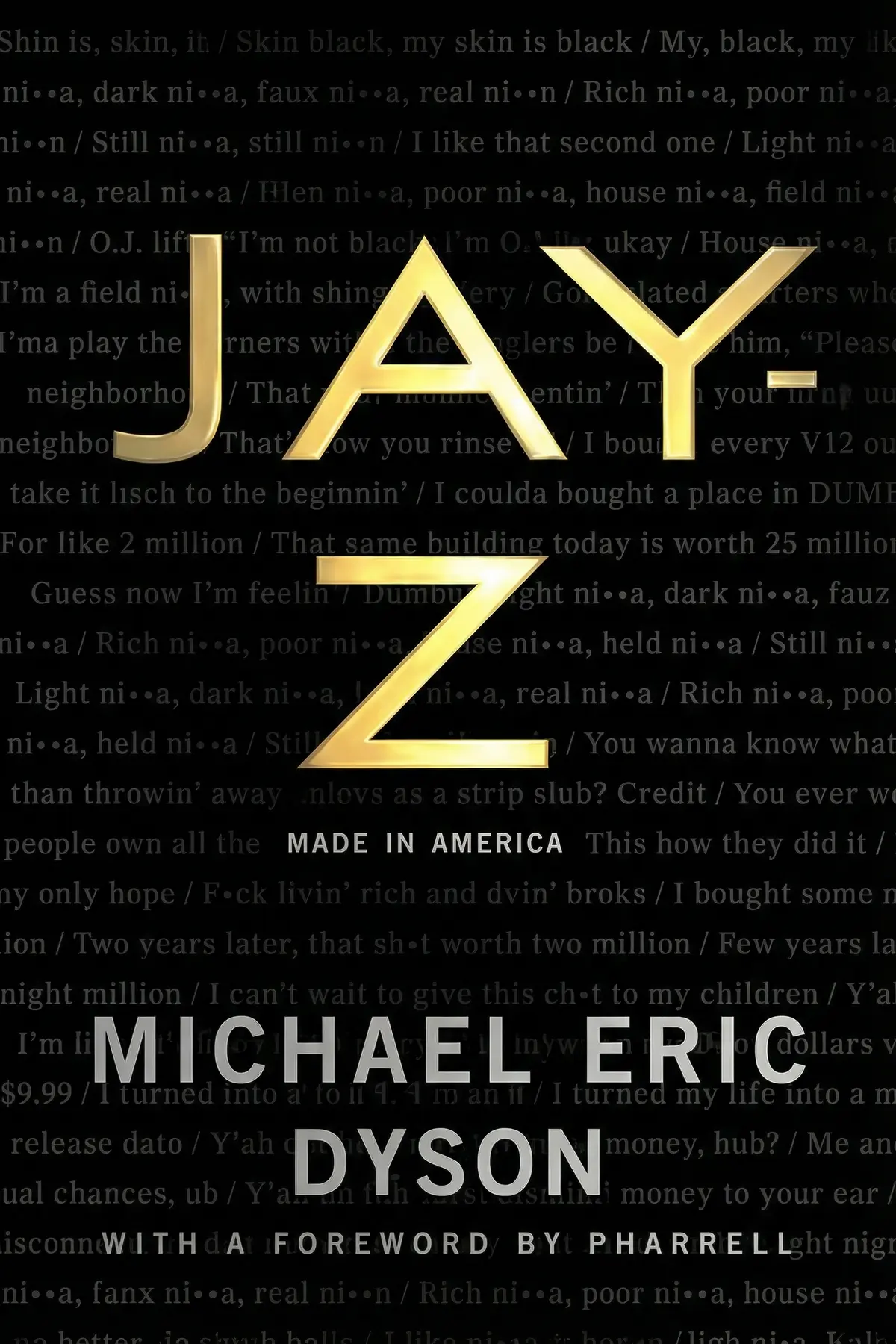
Table of Content
1. Introduction
1 min 07 sec
If you feel you have to choose between making money and doing work that means something, Michael Eric Dyson offers a strong counterexample. In JAY-Z: Made in America, the scholar and public intellectual argues that JAY-Z built his career by refusing that choice, packing poetry and protest into records made for parties.
Dyson frames it all as a hustle. JAY-Z started out as what Dyson calls a blight hustler, selling crack on street corners because poverty left few other doors open. He became a bright hustler, someone who aims the same drive and cunning at creative work that improves things for others. That turn from desperate hustle to creative hustle runs through everything that follows. It shapes the albums and the lyrics, a music video staged as gallery art and the prison reform work. It even explains a deal with the NFL that angered his allies, and a marriage crisis turned into three albums. Along the way you learn to hear rap as poetry, and you get a working model for joining ambition to conscience.
2. Turn a hard start into a bright hustle
1 min 44 sec
Two young men can work the same street corner with the same hunger, and only one of them ends up in a cell. Dyson’s distinction between two kinds of hustle explains what made the difference.
3. Win the party first, then deliver the message
1 min 44 sec
His debut won the critics over and then barely sold. What JAY-Z changed afterward let him talk about Hurricane Katrina and white privilege to an audience that mostly came to dance.
4. Hear the poetry packed into one line
1 min 45 sec
He has never written a lyric down, and his verses sound like easy conversation. One quick boast about a piece of paper shows why Dyson thinks he belongs among the great poets.
5. See how hip-hop earns a place in galleries
1 min 49 sec
He performed behind a gallery cordon like a work on display, in a video that took six hours to film. The stunt looked like vanity, but Dyson reads it as an attack on who gets to call their work fine art.
6. Back your beliefs with money and action
1 min 45 sec
Plenty of stars post about justice. One young man’s three years at Rikers Island show what it looks like when a famous voice turns outrage into scholarships, bail money and a documentary.
7. Push for change from inside the institution
1 min 53 sec
He backed a player who knelt in protest at the league’s games, then agreed to advise that same league. Critics called it betrayal. Dyson offers a less comfortable reading of what JAY-Z was doing.
8. Owning your failures in public changes the story
1 min 56 sec
His wife’s album exposed his cheating to the world. He could have stayed silent. What he did instead upended the tough-guy image he had spent years building, and Dyson calls it political.
9. Conclusion
1 min 13 sec
Dyson’s wider point is that people who ignore hip-hop when they think about poetry, politics or business are missing a lot. Read closely, JAY-Z’s albums are a running commentary on growing up amid racial inequality and police violence in America. His career shows that chasing material success and fighting for justice can happen in the same life, even inside the same song.
The hustle is the thread. The drive that once worked a street corner learned to release its own album and slip a protest about Hurricane Katrina between party tracks. It turned a gallery into a stage and paid for scholarships for people leaving prison. It did not always take the purest path, as the NFL deal shows. And it sometimes failed the people closest to it, as 4:44 admits.
Some of this carries straight into your own work. When the gatekeepers say no, find a way to publish yourself; there are more routes online today than JAY-Z ever had. Put the serious message inside work people already want. And judge your values by what your money and time actually do.
The record labels that turned him away are the reason he built one of his own.
About this book
What is this book about?
Many ambitious people assume they must choose: chase money and reach, or do work that means something. Michael Eric Dyson argues that JAY-Z refused that choice, and that his career shows how to hold both. Dyson builds his reading around the hustle. JAY-Z began as a blight hustler, selling crack on the street because poverty left him few options. When no record label would sign him, he founded his own and released his first album himself. From there he became what Dyson calls a bright hustler, aiming the same drive at creative work and change. Dyson follows that shift through the strategy of tucking political songs between dance tracks, the poetry hidden in lyrics JAY-Z never writes down, and a music video staged inside an art gallery. He also covers JAY-Z's prison reform work and his much-criticized deal with the NFL. The last part looks at the three albums he and Beyoncé made about a crisis in their marriage. Readers get a way of hearing rap as poetry and a frank look at pragmatic activism, flaws included. They also get a working model for turning hard beginnings into influence that serves others.
Book Information
Who it's for
Turned down by gatekeepers
Creators and founders who have been turned down by gatekeepers and want a model for doing it themselves.
Hip-hop fans wanting depth
Hip-hop fans who want to hear JAY-Z's lyrics as layered poetry and political commentary.
Balancing business and justice
Professionals trying to combine commercial success with a real commitment to social justice.
About the Author
Michael Eric Dyson
Michael Eric Dyson was born in Detroit, Michigan, in 1958. He is a public intellectual and radio host, and he has written or edited more than twenty books. Among them are studies of Malcolm X, Martin Luther King Jr., Marvin Gaye, Barack Obama and Tupac Shakur. His book on Hurricane Katrina, Come Hell or High Water, won an American Book Award. He has also won two NAACP Image Awards, and What Truth Sounds Like became a New York Times best seller.
Ratings & Reviews
Ratings at a glance
What people think
Listeners find the material captivating and accessible, praising its wealth of information and steady viewpoint. The caliber of the prose is widely admired, and one listener observes that it successfully captures JAY-Z’s unchanging narrative regarding the hustle. They enjoy the lyrical elements, with one account describing the text as a vivid reminder of the artist's poetic brilliance and another noting that it provides a roller-coaster ride of emotions.
Top reviews
Narut
Dyson’s deep dive into the lyricism of Shawn Carter is nothing short of masterful. I have always appreciated Jay-Z, but seeing his verses broken down as high-level poetry—complete with complex metaphors and synecdoche—gave me a whole new respect for his craft. The book brilliantly tracks his evolution from the "blight hustle" of the Marcy Houses to the "bright hustle" of the billionaire boardroom. While Dyson’s vocabulary can be a bit dense at times, the way he contextualizes the music within the broader American experience is truly profound. It is a vivid reminder that hip-hop isn't just entertainment; it is a vital form of social commentary. If you want to understand how Hov became a cultural icon and a master of his craft, this is the definitive blueprint.
Show moreOoi
As a long-time Hov fan, this was exactly the intellectual treatment I felt his career deserved. Dyson does not just look at the hits; he looks at the soul of the music and what it says about the American dream. The way he explains the transition from a street hustler to a philanthropist and social activist is incredible. I particularly loved the focus on the 4:44 album and how it redefined Black masculinity and relationships. This isn't just a book about a rapper; it is a master class on how art can shift culture and influence politics. It is emotional, powerful, and deeply researched. A must-read for anyone who thinks hip-hop is shallow. Jay-Z is truly a poet for our times.
Show morePalm
The chapter on poetic legacy is probably the best thing I have read about hip-hop in years. Dyson treats the lyrics with the same respect you would give to Shakespeare or Baldwin, which is long overdue. He really digs into the "B-sides" and the experimental tracks that most casual fans overlook. Personally, I think the way he weaves together history and the current political climate is what makes this book stand out. It is not just about one man; it is about how that man reflects the struggles and triumphs of an entire generation. It is a vivid, intelligent, and necessary piece of cultural criticism that showcases the consistency of JAY-Z's messaging over the decades.
Show moreKwan
Finally got around to reading this and I am mostly impressed by how Dyson handles the subject. It isn't a standard biography, so do not go in expecting a play-by-play of his business deals or personal drama. Instead, it is a series of intellectual essays on Jay’s impact on Black culture and American politics. I loved the section on how he uses his wealth for social justice, but I will admit Dyson sometimes goes on tangents about himself or other figures like Nipsey Hussle. Sometimes the academic tone feels like a bit much for a book about rap, but the insights into the lyrics are worth the effort. It is a solid 4 stars for the perspective alone, even if the writing is occasionally self-indulgent.
Show moreWorawit
This book feels less like a biography and more like a high-level sociology course on the impact of hip-hop. I found the information about Jay-Z’s "sneak-and-speak" political approach fascinating. Dyson shows how Jay hides deep messages in club bangers, which is something I had not fully considered before. My only real gripe is that it meanders a lot; there are several pages dedicated to other artists and political figures that felt a bit out of place. Still, the writing is beautiful and it is a very engaging look at a modern icon. It definitely makes you want to go back and listen to all the classic albums with fresh ears. Dyson proves that Jay-Z's legacy is deeper than the boardroom.
Show moreAva
Ever wonder how a kid from the projects becomes a billionaire without losing his street cred? Dyson explores that paradox with a lot of skill here. I appreciated the distinction between "blight hustling" and "bright hustling," as it adds a layer of complexity to Jay-Z's early life that most reporters miss. The book is a fascinating journey through history, capitalism, and social class. I did find some of the comparisons to other artists a bit questionable, and the author's prose can be quite flowery. However, the core message about Jay’s poetic brilliance is undeniable and well-supported. It is an impressive look at how one man used his talent to effect positive change while staying commercially relevant.
Show moreRosa
Look, if you want a book that challenges you to think about music as more than just a beat, this is it. Dyson is a master of language, and his enthusiasm for the subject is infectious throughout. He does a great job showing how Jay-Z "puts his money where his mouth is" regarding criminal justice reform and supporting political campaigns. My only issue is that it can feel a little repetitive—there are only so many times you can hear about the "art of the hustle" before it starts to blend together. But the sections on 4:44 and the vulnerability shown in that era were really moving. Definitely worth picking up for the deep-seated analysis and the vivid reminder of his genius.
Show moreJoe
To be fair, Michael Eric Dyson is a brilliant writer, but his "Stan" energy is a bit distracting in this one. He basically treats Jay-Z as an untouchable deity, which makes the analysis feel slightly biased at times. I enjoyed the breakdown of songs like "Minority Report" and how they reflect the abandonment of Black communities, but the constant praise gets exhausting. Also, Dyson has a habit of name-dropping other celebrities he has met, which does not really add to the story of Shawn Carter. It is a decent read for the lyrical analysis and the history of hip-hop, but be prepared for a very worshipful tone throughout. It is a roller-coaster ride of emotions and academic jargon.
Show moreLook
I was hoping for a straightforward book on the life and success of a great businessman, but this was not it. Instead of a biography, I got a very politically charged lecture that felt more like a university curriculum than a music book. Frankly, I felt like the author spent more time trying to prove his own intellect than actually telling us about Jay-Z the man. There is way too much focus on race and sociology for my taste. I wanted to hear about the empire building and the music production, not a 200-page comparison of a rapper to a god-like figure. It just felt very one-sided and preachy. If you want a factual account of his life, look elsewhere.
Show moreOtt
Not what I expected at all and I could not even finish it. I came here to learn about the business mogul and the man who built Roc-A-Fella, but this book is just a heavy-handed academic essay on race and politics. The author is clearly obsessed with Jay-Z and spends the whole time comparing him to legendary poets and intellectuals. It feels very forced and repetitive. If you're looking for a factual account of his life or his success in the liquor and clothing industries, you will be disappointed. This is just a collection of Dyson’s personal opinions wrapped in big words. Total disappointment for a fan of the music who wanted the man, not the myth.
Show moreQuestions about this book
What is JAY-Z: Made in America by Michael Eric Dyson about?
Dyson reads JAY-Z’s life and work through the idea of the hustle. JAY-Z began as a blight hustler, dealing crack out of poverty, and became a bright hustler, using his drive creatively and for positive change. The book looks at his music strategy, his poetry, his art-world ambitions, his activism on prison reform, his NFL deal and the albums he and Beyoncé made about their marriage.
Why does Michael Eric Dyson call JAY-Z a poet?
Dyson argues that JAY-Z uses complex metaphor and wordplay to make sharp social comment, and that he is overlooked only because people do not listen closely. JAY-Z composes his rhymes in his head without writing them down, in line with the African American oral tradition. A single line about being flyer than a piece of paper bearing his name carries meanings about concert fliers, escape from slavery and looking sharp.
How did JAY-Z mix commercial success with political songs?
After his 1996 debut Reasonable Doubt won praise but sold poorly, JAY-Z decided he needed the widest audience possible to have political influence. He filled albums with party songs, then slipped in serious tracks such as Minority Report, about the government’s response to Hurricane Katrina, and Young, Gifted, Black, about white privilege. He used B-sides to try out material that might puzzle party fans.
What can I apply from JAY-Z: Made in America?
The book’s practical advice is to do it yourself when gatekeepers refuse you, as JAY-Z did by founding his own label when no company would sign him. You can also borrow his strategy of earning attention with work people already enjoy and then using it to say something harder. And you can test your values the way he does, by what your money and time actually support.
Why was JAY-Z criticized for working with the NFL?
JAY-Z had supported Colin Kaepernick, who knelt during the national anthem to protest police brutality, yet he later agreed to advise the NFL on music and social justice. Many saw that as betrayal. Dyson accepts that the criticism is fair but argues that JAY-Z is better understood as a pragmatic activist who tries to change powerful institutions from within.
Readers also enjoyed

Ali: A Life
Jonathan Eig

All About Love: New Visions
bell hooks

A Life Decoded: My Genome: My Life
J. Craig Venter


A Long Way Gone: Memoirs of a Boy Soldier
Ishmael Beah

All Creatures Great and Small
James Herriot


A Promised Land
Barack Obama

AUDIO SUMMARY AVAILABLE
Listen to JAY-Z in 15 minutes
Get the key ideas from JAY-Z by Michael Eric Dyson, plus 5,000+ more nonfiction titles.
- 5,000+ titles
- Listen as much as you want
- 7-day free trial
- Cancel anytime









