

13 min 36 sec
Available in: English
Influence is Your Superpower: How to Get What You Want Without Compromising Who You Are
By Zoe Chance
Shows how to ask for what you want and get more yeses by speaking to the brain's lazy autopilot, choosing your moment and words, framing ideas well and treating objections with respect.
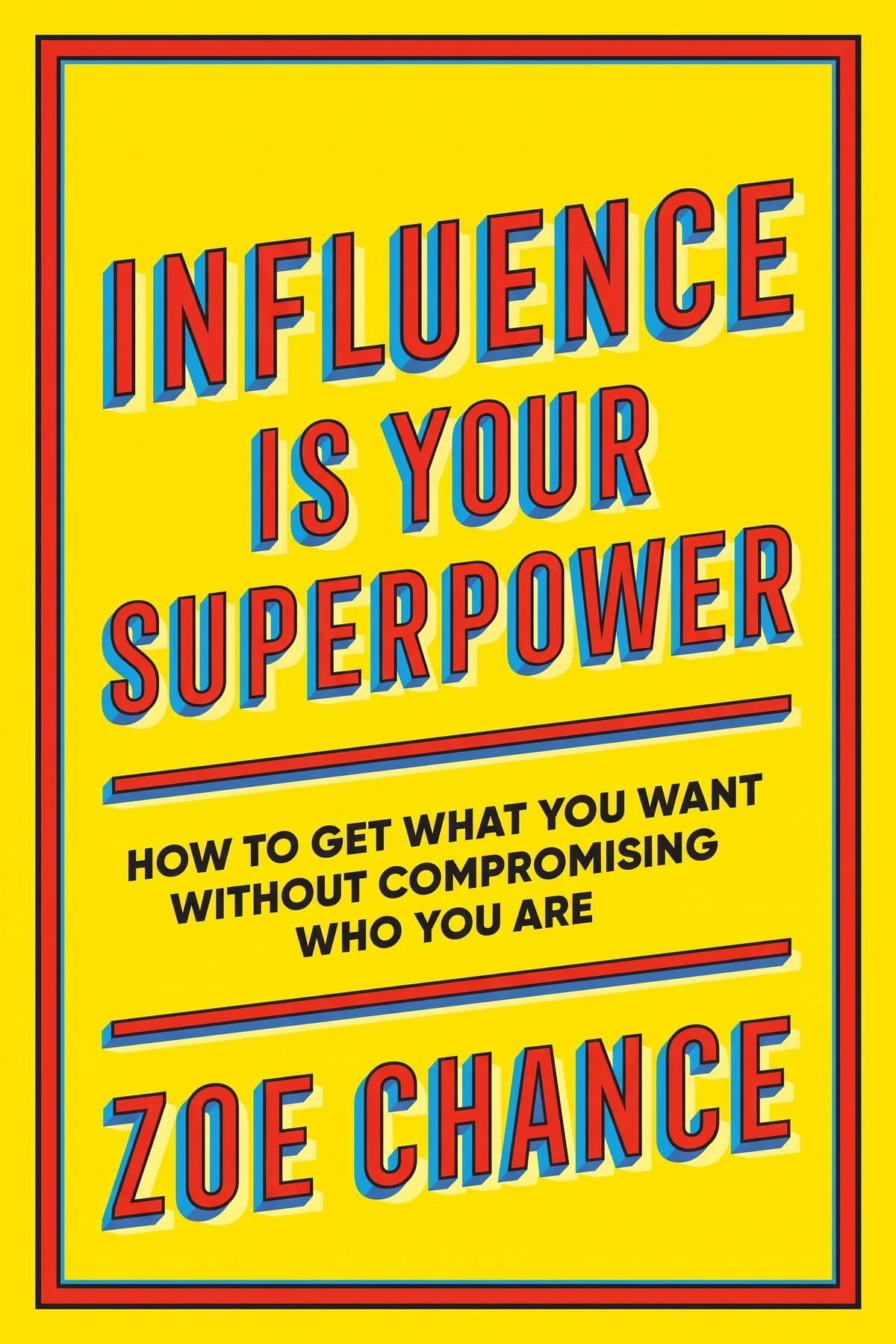
Table of Content
1. Introduction
1 min 00 sec
If you hold back from asking for a raise, a favor or a yes from a client, you may be speaking to the wrong part of the other person’s mind. In Influence is Your Superpower, Yale School of Management teacher Zoe Chance argues that nearly everything we hear passes first through a fast, lazy, instinctive mind she nicknames the Gator Brain, and that requests built for it simply work better. Chance, who once ran a $200 million slice of the Barbie brand, sees influence as something we all used as crying babies and later unlearned, because we were taught that being nice matters more than getting what we want.
Her case is that you can be generous and persuasive at once. The skills can be practiced: make the request effortless, ask without fear of no, pick the moment and the words, frame the idea, and welcome resistance. By the end, a pay talk or a pitch becomes something you can design.
2. Make your request easy for a lazy brain
1 min 53 sec
An animal that weighs nearly half a ton gets by with a brain the size of a spoonful. That odd fact explains why so many careful, well-argued proposals fail and what a pizza company did instead.
3. Lose your fear of hearing no
1 min 55 sec
A young entrepreneur spent a hundred days deliberately chasing rejection with absurd requests. What strangers actually told him changes how risky an ordinary ask should feel, and there is a gentler drill anyone can start tomorrow.
4. Choose the moment your audience wants yes
1 min 48 sec
A travel agency’s ad appeared on city sidewalks only when the weather turned miserable, and flight sales jumped. The same logic applies to when you approach your manager, and to a few small words that weaken every request.
5. Ask high, then make them a partner
1 min 41 sec
Most people open with the smallest request they think will pass, hoping modesty gets rewarded. Chance argues for the reverse, and adds a four-word question that can turn a doubtful boss into a collaborator.
6. Pick the frame that gets people moving
2 min 04 sec
The head of one of America’s biggest companies kept refusing a young founder’s job offer until a single question changed his mind. Chance names three frames behind moments like that, including one that helped people clear debt faster.
7. Turn pushback into support for your ideas
1 min 57 sec
Telling meat eaters their diet was bad for them only made them defensive. One company found a way around that objection, and its approach suggests three short phrases for handling doubt in any conversation.
8. Conclusion
1 min 18 sec
Chance’s argument comes down to a simple reversal of what many of us were taught. Influence is the ability you had as a crying infant, refined by an understanding of how minds actually work, and using it well does not make you less kind. People live mostly on autopilot, they dread rejection as much as you do, and they respond to moments, words and frames that make agreement feel natural. The best influencers, in her view, reach their goals while lifting others up, listen honestly to opposing views and turn resistance into real support.
The widest door she opens is a small one. Most negotiations, she argues, never fail at the table. They fail before they begin, because nobody realized there was anything to negotiate. A salary offer, the terms of a mortgage, even your seat on a plane can often be discussed. So build the habit of asking whether there is room to negotiate here, and when the answer is no, let it be just a word. Before your next big request, find its pizza emoji version, the one step a busy mind can accept almost without thinking.
The baby who cried to be fed never apologized for asking. You can keep your good manners and still ask.
About this book
What is this book about?
Many capable people avoid asking for raises, favors or deals. They were taught that being nice matters more than getting what they want, and a no feels like a personal rejection. Zoe Chance, who teaches influence and persuasion at the Yale School of Management, argues that influence is an ability we all had as infants and can relearn without becoming pushy. Her starting point is cognitive science. Most of the time our minds run in a fast, instinctive mode she calls the Gator Brain, and every request has to get past it before any careful judgment begins. From there she builds a practical toolkit. Make the request effortless. Get comfortable hearing and saying no. Pitch when your audience is ready, strip weak phrases from your language and open with a bigger ask. Choose a frame that inspires, reassures or intrigues, and meet resistance by naming it instead of fighting it. The cases range from a pizza ordered with one emoji to rain-revealed sidewalk ads in Hong Kong, Steve Jobs recruiting John Sculley and Beyond Meat winning over meat eaters. Readers get specific phrases and habits they can try at their next meeting.
Book Information
Who it's for
Early-career professionals
Professionals early in their careers who avoid asking for raises, promotions or help because a no feels personal.
Founders and sales reps
Founders and salespeople who want simpler pitches, better timing and calmer ways to handle objections.
Managers needing buy-in
Managers who need to win support for ideas without pressure or manipulation.
About the Author
Zoe Chance
Zoe Chance is a writer, researcher, teacher and climate philanthropist with a doctorate from Harvard. At the Yale School of Management she teaches courses including Mastering Influence and Persuasion. Before academia she ran a $200 million part of the Barbie brand, worked on political campaigns and sold by phone and door to door. Google has used her behavioral economics framework for its global food policy. She lives with her family in New Haven, Connecticut.
Ratings & Reviews
Ratings at a glance
What people think
Listeners find this book to be an exceptional listen that is straightforward to apply and grasp. They value its educational nature, as one listener points out it is packed with research and stories to back up its concepts, while another emphasizes its compassionate take on influence and bargaining. The material contains captivating narratives and is composed in a chatty style, ensuring it is both entertaining and useful.
Top reviews
Anthony
Ever wonder why some people just seem to have a 'natural' charisma while the rest of us struggle to be heard? Zoe Chance breaks down that mystery by focusing on the 'Gator Brain'—the lazy, instinctive part of our subconscious that filters everything before the rational mind even wakes up. I loved the Pizza Hut vs. Dominoes example because it perfectly illustrates how making things easy is the ultimate superpower. The writing is snappy and far from the dry academic tone I expected from a Yale professor. My only minor gripe is that some of the 'System 1 and 2' science felt familiar if you're a Kahneman fan, but her framing makes it much more actionable for daily life. It’s a rare business book that actually feels like a conversation with a brilliant friend.
Show moreKomsan
Wow, this is easily one of the most empathetic and human books on influence I have ever encountered. Most books in this genre feel like they’re teaching you how to manipulate people into doing what you want, but Chance focuses on connection and mutual benefit. I was particularly struck by the idea that 'no' isn't fatal and that learning to say it ourselves actually makes us better at hearing it from others. The framework of making ideas 'Monumental, Mysterious, and Manageable' is something I’ve already started applying to my marketing pitches. Her writing style has a certain 'snap, crackle, and pop' that makes complex psychological concepts feel effortless to digest. It’s refreshing to read a book about power that doesn't require you to be a jerk to get what you want.
Show moreNoppadol
After hearing so many people rave about this, I had high expectations, and Zoe Chance actually managed to exceed them. The way she weaves unheralded scientific research into punchy, page-turning stories is nothing short of masterful. I particularly loved the 'pizza emoji' example of simplicity; it’s such a clear illustration of how we overcomplicate our requests and lose people in the process. This book teaches you how to appeal to the instinctive part of the brain that actually makes the decisions. It’s also surprisingly funny, which is rare for a book that is essentially a textbook for a business school course. If you want to level up your social intelligence without feeling like you’re studying for an exam, this is the book you need.
Show morePrapaiwan
What would it take for every business book to be as entertaining and useful as this one? Zoe Chance has written a rare gem that combines hard science with wickedly original stories and genuine humor. I’ve already recommended it to three colleagues because the strategies for turning resistance into authentic support are so immediately applicable. The concept of 'Gator mode' has become a shorthand in our office for making sure our pitches are as easy to digest as a pizza emoji. It’s not just about winning; it’s about creating a collaborative environment where everyone feels heard and valued. Truly, this is the first 'influence' book I’ve read that feels like it has a soul.
Show moreRoo
Finally got around to finishing this, and the 'Magic Question'—asking 'What would it take?'—has already changed how I handle project deadlines at work. Instead of hitting a wall of 'no,' this simple shift in language invites people to problem-solve with you, which is a total game-changer. Personally, I found the section on diminishing language particularly convicting because I realize now how often I sabotage my own authority with phrases like 'I was just wondering.' The book is packed with research, but it's the anecdotes about her own life and the Philippine airline campaign that keep it grounded. To be fair, a few chapters felt a bit longer than necessary, and some of the 'everything is negotiable' advice might feel aggressive to introverts at first. Still, the practical strategies for turning resistance into support are worth the read.
Show moreSureerat
Picked this up on a whim after hearing about her popular Yale course, and I can definitely see why students flock to her. The core message that 'everything is negotiable' is a wake-up call for anyone who tends to just accept the first offer they’re given, whether it's a salary or a seat on a plane. I appreciated the specific tips on how to ask for more by starting big to leverage the concept of relative size. It feels like a scientific gloss on classic persuasion tactics, updated for a world where we’re all constantly overwhelmed and distracted. Frankly, some of the guerilla marketing stories felt a little disconnected from the 'everyday influence' theme, but they were still fascinating to read. It’s a very practical, high-energy guide that encourages you to stop being afraid of your own potential.
Show moreJavier
Truth is, I’ve always been terrified of negotiating because it felt like a confrontation I was destined to lose. This book changed my perspective entirely by framing influence as a way to uplift others while reaching your own goals. The advice to 'pitch smarter, not harder' by choosing the right moment—like the Philippine airline agency did during a monsoon—is a brilliant reminder that timing is half the battle. I did feel that the 'Gator vs. Judge' metaphor was hammered home a bit too much in the middle sections, which slowed the pace down. But the 'What would it take?' strategy is worth the price of the book alone for anyone in a corporate environment. It’s a smart, informative read that manages to stay simple without being simplistic.
Show moreMaja
As someone who tends to use a lot of 'diminishing language' in emails, the chapter on weeding out 'I was just wondering' was a total lightbulb moment for me. We often think being apologetic makes us more likable, but Chance shows how it actually undermines the very influence we’re trying to build. The book is full of these small, actionable tweaks that don’t require a total personality transplant. I loved the interactive feel of the chapters and the way she ends with revelations or provocations that make you think. My only criticism is that the focus on 'System 1' feels a bit repetitive if you've read any other behavioral science books in the last decade. Regardless, her voice is so unique and engaging that it’s hard not to enjoy the journey.
Show moreRatthapong
Look, if you’ve already devoured every bestseller on behavioral economics and persuasion, you might find this a bit repetitive. It draws heavily on established concepts like cognitive bias and the work of Daniel Kahneman, so the 'new' information is somewhat limited. That said, Zoe Chance is a fantastic storyteller and her sense of humor keeps the pages turning even when the material feels like a retread of Dale Carnegie. The 'Gator Brain' analogy is a cute way to rebrand System 1, but I was hoping for more deep-dive research rather than just snappy summaries. It’s a solid introductory text for anyone new to the subject, but seasoned pros in sales or psychology might find it a bit too 'lite' for their taste. Good for a beach read, but maybe not the revolutionary manual the subtitle suggests.
Show morePensuda
In my experience, 'self-help' books often overpromise and underdeliver, and while this has great moments, it didn't entirely escape that trap. There is a lot of focus on the 'Gator Brain' being lazy, which is a fun metaphor, but the book spends a lot of time on anecdotes that don't always offer a clear path to implementation. Don't get me wrong, the writing is exquisite and Zoe Chance is clearly brilliant, but I wanted more 'how-to' and slightly less 'look at this cool thing that happened.' The section on charisma was a highlight, specifically the idea that it’s an action rather than a personality trait. However, I found myself skimming some of the later chapters that felt like they were stretching a single point to fill pages. It's a solid read, but I expected a bit more novelty given the hype.
Show moreQuestions about this book
What is the main idea of Influence is Your Superpower?
Zoe Chance argues that influence is a natural ability everyone has and can practice without becoming pushy. Because most thinking happens in a fast, lazy mode she calls the Gator Brain, requests succeed when they are easy to grasp, well timed, clearly worded and framed in a way that inspires, reassures or intrigues. She also shows how to treat resistance with respect so it turns into support.
What are the Gator Brain and the Judge Brain?
They are Chance’s names for the two thinking modes researchers call System 1 and System 2. The Gator Brain is fast and instinctive and handles habits like chopping onions or swimming laps. The Judge Brain analyzes, compares and concentrates. Chance’s key point is that the Gator is the default, and nothing reaches the Judge without passing it, so proposals should be easy for the Gator first.
How can I get over the fear of rejection when asking for things?
Chance points to Jia Jiang, who spent 100 days making outlandish requests and still received 51 yeses. Her gentler exercise is to say a polite, firm no to every unwanted request for 24 hours, then notice that your no does not reject the person or end anything forever. Seeing no as just a word makes it easier to hear and easier to ask.
What is the magic question in Influence is Your Superpower?
It is a question that begins with what would it take. Asking a boss why you cannot go part time invites objections. Asking what it would take for you to go part time invites the boss to help solve the problem, perhaps through better processes, training a junior colleague or agreeing a weekly workload. It turns a request into a shared project.
How does the book suggest handling objections?
Chance recommends redirecting resistance instead of fighting it, as Beyond Meat did by avoiding guilt and focusing on taste. In conversation, name the objection yourself, ask permission before making a request, such as asking to discuss your pay this week, and affirm the other person’s freedom with phrases like no pressure. Each move lowers defensiveness and keeps the focus on your idea.
Featured in
Readers also enjoyed


A Liberated Mind: How to Pivot Toward What Matters
Steven C. Hayes


Acting with Power: Why We Are More Powerful Than We Believe
Deborah Gruenfeld


Age of Propaganda: The Everyday Use and Abuse of Persuasion
Anthony Pratkanis



AUDIO SUMMARY AVAILABLE
Listen to Influence is Your Superpower in 15 minutes
Get the key ideas from Influence is Your Superpower by Zoe Chance, plus 5,000+ more nonfiction titles.
- 5,000+ titles
- Listen as much as you want
- 7-day free trial
- Cancel anytime









