
Makers: The New Industrial Revolution
Chris Anderson
 English
Shows how one act of giving sets off others, and how to aim generosity at real needs, build it into a team's culture and make it visible so it pays back.
1 min 03 sec
If you think of generosity as a cost your team or company can barely afford, Chris Anderson wants to change your mind. In Infectious Generosity, the head of TED argues that one act of giving rarely stays one act. It spreads from person to person, and that spread can be steered.
Picture yourself hurrying between meetings when a colleague you hardly know hands you a fresh coffee because you looked like you needed a lift. Later you pass the favor on by calming a panicked intern, while across the room someone holds a door for a visitor carrying boxes. Anderson’s case is that this chain reaction works for whole organizations too, as long as the giving is aimed at real needs and made visible to others.
Follow his argument and you will be able to test whether a gift actually helps, set up a workplace where helping is normal, and explain to a doubtful finance team why giving back can show up in hiring, loyalty and revenue.
1 min 45 sec
A coffee from a near-stranger can change three people’s afternoons. One software company turned that small chain reaction into close to two million hours, and says it shows up in hiring and customer ties.
2 min 06 sec
A huge donation to a famous cathedral drew anger instead of thanks. The backlash points to a test most givers never run, and it applies to a simple compliment as much as to a fortune.
2 min 01 sec
Most companies say they value helpfulness, then reward something else. Closing that gap starts with an uncomfortable survey and ends with leaders doing the work themselves, beside everyone else.
2 min 12 sec
An outdoor clothing brand told shoppers not to buy its jacket on the busiest day of the year. What followed reached the biggest retailers in the world and changed what customers expect.
2 min 04 sec
Giving looks like pure cost on a budget. A healthcare giant and an imagined neighborhood restaurant suggest the money and the pleasure flow back in ways the budget never shows.
1 min 06 sec
The most useful thing in Anderson’s argument may be its treatment of generosity as something that can be designed. Kindness spreads on its own, but it spreads furthest when someone chooses the target with care, makes the act visible and gives others an easy way to join. That is how a coffee on a desk becomes a better afternoon for an intern, and how a jacket advertisement on Black Friday ends up shifting what giant retailers offer their customers. Givers gain as well, in pleasure and pride and, for companies, in loyalty and talent.
The practice can begin modestly. Before your next donation or favor, say what you want it to change and how you would know, and check that the person receiving it actually wants it. If you lead people, ask them anonymously where help gets blocked, tell the stories of those who helped anyway, and show up yourself when the team volunteers. When your organization gives, put a number on the wall that everyone can push toward.
Generosity behaves a lot like the ideas TED was built to share. It is worth most when it travels.
Many managers and professionals treat generosity as a cost: a line in the budget, a nice gesture, something to fund once profits allow. Chris Anderson, who leads TED, argues the opposite. Giving is contagious. One favor tends to set off another, and organizations that make giving routine see the effects in who they hire, who stays and how customers feel about them. Anderson also asks for more discipline in how people give. A large gift can draw criticism instead of thanks if it misses real need, and even a compliment can land badly. He offers simple checks before giving, steps leaders can take to make helping normal at work, and ways to turn private kindness into public example that others copy. The cases range from SAP's paid volunteering program and Patagonia's famous Black Friday advertisement to Johnson and Johnson's community health work. Readers get a practical way to give with more effect, and an argument they can bring to a skeptical boss or finance team.
Team leads and HR people who want helping, mentoring and volunteering to become normal at work.
Founders and managers who need a business case for giving back that a skeptical finance team will accept.
Regular donors who want their gifts and favors to change something real.
Chris Anderson is a British-American businessman who leads TED, the non-profit that shares talks built around ideas and runs a yearly conference in Vancouver, Canada. He became its curator in 2001 and grew it into a global platform under the motto ideas worth spreading. He also founded the video game journalism website IGN. He is also the author of TED Talks.
Chris Anderson
Chris Anderson
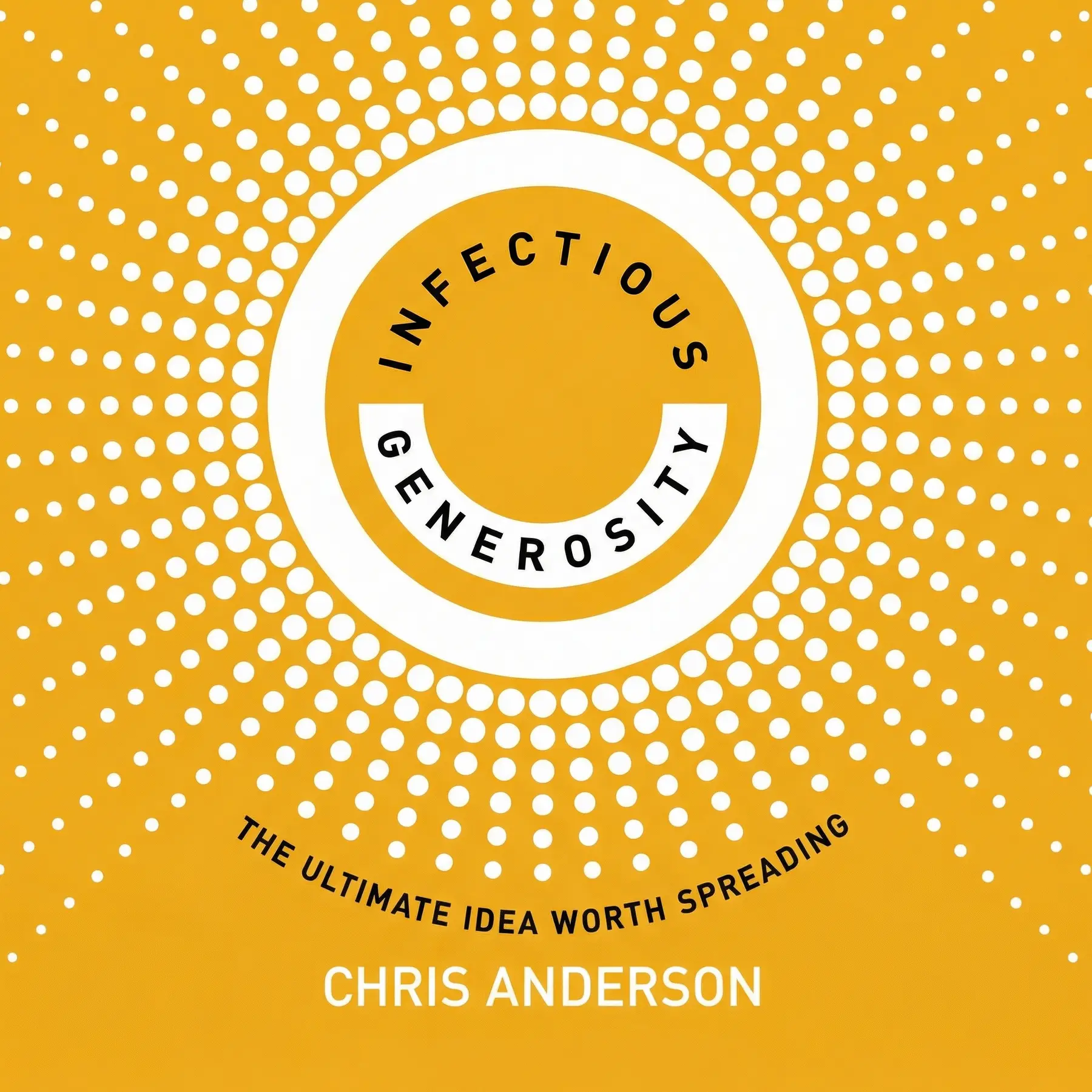
Listeners find this book motivating, as it examines the potential of giving and provides actionable guidance. They appreciate its accessibility, with one listener noting it is a fast listen and another emphasizing how deliberate efforts can lead to enduring change. Listeners value the way the book increases optimism and joy, with one remarking on how it gets their thoughts and energy moving.
Picked this up during a personal slump and it really shifted my perspective on what it means to live an impactful life. Chris Anderson manages to take the grand, often intimidating concept of global change and distill it into something manageable through small, intentional acts of kindness. I found the "annual checkup" at the end incredibly useful for auditing my own habits of giving, whether that’s money or just my time. Truth is, we often forget that being a "net giver" doesn't require a massive bank account, just a shift in our daily attention. The writing is accessible and flows quickly, making it a perfect weekend read for anyone needing a boost of optimism. It’s a call to action that feels both urgent and achievable in our increasingly self-centered world. If you need a reminder that humanity isn't all bad, this is it.
Show moreEver wonder if the internet can actually be a force for good despite the constant barrage of doom-scrolling and influencer narcissism? Anderson argues that it can, presenting a hopeful framework for how digital platforms can amplify generosity instead of just outrage. I appreciated the "why, how, and what if" structure because it gave me concrete ideas for how to show up differently in online spaces. Some parts felt a bit "bright-sided" for my cynical heart, but the data and case studies are hard to argue with. It’s a refreshing contrast to books that tell us to just unplug; instead, it asks us to engage with more intention and grace. I finished it feeling energized to look for those tiny opportunities to be a net giver in my own community. It is definitely worth a look for the digitally exhausted.
Show moreWow. I didn't expect a book about generosity to get my energy levels going quite this much, but Anderson’s enthusiasm is genuinely contagious. He provides a wealth of real-life examples that show how a single gesture can ripple out to affect thousands of people. Not gonna lie, some of the stories felt a bit repetitive after a while, but the overall message is exactly what our culture needs right now. The focus isn’t just on financial wealth; it’s about sharing your talents, your time, and even your listening skills with those around you. It’s a practical manual for anyone tired of the "self-care" obsession that often turns into simple self-centeredness. This is the kind of book you buy in bulk to give to friends who are feeling burnt out by the state of the world.
Show moreAfter hearing so much about the "TED way" of thinking, it was fascinating to see Chris Anderson apply those principles to the concept of radical giving. This book is a masterclass in how to take a dry, academic concept and turn it into a hopeful, actionable reality. I loved the story of the artist Mundano; it really drove home the point that creativity and generosity are two sides of the same coin. The author’s "what if" approach pushed me to think much bigger about my own potential impact on the world. It’s rare to find a book that is both deeply inspiring and provides a clear roadmap for change. While I think it could have been shorter, the anecdotes are powerful enough to keep you turning the pages. I’ve already started implementing some of the strategies in my daily life.
Show moreTo be fair, I went into this expecting a lot of corporate fluff, but I was pleasantly surprised by how practical the advice actually is. Anderson doesn't just tell you to be "nice"; he explains the mechanics of how generosity spreads through social networks and psychological triggers. I particularly liked the distinction between being a net giver and a net taker, which is a question I’ve been asking myself every morning since finishing the book. There are some minor criticisms to be made about the tone being a bit too optimistic given the current state of the world. Even so, the readability is top-notch and it successfully gets your thoughts moving in a more constructive direction. It’s a solid read that offers a much-needed dose of humanity without being overly preachy.
Show moreLook, I really wanted to like this more because the mission of "ideas worth spreading" is so vital, but the book itself felt a little padded. It’s basically a collection of anecdotes about people being nice to each other, which is fine, but it sometimes lacks real substance. I agree with other reviewers who mentioned that it feels like a meeting that could have been an email—or in this case, a 10-minute video. In my experience, if you’ve watched more than five TED talks, you’ve already grasped the core philosophy being preached here. However, the practical tips in the final chapters are actually quite useful for those wanting to make a change. It’s a good 2024 starter book if you want to shift your focus away from yourself and onto others.
Show moreAs someone who closely follows social justice movements, I found myself frequently disagreeing with the underlying philosophy presented in these pages. Anderson advocates for individual charity as a primary world-shaper, but donating the crumbs from wealthy tables often just preserves a broken status quo. Look, it’s a beautifully written book with plenty of heartwarming stories that will make you feel good about humanity for a moment. However, it largely ignores the systemic injustices that necessitate such charity in the first place, which feels like a major oversight. If you want a quick read that maximizes hope and provides simple tips for being kinder, you’ll likely enjoy it. Just don’t expect a deep dive into the structural changes needed to actually fix the disparity in our world. It's a nice sentiment, but perhaps a bit naive.
Show moreFinally got around to finishing this, and I’d say it’s a decent guide for someone looking to jumpstart their year with a more positive mindset. It reads almost like the polar opposite of Cal Newport’s Digital Minimalism because it encourages us to use our connectivity as a tool for spreading "infectious" goodwill. Personally, I found the historical notes on the TED movement to be the most engaging parts of the book, as they felt more grounded. The rest of the content was a bit bland at times, leaning heavily on the idea that "giving feels good," which isn't exactly a new revelation. It’s a pleasant enough experience, but it lacks the intellectual bite I was hoping for from a thinker of Anderson's caliber. Still, it’s an easy, accessible read for a rainy afternoon if you want something light.
Show moreTruth is, this could have been an email or a long-form article rather than a 200-plus page book. I had high hopes based on the concept of "infectious generosity," but the execution felt a bit like a highlight reel of TED’s greatest hits. To be fair, the writing style is very conversational and easy to digest, which makes it a good entry point for people who don't read much non-fiction. I did appreciate the specific bullet points on how to model generous behavior in a professional setting. However, I kept waiting for a deeper analysis that never really arrived, leaving the whole experience feeling somewhat superficial. It’s a "nice" book, but maybe not an "essential" one if you’re already a fairly giving person who understands the basics of altruism.
Show moreThis book honestly felt like a classic case of an 18-minute TED talk being stretched far too thin to justify a hardcover price point. While I respect Anderson's mission, the narrative frequently devolves into a curated list of his favorite viral videos rather than offering deep, original insights. I also couldn't help but notice how much heavy lifting research assistant Kate Honey seemed to do, based on the glowing acknowledgments and her frequent interview citations. Frankly, it makes me wonder how much of the "infectious" part was actually his own creative spark versus a collaborative team effort. By the halfway mark, I was skimming through repetitive anecdotes that didn't add much to the core thesis. It’s not a bad message, but it certainly isn't the revolutionary manifesto I was expecting from the head of TED.
Show moreAnderson argues that generosity is contagious: one act of giving tends to set off others, from a single office to whole industries. He adds that giving works best when it is aimed at real needs and checked for results, and when organizations make it visible and reward it. Done that way, he says, it pays back givers, receivers and communities, including in hiring, retention and customer loyalty.
Anderson suggests four checks before giving. Name the outcome you want and how you would know it happened. Make sure the gift fits the receiver’s real needs, not your assumptions or ego. Find out exactly how the money or help will be used. And think about what it could set in motion later. He uses the criticized Notre Dame donation to show what happens when intention outruns impact.
Start with an anonymous survey on how often people help each other and what blocks them. Publicly share stories of staff who supported colleagues or customers. Include mentoring, volunteering during work hours and community projects in reviews and rewards. Seek input from quiet and remote people. Most of all, leaders should take part themselves, for example by mentoring an intern or volunteering beside their team.
Anderson thinks so and gives examples. SAP links its paid volunteering program, close to two million hours over more than fifteen years, to better retention, recruiting and customer ties. Patagonia’s 2011 advertisement telling shoppers not to buy its jacket boosted sales. Johnson and Johnson’s leaders say its community health programs bring stronger recruiting, customer loyalty and dividend growth ahead of competitors.


Andrew D. Thompson


Deepak Chopra


Richard Wiseman




AUDIO SUMMARY AVAILABLE
Get the key ideas from Infectious Generosity by Chris Anderson, plus 5,000+ more nonfiction titles.









