
A Bigger Prize: How We Can Do Better Than the Competition
Margaret Heffernan
 English
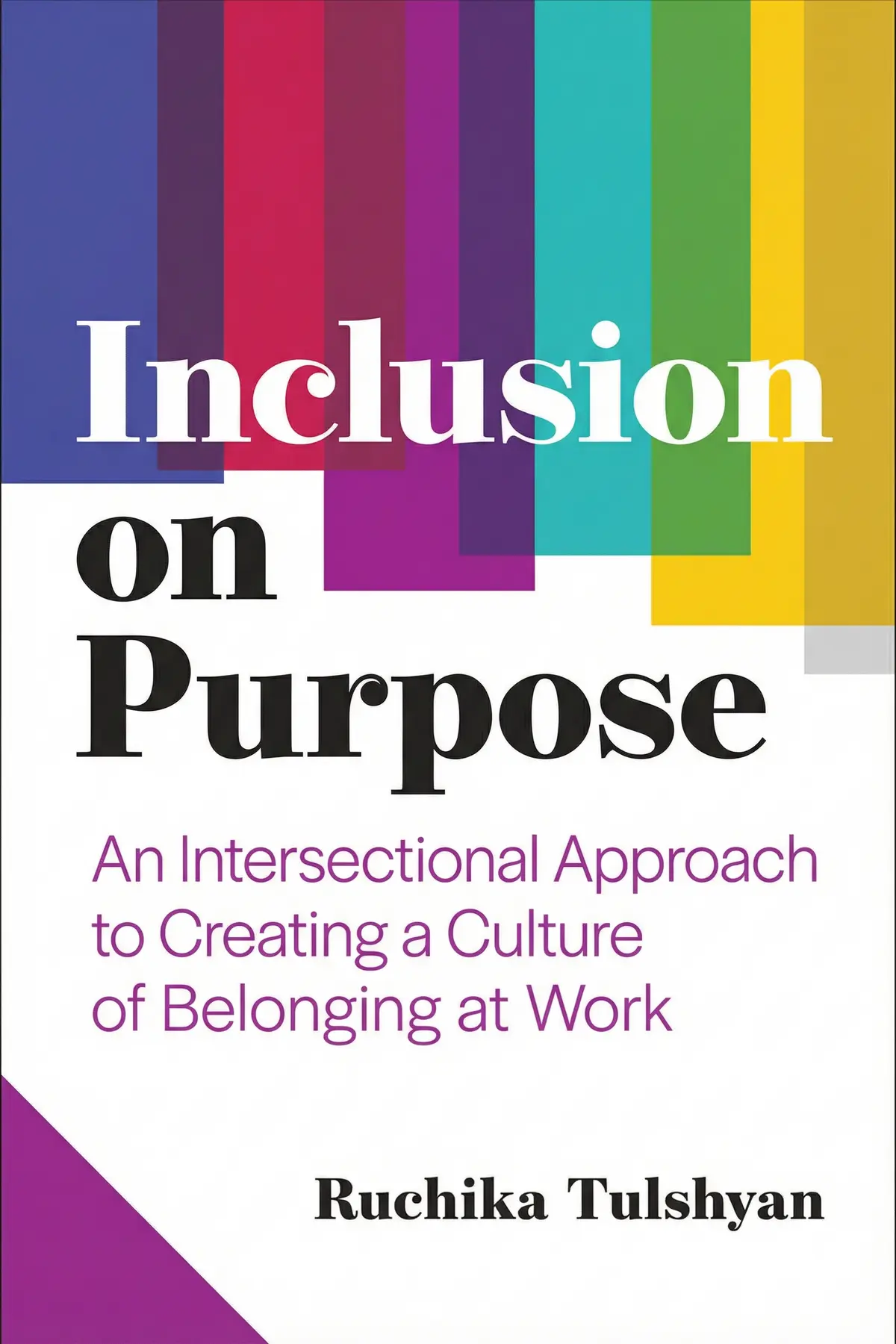
A practical guide to turning stated inclusion values into real practice at work, from speaking up in meetings to fairer hiring, transparent pay, specific feedback and teams where people of every background feel safe.
1 min 14 sec
If you lead a team, you probably already believe inclusion matters, and you may still watch it fail in the meetings you sit in. In Inclusion on Purpose, inclusion strategist Ruchika Tulshyan argues that belief was never the missing piece. She cites a McKinsey report estimating the global economy would be 12 trillion dollars richer with gender equity worldwide, and research from the University of California, Berkeley finding that colleagues from different backgrounds make people more innovative, harder working and smarter. The case is made. What most companies lack is follow-through.
Tulshyan’s argument is easy to state and hard to practice: inclusion that is only talked about does not happen, so people and organizations must build it deliberately into how they speak up, hire, pay, give feedback and make it safe to talk. She reads all of it through intersectionality, the idea that race, gender and other factors combine to shape each person’s experience at work. What follows is a handful of specific changes, from rewriting a job ad to refusing salary negotiations, that a manager could start this month.
1 min 54 sec
A new hire was invited to present to her company’s leaders with an hour’s notice. What happened next revealed far more about the room than about her work, and about a failure most of us share.
2 min 09 sec
Saying you do not see color sounds generous. Tulshyan argues it reveals something uncomfortable about the speaker, and she offers four shifts that change how a person behaves when a colleague is under fire.
2 min 12 sec
Most hiring managers pick the finalist who will fit in best. That comfortable instinct, Tulshyan argues, is exactly the one to resist, and a jury experiment hints at what teams lose when they follow it.
2 min 23 sec
A better qualified employee ended up doing exactly the same work as a colleague for less money, and her manager admitted the problem. Tulshyan’s fix for cases like hers surprises most people who hire.
2 min 11 sec
A rising executive was told she lacked a quality nobody could define. Every attempt to fix it earned her a new criticism, and her experience exposes a habit many well-meaning managers share.
2 min 08 sec
A journalist was stopped and questioned at a political convention, and a colleague came to vouch for her. The moment that hurt most came later, from her own manager, and nobody on the team noticed.
1 min 06 sec
Every story in Tulshyan’s book has the same shape. A company says it values inclusion, a woman of color pays for the distance between saying and doing, and the people around her stay quiet. Her argument is that goodwill never closes that distance. Practice does: deliberate habits in individuals and fixed rules in the systems that decide who gets hired, paid, promoted and heard.
That makes the work concrete. Decide now what you will say the next time a colleague is treated unfairly in a meeting, and use whatever advantage you hold to say it. If you hire, look for what a candidate would add, write the interview questions before the first conversation, and offer one honest, audited salary instead of rewarding the best negotiator. If you manage, give feedback someone could act on tomorrow, and keep asking your team whether they feel safe enough to speak.
The people in these stories were rarely failed by one villain. They were failed by a room full of people who could have spoken and chose not to.
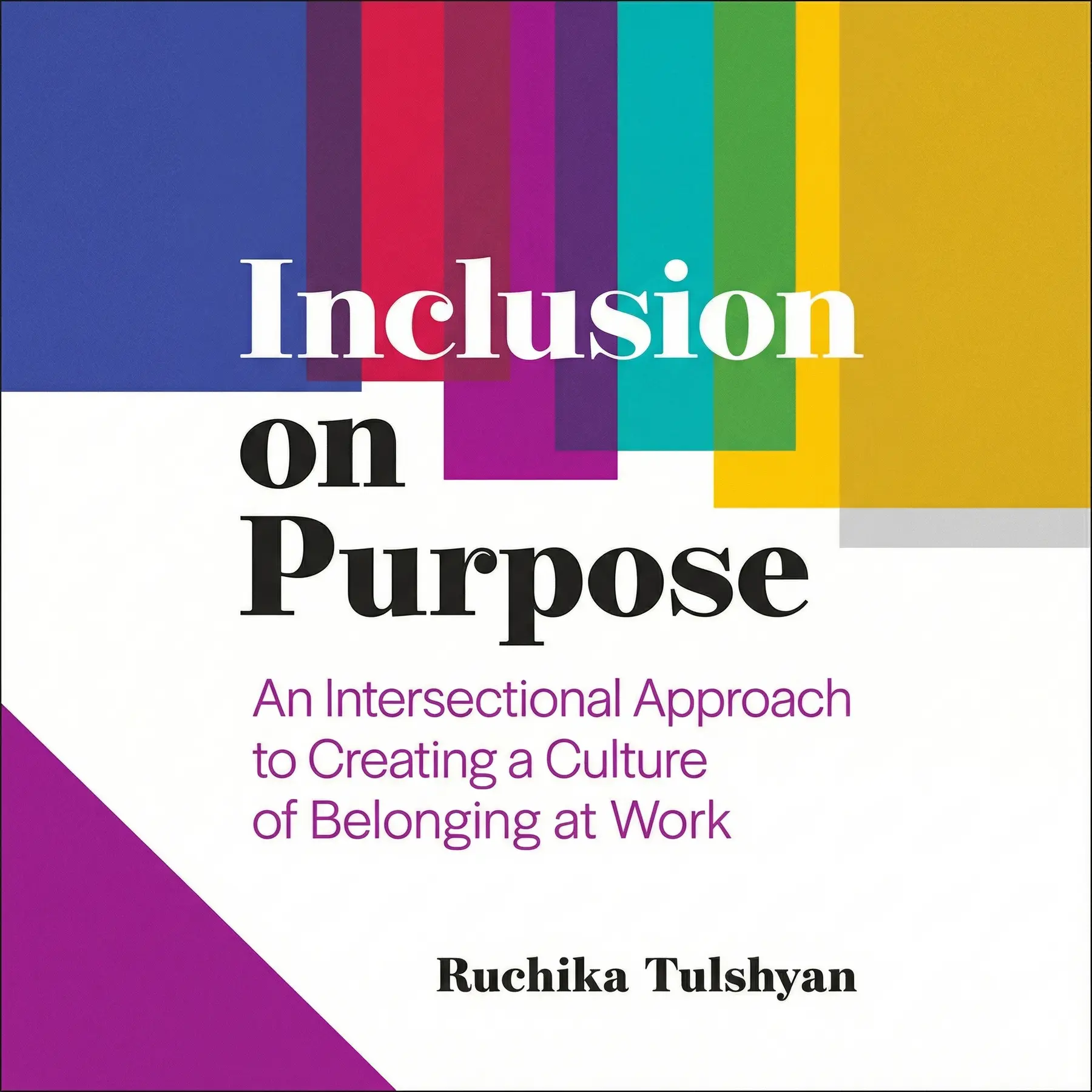
Many companies say they value inclusion, and the business case is hardly in doubt. Yet women of color still get dismissed in meetings, underpaid next to less qualified colleagues and given feedback too vague to act on, while the people around them say nothing. Ruchika Tulshyan argues that the missing piece is intention. Inclusion has to be deliberate, or it does not happen. She works on two levels. Individuals learn to think intersectionally, to see how race, gender and other factors combine, to recognize their own privilege and to use it by speaking up and acting as antiracists. Organizations learn to rebuild four systems: hiring for culture add instead of culture fit, closing the pay gap by setting fair salaries instead of rewarding negotiators, giving specific feedback tied to outcomes, and creating psychological safety through surveys, a usable code of conduct and funded employee resource groups. Each idea comes with a real story, from a diversity lead attacked by her CEO to a journalist joked about by her own team, and with changes a manager can make right away.
Managers and team leads who support inclusion but see it fail in daily meetings.
Founders and hiring managers rebuilding how they recruit, pay and review people.
People leaders and L&D teams looking for concrete practices beyond diversity statements.
Ruchika Tulshyan is a bestselling author who writes about diversity, inclusion and leadership. She founded Candour, an inclusion strategy practice, after a career as an international business journalist. Her first book, The Diversity Advantage, looked at how leaders can help women advance, and Inclusion on Purpose was the best-selling MIT Press title of 2022. Her writing has appeared in the New York Times and Harvard Business Review, and Thinkers50 named her to its On the Radar list in 2019. She is Singaporean and has lived and worked on four continents.
Listeners consider the book a superb read that offers practical frameworks and functional advice, with one listener emphasizing its instructional step-by-step approach. The writing delivers deep insights and a realistic perspective, remaining both lucid and thoroughly researched. Furthermore, listeners value the emphasis on supporting women of color and the intersection of race and gender; one listener explicitly highlights the ADAPT framework for taking immediate action.
Finally got around to reading this, and it really shifts the perspective on what DEI should actually look like in a professional setting. Tulshyan doesn’t just recycle old corporate platitudes; she actively dismantles them by centering the lived experiences of women of color. The distinction she makes between being 'underestimated' rather than just 'underrepresented' hit home for me because it changes the focus from a numbers game to a value problem. I especially appreciated the section on imposter syndrome, which she correctly identifies as a systemic byproduct rather than an individual flaw to be 'fixed' by the person suffering from it. While some might find the heavy corporate focus a bit narrow, the actionable tips and frameworks provided are gold for anyone in leadership. It’s rare to find a book that feels both deeply empathetic and rigorously pragmatic. This is exactly the kind of guide managers need if they are serious about creating psychological safety.
Show moreWow, I feel completely seen by Tulshyan’s analysis of 'office housework' versus 'glamour work' in the modern office. As an Asian woman, I’ve often felt the pressure to be the 'helper' while seeing my male peers get the high-visibility projects. This book gave me the vocabulary to describe that phenomenon and, more importantly, gave my manager a framework to fix it. The emphasis on intersectionality is not just a buzzword here; it is woven into every single chapter and recommendation. I loved how she addressed things like Islamophobia and the specific barriers faced by Black women without lumping everyone into one monolith. The tone is firm but encouraging, making it a fast read despite the heavy subject matter. It’s a pragmatic guide that doesn't shy away from the emotional and physical toll of exclusion. Every leader needs this on their desk.
Show moreEver wonder why typical diversity training never seems to stick? Ruchika Tulshyan argues that it’s because we treat inclusion as a one-time workshop rather than a continuous practice. She links the idea of an inclusion mindset directly to the well-known growth mindset, which makes it feel much more attainable for people who might be intimidated by the topic. The book is incredibly clear, well-paced, and filled with actionable steps that you can take tomorrow. I particularly enjoyed the foreword by Ijeoma Oluo, which set the tone perfectly for a book that is both radical and practical. It moves past the 'lean in' era and asks the systems to change instead of the women of color. This is a brilliant read that manages to stay optimistic while being brutally honest about the current state of work. I’ve already bought copies for my entire management team.
Show moreDirect and unapologetic, this is the book I wish I had five years ago when I first entered management. Tulshyan masterfully explains how to create psychological safety for women of color by interrupting bias in real-time. The way she breaks down the intersectionality of race and gender is so much more nuanced than the usual 'women in leadership' discourse. I found the sections on the ADAPT framework particularly useful for taking immediate action during team meetings. Honestly, the book is worth it just for the insights on how to deliver feedback without letting unconscious bias cloud your judgment. It’s a rare find that is both academically grounded and extremely easy to read. It challenges you to look at your own privilege without being condescending. I walked away with a dozen sticky notes and a much clearer plan for my department’s future.
Show moreThis book doesn't just ask for a seat at the table; it asks why the table was built that way in the first place. Ruchika Tulshyan has written a brilliant, step-by-step guide for anyone who is tired of the same old DEI slogans. The focus on women of color is intentional and powerful, offering a perspective that is so often missing from mainstream business advice. I loved the emphasis on 'intentionality'—the idea that inclusion doesn't happen by accident. The frameworks are clear, the research is impeccable, and the tone is perfectly balanced between professional and personal. It’s cathartic for those who have felt 'underestimated' and eye-opening for those who hold the power to change things. Truly an essential read for the modern workplace. Stop reading reviews and just buy the book already; you won't regret it.
Show moreAs someone who works in HR, I found the critique of traditional human resources departments incredibly refreshing and, frankly, quite necessary. The book dives into how companies often prioritize self-protection over genuine inclusion, which is a hard truth many need to hear. Tulshyan’s BRIDGE framework provides a solid roadmap for those of us trying to navigate the messiness of workplace culture post-COVID. Seeing the specific data on how the pandemic disproportionately pushed Black women out of the workforce was sobering but crucial for the context of the book. My only minor gripe is that it can feel a little repetitive in the middle chapters, but the reflection questions at the end of each chapter make it a great tool for team discussions. It is much more than a 'feel-good' read; it's a call to use privilege intentionally. Definitely worth the time if you want more than just surface-level diversity training.
Show moreThe chapter on inclusive hiring practices should be mandatory reading for every recruiter in the country. Tulshyan explains why disaggregated data is so important for identifying where the actual gaps are, rather than just looking at broad categories. I also appreciated her take on how workplace events centered around alcohol can be unintentionally exclusionary. It’s a small detail that most people overlook, but it speaks to a much larger culture of belonging. While the book is very corporate-centric, the advice on giving unbiased feedback using the Situation-Behavior-Impact model is universally applicable. Some of the transitions between individual behaviors and organizational systems felt a bit jarring at times, but the content is too good to ignore. It’s a very well-researched piece that balances personal stories with hard data effectively. I'll be returning to these frameworks frequently during our next hiring cycle.
Show moreAfter hearing so much buzz about this title, I was glad to find that it actually lived up to the hype. The most powerful part of the book is its response to the 'lean in' philosophy that dominated the last decade. Tulshyan points out that leaning in doesn't work when the system is designed to push you back out. She does an excellent job of contextualizing these issues within the recent labor movements and the changes brought on by COVID-19. My only minor complaint is that the technology section at the end felt a little rushed compared to the rest of the book. Regardless, the advice on sponsorship versus mentorship is brilliant and something every executive needs to hear. It’s a thoughtful, pragmatic, and necessary addition to the modern professional library. If you want to move beyond performative allyship, this is the roadmap you need.
Show moreThis book is a perfectly fine introduction to DEI concepts, but it didn't necessarily break new ground for me personally. If you’ve been keeping up with anti-racist literature over the last few years, a lot of what Tulshyan covers might feel like a refresher. She is a clear and engaging writer, and her focus on women of color is a vital lens that many other business books lack. However, I was hoping for more radical ideas regarding the future of work beyond the existing corporate structure. To be fair, the ADAPT framework is helpful for immediate application, and the research is definitely well-documented. It’s a solid 3.5-star read that I would recommend to beginners or leaders just starting their journey. If you’re already an experienced practitioner, you might find yourself skimming parts that feel like common knowledge. It serves its purpose well enough without being a total game-changer.
Show moreNot what I expected, as I usually struggle to get through non-fiction business books without losing interest. To be fair, Tulshyan makes it a lot easier with her storytelling and real-world examples. However, I still found it a bit repetitive in the second half when it shifted toward organizational behavior. The beginning was very strong, particularly the critique of the term 'underrepresented,' but then it started to feel like every other DEI handbook I’ve seen. It’s a good book, don’t get me wrong, and the BRIDGE framework is a helpful mnemonic for staying on track. I just think it could have been about fifty pages shorter and still delivered the same impact. If you aren't a regular reader of this genre, you’ll probably find it much more revolutionary than I did. It’s definitely a serviceable guide for leaders who are new to the concept of intentionality.
Show moreRuchika Tulshyan argues that inclusion does not happen just because a company values it. It has to be deliberate. Individuals need to think intersectionally, recognize their privilege and speak up when others are treated unfairly. Organizations need to build inclusion into four systems: hiring, pay, feedback and psychological safety. Throughout, she shows how race and gender combine to shape very different experiences at work, especially for women of color.
Culture add is Tulshyan’s alternative to hiring for culture fit. Instead of choosing the candidate who resembles the existing team, you look for someone who will make it more diverse. She pairs this with other changes: advertising widely, avoiding job-ad words like ninja, rockstar and guru, using a diverse interview panel and putting identical questions to every candidate, in an identical sequence, to limit bias.
She puts the main responsibility on employers at the hiring stage. Because white men tend to do better in salary negotiations than women of color, she recommends a pay audit to set the right figure for each role, sharing that figure openly and early, and offering it to whoever is hired without negotiation. She also encourages better-paid workers, especially white men, to be open about what they earn.
Be specific and tie feedback to outcomes. Tulshyan describes an executive told she lacked executive presence with no examples, a label that turned out to mean she did not belong. She notes that women tend to get vaguer feedback than men and warns against coded words like angry, hostile or bossy. Her rule is that no feedback is better than feedback too vague to act on.
It suits managers, team leads, founders and HR or learning professionals who want inclusion to show up in daily decisions, not just in company values. It also helps individual employees who want to be better allies, since Tulshyan explains intersectionality, privilege and antiracism through real workplace stories and gives concrete steps for speaking up, hiring, setting pay and building psychological safety.
AUDIO SUMMARY AVAILABLE
Get the key ideas from Inclusion on Purpose by Ruchika Tulshyan, plus 5,000+ more nonfiction titles.