
14 min 55 sec
Available in: English
Identity: The Demand for Dignity and the Politics of Resentment
Fukuyama traces today's identity politics to an ancient craving for recognition. He shows how it splinters societies and weakens the fight for economic fairness, and argues for broader identities built on shared democratic values.
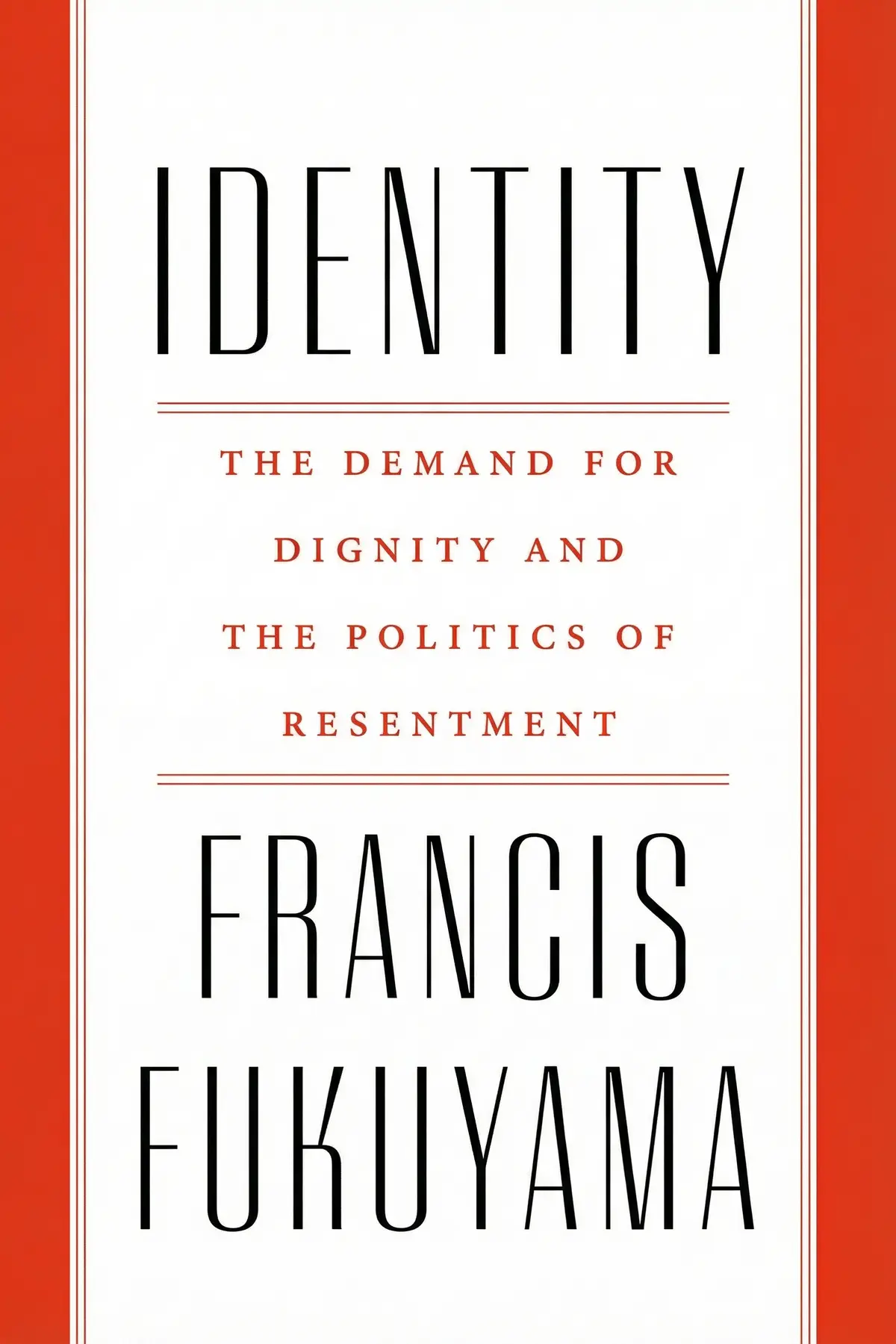
Table of Content
1. Introduction
54 sec
If identity politics leaves you either cheering or exasperated, Francis Fukuyama offers a third response: understanding where it comes from. In Identity, the Stanford political scientist traces today’s fights over race, gender, religion and nation to one of the oldest human needs, the wish to have our dignity recognized by others. The ancient Greeks called it thymos.
His argument cuts two ways. The grievances of marginalized groups are often just, he says, because real discrimination persists. But when each group fights only for its own recognition, societies split into ever smaller camps. The broad coalitions that could tackle problems like rising inequality then fall apart. His remedy is to keep identity and make it bigger. Follow his history from Martin Luther to the Stonewall riots and the political news starts to read differently.
2. Spot the hunger for respect behind political fights
1 min 21 sec
Same-sex couples were offered unions with identical tax and inheritance rights, and many campaigners still said no. Their refusal points to a need that money and legal fixes cannot satisfy.
3. Trace the inner self from Luther to Rousseau
1 min 20 sec
The belief that a true you lives inside, waiting to be seen, feels like plain common sense. It took a rebel priest, a philosopher from Geneva and a boom in trade to invent it.
4. Tell individual dignity claims from group ones
1 min 35 sec
One revolution produced two different demands for respect, and both are still with us. Learning to tell them apart explains a great deal about constitutions, flags and the arguments of today.
5. Spot when group pride turns dangerous
1 min 37 sec
A philosopher who condemned racism and simply wanted Germans to value their own culture ended up feeding one of history’s most destructive ideas. The same pattern can still be seen in Europe today.
6. Understand the state and sixties roots of identity politics
2 min 00 sec
After World War II, governments took on a new task their predecessors never imagined. Then a decade of protest changed what people meant by identity, and one strategy for respect overtook another.
7. See what splintered movements cost the poorest
1 min 47 sec
While wealth piled up at the top, the movement that once fought hardest against inequality lost voters. Fukuyama’s explanation borrows a strategy from the British Empire, and it is not comfortable reading.
8. A shared nation that makes diverse societies stronger
1 min 35 sec
Patriotism carries the memory of world war, and many people keep their distance from it. Fukuyama argues that the right kind of national identity protects security, honest government, prosperity and trust.
9. Policies that turn neighbors into fellow citizens
1 min 36 sec
Language tests, shared classrooms and a year or two of service for every young adult are among the tools Fukuyama proposes. Each asks something of citizens, and each promises something in return.
10. Conclusion
1 min 10 sec
Fukuyama turns a shouting match into a history. The hunger Socrates called thymos never left us. Luther and Rousseau gave it an inner self to defend, and the French Revolution wrote it into law. The therapeutic state took charge of it, and the 1960s gave it group form. Each step answered a real injustice. The last one also split the people who most need change into ever smaller camps while wealth gathered at the top.
His answer refuses both easy positions. Recognition matters, so discrimination has to end. Fragmentation hurts, so the goal is a larger identity built on democratic values that anyone can learn and adopt.
That gives you something to listen for. When a political fight seems to be about money or rules, look for the recognition being sought. When a movement grows, notice whether its circle widens or shrinks. And when patriotism is mocked or worshipped, remember Fukuyama’s version of it: a country as a set of shared beliefs open to newcomers.
Everyone wants their dignity seen. The harder work is building a home large enough to grant it to all.
About this book
What is this book about?
Fights over race, gender, religion and nation fill the news, and most people either cheer them on or tune them out. Francis Fukuyama tries to understand them instead. He argues that identity politics rests on one of the oldest human needs, the wish to have our dignity recognized, which the ancient Greeks called thymos. Fukuyama follows that need through history. Martin Luther and Jean-Jacques Rousseau gave it an inner self to defend. The French Revolution wrote it into law, and governments after World War II took on responsibility for citizens' self-esteem. In the 1960s, movements for marginalized groups turned it into a collective cause. Each step pushed the idea of identity further. The final one, he argues, split the political left into small, competing groups, just as wealth piled up at the very top. His answer is to make identity bigger. Readers get a clear history of where identity comes from and an explanation of why fragmentation weakens movements for change. They also get concrete proposals, from integration policies to national service, for a national identity based on liberal values that anyone can join.
Book Information
Who it's for
Professionals who follow politics
Professionals who follow politics and want to understand where today's identity battles come from.
Uneasy about growing division
Readers worried about polarization and rising inequality who want a case for unity that still takes injustice seriously.
Leaders of diverse teams
Leaders of diverse teams looking for ways to build shared belonging.
About the Author
Francis Fukuyama
Francis Fukuyama is an American political scientist, born in Chicago in 1952. His 1992 book The End of History and the Last Man argued that liberal democracy and free-market capitalism might be the endpoint of humanity's political development. He studied classics at Cornell and earned a doctorate in political science at Harvard. He has worked at the RAND Corporation and on the US State Department's Policy Planning Staff, and he served on the President's Council on Bioethics. Since 2010 he has been a senior fellow at Stanford's Freeman Spogli Institute.
Ratings & Reviews
Ratings at a glance
What people think
Listeners find the work insightful, as one listener notes the deep connection it draws between psychological and political aspects. Furthermore, the academic analysis is praised, with one listener emphasizing its informative history of the concept. They also value its readability, the compelling exploration of human dignity, and the brilliant breakdown of identity politics. While the book is deemed significant and useful, listeners hold varied opinions regarding its pacing.
Top reviews
Phimwan
As someone who values rigorous political theory, I found Fukuyama’s latest work to be a profound bridge between psychology and modern sociology. He tracks the evolution of Western civilization. He explores the shift from rigid village structures to the atomized, inner-focused identities that define our modern lives. Truth is, his explanation of 'thymos'—the innate human desire for recognition—clarifies the current political polarization better than any op-ed I have seen recently. The middle drags. However, the historical synthesis of Luther, Kant, and Hegel remains masterful. It is a brilliant, necessary analysis of why dignity has become the central battlefield of 21st-century governance. Read it.
Show moreJoshua
The chapter on the evolution of dignity is worth the price of the book alone. It’s brilliant. Fukuyama connects the dots between the Protestant Reformation and the modern obsession with the 'inner self' being more real than the external world. I love how he breaks down identity into three parts: thymos, the inner/outer distinction, and the universalization of dignity. It is a deeply insightful look at how we reached 'the end of history' only to find ourselves stuck in a cycle of resentment. Some might find his tone a bit dry. I didn't. The scholarly depth here is exactly what we need in an era of shallow social media shouting matches.
Show morePing
I’ve been following the debate over identity politics for years, and this is the most balanced, scholarly analysis of the topic I have encountered. It’s essential. Fukuyama isn't just complaining about the current state of the world; he is providing a deep, historical context for how we arrived at this point. The link between the psychological need for respect and the political rise of populist leaders is handled with incredible nuance. It’s rare to find a book that is this readable while still maintaining such high academic standards. If you want to understand the 'politics of resentment' without the usual partisan vitriol, you absolutely need to read this book immediately.
Show moreWatcharin
This book provides an incredibly informative history of how 'identity' became a political weapon in the modern era. It is deep. Fukuyama explains that people started measuring their worth by their inner lives rather than community ties as society fragmented during the industrial revolution. I particularly appreciated the scholarly analysis of the 'politics of resentment' and how it fuels movements like Trumpism and Brexit. Look, the solutions feel dated. He advocates for national service, which seems idealistic in our current fractured climate. Still, the psychological link is vital. It is a highly readable account that puts the 'creedal' identity back at the center of the conversation.
Show morePot
Ever wonder why political discussions feel so much more emotional and personal lately? Fukuyama argues that the quest for recognition has superseded economic interest as the primary driver of political behavior in liberal democracies. He makes sense. Personally, I found the first few chapters on the philosophical roots of dignity to be the strongest part of the text. He manages to make complex ideas from Nietzsche and Rousseau accessible without stripping away their intellectual weight. My only gripe is that he occasionally oversimplifies the origins of movements like #MeToo or Black Lives Matter. He lumps them into a broad 'identity politics' bucket. It is a compelling discussion regardless.
Show moreDavid
Finally got around to reading this, and I have to say Fukuyama is onto something regarding the 'particularization' of society. He warns that when we focus on increasingly smaller marginalized groups, we lose the meta-narratives that actually bind a democracy together. We need unity. The book is an important call to return to a 'creedal' identity based on shared values like the rule of law rather than ethnic silos. I don’t agree with his skepticism toward dual citizenship. However, his core argument is solid. It is a valuable piece of the puzzle for understanding why our democratic systems feel like they are currently breaking apart at the seams.
Show moreManika
After hearing so many critiques of 'The End of History,' it was fascinating to see Fukuyama grapple with the current retreat of liberal democracy. He makes a compelling case that we’ve ignored the human need for dignity in our focus on economic globalization. Dignity matters. The book is incredibly insightful when discussing how 'isothumia'—the demand to be seen as equal—can easily turn into 'megalothumia'—the desire to be superior. While I found the pacing a bit uneven toward the end, the overall analysis of how identity can both divide and integrate us is very powerful. It is a scholarly yet accessible roadmap for our current cultural moment.
Show moreMia
Picked this up hoping for a follow-up to 'Political Order and Political Decay,' but this feels much more like a long-form essay than a dense historical tome. It’s light. The first half is a brisk and illuminating walk through Western history, highlighting the shift from Catholic communalism to the Reformation's focus on the inner self. Unfortunately, the book loses steam when Fukuyama begins offering his own solutions to the polarization crisis. He's a hard assimilationist. He advocates for things like ending bilingual education, which many will find off-putting or simply unrealistic in a de facto multicultural society. The theory is sharp, but the prescriptions feel rushed.
Show moreEye
Wow, this was a real mixed bag for me. The beginning is a fantastic, speedy synthesis of how identity went from being tied to your village to being a purely internal quest for self-worth. It’s fast. However, Fukuyama’s solutions for fixing our polarized society feel remarkably disconnected from the modern reality of race and class in America. He argues for a melting pot model that seems to ignore why groups felt the need to retreat into specific identities in the first place. The truth is, his historical overview is brilliant, but his political prescriptions are likely to alienate the very people he is trying to reach. Read for the history, skip the advice.
Show moreKofi
Not what I expected from a thinker of Fukuyama’s stature, particularly regarding the historical accuracy of his claims about the American Civil Rights movement. He characterizes MLK as someone who didn't want radical change. This is wrong. It completely ignores the economic and systemic redress King actually demanded. Frankly, the narrative feels like it was written from a position of extreme privilege that fails to understand the 'lived experience' of marginalized groups. While the writing is readable, his dismissal of gender and race reform as mere 'feelings' is intellectually lazy. It feels like he is trying to blame the left for a beast they didn't actually create. I was disappointed.
Show moreQuestions about this book
What is the main argument of Identity by Francis Fukuyama?
Fukuyama argues that identity politics comes from thymos, the ancient human need to have our dignity recognized. Individualism, the French Revolution, the post-war therapeutic state and the movements of the 1960s gave that need its modern form. He believes many group grievances are legitimate. Still, he warns that splitting into ever smaller groups weakens societies and the fight against inequality, so he calls for broader, inclusive identities.
What is thymos in Fukuyama's Identity?
Thymos is the part of the soul that, according to Socrates, wants other people to judge us worthy. It is separate from appetite and reason. When thymos is satisfied we feel pride, and when it is frustrated we feel anger or shame. Fukuyama uses same-sex marriage as an example: many campaigners rejected civil unions that offered the same legal benefits, because they wanted equal recognition.
Why does Fukuyama say identity politics hurt the political left?
He argues that the left once united people around class and economic equality. When it turned toward many separate group causes, its coalition broke into smaller units with competing interests. In Southern Europe, the center-left vote dropped from 36 percent in 1993 to just 21 percent by 2017. Over a similar period, the richest tenth of American families increased their share of wealth from 67 to 76 percent.
What solutions does Fukuyama propose in Identity?
He favors a national identity based on liberal democratic values and universal human rights. To build it, he proposes ending discrimination, asking immigrants to learn the national language, history and values while improving their job prospects, replacing religious schools with common schools that share a curriculum, and introducing a year or two of compulsory military or civilian national service.
Who should read Identity by Francis Fukuyama?
It suits readers who want to understand the history behind today’s arguments about race, gender, religion and nation without simply cheering or dismissing them. It is useful for people concerned about polarization and inequality, for students of politics, and for anyone interested in how a diverse society can build shared trust and belonging.
Readers also enjoyed

A Theory of Justice
John Rawls



A Warning
Miles Taylor



A Biography of Loneliness: The History of an Emotion
Fay Bound Alberti


A Force for Good: The Dalai Lama's Vision for Our World
Daniel Goleman

Abolish Rent: How Tenants Can End the Housing Crisis
Tracy Rosenthal
AUDIO SUMMARY AVAILABLE
Listen to Identity in 15 minutes
Get the key ideas from Identity by Francis Fukuyama, plus 5,000+ more nonfiction titles.
- 5,000+ titles
- Listen as much as you want
- 7-day free trial
- Cancel anytime









