
15 min 29 sec
Available in: English
 ไทย
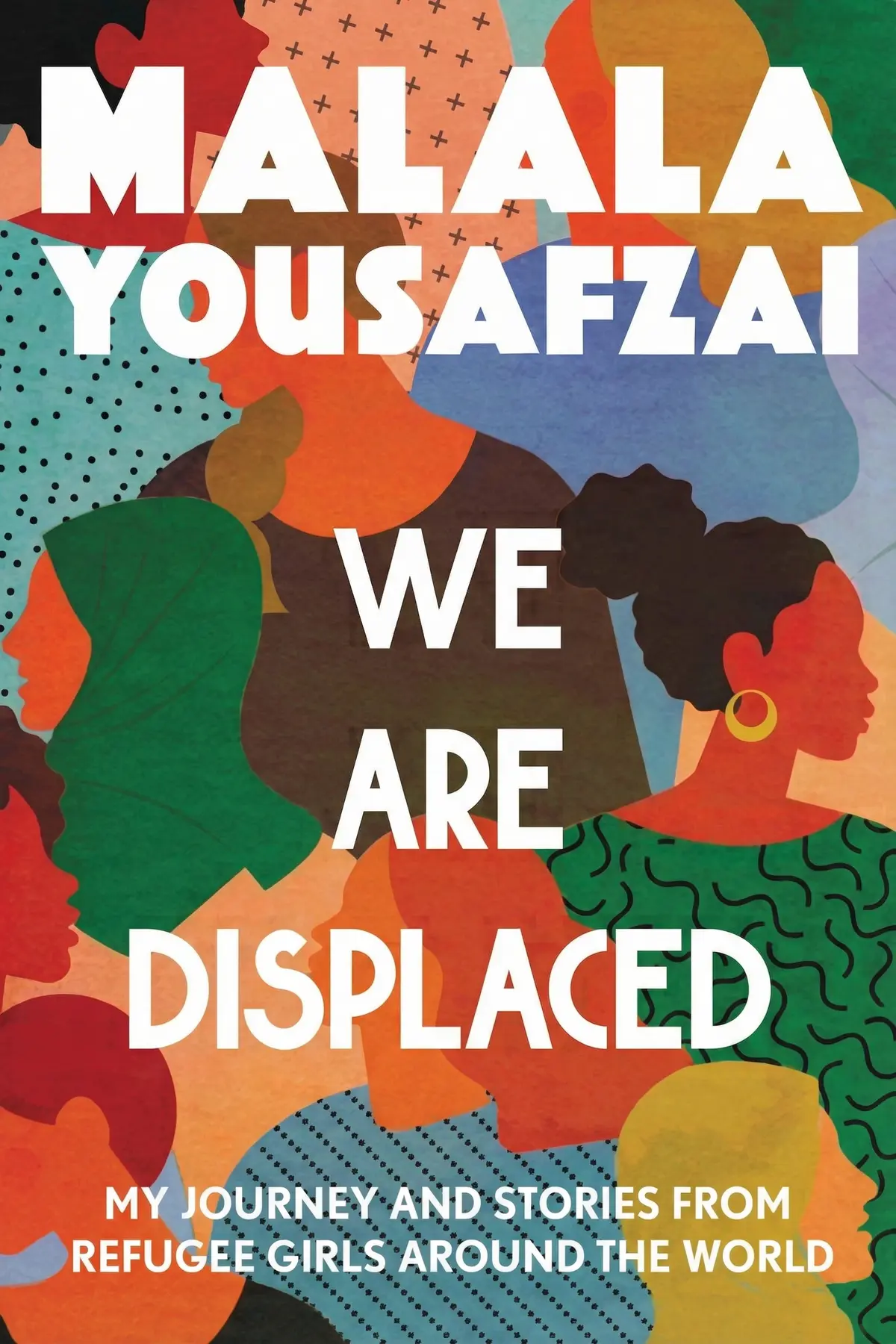
EnglishไทยI Am Malala: The Girl Who Stood Up for Education and Was Shot by the Taliban
Malala Yousafzai's memoir traces how a girl from a poor Pakistani valley, raised by an outspoken teacher, defied the Taliban's ban on girls' schooling, survived being shot and kept campaigning for every child's right to learn.
Table of Content
1. Introduction
1 min 02 sec
Most people assume that changing anything big takes money, power or age. Malala Yousafzai had none of them. In I Am Malala, she tells how a girl from a two-room shack in Pakistan’s Swat Valley became a global voice for girls’ schooling, so dangerous to the Taliban that one of their gunmen shot her on a school bus in 2012. Her first answer to how this happened is simple: her courage was learned at home, from a father who believed education could solve his country’s problems.
The thread running through her story is that one young voice, used openly and without violence, can outlast people with guns. Along the way she shows how extremism creeps into a peaceful place, what speaking up costs, and why she kept going when her own country turned on her. Her life becomes a story you can retell, and a reason to speak the next time staying silent feels safer.
2. See what one father's belief built in his daughter
1 min 57 sec
Her birth was greeted with a custom that Pashtun families saved for sons. The man behind that choice had fought his own family for an education, and he answered a book ban in an unexpected way.
3. Turn small outrages into a reason to act
1 min 38 sec
A stolen toy phone and a hill of garbage taught a young girl two different lessons. One was about forgiveness; the other turned her anger into her first piece of public work.
4. Learn to spot extremism slipping into a peaceful valley
1 min 44 sec
A disaster, a frightened population and a radio station proved enough to turn a peaceful valley against its schoolgirls. The way it happened is a warning for any community under strain.
5. Speak the truth even under a false name
1 min 49 sec
A BBC reporter needed someone willing to describe life under the Taliban, and the volunteer was a schoolgirl. Her choice of name, and her later decision to abandon it, changed everything.
6. Put every prize to work for the cause
1 min 40 sec
Prize money, a prime minister’s mansion and crowds of journalists can pull anyone toward self-promotion. A teenager showed another way to use sudden attention, and it began with a list.
7. Danger can grow after the fighting seems over
2 min 08 sec
The army announced victory, the police offered protection and a girl turned it down. Months later, a man stepped onto a school bus with a question and a pistol.
8. Keep going when your own country turns away
2 min 07 sec
Saving her required a British specialist, a foreign jet and a way around her own government’s pride. Recovery was only the start; the harder reception was waiting back home.
9. Conclusion
1 min 24 sec
Malala’s account could be read as a near tragedy. She tells it as an argument. A baby welcomed with sweets meant for a son, raised in two rooms without running water, grew into a teenager who handed a prime minister her demands and addressed the United Nations. What she had was a father who answered calls to ban a novel by urging its critics to read it and reply with a book of their own, and the habit he gave her of meeting bad ideas with better ones.
Her message has two halves that belong together. Speak out against discrimination and abuse, whatever the cost and however young you are. And never fight an oppressor with the oppressor’s tools, least of all violence. The Taliban had guns, a radio station and fear. She had a diary under a flower’s name and a list of demands.
The story asks something modest of anyone listening. When something unfair crosses your path, the way the children on the dump crossed hers, say it aloud and attach one concrete request. And keep her larger claim in view: every child has a right to learn, whatever their gender, class, race, faith or ethnicity.
On a bus in Swat, a gunman asked who Malala was. She has been answering ever since.
About this book
What is this book about?
In the Swat Valley of northwest Pakistan, a region beautiful enough to be called paradise and poor enough that Malala Yousafzai's family lived in two rooms without running water, schooling for girls was never guaranteed. Then the Taliban arrived, and it was banned outright. Malala tells how she came to stand against them. Her father, a teacher and former student activist, believed education could solve Pakistan's problems and celebrated her birth the way other Pashtun families celebrated sons. When extremists used an earthquake and a radio station to spread fear and close schools, she wrote an anonymous diary for the BBC, then dropped her pen name and spoke openly, winning prizes she poured into a foundation for girls' education. In 2012 a gunman shot her on her school bus. The book follows the surgeons, specialists and political maneuvering that saved her, her recovery in Britain and her speech at the United Nations, alongside the scorn she faced at home. Readers get a vivid account of how extremism takes hold, and a case for speaking out without ever borrowing the oppressor's weapons.
Book Information
Who it's for
Curious how extremism spreads
Readers who want a firsthand account of how extremism takes hold of an ordinary community.
Backing girls' education
Students, teachers and parents who care about girls' right to education.
Considering speaking up
Young people and professionals weighing whether to speak up against unfairness, and what it might cost.
About the Author
Malala Yousafzai
Malala Yousafzai was born in 1997 in Mingora, in Pakistan's Swat district. As a child she blogged for BBC Urdu about living under Taliban occupation and spoke up for girls' right to attend school. In October 2012 she was shot by a Taliban gunman while riding a bus home from an exam. After treatment in Birmingham, where she later settled, she cofounded the Malala Fund with Shiza Shahid. In 2014, at 17, she shared the Nobel Peace Prize with Kailash Satyarthi, becoming the youngest Nobel laureate ever. She graduated from Oxford in 2020 after studying Philosophy, Politics and Economics.
Ratings & Reviews
Ratings at a glance
What people think
Listeners view this autobiography as a necessary read, specifically for teenage girls, citing its engaging narrative and elegant prose. They value Malala’s exceptional character and her bravery in finding her voice, while the work offers extensive historical background on the territory. Listeners portray it as a poignant story that resonates deeply, with one listener highlighting how the account encourages audiences to recognize and value the difficulties others endure.
Top reviews
Supranee
Rarely does a memoir feel so essential and yet so intimate at the same time. Malala’s story isn’t just about the horrific day she was shot on a school bus; it is a vibrant, lush description of the Swat Valley and a father’s unconventional love for his daughter. I was moved by how she balances the weight of global advocacy with the simple, relatable desires of a teenage girl who loves Twilight and worries about her exams. Her voice shines through the prose, offering a perspective on Islam that is filled with peace and a thirst for knowledge. This book serves as a vital reminder that education is a precious gift often taken for granted in the West. It is a beautiful, emotional journey that tugs at your soul and leaves you feeling incredibly humbled by her resilience.
Show moreWan
Finally sat down with this after years of hearing about Malala’s Nobel win, and I’m honestly kicking myself for waiting so long. The book is an absolute must-read for every young woman because it illustrates the sheer power of speaking out when everyone else is silent. I loved the small details, like her father’s refusal to clip her wings and her mother’s quiet strength despite her lack of formal education. It’s a heartbreaking look at how quickly a beautiful home can be transformed by fear and ideology. The description of the Taliban arriving like 'vampires' in the night was chilling and stayed with me long after I closed the cover. This isn't just an autobiography; it is a manifesto for the right to learn. Malala is a beacon of hope in a world that often feels very dark.
Show moreDaranee
Wow, what a punch to the gut. This book manages to be both a terrifying account of life under extremism and a charming story of a girl who just wants to learn. I was struck by the irony of a group of men being so threatened by a schoolgirl with a book that they felt the need to attempt an assassination. Malala’s lack of bitterness toward her attackers is what stayed with me the most. She prays for peace and continues her work with a grace that most adults couldn't muster. The descriptions of her recovery in Birmingham were particularly moving, highlighting the loneliness of being a 'world-famous' refugee. It’s an emotional rollercoaster that makes you appreciate the freedom to walk to school without fear. Every library needs a copy of this.
Show moreWitthaya
Picked this up for my daughter’s school project, but I ended up staying awake until 2 AM to finish it myself. It is such a beautifully written account that manages to explain complex religious and political issues in a way that feels accessible. Malala’s relationship with her father, Ziauddin, is the true heart of the book; his belief in her potential is what gave her the foundation to change the world. I was moved to tears several times, especially when she describes her mother’s journey toward literacy. It really makes you stop and check your privilege when you realize that people are literally dying for the right to sit in a classroom. This is a story of triumph over evil, and it's handled with incredible maturity. Truly a life-changing read that I will be recommending to everyone I know.
Show moreNarongrit
Looking at the Swat Valley through Malala’s eyes changed how I view the news entirely. We often see these regions as nothing but war zones, but she paints a picture of a lush, beautiful home filled with history and poetry. Her account of the Taliban’s creeping influence—starting with the destruction of TVs and ending with the bombing of schools—is a terrifying cautionary tale about the loss of freedom. I found her perspective on Islam to be incredibly enlightening, as she repeatedly uses the Quran to justify her right to an education. She isn't fighting her religion; she is fighting the people who have hijacked it. This book is a testament to the fact that one voice can indeed be louder than a gun. I finished it feeling inspired and ready to do more for global education.
Show moreNatchaya
How much do we truly understand about the price of a single pen? This book provides a much-needed history lesson on Pakistan and the rise of the Taliban, though the mix of personal reflection and dense political fact occasionally felt disjointed to me. I suspect the co-author, Christina Lamb, handled the heavy historical lifting, which sometimes made me wonder whose voice I was actually hearing in certain chapters. However, when Malala speaks about her school friends or her competitive streak in the classroom, the narrative becomes truly electric. The courage required to stand up to extremists at age fifteen is simply unimaginable. While the pacing slows down during the detailed political breakdowns, the overall impact is undeniable. It is a necessary read for anyone wanting to see the human face behind the headlines of the 'War on Terror.'
Show moreJoy
It’s surprisingly easy to forget that Malala was just a teenager who liked Ugly Betty and squabbled with her brothers while the world was watching her. This book does a great job of grounding her extraordinary life in the ordinary moments of childhood. I appreciated the insight into Pashtun culture and the code of 'Pashtunwali' which explained so much about their hospitality and resilience. The prose is clear, though it does get a bit dry during the long sections on Pakistani Prime Ministers and military coups. I would have preferred more focus on her internal thoughts during the rise of the Radio Mullah. Still, the message of the book is powerful enough to overcome any minor pacing issues. It’s a humbling experience to read about a child who possesses more moral clarity than most world leaders.
Show morePooja
The narrative voice here is undeniably powerful, even if the collaboration with Christina Lamb feels a bit clunky in the middle sections. Truth is, the book works best when it stays close to Malala’s personal experiences and her family’s struggles to keep their school open against all odds. I found the sections regarding her move to England and her recovery at the hospital in Birmingham to be deeply affecting, particularly her confusion upon waking up in a strange country. It captures the trauma of displacement very effectively. While some of the political context felt like a bit of a slog, the overall message of the book is too important to ignore. It’s a solid 4-star read that offers a unique window into a world most of us will never experience firsthand. A very brave piece of work.
Show moreNoppadol
To be fair, I expected a more straightforward autobiography, but what I got was a dense history lesson wrapped in a personal struggle. I really admired Malala’s bravery and her vision for the future, but the book itself felt like an odd hybrid that didn't always gel for me. At times, the detailed accounts of Pakistani political shifts felt like they were pulled from a textbook, which pulled me out of Malala’s personal story. I found myself skimming the geopolitical sections to get back to her family life in Swat. The writing is a bit plodding in the middle, and I struggled to keep track of her age during certain events. It’s an important document for historical purposes, certainly, but as a compelling piece of literature, it felt slightly over-edited and a bit too polished to feel entirely authentic.
Show moreCameron
As someone who actually lived in the Swat region during these events, I found many of the descriptions hard to reconcile with reality. There are significant 'timing' issues in the narrative; for instance, she mentions incidents on the way to school in January and February, but Swat is a winter zone where schools are strictly closed for vacation during those months. The portrayal of the local Taliban's control over the city also feels exaggerated for a Western audience. While I admire Malala’s courage as an individual, the book feels like it was written to fit a specific political narrative rather than representing the nuanced truth of our valley. Many locals feel the events were distorted, and the heavy hand of the British co-author is evident throughout. It's a polished piece of media, but I question its authenticity as a historical record.
Show moreQuestions about this book
What is I Am Malala about?
Malala Yousafzai’s memoir follows her life from a poor home in Pakistan’s Swat Valley to her campaign for girls’ schooling, which she began with an anonymous BBC diary after the Taliban banned girls from school. It covers the attack on her school bus in October 2012, the doctors and governments involved in saving her, her recovery in Britain and her continued work through the Malala Fund.
Why did the Taliban target Malala Yousafzai?
Under Maulana Fazlullah, the Taliban in Swat preached that girls should not go to school and had destroyed 400 schools by 2008. Malala openly opposed that ban, first in her BBC diary and then under her own name in a documentary, speeches and award ceremonies. Her growing fame made her a more visible target, and in 2012 she received a public death threat months before the shooting.
How did Malala survive being shot?
Passing clean through her head and just missing the brain, the bullet came to rest in her shoulder. In Peshawar, military neurosurgeon Colonel Junaid removed part of her skull to relieve swelling, against his superiors’ advice. British specialist Dr. Fiona Reynolds then diagnosed a dangerous clotting problem and had her moved to Rawalpindi. The United Arab Emirates provided a private jet that carried her to Queen Elizabeth Hospital in Britain.
What is the main lesson of I Am Malala?
Malala’s message is to speak out against discrimination and abuse whatever it costs, and at any age, but never to fight an oppressor with the oppressor’s methods, especially violence. Against guns and radio propaganda she used a diary, speeches and specific demands, and she insists that every child should be entitled to schooling, whatever their gender, class, race, faith or ethnicity.
Who should read I Am Malala?
It suits readers who want a firsthand view of how extremism took hold in one Pakistani valley, and anyone who cares about education, especially for girls. Students and teachers will find a vivid case study, and readers wondering whether their own voice can matter will see how a teenager with no money or power used words, prizes and a foundation to keep pushing her cause.
Readers also enjoyed

Ali: A Life
Jonathan Eig

All About Love: New Visions
bell hooks

A Life Decoded: My Genome: My Life
J. Craig Venter


A Long Way Gone: Memoirs of a Boy Soldier
Ishmael Beah

All Creatures Great and Small
James Herriot


A Promised Land
Barack Obama

AUDIO SUMMARY AVAILABLE
Listen to I Am Malala in 15 minutes
Get the key ideas from I Am Malala by Malala Yousafzai, plus 5,000+ more nonfiction titles.
- 5,000+ titles
- Listen as much as you want
- 7-day free trial
- Cancel anytime









