
12 min 57 sec
Available in: English
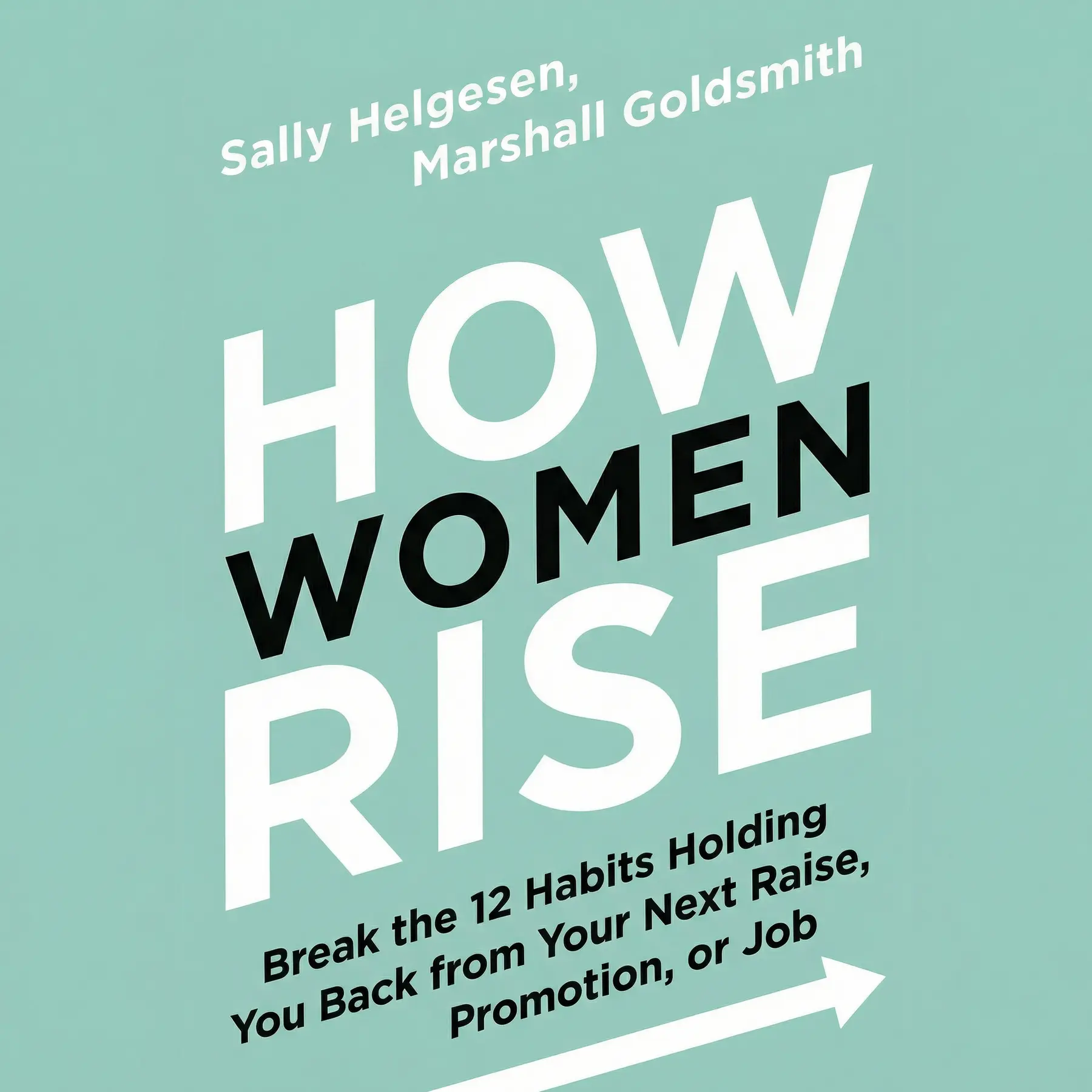
How Women Rise: Break the 12 Habits Holding You Back from Your Next Raise, Promotion, or Job
A practical look at the habits many professional women learned early, from perfectionism to modesty, that quietly block raises and promotions, and the small changes in speech, posture and focus that get them noticed.
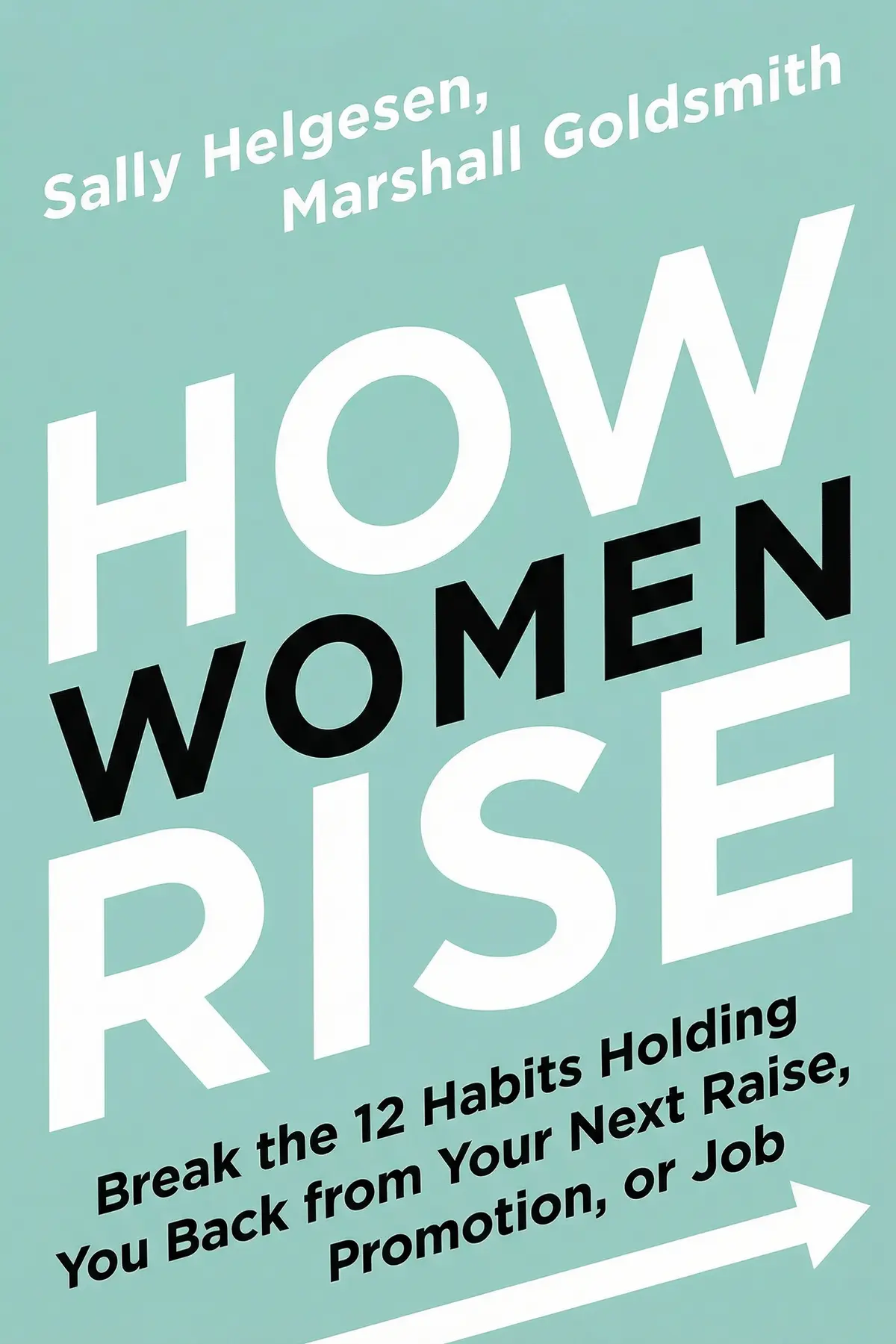
Table of Content
1. Introduction
1 min 01 sec
Plenty of capable women do excellent work for years and still watch the raise, the promotion or the bigger job go to someone else. In How Women Rise, leadership consultant Sally Helgesen and executive coach Marshall Goldsmith argue that the gap often comes from habits rather than talent, and that the habits which earned praise early on are the very ones now in the way. A girl rewarded for being agreeable and error-free can grow into a professional who avoids risk, hides her own part in a win and says yes to everything.
Those behaviors look polite. To senior people, they can read as timid or uncommitted. The authors’ case is that the traits which won approval at school and in junior roles stall a career at the next level, and that seeing them clearly is the first step to letting them go. Six of these habits follow, each with the story the authors use to expose it and a small change you can try tomorrow morning.
2. Trade flawless work for the risks leaders reward
1 min 54 sec
Being the person who never makes a mistake sounds like the safest way up. One executive coach’s data on what actually gets rewarded at the top suggests that safety comes with a heavy hidden cost.
3. Say no without losing your standing
1 min 47 sec
Agreeing to every extra task feels generous and safe. Helgesen and Goldsmith argue it slowly drains something a career cannot do without, and the drain starts long before anyone gets a management title.
4. Stop mastering your current job so you can move up
1 min 47 sec
Becoming the team’s most reliable expert seems like the obvious ticket upward. A software developer’s story shows why it can work in reverse, and why your boss may have every reason to keep you exactly where you are.
5. Claim credit for yourself and your team
1 min 34 sec
Senior women in law, accounting and consulting all named the same weakness in their talented younger colleagues. It has nothing to do with the quality of their work, and it can even turn a manager’s own staff against her.
6. Take up the space your role deserves
1 min 57 sec
Watch who shifts in their chair when a latecomer walks into a meeting. That small movement, and a few common words before a point, can tell senior leaders far more than you intend them to.
7. Stop replaying mistakes and start moving again
1 min 46 sec
Men and women dwell on past failures equally often, yet they handle them in opposite ways. One of those ways, research suggests, drains the energy needed to fix the problem and can do lasting harm.
8. Conclusion
1 min 11 sec
Helgesen and Goldsmith do not ask women to become someone else. Their argument is that a handful of habits, each learned for good reasons and praised along the way, now sends the wrong signal to the people who hand out promotions. Fear of small mistakes keeps careful workers from taking risks. Endless helpfulness reads as an inability to lead. Modesty reads as inauthentic, and a tidy, quiet presence reads as a lack of commitment. Meanwhile the work itself, often excellent, goes unseen.
The practice the book supports is small and specific. In your next meeting, let your arms and papers sit where they naturally fall, skip the apology before your point, and make it in fewer words than you planned. When a project lands, name your part and your team’s part out loud to someone senior. When a request does nothing for the role you want, decline it clearly. And when a mistake starts looping in your head, ask what comes next and move.
The women at that board meeting did not need more talent to keep their seats. They only needed to stop moving over.
About this book
What is this book about?
Many women do excellent, careful work for years and still see the raise or the promotion go to someone else. Sally Helgesen and Marshall Goldsmith argue that talent is rarely the problem. The trouble lies in habits that were rewarded early in life and in entry-level jobs, then turn into obstacles as women aim higher. Drawing on interviews with senior women, workshops, coaching data and research, the authors look at behaviors such as the need to please, the drive for perfection, building too much expertise in the current job, refusing to claim credit, making oneself physically and verbally smaller, and dwelling on past mistakes. Each one looks like a virtue from the inside. From the outside, to a senior decision maker, it can read as timid, uncommitted or not ready to lead. Readers get a clear way to spot these habits in themselves and concrete changes to try: saying no to work that leads nowhere, naming their own contribution, taking up space at the table, speaking more briefly and letting go of yesterday's errors.
Book Information
Who it's for
Women overlooked for promotion
Early and mid-career women who work hard yet keep being passed over for promotion.
Women new to managing
New women managers unsure how to claim credit and assert authority without feeling pushy.
Mentors, coaches and leads
Mentors, coaches and team leads who want to help talented women get seen.
About the Author
Sally Helgesen
Sally Helgesen is a leadership development consultant who speaks and runs workshops for companies, associations, universities and non-profit groups. Her earlier books include The Female Advantage, translated into 12 languages, The Web of Inclusion and The Female Vision. Marshall Goldsmith is an American executive leadership coach who has advised more than 200 major CEOs and their teams. He taught management practice at Dartmouth's Tuck School of Business, belongs to the Thinkers 50 Hall of Fame, and his 41 books, including What Got You Here Won't Get You There, have sold more than 2.5 million copies.
The Earned Life: Lose Regret, Choose Fulfillment
Marshall Goldsmith
Triggers: Creating Behavior That Lasts – Becoming the Person You Want
Marshall Goldsmith
Ratings & Reviews
Ratings at a glance
What people think
Listeners find this to be an exceptional resource for professional women, offering a highly actionable roadmap for moving up in their careers. They characterize the work as deeply perceptive, accessible, and brilliantly composed, with one listener pointing out that it addresses a broad spectrum of topics. Listeners value the uplifting takeaway, as one notes it boosted their professional self-assurance, while another emphasizes how it prompts women to practice meaningful self-reflection.
Top reviews
Sarawut
Finally finished this, and I’m honestly buzzing with new ideas for my career. It is such a fabulously written guide that forces you into some much-needed introspection regarding your daily office habits. I’ve always been that person who credits the whole team while staying in the shadows, but Helgesen and Goldsmith illustrate exactly how that holds us back from the recognition we deserve. The chapters on overcoming the 'Disease to Please' and perfectionism were particularly eye-opening for me personally. It isn’t about becoming a jerk; it’s about learning to own your accomplishments so you can actually rise to a position where you have the power to influence the culture for others. If you are feeling stuck or just want a fresh perspective on your professional trajectory, this is a highly practical and inspirational read. It covers a wide range of issues without feeling overwhelming or redundant like many business books do.
Show moreMaja
Wow, what a reality check this was for my professional life. I picked this up because a mentor suggested it, and I am so glad I did. The book identifies twelve specific habits that often serve women well early in their careers but eventually become obstacles to reaching the executive level. I saw myself in almost every page, especially the part about 'ruminating' on past mistakes instead of moving forward. The writing is clear and the fictionalized examples of successful women are very relatable. It’s a highly practical guide that doesn't just point out what’s wrong, but offers clear steps for how to pivot. Personally, I think every working woman should read this at least once, regardless of her industry. It gave me the confidence to start advocating for myself and my own career goals more aggressively. It really is an excellent read for anyone looking to break through that mid-level ceiling.
Show moreNina
This is hands-down one of the most inspirational and useful career books I have ever read. I originally asked my HR department for a copy, but it was so good I ended up buying a permanent one for my own shelf. It helped me realize that my tendency to wait for 'permission' or 'recognition' was actually holding me back from the promotions I deserved. The authors are extremely insightful and they manage to hold up a mirror to your behavior without being cruel. I loved the lessons on making social connections at work and why networking is just as important as doing the actual job. It really encouraged me to engage in deep introspection about my career path and my own value. If you want to meet your full potential and stop being your own biggest obstacle, you need to read this book immediately. It is fabulously written and truly life-changing.
Show moreNannapat
Ever wonder why some people just seem to glide up the ladder while you’re working twice as hard and staying in the same place? This book provides the answer. It’s an excellent read that gets straight to the point about the subtle habits that keep women from rising to the top. The authors don't sugarcoat things, which I appreciate. They show you how your desire to be perfect is actually a liability and how 'taking up space' is a skill that can be learned. It’s extremely insightful and gave me a lot of confidence to change my approach to meetings and projects. The truth is, many of us are holding ourselves back without even realizing it. By developing the confidence to own our achievements and stop trying to please everyone, we can finally meet our full potential. This book is a highly practical and inspirational roadmap for doing exactly that. I can’t recommend it enough.
Show moreAey
As someone who has always struggled with the transition from being a 'doer' to being a 'leader,' I found this book to be incredibly insightful. It acts as a necessary sequel to Goldsmith’s previous work, but specifically tailored to the social forces that shape how women navigate the workplace. I’ve definitely been guilty of the 'perfection trap' and trying to make everyone happy, which just leads to burnout. The advice is very direct and actionable, especially the tips on how to stop being a 'yes woman' and how to start taking up more physical and mental space in meetings. To be fair, some of the habits mentioned felt a little repetitive, and I wish there was more concrete advice on the actual mechanics of negotiating a higher salary. However, the overall message is empowering and provides a great mirror for self-reflection. It’s an easy read that I’ll likely refer back to often.
Show moreKom
After hearing so much buzz about this, I finally dove in. It’s basically 'What Got You Here Won't Get You There' but rewritten for the other half of the workforce, and honestly, that’s exactly what I needed. The authors do a great job of showing how behaviors that make you a great team player can actually make you look like a 'non-leader' in the eyes of upper management. I particularly liked the section on why we feel the need to provide too much background information instead of just getting to the point. Look, the corporate world is what it is, and while I agree the system needs to change, I also need to survive and thrive in it right now. This book provides the map for that journey. It’s easy to read and contains very practical, if occasionally slightly stereotypical, advice that actually works in a real-office environment.
Show moreFord
Does this book have some valid points? Absolutely. I definitely recognized several of my own self-sabotaging habits in the descriptions, particularly the one about 'putting your job before your career.' It was a bit of a lightbulb moment for me. I also found the advice on being more concise in my communication to be very helpful, even if the reasoning behind it felt a bit traditional. My only real gripe is that it feels a little bit like it’s laying all the responsibility for change at the feet of the individual woman. It’s like being told to recycle to stop climate change while ignoring the big corporations. Still, I can’t deny that the tips are effective. I’ve started implementing some of the strategies for owning my accomplishments and I’ve already noticed a difference in how my manager perceives my contributions. It’s a solid 4-star read for any ambitious woman.
Show moreWin
Not what I expected, but I actually got a lot out of it. My Aunt Kathy recommended this to me during a holiday dinner when I was complaining about feeling stuck in my current role. It focuses on how to approach conflict-laden situations from a collaborative viewpoint instead of a fearful one, which was a huge takeaway for me. I also appreciated the discussion on 'consensus management'—how it’s a strength but can be overused to the point of appearing indecisive. The authors explain that you can let go of these limiting behaviors without losing your identity or turning into an 'asshole.' I’ll definitely be rereading certain parts as I prepare for my next performance review. It’s a very practical guide that covers a wide range of issues and provides the tools to navigate them effectively. It’s a must-read for those in that transition period between entry-level and management.
Show moreValentina
The truth is, I have mixed feelings about this one. On one hand, the authors make some great points about behaviors I definitely need to work on, like not promoting my own wins. Recognizing these traits is the first step toward making a change, and I appreciate the collaborative viewpoint the book encourages. However, I can’t shake the feeling that we are being coached to just 'play the game' rather than fix the rules. It’s a bit exhausting to be told, yet again, that we need to change our tone or our habits to be more palatable to management. The chapter on peer coaching was probably the most useful part for me, as it felt less about changing who I am and more about building a support network. It’s a decent business book with some wisdom, but it definitely feels a bit dated in its approach to gender dynamics in the office.
Show moreRania
Frankly, I found this entire book to be a massive let-down and quite patronizing. It essentially argues that for women to succeed, we must systematically strip away our natural strengths to mirror the behaviors of men in a patriarchal corporate structure. Why is the burden of change always placed on the individual woman rather than the inequitable systems that fail to value collaborative leadership? The authors even perpetuate that debunked myth about women speaking more words per day than men, which made it hard to take the rest of their research seriously. Telling women to speak in bullet points just to satisfy a man's short attention span isn't empowerment; it's conformity. I wanted a book that explains how to change the system, not one that tells me to be more palatable to it. If you’re looking for something that celebrates unique female strengths, look elsewhere. This felt like a manual on how to fit into a mold that wasn't built for us.
Show moreQuestions about this book
What is the main idea of How Women Rise?
Sally Helgesen and Marshall Goldsmith argue that many professional women are held back less by their abilities than by habits learned early, such as perfectionism, the need to please, excessive expertise, modesty about their achievements, making themselves smaller and dwelling on mistakes. These behaviors earned praise at school and in junior roles, but senior leaders often read them as timidity or lack of commitment.
Why can becoming an expert in your job hurt your career?
The authors say time spent perfecting small details is time not spent building relationships, which matter more as you rise. They tell of a software developer who became her team’s most reliable worker, then found the company valued her client relationships far more. A boss who sees you as indispensable in your current role also has reason to keep you there.
How do women minimize themselves at work, according to the book?
Physically, by crossing legs, keeping arms close and gathering belongings into a small space, as one author saw at a board meeting where women shifted to make room while men stayed put. Verbally, by using doubtful openers, which a Harvard Business School study found women use more often. The authors report that leaders tend to read these signals as a lack of commitment.
How can I apply How Women Rise at work?
Start small. Before saying yes to a task, ask whether it serves the role you want. After a success, name your own contribution and your team’s to senior people. In meetings, take the space your role allows, drop qualifiers and decide your exact message in advance. When you catch yourself replaying a mistake, ask what the next step is and move on.
Readers also enjoyed

60 Seconds & You’re Hired!
Robin Ryan




Be A Free Range Human: Escape the 9 to 5, Create a Life You Love,
Marianne Cantwell
AUDIO SUMMARY AVAILABLE
Listen to How Women Rise in 15 minutes
Get the key ideas from How Women Rise by Sally Helgesen, plus 5,000+ more nonfiction titles.
- 5,000+ titles
- Listen as much as you want
- 7-day free trial
- Cancel anytime









