
14 min 41 sec
Available in: English
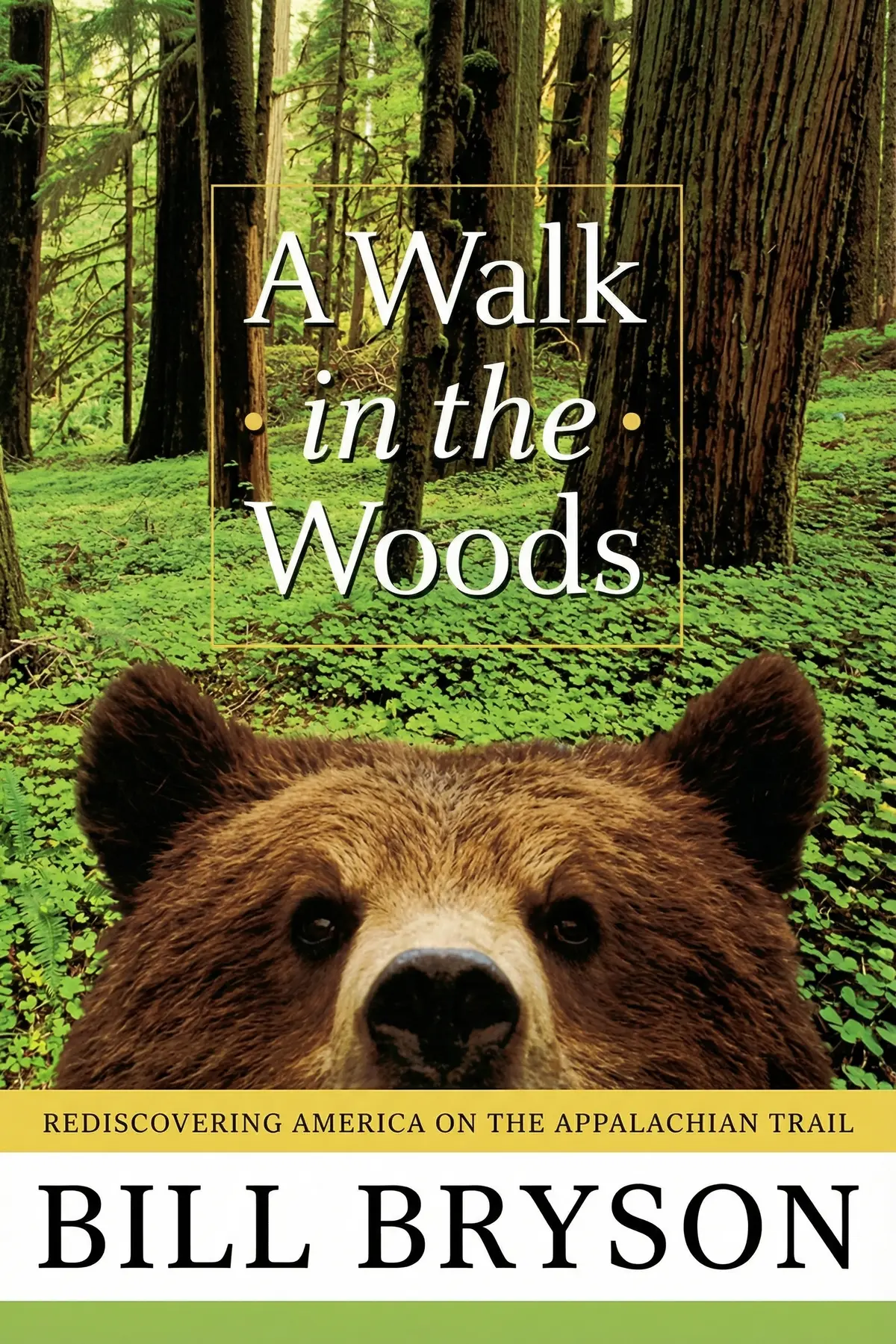
How to Raise a Wild Child: The Art and Science of Falling in Love With Nature
Shows parents and teachers why kids now spend minutes outdoors against hours on screens, and how everyday nature, regular unplanned outings and an adult who shares the curiosity can bring childhood back outside.
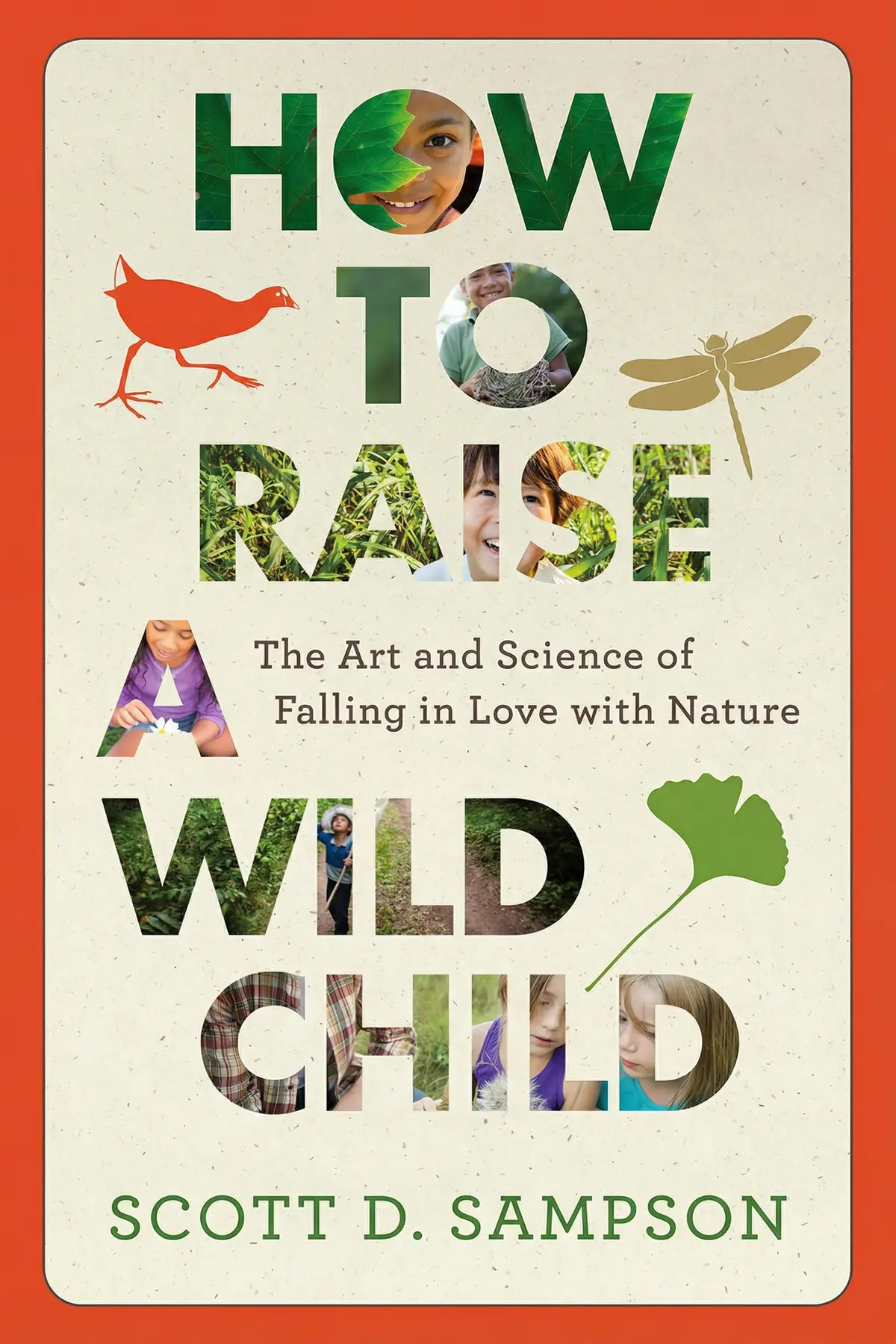
Table of Content
1. Introduction
1 min 07 sec
Many parents feel a nagging sense of loss watching their children spend free hours on screens, and Scott D. Sampson says that feeling is more than nostalgia. In How to Raise a Wild Child, the paleontologist known to young television viewers as Dr. Scott points to studies finding that the average American child now spends between four and seven minutes a day outdoors, against about seven hours in front of screens.
Sampson’s argument is that this gap can be closed without heroic weekend expeditions. What children need is ordinary nature built into the daily routine, an adult who shares the curiosity, a school that uses the outdoors and a kind of freedom that fits their age. Do that, he argues, and kids grow up healthier, more creative and attached to the living world for life.
What follows moves from why childhood went indoors to the small, repeatable habits that bring it back out: a question to ask on a walk, places to find nature on an ordinary weekday, what to look for in a school, and how even a phone can become a field tool.
2. Understand how childhood moved indoors in one generation
1 min 46 sec
No single villain kept kids inside. Several sensible parental choices, each reasonable on its own, added up to a childhood with almost no outdoor time, and the daily total is startling.
3. Outdoor time builds healthier, sharper kids
1 min 50 sec
Children in one kind of kindergarten spent their days without walls or plastic toys, and later outperformed their peers at reading and math. The health figures behind Sampson’s alarm explain why that matters.
4. Find everyday nature without a long drive
1 min 52 sec
Parents often feel guilty about skipped camping trips and missed national parks. Sampson argues that the most valuable nature may already sit on a windowsill, in a schoolyard or on the living room screen.
5. Become the nature mentor your child copies
1 min 50 sec
Arguing with a child who prefers television rarely works. Sampson suggests a different role for the parent, one built on a single good question and a habit you can practice before the school run.
6. Pick a school that teaches under the trees
1 min 42 sec
Two schools can have identical test scores and very different grounds. Sampson explains what to look for on a school visit, and what a single teacher can change without any new budget.
7. Match outdoor play to your child's age
1 min 44 sec
A toddler, a ten-year-old and a teenager each want something different from the outdoors. Sampson shows what each stage gains, from the humble stick to a study of teens in the wilderness.
8. Turn screens into tools for exploring nature
1 min 35 sec
Technology pulls children away from the outdoors, yet Sampson refuses to treat it as the enemy. He saves his real worry for a slower force that may make nature harder to reach for the next generation.
9. Conclusion
1 min 15 sec
What Sampson asks of parents turns out to be modest. A child does not need a mountain every weekend. She needs a stick, a fish tank, a regular walk and an adult who stops by the car to listen for birds. Repeated often enough, those ordinary moments are what Sampson believes build the health, imagination and confidence that an indoor childhood is losing, along with a bond with the outdoors that lasts into adult life.
The habits follow directly from his argument. Before buying the next expensive toy, take your child for a walk instead, and trust water, leaves, dirt, stones and sticks to become a whole world of games. Ask one good question on that walk and let your child answer in words, drawings or photos. Choose a school, or run a classroom, that sends children outside to plant things and to learn. And when the phone comes along, give it a job, like filming crabs or naming a plant.
The pressures that pulled childhood indoors, from packed schedules to spreading cities, will not ease on their own. The way back outside begins with one ordinary walk, repeated until it becomes part of the week.
About this book
What is this book about?
Many parents watch their children spend free afternoons on screens and feel that something from their own childhood has gone missing. Paleontologist Scott D. Sampson argues that the feeling is more than nostalgia. He cites studies finding that the average American child now spends only a few minutes outdoors each day, and he links time in nature to stronger immune systems, better social skills and better results in reading and math. His approach asks for small, steady habits, not heroic weekend expeditions. Sampson sorts nature into three kinds: wild, domestic and technological. He shows how to turn parents into nature mentors who ask good questions and model their own enthusiasm. He explains what to look for in a school, how outdoor play changes from toddlerhood to the teenage years, and how phones and apps can help a child explore instead of pulling them away. Readers get a practical plan for weaving nature into ordinary weekdays, along with a clear view of the forces that keep children indoors and what it may cost to ignore them.
Book Information
Who it's for
Parents worried about screens
Busy parents who worry their kids spend too much time on screens and too little outside.
Teachers wanting outdoor lessons
Teachers who want simple ways to bring the outdoors into lessons.
City families
Families in cities who assume real nature is out of reach without long trips.
About the Author
Scott D. Sampson
Scott D. Sampson is a Canadian-American paleontologist known to many young viewers as Dr. Scott on the PBS KIDS series Dinosaur Train, where he hosts segments and has served as science advisor. His research on dinosaurs has taken him to Madagascar, Kenya, Zimbabwe, South Africa, Mexico, the United States and Canada. He led the California Academy of Sciences in San Francisco from 2019 to 2026 and earlier was chief curator at the Denver Museum of Nature & Science. He has also served as a program ambassador for Nature Rocks, a Nature Conservancy initiative encouraging families to explore nature.
Ratings & Reviews
Ratings at a glance
What people think
Listeners find this work to be a carefully crafted and useful handbook, and one listener points out the wide variety of advice on mentoring in the natural world. Furthermore, the text offers significant value for parents, acting as essential reading for anyone who works with kids. Listeners also value how the content strengthens children's bond with the environment and encourages an appreciation for the outdoors, while providing ideas for nature-based play.
Top reviews
Goy
Ever wonder why your kids seem so much calmer when they're playing in the dirt? Scott Sampson breaks it down beautifully in this essential guide for modern parents. This isn't just a list of games; it’s a philosophy on how to become a "Coyote Mentor" for your children. I loved how it addressed the different developmental stages, from the "lantern consciousness" of toddlers to the need for autonomy in teenagers. The suggestion to create a "nature club" with other families was a total game-changer for our neighborhood! It’s inspired us to look at our local park not just as a playground, but as a living classroom. Yes, there is some science involved, but it provides the necessary foundation to understand how deeply we are connected to the earth. Every educator and parent should have this on their nightstand. It truly strengthens the bond between our youth and the natural world.
Show moreMonthon
Picked this up after seeing a recommendation on a parenting forum, and I’m so glad I did. It’s a total deep dive into how we can raise kids who actually care about the planet. Look, we all know screens are an issue, but Sampson provides a way forward that isn't just "fear-based." He encourages us to be mentors who listen and ask questions rather than just providing all the answers. I particularly enjoyed the sections on "indigenous stories" and the "Great Cosmic Mother"—it adds a spiritual layer to the science that I found very moving. It’s one of the few parenting books that I think actually has the power to change your lifestyle for the better. If you have any influence over children, whether you're a parent, teacher, or grandparent, you need to read this. It’s an inspiring collection of wisdom that feels very authentic to our current struggle.
Show moreTom
Finally got around to reading Scott Sampson’s guide, and it’s a solid resource for any parent feeling the modern "indoor" squeeze. As someone who grew up with Dr. Scott on Dinosaur Train, I appreciated his voice here, though it’s definitely more academic than his TV persona. The book does a fantastic job explaining why our kids need the dirt and the trees, offering a clear roadmap for mentoring rather than just supervising. I loved the "Coyote mentoring" concept—it really changes how you think about your role in their outdoor play. To be fair, the first half is quite heavy on the "why," which might feel repetitive if you're already an avid nature lover. However, the later sections provide actionable tips for different age milestones that I found incredibly helpful. It’s an essential addition to the modern parent's library if you want to help your children build a lifelong bond with the planet.
Show moreTee
As someone who cares deeply about conservation, I found this book incredibly grounding. Sampson, a paleontologist, brings a unique evolutionary perspective to parenting that you won't find in your typical lifestyle guides. He doesn't shy away from the reality of the digital age, either. Instead of telling us to throw away our phones, he discusses the "hybrid mind" and how to use technology to actually deepen our connection to the outdoors. Taking nature photos or using bird-watching apps are great ways to bridge that gap for older kids. The truth is, some parts are a bit wordy, and he repeats himself toward the end. But the core message about fostering a "sense of wonder" is so vital. It’s helped me realize that I don’t need to be an expert on trees or bugs to be a good mentor—I just need to be curious alongside my kids.
Show moreVimolwan
Wow. This book really made me stop and re-evaluate our daily routine. We live in a pretty urban area, and I always felt like "nature" was something we had to drive two hours to find. Sampson’s advice on "nearby nature" changed that mindset completely. We’ve started noticing the birds in the local park and even the weeds growing in the sidewalk cracks. The section on rethinking schoolyards to be more green and less "pavement and litigation-proof plastic" was especially eye-opening. While the writing can be a bit dense with scientific jargon in the beginning, the emotional payoff is worth it. It’s a well-thought-out guide that reminds us that we are part of nature, not separate from it. My kids are already showing more coordination and creativity just from a few weeks of more unstructured outdoor play. Solid four stars for making me a more intentional parent.
Show moreSiriphen
After hearing so much about "nature deficit disorder," I wanted a book that offered more than just a diagnosis. "How to Raise a Wild Child" delivers exactly that. It's a comprehensive resource that provides a wide range of strategies for guiding children through the wilderness at every stage of their development. I appreciated the specific mentions of things like "sit-spots" and nature journaling, which are simple enough for any family to start. To be fair, I did find the author's frequent mentions of his own daughter a little repetitive, and sometimes it felt a bit like he was showing off his coyote mentoring skills. But if you can look past the occasionally "perfect" tone, the actual advice is top-notch. It’s given me the confidence to let my kids take more "calculated risks" outside, which has been great for their confidence. A very valuable guide.
Show morePlernpiriya
Frankly, this is probably the most thorough guide to nature parenting on the market right now. Scott Sampson manages to weave together ecology, psychology, and practical mentoring in a way that feels very cohesive. I will warn readers that he is a scientist through and through—there’s a lot of talk about evolution and the Big Bang, which I found fascinating, but it might not be for everyone. My favorite part was the "Way of the Coyote" section; it’s a brilliant way to describe the balance between being a teacher and a companion. The only reason I’m not giving it five stars is that it can be a bit repetitive, and the "How to" title implies a bit more activity-based content than the book actually delivers. It’s more about shifting your mindset than following a recipe. Still, it’s a highly recommended read for those looking to ignite a genuine passion for the environment in the next generation.
Show moreSakura
This book was a bit of a mixed bag for me, unfortunately. While I completely agree with the premise that we need to "re-wild" our kids, the "How to" part of the title felt slightly misleading at times. I picked this up hoping for specific activities to do with my toddler, but found that most of the advice is geared toward older children, starting around age five or six. Frankly, I spent a lot of time wading through scientific justifications and personal anecdotes about the author's own life. I already know nature is good for them; that's why I bought the book! That said, the chapters on "place-based learning" and how to balance technology with the outdoors were thought-provoking. If you can get past the dense background info, there are some real gems here. It just takes a lot of digging to find the practical bits among the theories.
Show moreAndrei
The chapter on the "Age of Competence" was easily the highlight of the book for me. It gave me a lot of perspective on why my ten-year-old is suddenly craving more independence and how to facilitate that safely in a natural setting. However, I have to agree with other reviewers who said the book could have been about a hundred pages shorter. Once you get past the mid-point, it feels like the same three points are being recycled. "Get outside, let them play, be a mentor." I got it the first five times! Also, if you’re looking for a very structured "to-do" list, you might be disappointed. It’s more of a conceptual guide than a workbook. It’s a decent read for the inspiration factor alone, but it definitely requires some skimming if you value your time. Not bad, just a bit bloated for what it is.
Show moreGame
Not what I expected at all, and to be honest, it was quite a struggle to finish. My main gripe is that it feels like the author is constantly preaching to the choir. If you are the type of person to buy a book about raising a wild child, you probably already understand that nature is important for brain development and physical health. Yet, about 70% of the text is dedicated to convincing the reader of these facts. I wanted more dirt-under-the-fingernails advice and fewer lectures on the history of biology or the Big Bang theory. It’s well-written, but the tone felt a bit self-congratulatory at times, especially with the personal stories of his "perfect" outdoor parenting. If you want a quick list of things to do outside this weekend, this isn't it. You’re better off just going for a walk and leaving the book on the shelf.
Show moreQuestions about this book
What is the main idea of How to Raise a Wild Child?
Scott D. Sampson argues that children have drifted indoors because of safety fears, city living, packed schedules and screens, and that this harms their health and development. His fix is not occasional big trips but daily, ordinary contact with nature, guided by a parent who acts as a mentor, supported by schools and matched to the child’s age, so that kids form a lasting bond with the outdoors.
How much time do kids spend outside, according to Sampson?
Sampson cites recent studies finding that the average American child spends only four to seven minutes a day outdoors, compared with about seven hours in front of screens. He links low outdoor time to worrying health trends, noting that nearly six million US children had an ADHD diagnosis in 2014 and that 18 percent of six to eight year olds are obese.
What does it mean to be a nature mentor for your child?
A nature mentor listens, asks thoughtful questions and encourages a child to tell stories about what they found outdoors, such as asking what the coolest discovery of the day was. Stories can also be journals, drawings or photos. Sampson adds unplanned outings three to five days a week and urges parents to show their own love of nature, because children imitate what they see.
Does Sampson think children should avoid technology?
No. Sampson sees the pull of digital media as permanent and recommends a compromise he calls a hybrid mind, where children move easily between virtual and real experiences. Cameras, video and apps can help them explore, for example filming crabs on a beach or identifying an unknown plant with a botany app. His bigger worry is urban growth, which destroys natural habitats.
How can I apply How to Raise a Wild Child if I live in a city?
Sampson stresses domestic nature: city parks, schoolyards, local farms, potted plants and fish tanks all count. Pair them with technological nature such as nature documentaries, and aim for a wild trip to forests or mountains about once a month. The key is routine, like feeding the fish every evening or a regular weekend walk, because repeated experiences shape a child’s habits and memories.
Readers also enjoyed


Beyond Words: What Animals Think and Feel
Carl Safina

Bad Therapy: Why the Kids Aren't Growing Up
Abigail Shrier

Battle Hymn of the Tiger Mother
Amy Chua

AUDIO SUMMARY AVAILABLE
Listen to How to Raise a Wild Child in 15 minutes
Get the key ideas from How to Raise a Wild Child by Scott D. Sampson, plus 5,000+ more nonfiction titles.
- 5,000+ titles
- Listen as much as you want
- 7-day free trial
- Cancel anytime









