
13 min 50 sec
Available in: English
 ไทย
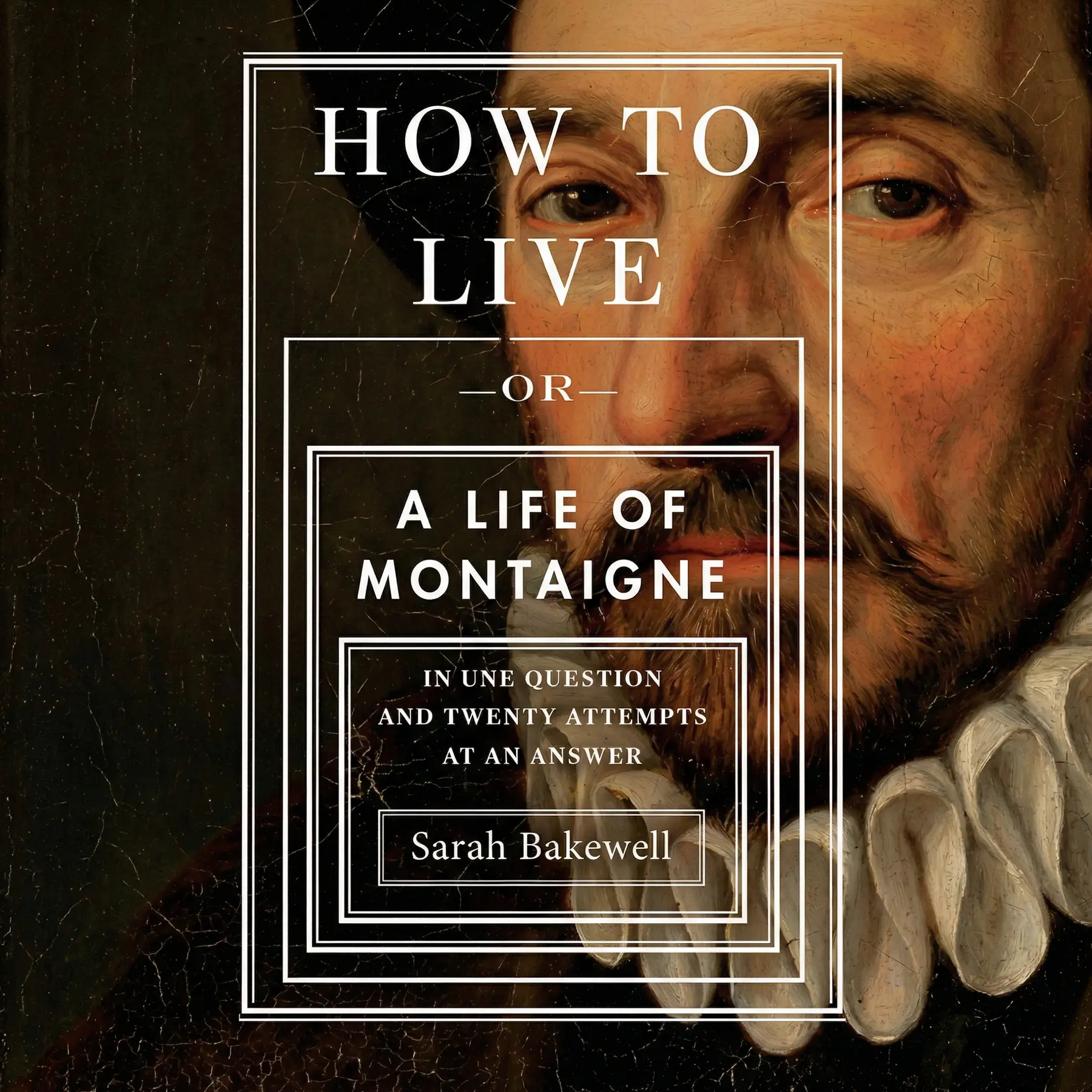
EnglishไทยHow to Live: Or A Life of Montaigne in One Question and Twenty Attempts at an Answer
Sarah Bakewell retells the life of Michel de Montaigne to show how a gloomy, self-described ordinary man learned to hold death lightly, doubt his own certainty and turn his wandering thoughts into the first essays.
Table of Content
1. Introduction
1 min 03 sec
If worry about loss, failure or your own limits keeps spoiling days that should feel good, a sixteenth-century French nobleman found a way through it, and he did it by inventing the essay. In How to Live, Sarah Bakewell tells the life of Michel de Montaigne, who retired in his thirties, sank into gloom, and began writing about the closest subject he had: himself. His pieces were personal, wandering and openly unsure, and they made him one of the most influential writers in history.
Bakewell’s account suggests an answer to the old question in her title. Montaigne learned to live by taking death less seriously, accepting that he was ordinary, and following his own mind with close attention. Each of those moves came from a specific episode in his life, from a violent fall off a horse to a restless retirement. They offer a lighter, more curious way to carry your own worries, and a good reason to write some of them down.
2. The hidden cost of a constant fear of death
1 min 58 sec
A young nobleman had money, land, a respected job and plenty of free time, and none of it gave him any pleasure. The reason was a single thought he could not shake, and it may sound familiar.
3. Lighten up by learning from a brush with death
1 min 58 sec
Thrown from his horse and coughing blood, Montaigne was sure he was dying. What he felt in those hours was the opposite of what he had dreaded for years, and it changed how he faced everything afterward.
4. Turn a wandering mind into something useful
1 min 56 sec
Montaigne retired to a quiet estate expecting peace and got a head full of monsters instead. His fix, borrowed from an ancient philosopher and then bent in a new direction, created a whole form of writing.
5. Being ordinary is a strength you can use
1 min 53 sec
In Montaigne’s day, only great people with great deeds had any business writing about themselves. He had neither, and he said so bluntly. His defense of an unremarkable life also carries a warning about certainty.
6. Let your thinking show its turns and doubts
2 min 00 sec
School taught most of us to pick a point and defend it to the end. Montaigne contradicted himself mid-page and left both versions standing. Bakewell explains why that messy habit captures something tidy writing misses.
7. Start now and keep revising what matters
1 min 56 sec
The Essays made Montaigne famous, and fame dragged him into the most dangerous politics of his age, including a stay in the Bastille. Yet the book kept growing, and he died believing it still unfinished.
8. Conclusion
1 min 06 sec
Montaigne never handed anyone a rulebook for living. What he left was an example: a man who feared death until a crash on a forest path showed him it could be gentle, who found retirement empty until he started writing down his wandering thoughts, and who decided that being ordinary was exactly what made him worth reading. His answer to Bakewell’s question is less a doctrine than a manner, light, curious and willing to be wrong.
That manner can be practiced. When a setback lands, try to meet it with the loose calm Montaigne felt after his fall, instead of bracing for the worst. When your thoughts go round in circles, write one down and follow it for a page, keeping the parts that contradict each other. And when you feel sure you are right, remember the man who doubled his own book with second thoughts and still left notes for more.
He died thinking his work unfinished. Four centuries of readers have found themselves in it anyway, which may be the best case anyone has made for an ordinary person paying close attention.
About this book
What is this book about?
Michel de Montaigne had wealth, land and a steady career, yet in his twenties and thirties he could not stop thinking about death. Plague, war and a string of family losses made the fear feel reasonable, and it spoiled everything else. Then a violent riding accident brought him close to dying, and what he felt there surprised him. Sarah Bakewell follows Montaigne from that turning point into an unhappy retirement, where he began writing down his restless thoughts and called the results Essays. She shows how he defended writing about an ordinary life, why he left his contradictions on the page, and how the book kept growing even after fame pulled him back into dangerous politics during France's religious wars. Readers get a portrait of the man who invented the essay, along with a practical stance toward life: carry hard moments more lightly, treat your limits as a link to other people, admit you might be wrong, and pay close attention to your own experience.
Book Information
Who it's for
Dreading loss or death
People whose quiet dread of loss or death keeps spoiling good days.
Professionals around retirement
Professionals near retirement, or newly free, who find empty time harder than work.
Curious about Montaigne
Writers, journal keepers and curious readers who want to meet the man who invented the essay.
About the Author
Sarah Bakewell
Sarah Bakewell was born in Bournemouth, England, grew up mostly in Sydney, Australia, and studied philosophy at the University of Essex. She spent ten years as a curator of early printed books at London's Wellcome Library before writing full time from 2002. How to Live won the Duff Cooper Prize and the US National Book Critics Circle Award for Biography. She also wrote At The Existentialist Café, has received the Windham-Campbell Prize in Non-Fiction, and teaches creative writing at Kellogg College, Oxford.
Ratings & Reviews
Ratings at a glance
What people think
Listeners value how the author clarifies intricate philosophical ideas and provides a window into the life of Montaigne, all while enjoying a friendly narrative voice that navigates through his writings. They also describe the book as an approachable, captivating experience that shifts their worldview and offers a deep dive into the history of the 1500s. Furthermore, listeners like how the personalities are depicted, with one listener highlighting the way the author breathes life into Montaigne. On the other hand, the tempo of the story draws a variety of responses from listeners.
Top reviews
Nitaya
Sarah Bakewell has achieved something truly remarkable here by turning a 16th-century essayist into a living, breathing companion for the modern age. This isn't your typical, dusty biography that fixates solely on dates and minor political appointments. Instead, she structures the narrative around twenty distinct answers to the titular question, weaving Montaigne’s personal history with the broader philosophical implications of his work. I found the sections on his skepticism and his acceptance of human imperfection particularly moving. Her conversational prose makes even the most complex ideas about Pyrrhonism feel accessible and relevant to our current chaotic world. It’s a beautifully balanced book—part history, part philosophy, and part guide to being a slightly better, or at least more self-aware, human being. Frankly, I finished it feeling like I had actually met the man in his tower.
Show moreAlice
Ever wonder how a man from the 1500s could possibly understand the anxieties of the 21st century? This book provides the answer with startling clarity and wit. Bakewell’s exploration of Montaigne’s world is vivid, mapping out the religious conflicts and social shifts that shaped his need for a private, reflective life. The 'twenty answers' framework is a brilliant organizational tool that keeps the reader grounded even as the narrative explores abstract concepts like the mutability of the self. I loved the bits about his travel and his refusal to be a martyr for any single cause. In my experience, very few biographies manage to change your actual perspective on life, but this one did. It encourages a specific type of moderation and humanity that feels desperately needed right now. This is a masterful blend of scholarship and storytelling that I’ll likely revisit.
Show morePannipa
Finally got around to this classic of modern biography, and it’s every bit as witty and insightful as the reviews suggest. Bakewell avoids the trap of many historians by keeping the prose lively and the observations sharp. She tackles everything from sex to stoicism with the same level of curiosity that Montaigne himself possessed. The way she juxtaposes his casual attitude toward religion with the brutal civil wars of his time was eye-opening. It provides a fascinating insight into how one maintains their humanity when the world is quite literally burning around them. The book is substantial yet maintains a certain lightness that makes it a joy to read. Personally, I found the advice to 'reflect on everything but regret nothing' to be the most impactful takeaway. It is rare to find a book that is this intellectually rigorous while remaining so deeply relatable.
Show moreFrida
Truth is, I didn't expect to fall in love with a book about a retired nobleman who spent his time observing his own cat, but here we are. Bakewell’s work is a masterpiece of accessible scholarship. She avoids the 'miserly' approach of giving one single answer to how we should live, instead offering a buffet of Montaignean wisdom that ranges from the profound to the delightfully mundane. The focus on his friendship with Étienne de la Boétie was particularly heart-wrenching and added a layer of emotional depth I wasn't expecting. The book serves as a perfect bridge between the 16th century and our own, highlighting the timelessness of human doubt and curiosity. Every chapter left me with something to chew on. If you’ve ever felt overwhelmed by the need to be certain about everything, this book is the perfect antidote. It’s charming, erudite, and profoundly comforting.
Show moreSelin
Picked this up on a whim after seeing it labeled as 'shelf help,' and I was pleasantly surprised by how much substance is packed into these pages. Bakewell manages to explain the 16th-century context of Montaigne's life—his time as the Mayor of Bordeaux and his proximity to royalty—without making it feel like a dry lecture. I was particularly struck by the contrast between Montaigne’s fluid worldview and the rigid certainties of his contemporaries like Pascal. The author makes the character of Montaigne come alive, especially in his more vulnerable moments, like his detailed descriptions of kidney stones. It’s an engaging read that manages to be both intellectually stimulating and surprisingly light. Look, it won't replace the Essays themselves, but it provides the essential scaffolding needed to truly appreciate them. My only gripe is that some chapters felt repetitive towards the end.
Show moreWan
The chapter on Montaigne’s relationship with Marie de Gournay was easily the highlight for me, offering a touching look at his later years and his intellectual legacy. Bakewell does a fantastic job of illustrating how Montaigne was a prophet of the postmodern, emphasizing shifting perspectives over absolute truths. Her writing style is incredibly inviting, guiding the reader through the complexities of the Renaissance without ever sounding condescending. I particularly enjoyed learning about the 'archaeology' of the Essays and how they grew with each edition. There are moments where the historical context becomes a bit overwhelming, but the author usually pulls back just in time to refocus on Montaigne’s personal charm. It’s a wonderful companion piece for anyone who has struggled to get through a complete edition of the Essays. This book makes the case that being 'slow-witted' and forgetful can actually be virtues.
Show moreLuckana
As someone who usually finds philosophy dry and impenetrable, Bakewell’s conversational prose was a breath of fresh air. She manages to take the 'man in the tower' and show us his messy, contradictory, and utterly human side. The book excels at placing the Essays within their historical moment, explaining how the terrifying reality of the plague and the religious wars necessitated Montaigne's specific brand of detached observation. I liked how she didn't shy away from his flaws or his more eccentric opinions, like his thoughts on pornographic graffiti or his admitted laziness. The pacing is a bit hit-or-miss, and some sections on his later reception felt like they belonged in a different book, but overall the character development is top-notch. It makes a strong case for why we should still care about a 500-year-old Frenchman today. A very rewarding read.
Show moreRome
While I appreciated the deep dive into the French Wars of Religion, the pacing felt uneven, dragging significantly during the middle chapters. Bakewell is clearly a gifted writer, but the sheer volume of historical and biographical detail occasionally buried the philosophical insights I was looking for. To be fair, her portrait of Marie de Gournay was fascinating, though I agree with other critics that the 'feminist' label felt a bit anachronistic for the period. The book shines when it explores how different generations—from Descartes to the Romantics—reinterpreted Montaigne’s work to suit their own cultural anxieties. However, the digressive structure, which is meant to mimic the style of the Essays, sometimes felt more like a distraction than a deliberate literary choice. It’s a solid resource for students of history, but general readers might find themselves skimming the more dense political segments.
Show moreJoe
I’ve been struggling to finish the original Essays for years, so I hoped this would be a useful shortcut into Montaigne's head. It definitely helped clarify his position as a Skeptic and his rejection of the 'massive gravitational core' of traditional philosophy. However, the book often feels like it's trying to do too many things at once—biography, history, and self-help guide—and doesn't always succeed at the balance. Some of the answers to the central question felt a bit thin, serving more as excuses to talk about 16th-century wine production or legal structures in Bordeaux. The truth is, I enjoyed the parts about his cat and his tower much more than the deep dives into Descartes’s cognito. It's a good book, certainly, but I think its reputation as a life-changing masterpiece might be slightly overstated for those already familiar with the period.
Show moreVimolwan
To be fair, the writing is polished, but the digressive nature of the book mimics Montaigne's own style a bit too closely for my liking. I went in expecting a clear guide to his philosophy, but instead, I found myself wading through endless anecdotes about minor French nobles and printing history. The pacing is sluggish at best. Every time the author started to make a poignant point about 'how to live,' she would veer off into a twenty-page tangent about 17th-century reception or obscure translations. It felt more like a collection of academic papers than a cohesive biography. Not gonna lie, I struggled to stay focused during the later chapters when the focus shifted away from the man himself and onto his literary legacy. It’s clearly well-researched, but for a casual reader, it was simply too much filler and not enough focus.
Show moreQuestions about this book
What is How to Live by Sarah Bakewell about?
It is a biography of Michel de Montaigne, the sixteenth-century French nobleman who invented the essay. Bakewell follows him from a gloomy, death-obsessed young man through a near-fatal riding accident, an unhappy retirement and the writing of his Essays, to fame and dangerous peace work during France’s religious wars. Along the way she draws out his answer to how to live: lightly, humbly, curiously and with close attention.
What did Montaigne learn from almost dying?
After a servant’s galloping horse crashed into him around 1569 or 1570, Montaigne lay at home believing he was dying. Outwardly he looked in agony, yet inside he felt calm, painless and pleasantly drifting, like falling asleep when exhausted. He concluded that dying is not something to dread and that the same light, floating attitude could help him through the hard parts of ordinary life.
Why did Montaigne think being ordinary was a good thing?
Montaigne called himself lazy, forgetful and slow, but argued that ordinariness is what people share. By describing his own flaws honestly, he would also describe his readers, giving them a mirror. He believed the usual idea of greatness divides people and can lead to cruelty, while accepting our limits keeps us humble, connected and open to the chance that we are wrong.
How can I apply Montaigne's ideas from How to Live?
Try meeting setbacks with the calm Montaigne felt after his fall instead of bracing for the worst. When your mind wanders or worries, write a thought down and follow where it goes, as he did when he started his Essays. Before a disagreement, name one way you might be wrong. And keep revising important work instead of waiting for perfect conditions.
Readers also enjoyed


A Promised Land
Barack Obama


A River in Darkness: One Man’s Escape from North Korea
Masaji Ishikawa

A Spy Among Friends: Philby and the Great Betrayal
Ben Macintyre

A Guide to the Good Life: The Ancient Art of Stoic Joy
William B. Irvine



A Year in the Life of William Shakespeare: 1599
James Shapiro
AUDIO SUMMARY AVAILABLE
Listen to How to Live in 15 minutes
Get the key ideas from How to Live by Sarah Bakewell, plus 5,000+ more nonfiction titles.
- 5,000+ titles
- Listen as much as you want
- 7-day free trial
- Cancel anytime









