
13 min 08 sec
Available in: English
How to Be the Love You Seek: Break Cycles, Find Peace, and Heal Your Relationships
Shows why adults repeat the relationship patterns they learned as children, and how daily check-ins with body, mind and heart build a calm inner base you can then share with a partner.
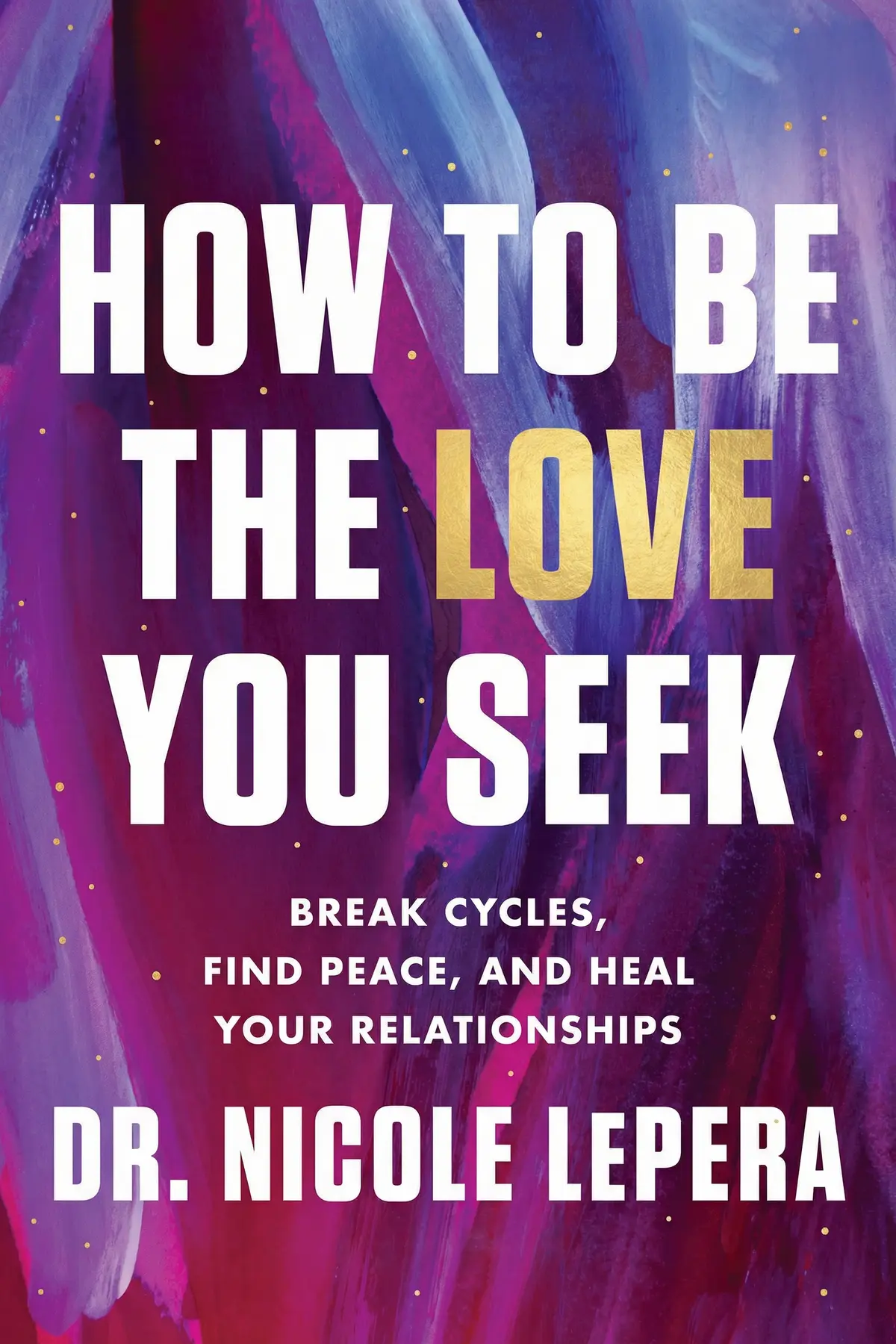
Table of Content
1. Introduction
59 sec
If your relationships keep hitting the same wall, a better partner may not be the fix. In How to Be the Love You Seek, clinical psychologist Nicole LePera argues that we choose and repeat relationships that feel familiar from childhood, even when those patterns hurt us. Her own discovery came during what she calls her “dark night of the soul,” an emotional breakdown that showed her she had never truly connected with anyone, herself included.
Her central claim is easy to say and harder to live: a secure, loving bond with yourself has to come before a secure, loving bond with anyone else. LePera builds that bond through short daily check-ins with the body, the mind and the heart. Then she shows how a steadier nervous system can calm the people closest to you. What you get is a way to catch an old pattern as it starts, settle yourself, and offer a partner calm in place of conditioning.
2. Spot the childhood script in your adult love
2 min 11 sec
A psychologist with a stable family and a steady stream of partners discovered she had never felt close to anyone. The reason sits in lessons most of us learned as children from our earliest caregivers.
3. Let your body tell you what it needs
2 min 10 sec
Most of us only hear from our bodies when something breaks. LePera describes a brief daily pause that helps you read signals like sluggishness or overstimulation and decide what your body needs.
4. Turn old stories into a useful alarm
2 min 10 sec
A popular piece of advice says the ego is the enemy and must be defeated. LePera disagrees, and her alternative turns the stories that sabotage you into an early warning you can actually use.
5. Hear what your heart wants three times daily
2 min 08 sec
Your heart holds tens of thousands of neurons, and LePera believes it has been trying to tell you something. Listening is simple. Acting on what you hear is the part that takes courage.
6. Calm yourself first, then calm the people you love
2 min 10 sec
You can walk into a tense room relaxed and leave it tense, without anyone saying a word. LePera explains the channel behind that, and how to send calm through it instead of stress.
7. Conclusion
1 min 20 sec
LePera’s breakdown looked like the end of something. In her telling, it was a beginning, because it showed her that the connection she kept seeking from partners had to be built inside first, in her own body, mind and heart. In the two years that followed, she changed how she related to herself, her relationships changed with it, and she began teaching the same process to clients, often with similar results.
The reframe is a relief. Feeling safe does not depend on another person first recognizing your needs completely and offering their support. You can practice that care on yourself, and then share it.
The starting points are small. Pause once today and ask your body what it needs, then give it that, whether it is movement, rest, a few deep breaths or time outside. When an old story starts running during a conflict, treat it as an alarm and sit with it before you answer. And when someone you love is tense, breathe with them or take their hand before you reach for words.
LePera promises no overnight change. What she offers is an investment that pays back many times, made one pause at a time, until the steady presence you wanted from others is something you can give.
About this book
What is this book about?
Many people keep ending up in the same painful relationship, with a different partner each time. Nicole LePera argues that this is no accident. As children we learned how to win love and acceptance from our caregivers, and as adults we look for whatever feels familiar, even when it does not work. Few of us had parents who felt safe and steady themselves, so most of us carry survival habits into romance. LePera's answer grew out of her own emotional breakdown. It showed her that she had never truly connected with anyone, herself included. Her method asks for short daily pauses across three centers. In the body, you notice what you need and give it rest, movement, breath or time outside. In the mind, you catch the old childhood stories you keep replaying. In the heart, you ask what you want and whether your actions match it. The book then turns outward. A steadier nervous system can calm the people you love through simple shared acts like breathing together or holding hands. Readers get a practical routine for meeting their own needs first, so that what they bring to a relationship is calm and not conditioning.
Book Information
Who it's for
Stuck in painful patterns
People who keep repeating the same painful pattern with different partners.
Anxious, numb or reactive
Anyone who feels anxious, numb or reactive in close relationships and wants daily tools to settle themselves.
Curious about love's roots
Readers curious how childhood conditioning and the nervous system shape adult love.
About the Author
Nicole LePera
Nicole LePera trained in clinical psychology at Cornell University and the New School for Social Research, and also studied at the Philadelphia School of Psychoanalysis. Her approach links mind, body and soul with everyday lifestyle habits. She founded the Mindful Healing Center in Center City Philadelphia before moving her work online. She also created the SelfHealers community, a worldwide group of people who work on their healing together. Her other books include How to Do the Work and How to Meet Your Self.
Ratings & Reviews
Ratings at a glance
What people think
Listeners find the book delivers a helpful guide for personal growth through deep insights and practical examples. They appreciate the focus on self-love and note the text is easy to digest, with one listener highlighting its accessibility for many types of readers. The content makes a lasting impact, as one listener described feeling their heart crack wide open. While reactions to the writing style are mixed, several listeners point out a high number of grammatical errors.
Top reviews
Gioia
Wow, I did not expect to feel so seen while reading these chapters. LePera has a way of explaining the body-mind connection that makes everything click. I felt my heart crack wide open during the sections on childhood wounding and how we carry that into our adult relationships. The insightful explanations and real-world examples helped me realize how much I’ve been abandoning myself to please others. It is an emotional journey, and while some parts are heavy, the guidance on making positive changes is empowering. This is exactly the kind of self-help that leaves a lasting impact on your soul.
Show moreChanon
Picked this up during a difficult season in my life and found the insights on nervous system regulation incredibly grounding. The book provides clear guidance on making positive changes without being overly clinical or cold. I love how she emphasizes that becoming the love you seek starts with your own internal state rather than fixing your partner. It’s an easy read that manages to be both profound and practical. I’ve already started using the breathing exercises to manage my stress triggers. If you’re tired of the same old relationship advice, this perspective is refreshing and deeply necessary for healing.
Show moreSuda
In my experience, few books manage to bridge the gap between psychology and somatic healing as well as this one does. The explanations of how we mirror our parents' dysregulation were incredibly eye-opening for me. You really do feel richer after finishing this, as it gives you a completely different lens through which to view your interactions. I adored her first book, and this one is a worthy successor that focuses more on the interpersonal side of healing. The beautiful edition is just a bonus to the life-changing content inside. I cannot recommend this more to anyone feeling stuck in their healing journey.
Show moreJom
Ever wonder why you keep repeating the same toxic patterns in your relationships despite knowing better? This book provides the insightful explanations I’ve been searching for to finally break those cycles. The way she breaks down emotional contagion and our physical responses to conflict is genius. It isn't just a 'how-to' book; it’s a manual for understanding your own heart and how it communicates with others. I found the exercises practical and immediately applicable to my daily life. It is a rare book that manages to be both intellectually stimulating and deeply heart-opening at the same time. Truly a must-read.
Show moreTariq
As someone who has followed the 'Holistic Psychologist' for a while, I found this to be a solid guide for anyone seeking deeper personal growth. The focus on self-love isn't just fluffy affirmations; it’s about the hard work of nervous system regulation. Frankly, some of the sections on 'heart coherence' felt a bit like a reach into pseudoscience, but the practical exercises for co-regulation are where this book really shines. The writing is accessible, though it can get a bit repetitive at times. If you can look past the HeartMath references, there is a lot of wisdom here about breaking old patterns. It definitely offers a more structured approach than her Instagram posts.
Show moreNaomi
Look, LePera has a very specific way of looking at the world that won't sit well with everyone, but I found this helpful. My favorite part was actually the epilogue, which felt like it was written in her true voice rather than the repetitive tone of the earlier chapters. Some sections felt like a bit of a 'trojan horse' for her more radical beliefs, and the wordiness can be a slog. However, the core message about self-reflection and improvement is powerful. It’s a nice introduction to these topics, though I still think 'How To Do The Work' is her stronger, more essential book for beginners.
Show moreOat
Finally got around to finishing this, and I have complicated feelings about the 'science' used throughout the text. While I'm skeptical of the HeartMath and energy medicine claims, I can't deny that the book is accessible and offers great guidance. It’s a very easy read for those who aren’t looking for a textbook. Personally, I think I get more out of her bite-sized Instagram content, but having everything in one place is convenient for deep diving. There are definitely some editing glitches and spelling errors that should have been caught, but the overall message of self-love is one that I really needed to hear right now.
Show moreThanakorn
The chapter on co-regulation offers some solid takeaways, but I struggled with the overall delivery of the message. To be fair, as a therapist, I find LePera’s work fascinating yet polarizing because she rejects traditional diagnosis entirely. It seems really clear after reading this that many 'trauma' symptoms she describes look exactly like neurodivergence, yet she paints everything with a single trauma brush. The writing style is quite wordy and occasionally feels like an AI was given a prompt to expand on her notes. While the advice on emotional contagion is spot on, the rigid thinking patterns throughout the book made it a difficult read for me.
Show moreAria
This book was a major disappointment compared to her previous writing and felt incredibly unpolished. The truth is, the author relies heavily on the HeartMath Institute, which is widely criticized as quackery on sites like Wikipedia and by the scientific community. It is frustrating to see real psychology mixed with such blatant pseudoscience. Beyond the content issues, the editing is surprisingly poor for a major release. I counted several spelling errors and grammatical mistakes that made it feel like I was reading a first draft. It is a confusing narrative that might actually do more harm than good for people looking for evidence-based mental health support.
Show moreWatcharaporn
Not what I expected from a licensed psychologist who claims to be an expert in the field. I would like to nominate this for a raspberry award because the author inadvertently describes herself as the toxic person through her own hypocritical anecdotes. Too much time is spent on her personal life story and fictionalized characters rather than providing actionable tools for the reader. Not gonna lie, the redundancy is exhausting; she makes constant promises to elaborate in later chapters but never quite gets there. It feels like a collection of blog posts thrown together without a cohesive, science-backed structure. I expected much better.
Show moreQuestions about this book
What is How to Be the Love You Seek about?
Nicole LePera argues that adults seek relationships that feel familiar from childhood, even when those patterns are unhealthy. Because few caregivers were calm and secure themselves, most of us learned survival responses commonly called fight, flight, freeze and fawn. Her remedy is to build a secure relationship with yourself first, through daily check-ins with body, mind and heart, and then share that steadiness with partners through coregulation.
What are the three centers of consciousness in Nicole LePera's book?
LePera describes body, mind and heart consciousness. Body consciousness means noticing physical sensations and meeting needs like sleep, food, movement, breath, nature and boundaries. Mind consciousness means spotting old childhood stories and working with them through meditation and affirmations. Heart consciousness means asking what you feel and want, and whether your actions match. She suggests regular check-ins with each, from a daily one for the body to at least three a day for the heart.
What is coregulation in How to Be the Love You Seek?
Coregulation is when one person’s calm, secure nervous system helps settle another person’s unsettled one. LePera says it works through the social synapse, a nonverbal channel that also explains why tension in a room spreads. Foundational ways to coregulate include breathing together, eye contact and hugging or cuddling, along with holding hands or walking in step. It also means asking a loved one directly for help when you need it.
How can I apply the ideas from How to Be the Love You Seek?
Start with a short pause. Bring your attention into your body and give it what it asks for, such as movement when sluggish or rest when overstimulated. Two or three times a day, check whether your mind is present or replaying an old story, and meditate on it before reacting. During conflict, try breathing together or holding hands before arguing your point. LePera stresses doing this daily, not as a one-time fix.
Who should read How to Be the Love You Seek?
The book suits people who keep repeating the same relationship patterns, who feel disconnected even when partnered, or who react strongly in conflict and want to understand why. LePera’s own story speaks to readers who look fine on the outside but feel empty inside. It also fits those interested in how childhood conditioning and the nervous system shape adult relationships.

Readers also enjoyed

A Liberated Mind: How to Pivot Toward What Matters
Steven C. Hayes




ADHD an A-Z: Figuring It Out Step by Step
Leanne Maskell




All About Love: New Visions
bell hooks
AUDIO SUMMARY AVAILABLE
Listen to How to Be the Love You Seek in 15 minutes
Get the key ideas from How to Be the Love You Seek by Nicole LePera, plus 5,000+ more nonfiction titles.
- 5,000+ titles
- Listen as much as you want
- 7-day free trial
- Cancel anytime









