

14 min 24 sec
Available in: English
How To Be Black: A Humorous and Intelligent Memoir with Satirical Stories About Race, Identity, and the Black Experience
A funny, pointed memoir about growing up black between two worlds. Thurston shows how narrow our picture of blackness is and gives plain rules for school, friendship and the office.
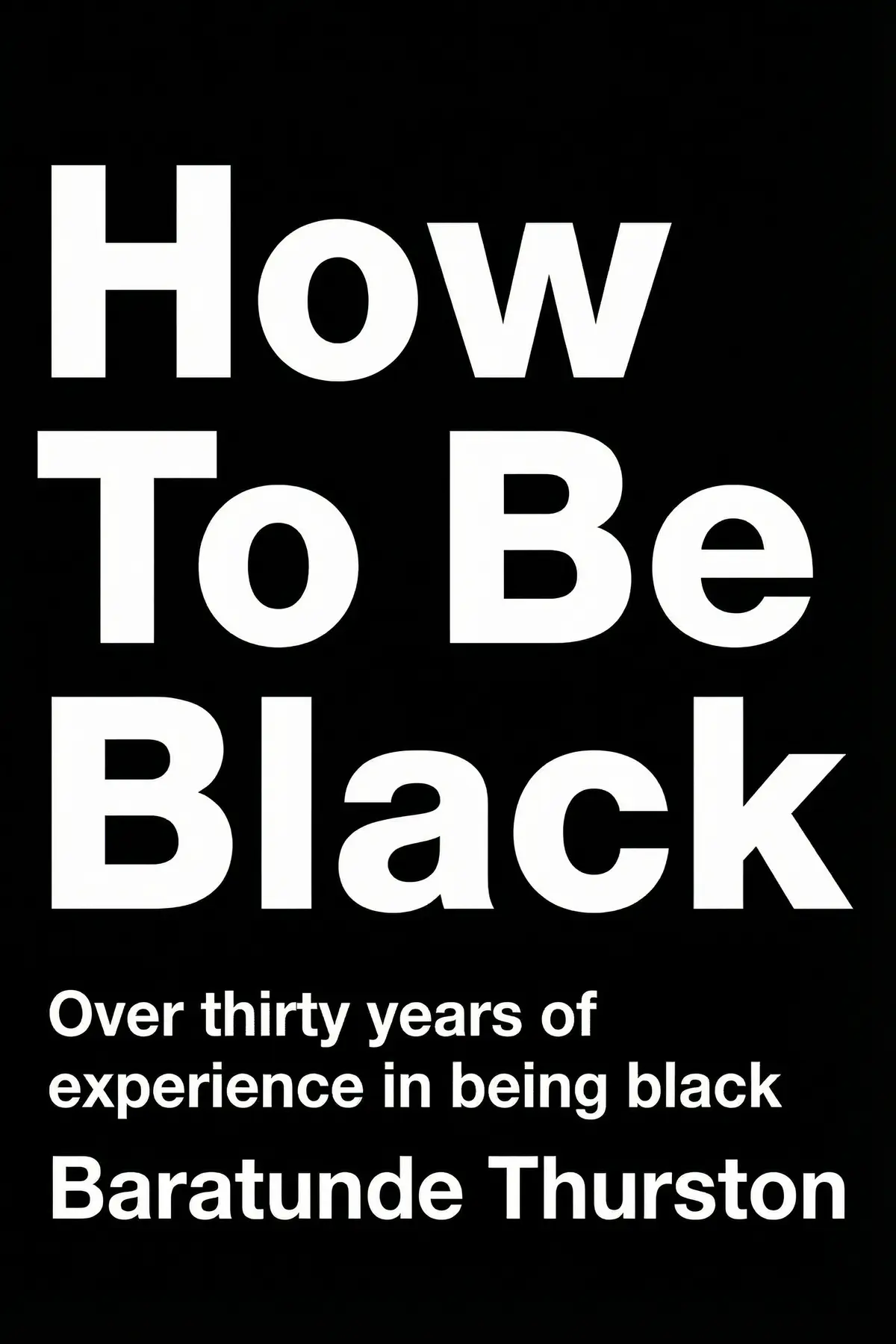
Table of Content
1. Introduction
59 sec
Most people carry a fixed picture of what a black person likes, says and does, and Baratunde Thurston grew up breaking it: a kid from Washington, DC, raised on organic cereal, mountain hikes and the double bass. In How To Be Black, Thurston, a Harvard graduate who later ran digital work for The Onion, tells his own story to show how narrow that picture is and how much trouble it causes on both sides of the color line.
His case is simple. Being black is not one fixed thing, and the awkward moments that come when black people enter mostly white schools, campuses and offices can be eased with a few plain rules and plenty of humor. The story moves from a mangled name at roll call to a lunch table that worried his classmates, and on to a coworker who wants the black view on Barack Obama. It offers guidance for the rooms where race comes up, whether you are the only black person there or the one asking the clumsy question.
2. Laugh off the names people get wrong
1 min 29 sec
American teachers could not say his name, and that was the easy part. The angriest reaction came from someone who, by every logic, should have been delighted to meet him.
3. See past the stereotype in your head
1 min 33 sec
Think of someone who loves camping, Mozart and organic vegan cooking. Thurston bets the face you just imagined is wrong, and his own childhood home is the evidence.
4. Spot the double burden of being the only one
1 min 32 sec
In a classroom full of white students, one boy became the expert on a novel written a century before his birth. Then a fellow black student handed him a second test.
5. A Saturday school that builds strong young men
1 min 35 sec
Push-ups, carpentry, Malcolm X and a trainer who walked across the boys’ stomachs. One weekly program showed Thurston a side of black life his private school never could.
6. A black lunch table is no threat to anyone
1 min 29 sec
A handful of black students sat together at lunch, and some classmates felt left out. One girl went further and proposed a solution that would have shocked her if she knew its history.
7. Keep your hands off and be a real friend
1 min 30 sec
Strangers kept reaching for his afro before he could even answer. Thurston’s response mixes a firm rule with sharp satire about the perks white people enjoy from having a black friend.
8. Find one ally early in a cold place
1 min 35 sec
Boston gave Thurston and his mother a frosty welcome, and nobody on the street would meet their eyes. Then a roommate with an African flag on the wall changed everything.
9. Handle the elevator question about Obama at work
1 min 34 sec
A coworker corners you between floors and asks what black people think of Barack Obama. The honest reply looks like the right one, and Thurston explains why it can trap you.
10. Conclusion
1 min 08 sec
How To Be Black is funny, but its jokes add up to an argument. Thurston keeps walking into places shaped by white privilege, a private school, Harvard, a corporate office, and each time he finds people on both sides wanting him to be one simple thing. Classmates turn to him during Uncle Tom’s Cabin. A schoolmate points out another black kid as an Oreo. A coworker wants the official black opinion between floors. His real life, from carob donuts to Baba Mike’s Saturday drills, fits none of those boxes.
In their place he offers a few plain courtesies, delivered with a grin. Keep your hands off other people’s hair. Read a table of black friends at lunch the way you would read any other table of friends. When you want a colleague’s view, ask for theirs, never for the opinion of millions. And if you are the one being cornered, you are allowed to change the subject.
Thurston’s bet is that humor and these small rules help black and white people understand each other a little better. Strangers still mangle his name. He laughs, and keeps waiting for someone to say Beelzebub.
About this book
What is this book about?
Most people carry a fixed idea of what a black person likes, says and does. Baratunde Thurston spent his life breaking it. He was a vegan, camping, double-bass-playing kid from Washington, DC, and he became one of very few black students at an elite private school, then a Harvard student, then an office worker in Boston. In How To Be Black, Thurston tells that story with jokes, and the jokes carry an argument. Each new room put pressure on him from two sides. White classmates and coworkers treated him as the spokesman for every black person. Some black peers checked whether he was black enough. Along the way he met teachers who could not say his name, strangers who reached for his afro and a coworker who cornered him in an elevator to ask about Barack Obama. Readers get a clear look at what it feels like to be the only one in the room. They also get practical guidance for those moments: what never to do, what to ask instead, and how humor can help black and white people understand each other.
Book Information
Who it's for
The only black person
People who are often the only black person in their class, team or office.
Managers, teachers and colleagues
Managers, teachers and colleagues who want to stop asking the clumsy question.
Into comedy about race
Readers who like their lessons on race delivered through sharp, personal comedy.
About the Author
Baratunde Thurston
Baratunde Thurston, born in 1977, is a Harvard University graduate who co-founded Jack and Jill Politics, a black political blog whose coverage of the 2008 Democratic National Convention was archived by the Library of Congress. He served as director of digital for The Onion and has worked as a digital advisor with the White House Office of Public Engagement. Fast Company named him one of its 100 Most Creative People in Business. How To Be Black, published in 2012, became a New York Times bestseller.
Ratings & Reviews
Ratings at a glance
What people think
Listeners find the book incredibly funny, mixing soft irony and blatant sarcasm while valuing its approachable tone and deep social reflections. Furthermore, they describe the work as highly engaging, with one listener noting how it provides comic relief for all races. Additionally, the book earns praise for its informative content and interesting life story, with one listener highlighting its unique approach to race relations.
Top reviews
Saranya
Baratunde Thurston is the master of the pivot, moving effortlessly between a harrowing childhood in 1980s D.C. and the ivory towers of Harvard. His writing is razor-sharp and frequently hysterical, yet it carries a weight that forces you to reconsider your own biases. I loved the chapters on his mother's 'tofu-eating hippie' influence; it paints such a vivid, non-monolithic picture of blackness that we rarely see in mainstream media. While some of the satire is biting, it never feels mean-spirited. Instead, it invites the reader into a conversation that is long overdue. This isn't just a manual; it’s a brilliant deconstruction of identity that manages to be both educational and entertaining. It left me feeling remarkably optimistic about the future of race relations.
Show moreAdam
There is something incredibly powerful about the way Thurston discusses his mother. She comes across as such a force of nature, raising him with a global perspective amidst the chaos of the D.C. crack epidemic. Frankly, I could have read an entire book just about her and his childhood. The way he balances that heavy history with light-hearted social commentary is a feat of literary gymnastics. He reminds us that being Black isn't a monolith, and that there is no 'wrong' way to exist in your own skin. It’s optimistic, audacious, and filled with a warmth that makes the more difficult chapters easier to digest. Highly recommended for anyone who has ever felt like an outlier in their own community.
Show moreEye
Finally got around to reading this gem, and it’s one of the most refreshing takes on race I’ve encountered. Thurston doesn't just lecture; he invites you to laugh at the stupidity of stereotypes while acknowledging the pain they cause. The advice he gives at the end—to simply be yourself—is a universal call to action that resonates regardless of your background. I loved the diverse voices on the Black Panel; it really drove home the point that there is no singular 'Black experience.' The prose is energetic and the humor is top-notch. If you’re looking for a book that is both thought-provoking and genuinely fun to read, this is the one. It is a total triumph of personal storytelling.
Show moreDylan
Ever wonder how to navigate being the 'token' friend without losing your mind? Thurston’s satirical 'how-to' guides are genuinely funny, using sarcasm to highlight the absurdity of modern race relations in America. I found myself laughing out loud at the advice for black employees, though the underlying truth of those situations is actually quite sobering. The inclusion of the 'Black Panel' was a clever touch, providing a range of perspectives that keep the book from feeling like a singular manifesto. To be fair, the humor feels a bit forced in the final chapters—like he’s trying too hard to land every single punchline—but the overall message of authenticity is solid. It’s a breezy read with a very sharp, educational edge.
Show morePiyanart
Picked this up on a whim after seeing it mentioned in a 'Best of' list, and I’m glad I did. Thurston has a conversational writing style that makes you feel like you’re grabbing a beer with him. It’s witty and biting, especially when he’s mocking the ridiculous expectations society places on Black people in corporate spaces. While I didn’t find every single joke 'laugh-out-loud' funny, the gentle irony throughout kept me engaged. The book does a great job of providing comic relief while still delivering a punchy message about identity. My only gripe is that some of the political references feel a bit dated now, but the core themes of self-acceptance and challenging stereotypes are unfortunately still very relevant today.
Show moreSoontorn
Snarky, smart, and completely necessary. Thurston manages to take the 'How-To' format and flip it on its head to reveal the daily performances required of marginalized people in America. I especially appreciated his insights into the 'Black Friend' dynamic—it’s something I’ve seen play out a thousand times but never saw articulated so clearly. The writing is punchy, with short sentences that hit hard. Truth is, some of the satire is so thick it becomes a bit confusing, leaving me wondering where the joke ended and his actual opinion began. However, the sheer audacity of his approach makes this a standout read. It’s an entertaining way to broaden your perspective without feeling like you're reading a dry, academic textbook.
Show moreSaowalak
As someone who has navigated predominantly white spaces for years, this book felt like a massive exhale. Thurston’s description of his time at Sidwell Friends resonated deeply with me. He captures that specific anxiety of being a 'representative' for your entire race with such precision and wit. In my experience, the chapter on the Black President was a bit much, but the rest of the book more than makes up for it. It’s a bold piece of work that uses humor as a scalpel to dissect American culture. Even though it was written several years ago, the social observations remain incredibly sharp. This is a great choice for anyone looking for an accessible, funny entry point into race relations.
Show moreAudrey
The structure of this book is a bit of a mixed bag for me. On one hand, the memoir sections are absolutely fascinating, detailing a life that spans from the drug wars of D.C. to the elite halls of Sidwell Friends and Harvard. Thurston is a gifted storyteller when he’s being sincere. On the other hand, the satirical 'manual' portions and the Black Panel transcripts felt like they disrupted the flow of his personal narrative. Not gonna lie, I found myself skimming the panel answers because they felt repetitive after a while. It’s definitely an educational read for those looking to understand the nuances of the Black experience, but the uneven pacing and impersonal tone in the comedy sections make it a slightly frustrating read.
Show moreSofia
To be fair, I think my expectations were a bit too high for this one. I was expecting a straight memoir, but what I got was a hybrid of autobiography and SNL-style sketches. Some of the sketches work brilliantly, while others—like the section on being a black employee—felt a bit recycled. Personally, the book shines brightest when Thurston is being vulnerable about his father or his education at elite schools. When he shifts into 'comedian mode,' the tone can feel a little too cynical and detached for my taste. It’s still a worthwhile read for the social commentary alone, but I wish the editing had been a bit tighter to keep the momentum going through the middle sections.
Show moreNing
I really wanted to like this more than I did, but the humor just didn't land for me. Look, I appreciate the attempt to use satire to tackle heavy subjects like systemic racism, but many passages felt arrogant or simply over the top. The five-page bit about being the next Black president was particularly tedious and seemed to go on forever without a clear point. Also, as someone not fully steeped in every American cultural trope, some references—like the extended watermelon joke—flew right over my head because the author doesn't bother to explain the context. It felt like a memoir that was afraid to be too serious, resulting in a book that’s neither a great biography nor a consistently funny comedy. It was quite a disappointing experience.
Show moreQuestions about this book
What is How To Be Black by Baratunde Thurston about?
It is a humorous memoir about growing up black in Washington, DC, and moving through mostly white spaces: the private school Sidwell Friends, Harvard and a Boston office. Thurston uses his own story, from a mangled name to an elevator question about Barack Obama, to show that being black is not one fixed thing and that humor plus a few plain rules can help black and white people understand each other.
Is How To Be Black a serious book or a comedy?
Both. Thurston tells his stories with jokes and satire, such as calling a black friend almost a public service for white people. Under the comedy sit serious points: the history behind patting someone’s head, the double standard around black students sitting together, and the pressure of being treated as the spokesman for every black person at school and work.
What does Thurston say about touching black people's hair?
Don’t. When strangers reached for his afro, often before he could answer, Thurston developed a quick move to avoid them. With friends he explained his reason: you pat pets, not people you respect, and given how white people have treated black people over a long history, the gesture is even worse. His rule is never to touch anyone’s hair, however unusual it looks to you.
How should you respond when a coworker asks for the black opinion?
Thurston lists three options: change the subject, challenge the assumption that all black people think alike, or answer honestly. He advises against the honest answer, because it makes you the office source for the black view on every issue. Changing the subject or questioning the premise works better. For the person asking, the lesson is to ask what a colleague thinks, never what their race thinks.
Readers also enjoyed

A Promised Land
Barack Obama


A River in Darkness: One Man’s Escape from North Korea
Masaji Ishikawa


A Spy Among Friends: Philby and the Great Betrayal
Ben Macintyre

A Biography of Loneliness: The History of an Emotion
Fay Bound Alberti


A Force for Good: The Dalai Lama's Vision for Our World
Daniel Goleman

A Year in the Life of William Shakespeare: 1599
James Shapiro
AUDIO SUMMARY AVAILABLE
Listen to How To Be Black in 15 minutes
Get the key ideas from How To Be Black by Baratunde Thurston, plus 5,000+ more nonfiction titles.
- 5,000+ titles
- Listen as much as you want
- 7-day free trial
- Cancel anytime









