

14 min 59 sec
Available in: English
 ไทย
EnglishไทยHow Not To Be a Boy
By Robert Webb
A comedian's memoir showing that the rules boys absorb, from toughness and fear of books to never crying, are taught rather than inborn, and what those rules cost men in friendship, love and family.
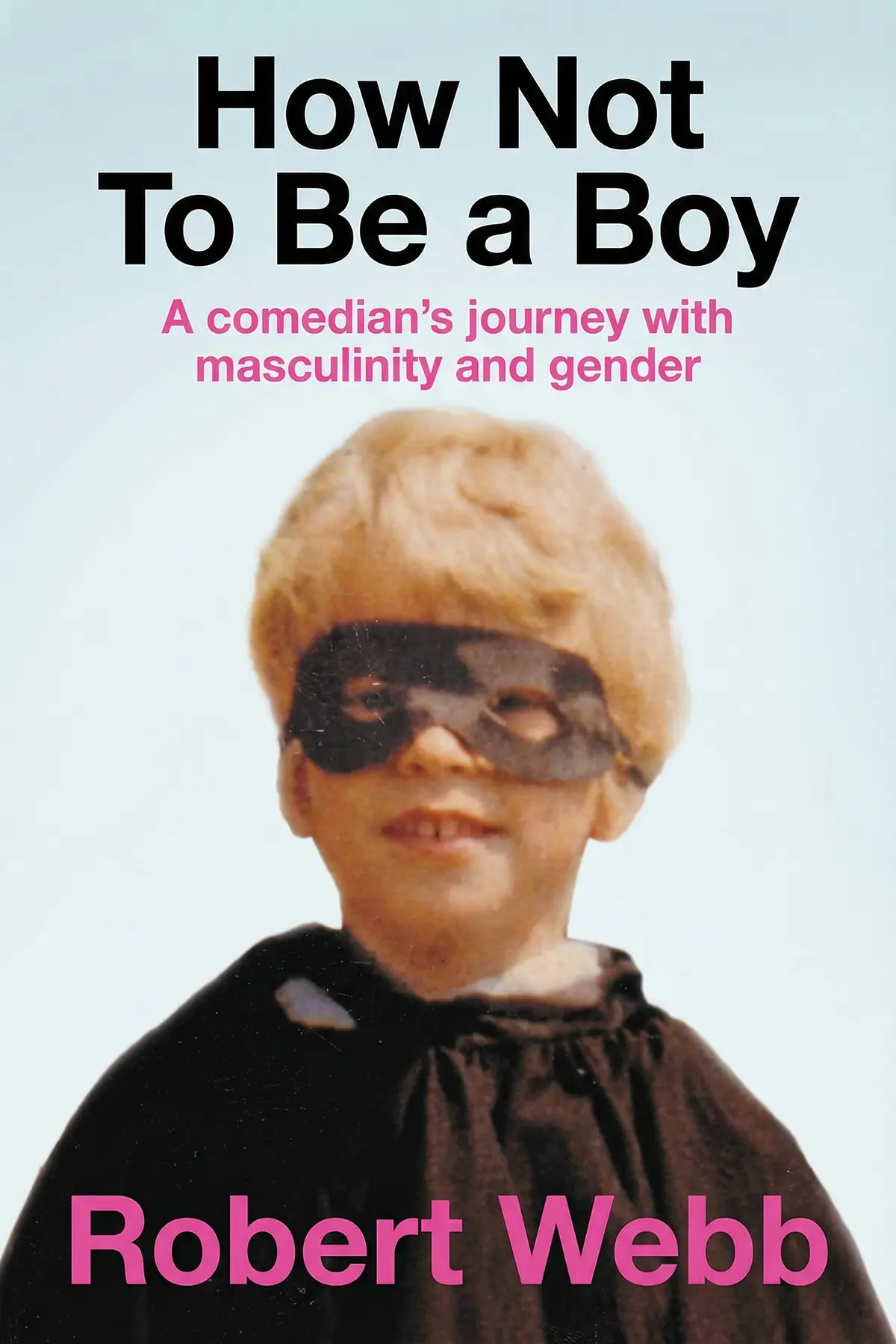
Table of Content
1. Introduction
54 sec
If you were raised to keep your feelings to yourself, walk away from arguments and pretend a knock to the head did not hurt, you may assume that is simply how men are made. In How Not To Be a Boy, comedian and Peep Show actor Robert Webb argues there is no male brain behind any of it, only generations of outdated expectations. He grew up in rural England, where boys were meant to love sport, distrust books and never cry, and he made it to Cambridge University and a career in comedy anyway.
His memoir follows those rules through his own funny and sometimes painful boyhood, showing who teaches them, what they cost grown men and how they can be dropped. Expect to recognize the rules at work in a son, a partner, a colleague or yourself, and to leave with a few plain habits for speaking and feeling more freely.
2. See the expectations behind so-called boy behavior
1 min 42 sec
A group of mothers judged how steep a slope their babies could climb, and their answers depended on something other than the babies. The result changes how you might read every boy who seems born to be rough.
3. Spot the dress code that bullies enforce
1 min 36 sec
A ten-year-old’s whole standing on the playground hung on the length and pattern of his socks. How he escaped the mockery is funny, and what it reveals about how boys learn their rules is not.
4. Test any stereotype by swapping who it describes
1 min 32 sec
People still say things about men that would sound shocking about almost anyone else. One simple swap exposes them, and Webb’s own older brother shows how little the usual picture of a man actually captures.
5. Understand how boys learn to hide pain and brains
1 min 36 sec
Weekly wrestling matches between loving brothers taught one lesson, and the classroom taught another. Together they explain why so many bright boys pretend not to care, and pretend not to hurt.
6. Say the awkward sentence instead of moving away
1 min 38 sec
A chess game on a school bus went wrong on the very first move, and nobody said a word. Years later, a grown man chose to change his address rather than speak to his neighbors.
7. Be honest when you want out
1 min 35 sec
A teenage girl wrote her boyfriend a letter that offered him an easy, honest exit. His reply, and what came after it, show what happens when a young man has no words for the truth.
8. Make it safe for a man to cry
1 min 40 sec
Grieving his mother at 17, Webb finally broke down beside a friend while a Prince song played. What that friend did next mattered more than any words, and it led somewhere neither expected.
9. Hear the love inside a clumsy guilt trip
1 min 35 sec
One father figure used guilt to say goodbye, and the other used rules about milk bottles to keep order. Both were trying to say something they never quite managed to put into words.
10. Conclusion
1 min 11 sec
Webb’s boyhood adds up to one case. The masculinity he was handed was a set of habits learned from parents, brothers and playground crowds, and learned habits can be unlearned. The boy pretending the play-fights with his brothers didn’t hurt became the teenager who could not correct Gareth’s queen or tell Isabel the truth, and the same habit shows in an adult friend who moved house rather than talk to his neighbors. In his own story, one friend simply stayed and held his hand while he cried.
The book points to things you can try this week. Notice when a boy’s behavior gets credited to his nature, and ask what he was taught. Say the uncomfortable sentence early, to a neighbor, a friend or a partner. And if you are a man who flirts, Webb asks you to remember that you are usually stronger than the woman in front of you, and to imagine a much bigger, stronger man leaning in, grabbing you or ignoring your no.
His father scrubbed milk bottles to keep life under control. The better kind of order, Webb suggests, is a man who can say what he feels.
About this book
What is this book about?
Many men grow up believing that toughness, silence and a dislike of anything bookish are simply part of being male. Robert Webb, the comedian and actor best known for Peep Show, disagrees. He argues that there is no male brain behind these habits, only expectations handed down by parents, older brothers and playground crowds. Webb makes his case through his own boyhood in rural England. A pair of patterned socks gets him mocked on the playground. His brothers teach him to hide pain. A chess game on a school bus shows how hard it is for boys to say one simple, honest thing. Later come a first girlfriend he could not bring himself to leave, the death of his mother, a night of tears beside a friend who stayed, and two fathers who could not say what they felt. The memoir is funny and frank. It also argues that men should be free to skip typically male pursuits, to cry and to show their emotions, and it closes with one practical reminder about physical strength when flirting.
Book Information
Who it's for
Men tired of silence
Men who were raised to hide pain and dodge hard conversations, and are tired of it.
Raising or teaching boys
Parents and teachers of boys who want to notice the rules they pass on without meaning to.
Men's partners and friends
Partners and friends trying to understand the men in their lives.
About the Author
Robert Webb
Robert Webb, born in 1972, became well known as one half of the comedy duo Mitchell and Webb with David Mitchell. Together they made the sketch show That Mitchell and Webb Look and the Channel 4 sitcom Peep Show, in which Webb played Jeremy. He has also appeared in The Smoking Room, Ambassadors and Back, sat on the panels of Have I Got News for You and QI, and written columns for The Daily Telegraph and The New Statesman. How Not To Be a Boy was a number one bestseller, and he later published a novel, Come Again.
Ratings & Reviews
Ratings at a glance
What people think
Listeners find this memoir to be both entertaining and sincere, with one review highlighting it as essential reading for all genders. The work earns praise for how it addresses toxic masculinity, and listeners enjoy the humor woven throughout.
Top reviews
Luckana
Robert Webb has managed something rare here by writing a celebrity memoir that actually says something profound. Instead of the usual 'then I got famous' routine, he dives deep into the absurdity of the gender rules we force on kids. I found myself laughing out loud at his descriptions of awkward teen years and then immediately feeling a lump in my throat when he talks about his mother's death. The way he dissects "The Trick"—the societal pressure that keeps men from being vulnerable—is both accessible and deeply convicting. Some might find the comedian-heavy prose a bit much, but to me, it felt like sitting in a pub with a very smart, very tired friend. It’s a necessary look at how toxic masculinity stunts our emotional growth and keeps us from connecting with those we love most.
Show moreSam
Few books have made me rethink my own childhood quite like this one. Webb dismantles the "rules for being a man" with surgical precision and a lot of self-deprecating wit. Growing up in rural Lincolnshire sounds like it was a minefield of "man up" expectations that he never quite fit into. I particularly loved the Star Wars references woven throughout; they added a layer of relatable geekiness to the trauma. Personally, I think every man should read this to understand why we keep our feelings bottled up until they explode. It’s a beautifully written, raw account of grief and the masks we wear to survive. This isn't just for fans of Webb's comedy; it's for anyone who's ever felt like they weren't doing 'gender' right.
Show moreOlivia
Wow, I wasn't expecting to cry over a Peep Show star’s life story, but here we are. I listened to the audiobook narrated by Robert himself, and I can’t recommend it enough because his delivery adds so much nuance to the humor. The way he describes his mother is so tender, and his reflection on how her death shaped his view of the world is heartbreaking. He captures the specific loneliness of being a boy who doesn’t fit the mould of "toughness." Frankly, I think it’s one of the most honest accounts of male emotion I’ve ever come across. It’s funny, brutal, and ultimately quite hopeful about the kind of men we can choose to be. A must-read for both men and women who want to understand the modern male psyche.
Show moreAdam
Finally got around to reading this and it lived up to the hype. Webb explores the idea that masculinity is essentially a performance we’re all forced into from birth, and he does it with such wit. The sections about his school days and the pressure to be "one of the lads" resonated deeply with my own experiences. It’s refreshing to see a high-profile man speak so candidly about therapy and the importance of emotional literacy. Look, it’s not always a comfortable read—especially when he talks about his treatment of women in his younger years—but that’s exactly why it works. It’s an authentic attempt to bridge the gap between who we are and who society tells us to be. Truly excellent and surprisingly moving.
Show moreMalee
Every parent of a son needs to have this on their shelf. Webb’s insights into how we socialize boys to reject their emotions are spot on and, frankly, quite terrifying. The story of his daughter wanting to dress as Spider-Man but fearing the "Trick" was such a poignant way to bring the theory into the real world. It’s a beautifully written book that balances the lightheartedness of a comedy career with the heavy lifting of dismantling the patriarchy. I loved his honesty about his own flaws; he doesn't paint himself as a hero, just a guy trying to do better. This book is a conversation starter and a heart-breaker all at once. I’ll be recommending this to everyone I know who cares about raising healthy humans.
Show moreWatcharaporn
Picked this up on a whim after seeing a Peep Show clip and was surprised by how heavy it got. Webb is quite candid about his struggle with alcoholism and his often-strained relationship with his father, which I found much more interesting than the Footlights stuff. Truth be told, the book sometimes feels like it’s struggling with an identity crisis between being a funny autobiography and a serious treatise on feminist theory. The sudden shifts into academic-style lecturing on gender roles can be a bit jarring when you're just enjoying the narrative flow. However, his honesty about being a "crap boyfriend" and learning to be a better father is refreshing. It’s not perfect, but it is incredibly brave and surprisingly entertaining for such a weighty subject.
Show morePatchara
As someone who usually avoids 'woke' celebrity manifestos, I found this surprisingly grounded and relatable. Webb doesn’t just point fingers at the patriarchy; he looks inward at his own failings and his complicated love for his father. The chapters on his mother’s terminal illness were devastatingly well-written, capturing that specific teenage numbness. My only real gripe is that he occasionally slides into a preachy tone that feels a bit like a Guardian op-ed, which might turn some readers off. Still, his point about how we "police" masculinity is hard to argue with once you see it through his eyes. It’s a funny, sad, and deeply human book that manages to be educational without being too dry or academic.
Show morePatcharaporn
Is this a memoir or a sociology textbook? Actually, it's a bit of both, and while the transition between the two can be clunky, the overall message is vital. Webb’s account of his time at Cambridge and the Footlights is entertaining, but the real meat of the book lies in his reflections on his working-class roots. He manages to be "Tremendously Fair" to his father while still acknowledging the damage caused by his violence and drinking. I appreciated the rawness of his struggle with his own identity and his desire to break the cycle for his daughters. It’s a very 'woke' book, sure, but it comes from a place of genuine lived experience. A few parts dragged, but it's well worth the time for the perspective it offers.
Show moreKru
The structure of this book felt a bit disjointed to me, even if the writing itself was sharp. I went in expecting more of a guidebook on dismantling stereotypes based on the chapter titles like "Boys Love Sport," but it’s really just a standard memoir with some gender theory sprinkled on top. At times, it felt like Webb was trying to have his cake and eat it too—wanting to be the funny comedian while also being a serious social commentator. While his vulnerability regarding his alcoholism and bisexuality is commendable, I found the pacing to be quite uneven. It’s a decent read for fans of his work, but don't expect a revolutionary feminist text. It’s more of a personal exorcism of his own past than a universal guide.
Show moreTariq
Call me a cynic, but I just couldn't connect with the tone of this at all. I gave up around the halfway mark because the writing felt overly snarky and self-important, as if he was trying too hard to prove how 'enlightened' he's become. There’s a lot of self-pity wrapped in comedy that didn't land for me, and I found the lectures on feminism to be incredibly patronizing. It felt like he was blaming every mistake in his life on the "Trick" rather than taking actual personal responsibility. Maybe it's just me, but I didn't find the "poor me, I went to Cambridge" vibe very relatable or insightful. I’ve read better books on toxic masculinity that didn't feel this whiney or defensive.
Show moreQuestions about this book
What is How Not To Be a Boy about?
It is Robert Webb’s memoir of growing up in rural England, used to argue that typical male behavior is learned, not wired in. Through stories about socks, sibling wrestling, a botched chess game, a first girlfriend and his mother’s death, he shows how boys are taught to be tough, unintellectual and silent about feelings, and what that costs them as men.
Does Robert Webb think there is a male brain?
No. Webb cites a November 2015 Science magazine article reporting that every brain is unique and cannot be sorted by gender. He also points to a study described by psychologist Cordelia Fine in which mothers underestimated how steep a slope their baby girls could climb and overestimated their baby boys, as an example of how expectations shape children.
What does How Not To Be a Boy say about men and conflict?
Webb argues that boys are rarely expected to learn how to talk through problems, so men tend to choose between fighting and avoiding. Since fighting is frowned upon, many avoid. His examples range from failing to correct a classmate’s illegal chess move to a friend who moved house instead of asking neighbors to stop using his bins. Avoidance, he warns, can lead to loneliness.
How can I apply the ideas in How Not To Be a Boy?
Catch yourself when you call a behavior natural to boys and ask what was taught. Test stereotypes by swapping in another group. Say the awkward sentence early instead of avoiding a problem or a dying relationship. Be the safe person a man can cry in front of. Webb also asks men who flirt to remember they are usually physically stronger than the woman they approach.
Who should read How Not To Be a Boy?
Men who feel boxed in by the rules they grew up with, parents and teachers raising boys, and anyone trying to understand why the men around them struggle to talk about feelings. Fans of Peep Show will also enjoy Webb’s frank and often funny stories of school, family, first love and grief.
Readers also enjoyed

A Promised Land
Barack Obama


A River in Darkness: One Man’s Escape from North Korea
Masaji Ishikawa


A Spy Among Friends: Philby and the Great Betrayal
Ben Macintyre

A Biography of Loneliness: The History of an Emotion
Fay Bound Alberti


A Force for Good: The Dalai Lama's Vision for Our World
Daniel Goleman

A Year in the Life of William Shakespeare: 1599
James Shapiro
AUDIO SUMMARY AVAILABLE
Listen to How Not To Be a Boy in 15 minutes
Get the key ideas from How Not To Be a Boy by Robert Webb, plus 5,000+ more nonfiction titles.
- 5,000+ titles
- Listen as much as you want
- 7-day free trial
- Cancel anytime









